Public apps
Public apps are built for many stores. They are distributed through the Shopify App Store after Shopify reviews them, and merchants install them from there.
A store-specific workflow does not always fit an existing app. We build custom Shopify applications and connected services around the processes your team and customers actually use.
Start a Project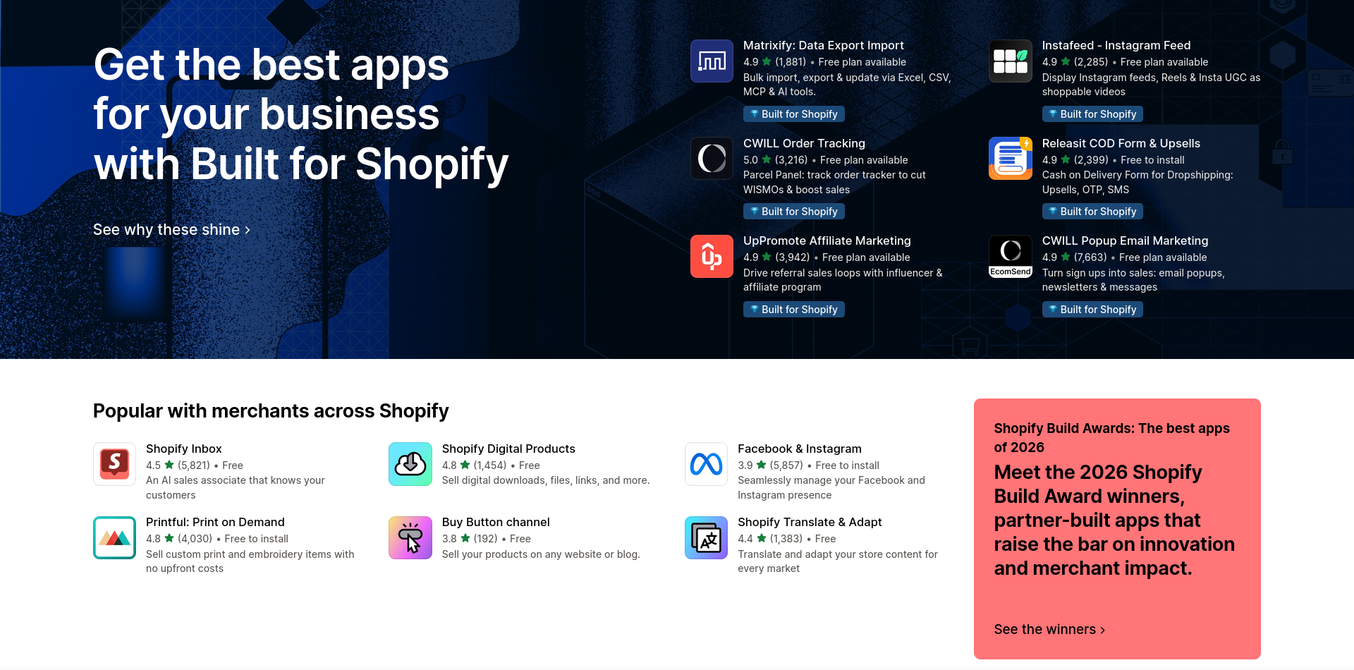
The Shopify app ecosystem is made up of developers, merchants and the apps that extend what a store can do. An app can be published in the Shopify App Store for many merchants to install, after it meets Shopify’s requirements, or built as a custom app for a single store.
Some apps also add sales channels, which are places to sell beyond the online store.
Public apps are built for many stores. They are distributed through the Shopify App Store after Shopify reviews them, and merchants install them from there.
Custom apps are built for one store, or for the stores of one Shopify Plus organization. They are not listed in the App Store, so they can follow your exact requirements. The older term “private app” is deprecated.
Sales channel apps add a place to sell, such as a marketplace or another storefront, and let you manage that channel from Shopify. A sales channel is a function an app can provide, separate from how the app is distributed.
An off-the-shelf app can solve common requirements. A custom build is worth considering when the workflow, data flow or interface is particular to your store. We define what Shopify should handle, what the application should handle and how the two will exchange data before development begins.

Age of Innocence storefront, alongside the checkout app project.
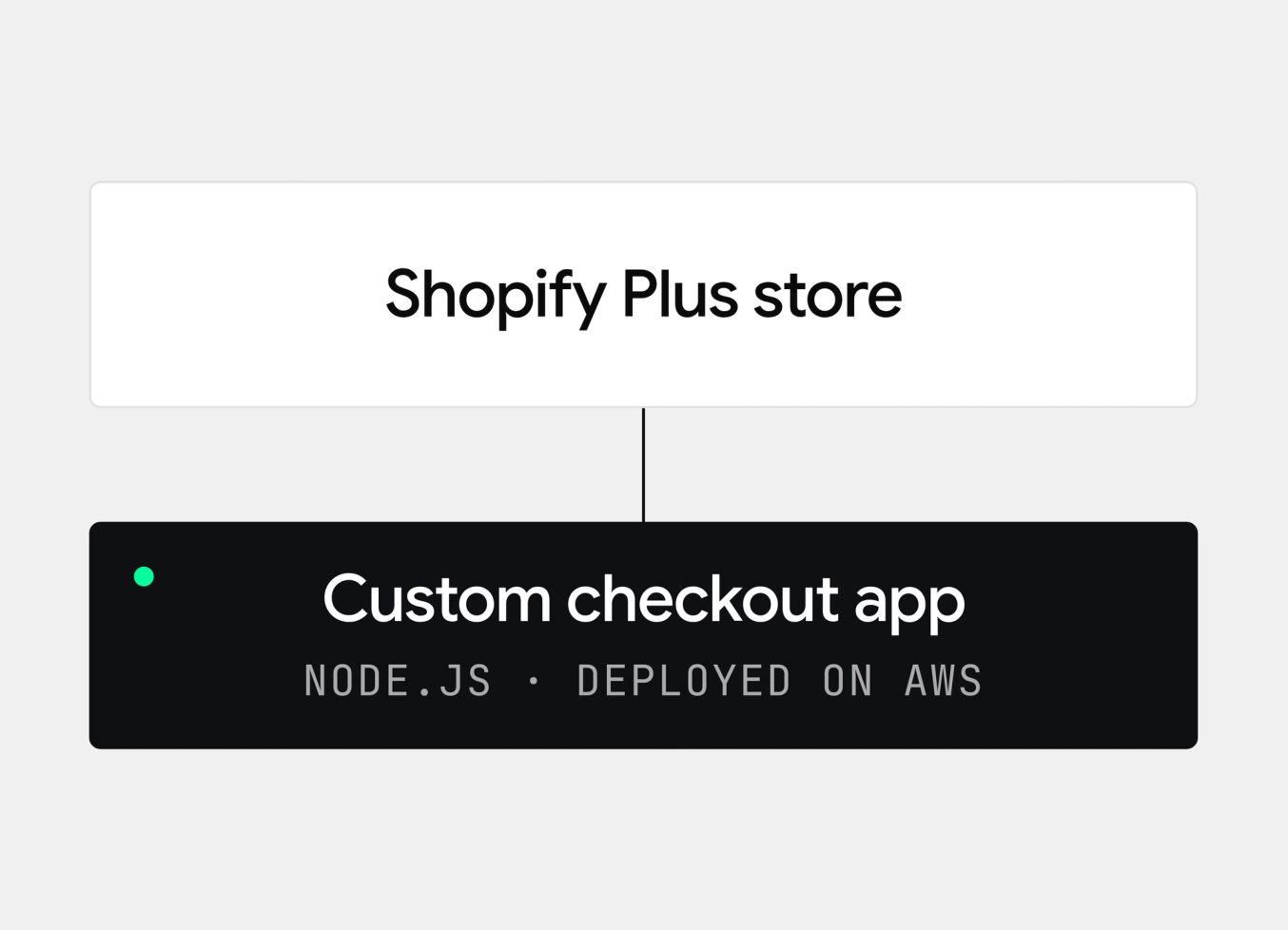
For Age of Innocence, we built a Node.js checkout app for one Shopify Plus storefront and deployed it on AWS. For LIMÉ, we built an app that links returns accepted at Aramex's warehouse to Shopify order updates and refund logic. These are different problems, but both required software shaped around an existing operation.
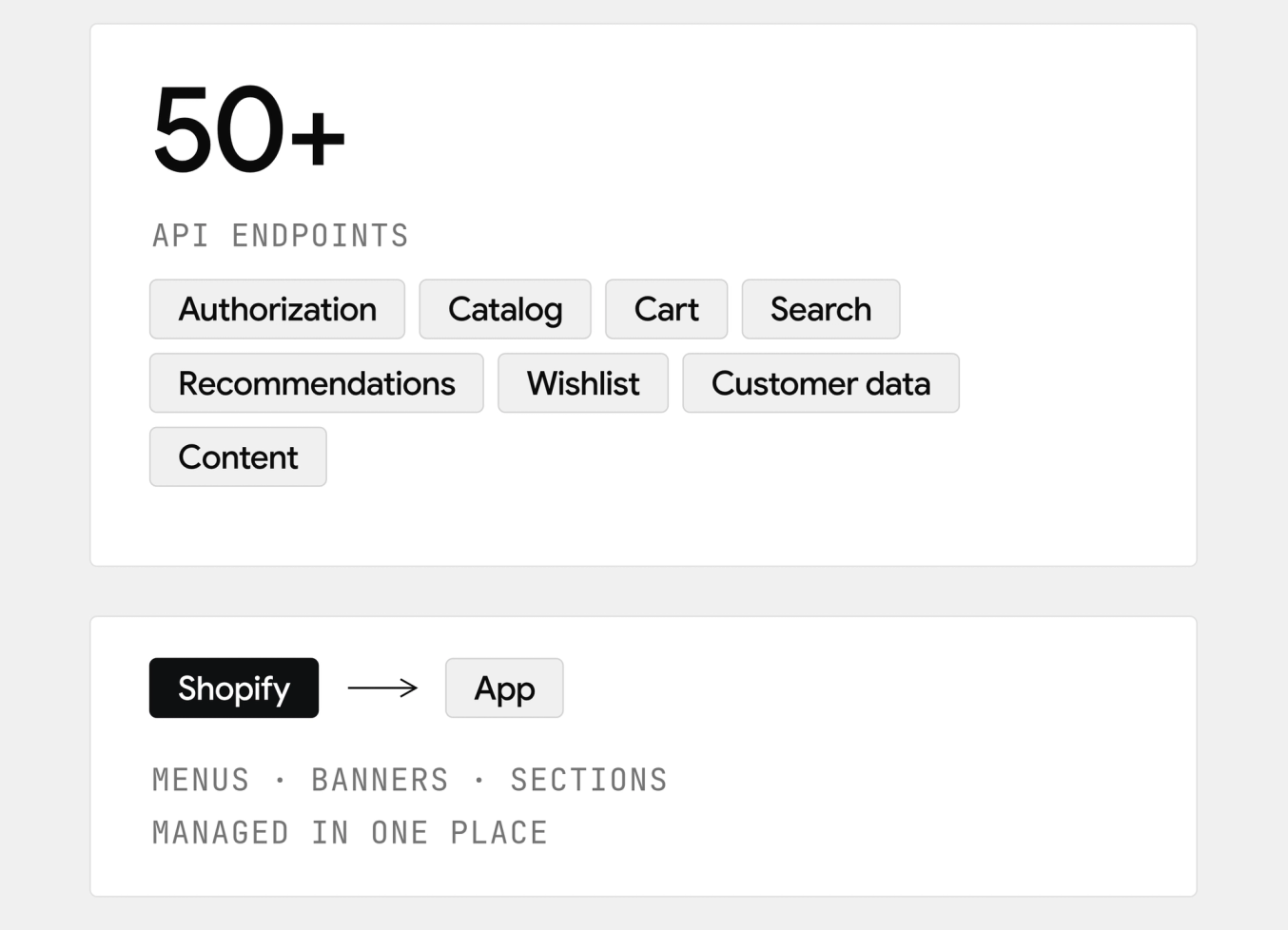
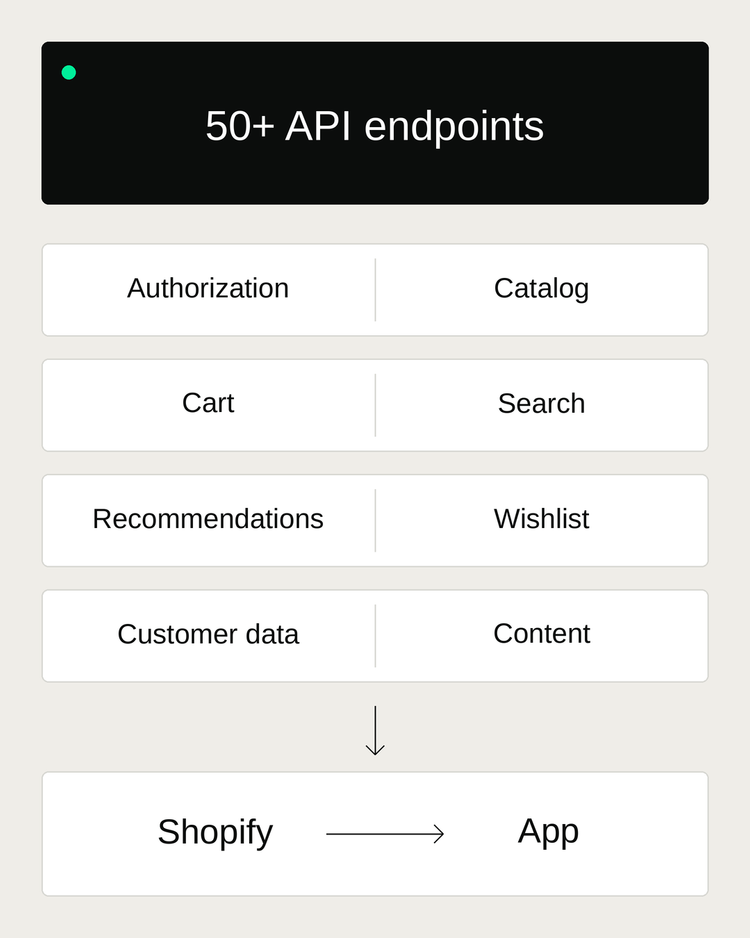
Some projects need a separate service rather than a screen inside Shopify. For LIMÉ's native mobile app, we built and continue to maintain a backend layer that supplies catalog, content, customer, cart and order data from Shopify. The right architecture depends on the channels, data and maintenance needs of the project.
We map the user action and the systems involved, identify the data and permissions required, and agree what the first release must do. Development and testing then focus on the real workflow, including what happens when data is missing or a connected service fails. After launch, ongoing maintenance can be scoped separately. Further reading: Shopify App Development: A Comprehensive Guide to Building Successful Apps.
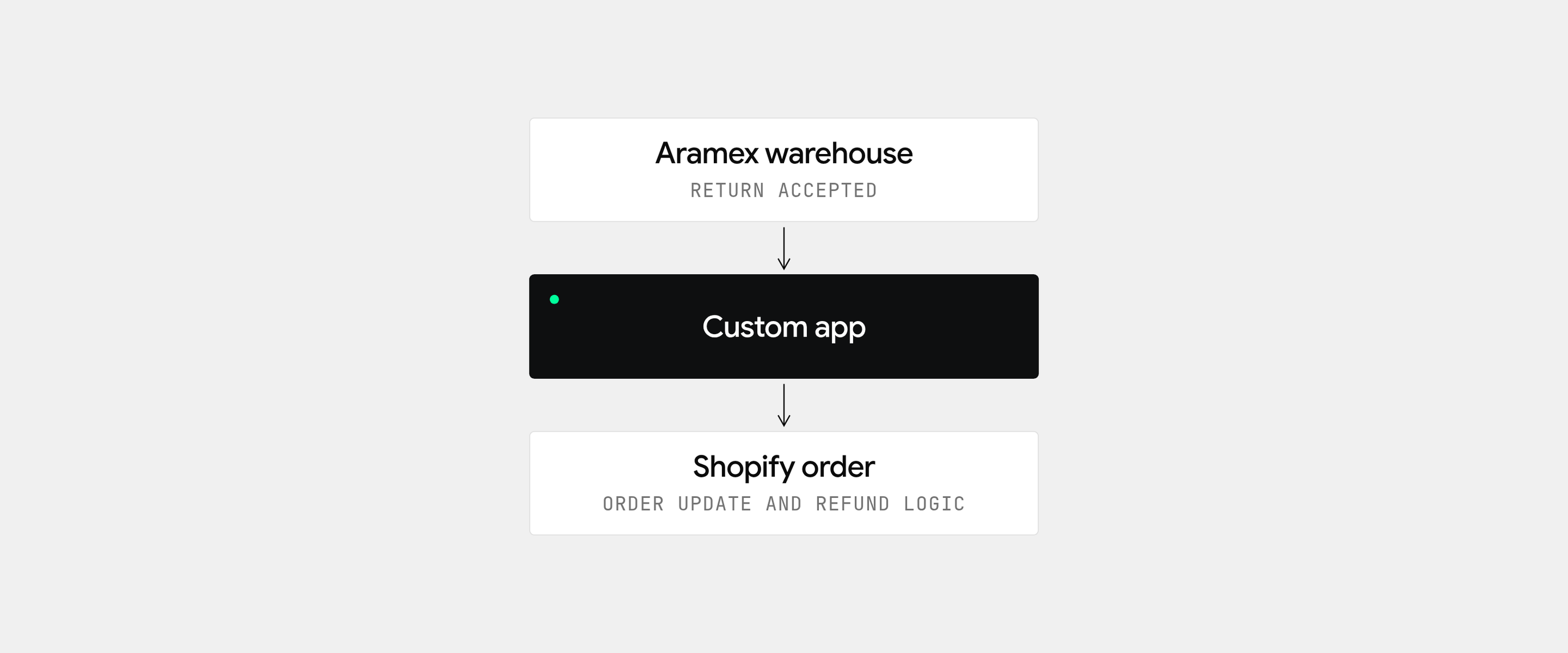
Returns accepted at the Aramex warehouse update the Shopify order and refund logic through a custom app.
Consider a custom app when a store-specific process cannot be met well by an existing product or a small configuration change. We review the workflow and existing options before recommending development. Shopify distinguishes public apps, which are distributed through the App Store, from custom apps built for one store. The older term “private app” is deprecated. Shopify source.
Yes, if the required data and permissions are available. LIMÉ's returns app linked warehouse events to Shopify orders and refund logic. The exact integration depends on the systems and safeguards involved.
We built a dedicated checkout app for one Age of Innocence Shopify Plus storefront. Checkout capabilities and approval requirements change, so the first step is to check what the current platform permits for your particular store. Case. Related reading: 10 Shopify App Ideas Worth Building in 2026.
Age of Innocence got a checkout app for one Shopify Plus storefront, and for Meierotto Jewelers we built a custom AWS app that syncs ERP exports to Shopify.

Best Shopify Apps for Beginners in 2026
We use necessary cookies to run the site. With your permission we also use analytics and marketing cookies to enhance your browsing experience. Review our Cookie Policy.
Your privacy choices
We use cookies to run the site, understand how it is used and measure our marketing. You can opt out of analytics and of the sale or sharing of your information at any time. We honour the Global Privacy Control signal. Review our Cookie Policy.
Cookies
We use cookies to run the site and to understand how it is used. You can change this in the settings. Review our Cookie Policy.
Cookie settings
Turning marketing off stops the sale and sharing of your information for advertising. A Global Privacy Control signal from your browser already does this.