Integrations
Connect your Shopify storefront with the services that support ordering, fulfillment, personalization and customer care.
Find the right connection between your Shopify store and the systems that run the business.
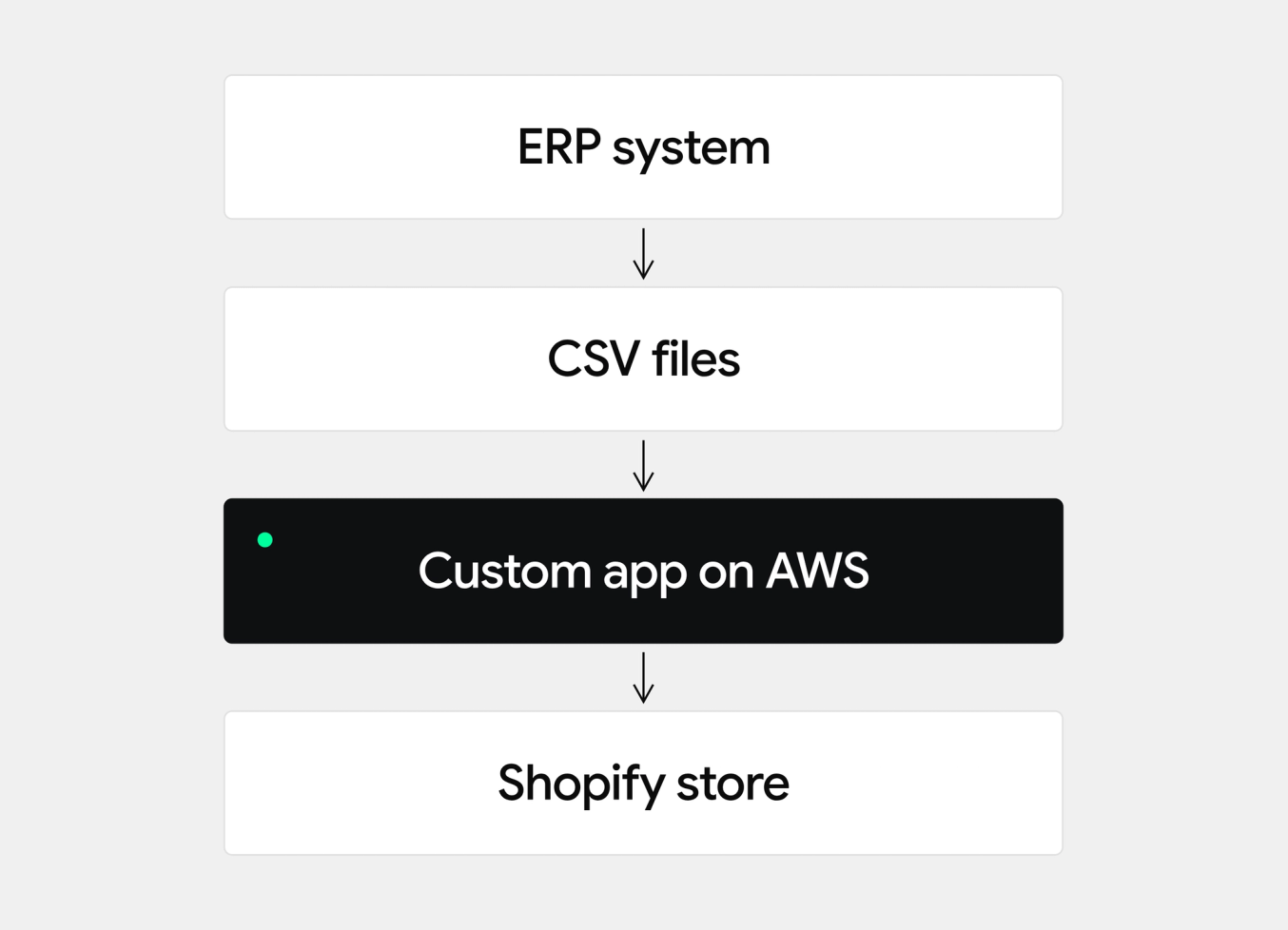
Learn MoreA store needs to know which system owns its product records. In the Meierotto Jewelers project, the ERP remained the source of product attributes. A custom application read CSV exports on AWS, matched records to Shopify products and updated the catalog through the Shopify Admin API. That work belongs with ERP Integrations. Winest's published 1C inventory sync points to the more specific 1C Integration path.
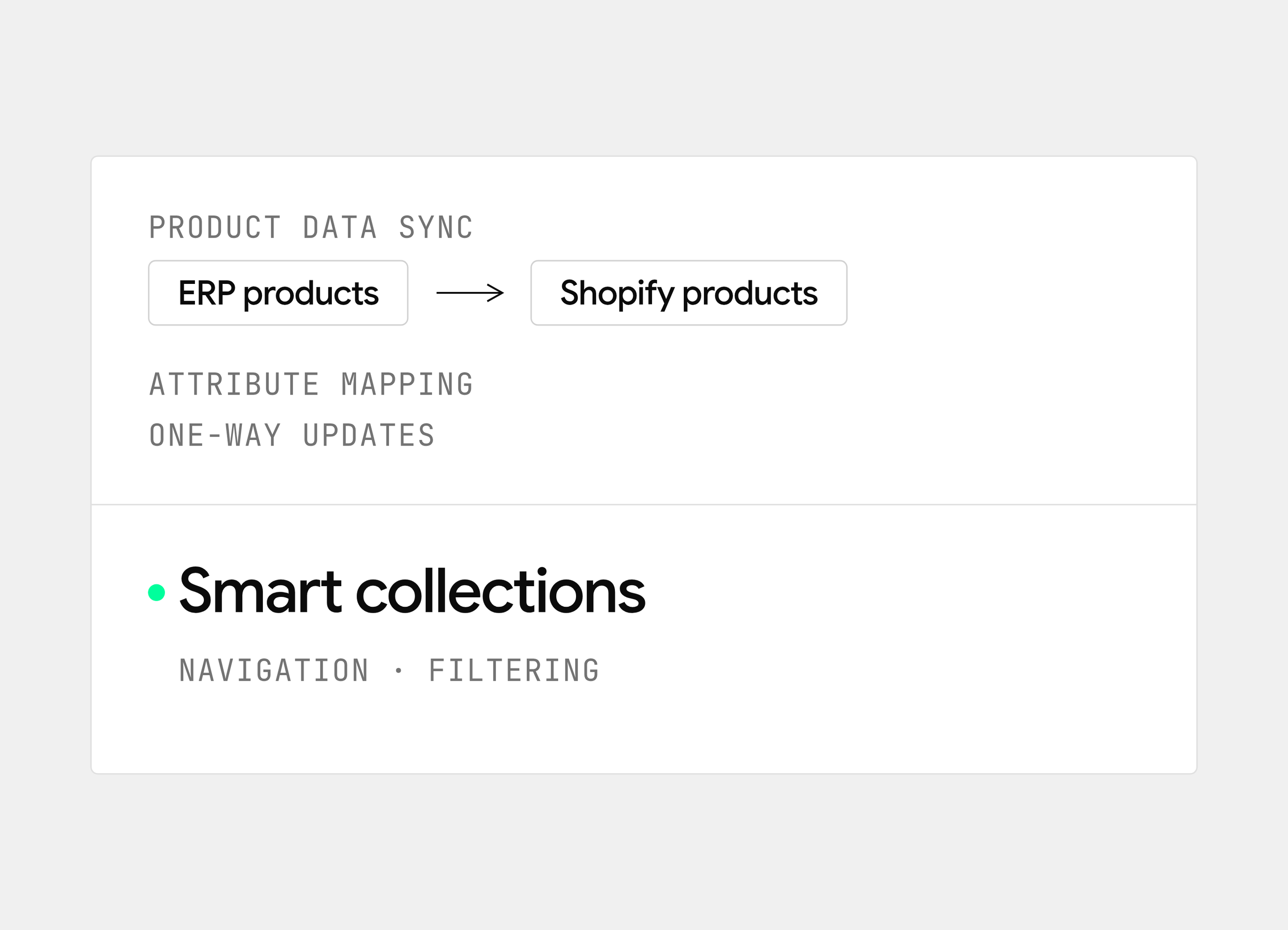
Product attributes move one way from ERP to Shopify.
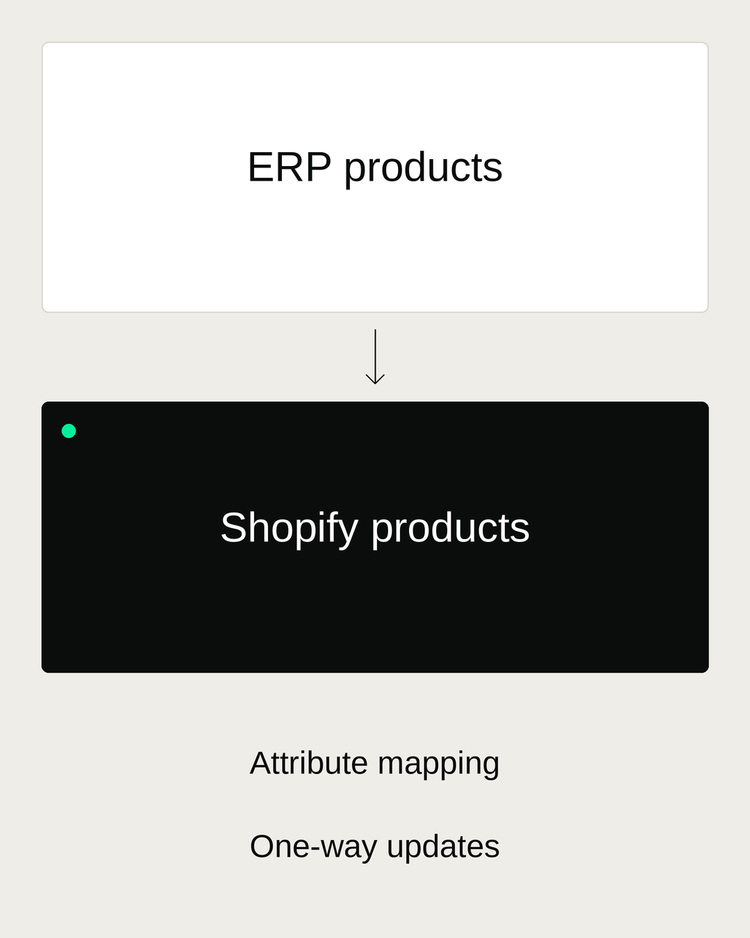
Product attributes move one way from ERP to Shopify.
Connect your Shopify storefront with the services that support ordering, fulfillment, personalization and customer care.
Keep the product information in your ERP connected to the catalog your customers see in Shopify.
Connect 1C inventory data with your Shopify store so product availability can be managed across the systems your team already uses.
For LIMÉ, ECORN connected the regional Shopify store with Aramex delivery and later built a returns app that linked warehouse accepted returns to Shopify order updates and refund logic. Bagworks New York used Customily for a product personalization journey. These examples show different needs, so each connection is scoped around its own systems, data and operational requirements.
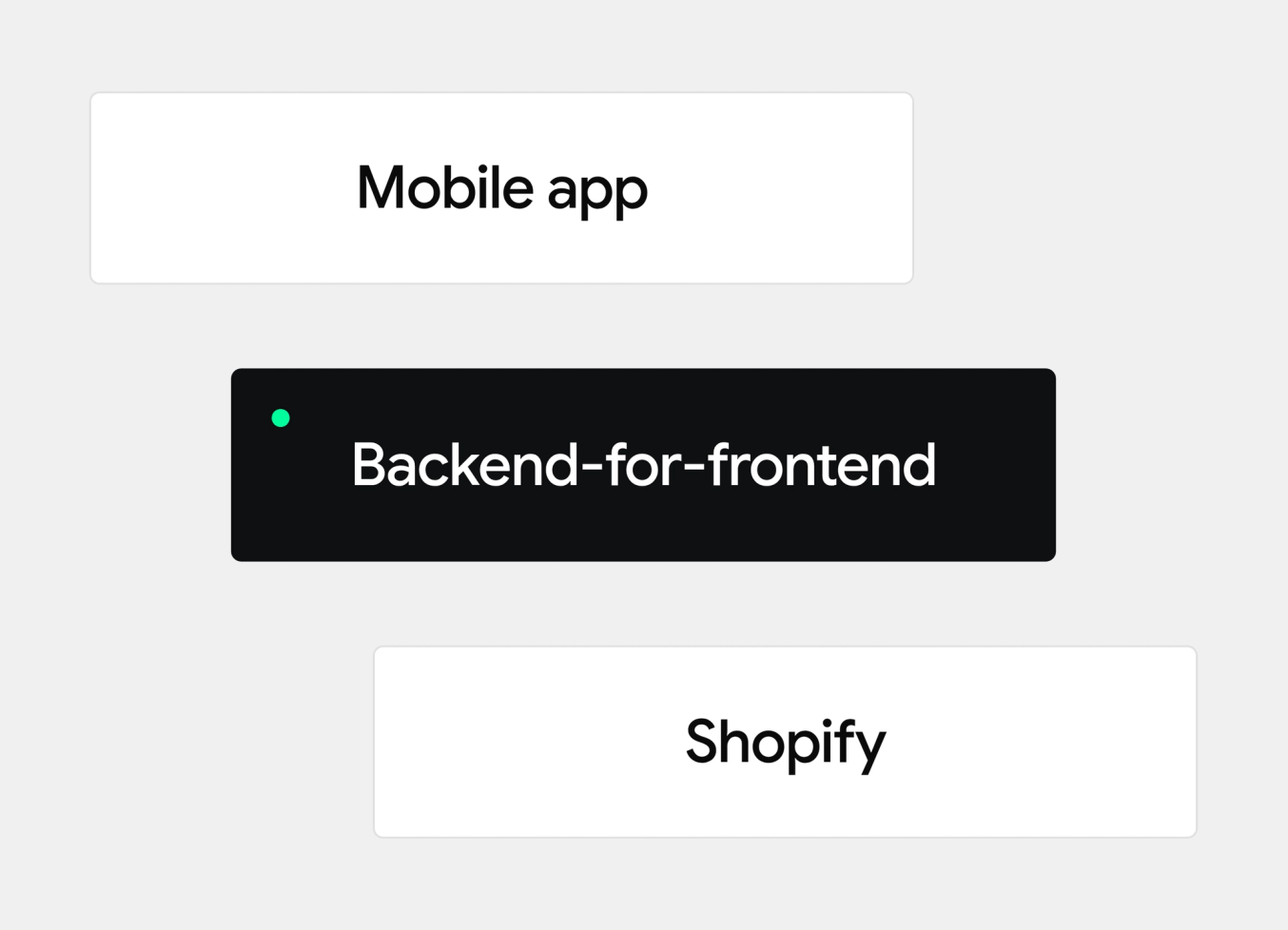
Payment configuration and a separate app backend need their own scope. LIMÉ's UAE launch included Stripe payments, while its later native app used a backend built and hosted by ECORN. Legal, tax and accounting advice stays with the business and its advisers; for the technical task, start with the payment or custom app service that matches it. Further reading: Shopify API Integration: A Practical End-to-End Guide.
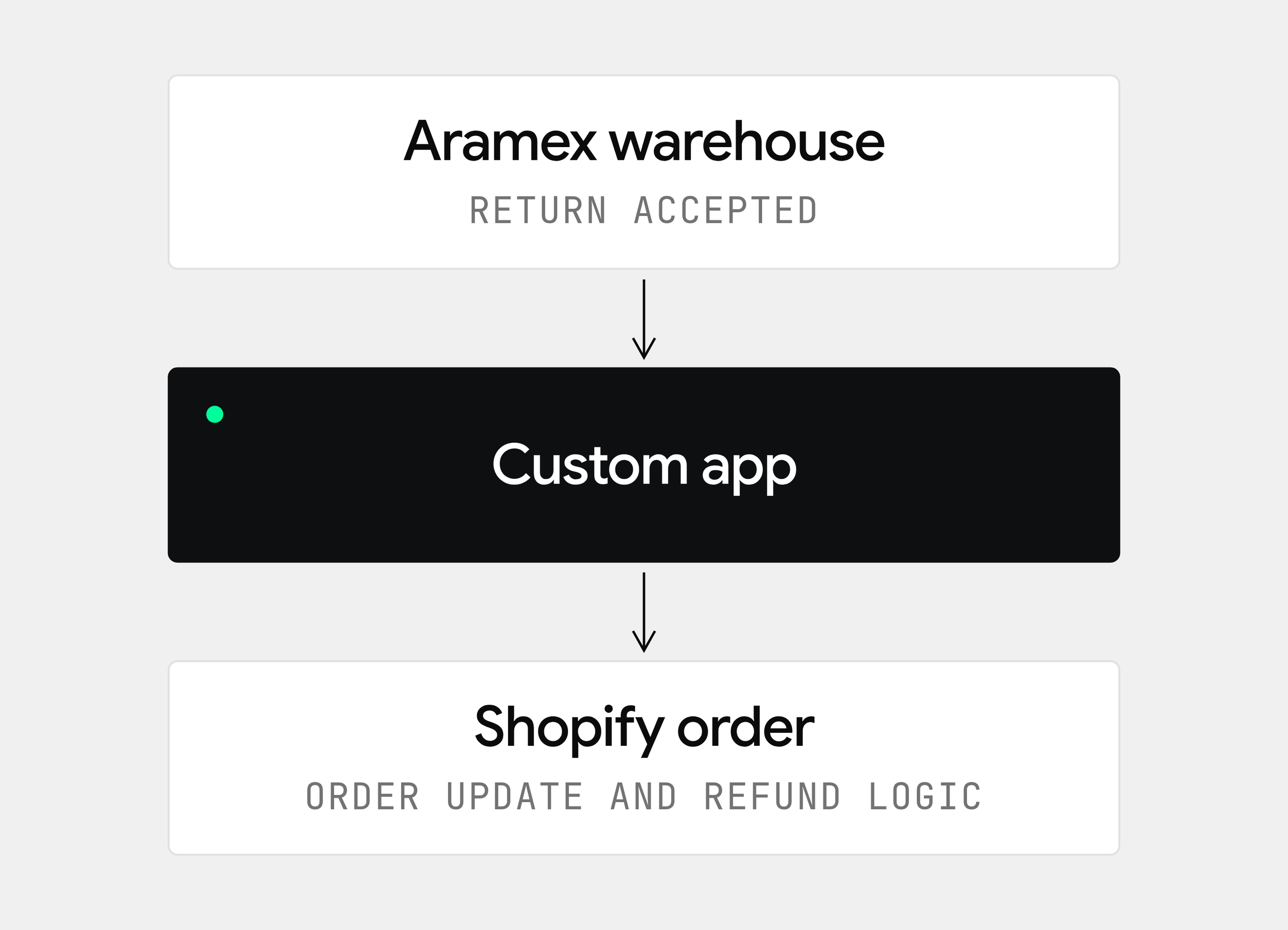
Returns accepted at the Aramex warehouse update the Shopify order and refund logic through a custom app.
Yes. Meierotto Jewelers uses a custom application that reads ERP CSV exports on AWS, matches products and updates Shopify attributes through the Admin API.
In LIMÉ's case, ECORN built a custom app linking returns accepted at Aramex's warehouse to Shopify order updates and refund logic.
LIMÉ's native app needed Shopify data and customer functions through one API layer. ECORN built that layer, working alongside a separate mobile development team. Related reading: Shopify Plus Integration Services Guide.
Meierotto Jewelers shows ERP exports synced to Shopify through a custom AWS app, and LIMÉ a returns app and a backend for a mobile app.
We use necessary cookies to run the site. With your permission we also use analytics and marketing cookies to enhance your browsing experience. Review our Cookie Policy.
Your privacy choices
We use cookies to run the site, understand how it is used and measure our marketing. You can opt out of analytics and of the sale or sharing of your information at any time. We honour the Global Privacy Control signal. Review our Cookie Policy.
Cookies
We use cookies to run the site and to understand how it is used. You can change this in the settings. Review our Cookie Policy.
Cookie settings
Turning marketing off stops the sale and sharing of your information for advertising. A Global Privacy Control signal from your browser already does this.