Shopify Development
Build and extend a Shopify store around the journeys, catalog and operations your business needs.
Decide whether a separate customer interface and commerce backend solve a real problem for your business.
Learn MoreHeadless commerce separates a customer interface from the commerce system that supplies product, cart and order functions. That separation can create more freedom for a particular channel, but it also introduces another application to build and maintain. The decision should follow a specific customer journey, content need or operational constraint. A conventional Shopify theme may still be the right choice for a store whose requirements fit it.
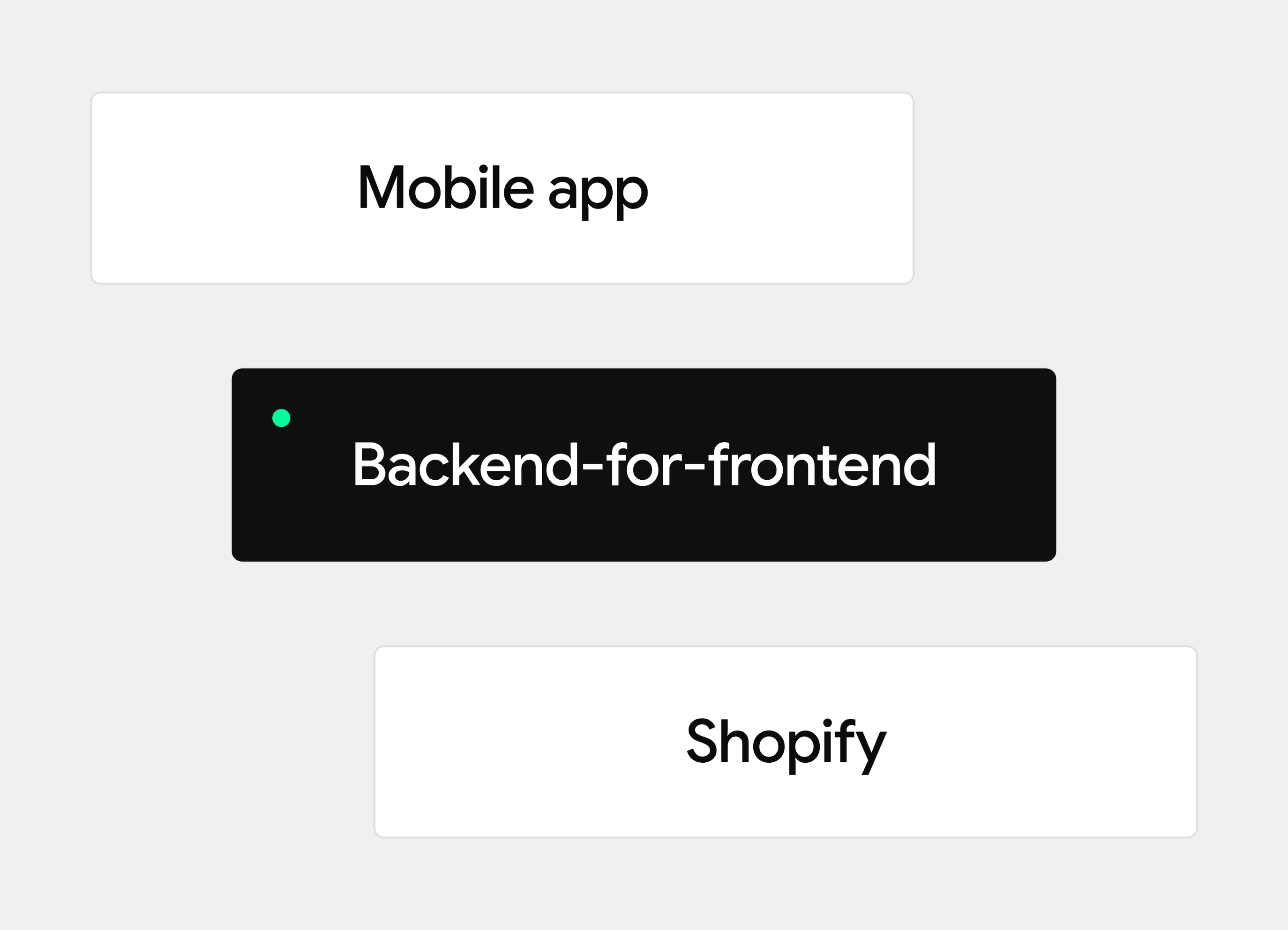
LIMÉ's app uses a backend between the app and Shopify.
Build and extend a Shopify store around the journeys, catalog and operations your business needs.
A store-specific workflow does not always fit an existing app. We build custom Shopify applications and connected services around the processes your team and customers actually use.
Choose the development path that fits your storefront, custom function or separate customer channel.
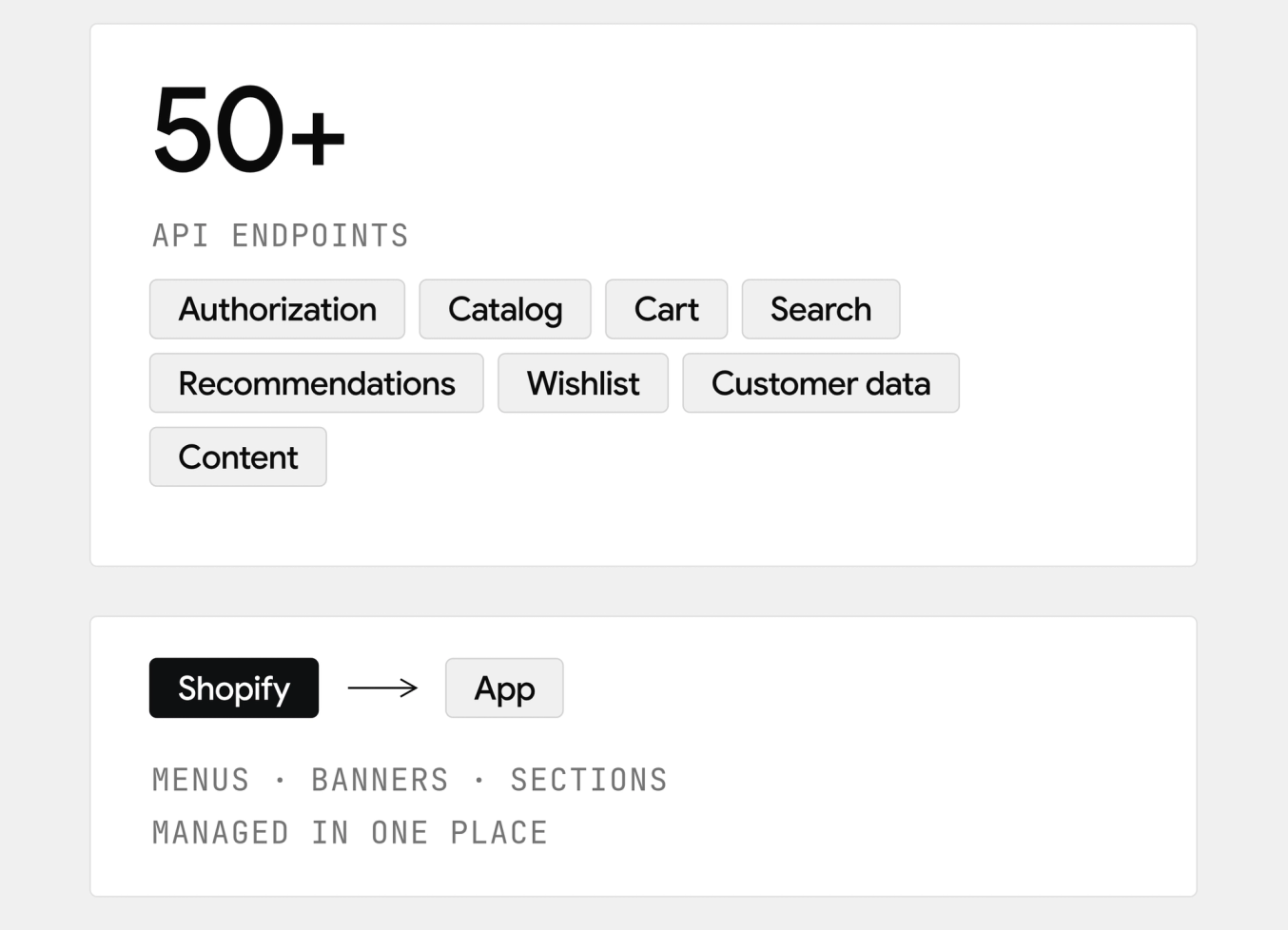
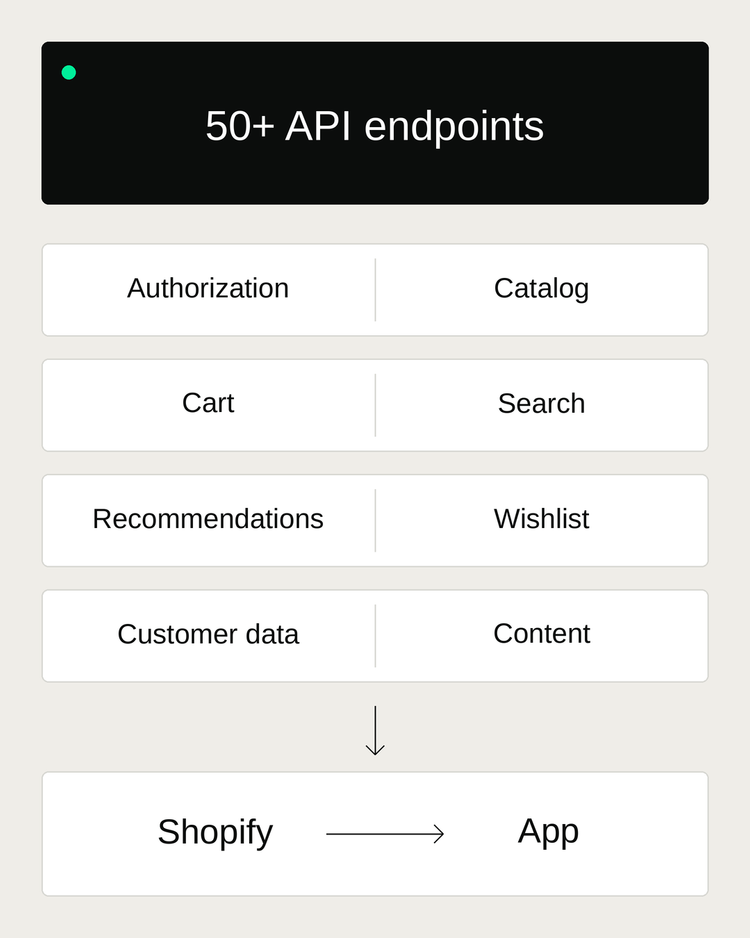
LIMÉ's native app needed Shopify catalog and content data without forcing merchandisers to work in another admin. ECORN built and hosts a backend-for-frontend between Shopify and the app. It supplies catalog, menus, customer login, cart, search, wishlist and orders. This is work on a separate app channel and API layer. LIMÉ’s web storefront itself is a Shopify theme; the backend serves the native app.
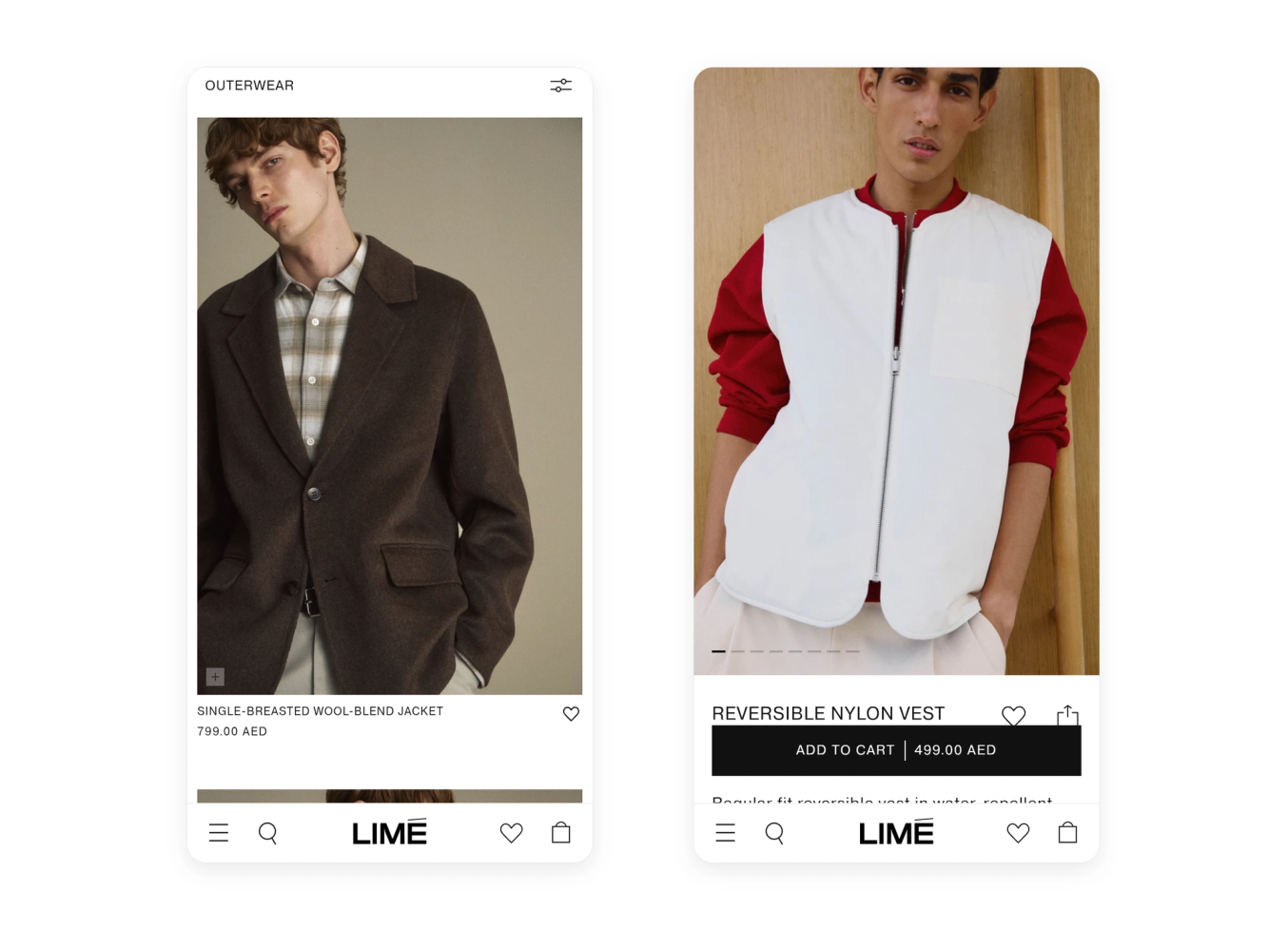
A headless plan should identify who owns the interface, content model, API layer, checkout path, hosting and release process. The team also needs to decide how changes made in Shopify reach the customer experience. The LIMÉ app backend is maintained as Shopify APIs and mobile requirements change; a new headless web build would need its own design and maintenance plan. Further reading: Hydrogen: Shopify Headless Framework.

LIME homepage banner on desktop.
No. ECORN adapted LIMÉ's existing design into a Shopify theme for the web store. The separate backend built later serves the native app, not a headless web storefront.
ECORN built and hosts a backend-for-frontend between Shopify and the app, covering catalog and content data plus customer functions. The case credits a separate mobile development team for the app channel.
No. A separate interface adds a build and maintenance layer. Its value should be assessed against a concrete requirement that an existing theme cannot meet. Related reading: Headless eCommerce Development Services Explained.
LIMÉ is an example of a separate backend between a native mobile app and Shopify, serving catalog and content, not of a headless web storefront.
We use necessary cookies to run the site. With your permission we also use analytics and marketing cookies to enhance your browsing experience. Review our Cookie Policy.
Your privacy choices
We use cookies to run the site, understand how it is used and measure our marketing. You can opt out of analytics and of the sale or sharing of your information at any time. We honour the Global Privacy Control signal. Review our Cookie Policy.
Cookies
We use cookies to run the site and to understand how it is used. You can change this in the settings. Review our Cookie Policy.
Cookie settings
Turning marketing off stops the sale and sharing of your information for advertising. A Global Privacy Control signal from your browser already does this.