

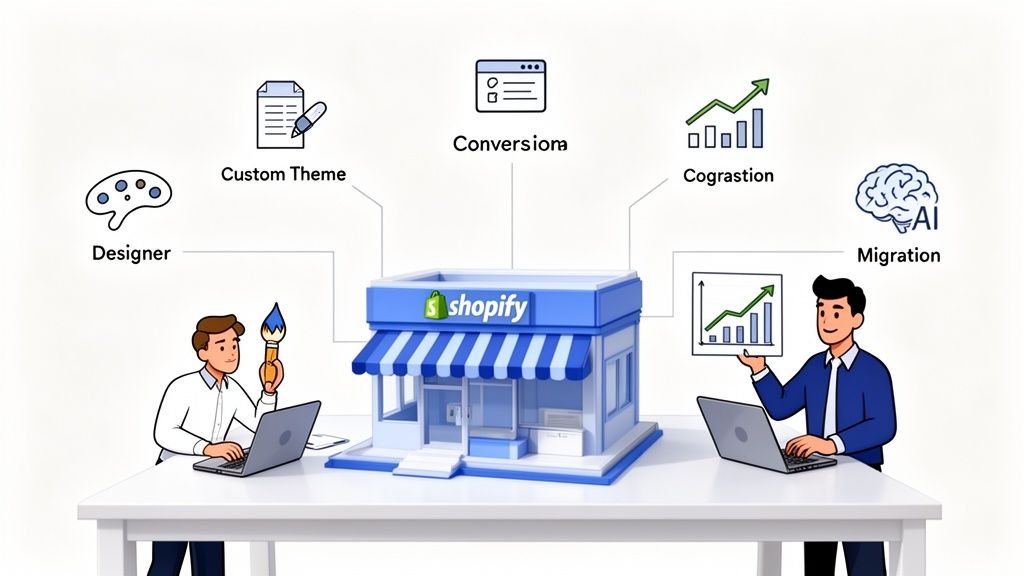
Think of a Shopify development agency as a specialized crew of experts who live and breathe high-performance eCommerce. They don’t just build websites; they design, build, and relentlessly optimize online stores. They’re the strategic partners you bring in to scale your revenue and create a powerful brand experience that a basic theme could never deliver on its own.
Why Smart Brands Hire a Shopify Development Agency
Sooner or later, every growing business hits a crossroads: stick with the DIY approach or bring in the pros? A standard Shopify theme is like a top-of-the-line home renovation kit from a big-box store. It’s functional, it gets the job done, and it can look pretty sharp. But as your brand grows, you'll start to feel the constraints of that pre-packaged solution.
A professional Shopify development agency, on the other hand, is your architect, general contractor, and interior designer rolled into one. They aren't just snapping together pre-made parts; they’re engineering a custom, high-performance machine built for one thing—growth. They craft a shopping experience that’s lightning-fast, dead simple to use, and unmistakably yours.
The Tipping Points for Seeking Expert Help
Most successful brands don't launch day one with an agency. They make the call when they run into specific growing pains that off-the-shelf solutions just can't fix. These pain points are the tell-tale signs that it’s time to invest in a team of experts.
Here are the most common triggers we see:
- A Slow, Clunky Site: Every single second counts. A one-second delay in page load time can tank your conversions by up to 7%. When your theme or a pile of conflicting apps starts dragging you down, an agency can parachute in and fine-tune your code for maximum speed.
- Fear of Traffic Spikes: Can your store actually handle a Black Friday rush or the flood of traffic from a viral TikTok? Agencies build rock-solid, scalable sites that won’t crash and burn during your most important sales events.
- A "Me-Too" User Experience: When your store looks just like ten others in your niche, you're not building a brand; you're just another commodity. An agency crafts a custom design and user experience (UX) that makes your brand memorable and a genuine pleasure to shop from.
- Integration Headaches: Need to sync your store with an ERP, a custom CRM, or a third-party logistics (3PL) provider? Agencies are the pros who handle these complex, mission-critical integrations so your entire operation runs like a well-oiled machine.
Partnering with a Shopify development agency is more than just a technical upgrade. It's a strategic move to build a scalable, revenue-generating machine that leaves your competitors wrestling with their generic, pre-built templates.
At the end of the day, hiring an agency is about shifting your focus from putting out fires to sparking new opportunities. It frees you and your team up to do what you do best—marketing, product development, and customer service—while the experts handle the heavy technical lifting. It's this kind of collaboration that turns your online store from a simple sales channel into a powerful engine for long-term growth.
What Does a Top-Tier Shopify Agency Actually Do?
Bringing a high-caliber Shopify development agency on board means you’re getting more than just a coder; you’re hiring a team of specialists who live and breathe ecommerce. Think of them as the architects and engineers of your digital flagship store. Their entire focus is on building a seamless, high-performance shopping experience that doesn't just look good but turns visitors into loyal customers and scales right alongside your brand.
This kind of expertise is more crucial than ever. The Shopify Partner ecosystem has absolutely ballooned, now home to over 100,000 agencies and freelancers. With somewhere between 4.5 to 4.6 million active stores on the platform globally, the competition is fierce, and the demand for custom work—like headless commerce builds and migrations to Shopify Plus—is through the roof. For more on this massive expansion, you can learn about the Shopify partner landscape.
Most brands don't start with an agency. The journey usually begins with a DIY store, hits a wall of "growth pains," and then leads to the realization that professional help is needed to break through to the next level.
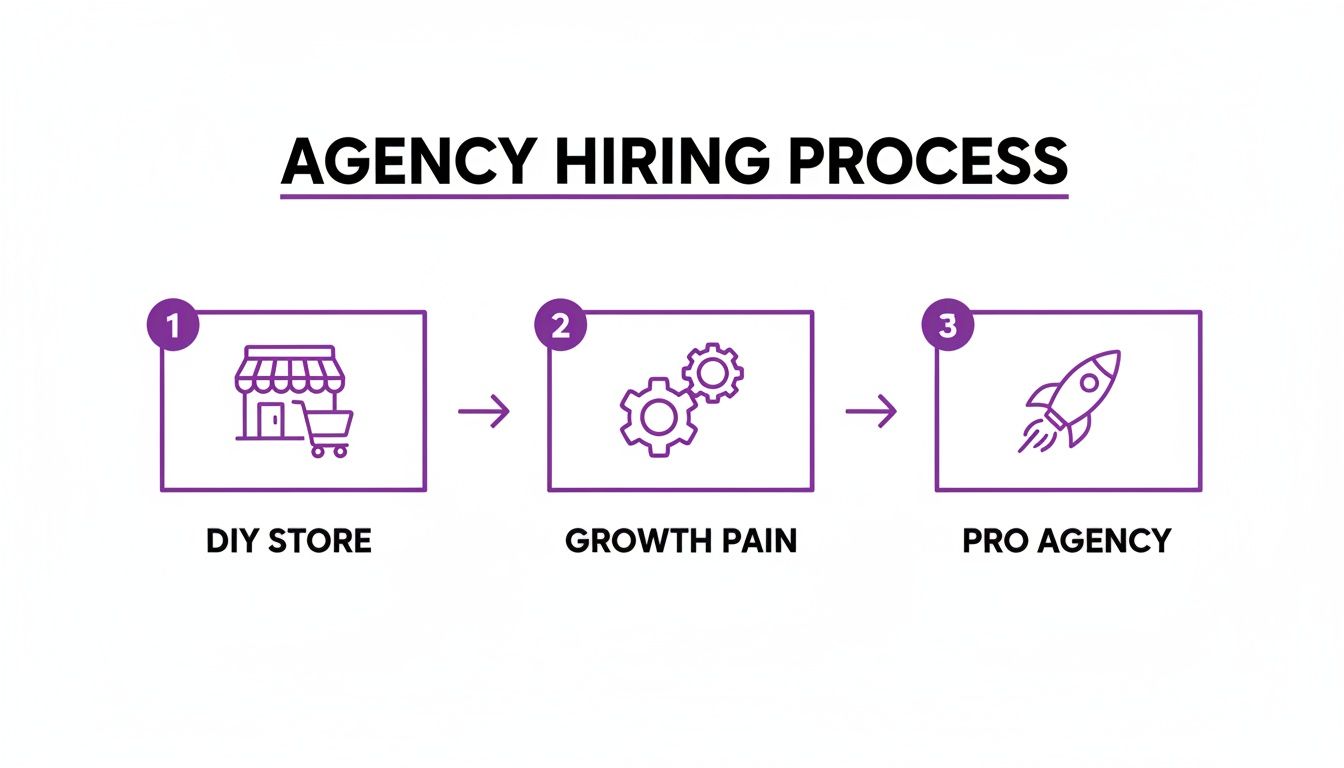
This is a natural evolution. You outgrow your initial setup, and technical limitations start holding you back. That's the signal that it's time to bring in the pros.
Let’s get into the specifics of what these agencies offer. They typically bundle their skills into a few core service areas, each designed to solve a different set of business challenges and drive real growth.
Core Agency Services and Their Business Impact
Here's a breakdown of the key services you'll find at a quality Shopify agency and, more importantly, what each one actually means for your bottom line.
Each of these services is a specialty in its own right, requiring a distinct set of skills and a deep understanding of the Shopify platform. Let's dig a little deeper into what each one entails.
Custom Theme Development and Design
A top-tier agency doesn’t just help you pick a theme from the store—they build a digital storefront from the ground up that’s a perfect reflection of your brand. Custom theme development is about creating an environment that’s not just visually stunning but also razor-sharp in its focus on your specific customer journey.
This goes way beyond aesthetics. It’s about crafting a user interface (UI) and user experience (UX) that feels so intuitive, it's almost invisible. The goal is to guide customers from discovery to checkout without a single moment of friction, creating a fast and memorable experience that feels like a true extension of your brand.
Shopify Plus Development for Enterprise Brands
Once your brand starts hitting serious volume, the standard Shopify plans might start to feel restrictive. This is where Shopify Plus comes in, offering a suite of powerful, enterprise-level tools. A skilled agency is your key to unlocking this potential, helping you manage complexity and scale your operations without limits.
An agency specializing in Shopify Plus can implement game-changing features, including:
- Shopify Scripts: This allows for incredibly deep customization of the checkout, enabling unique promotions, shipping rules, and payment options that are impossible on standard plans.
- Multi-Storefront Architecture: Essential for global brands, this lets you manage multiple regional stores from a single backend, making international expansion a much smoother process.
- Exclusive API Access: Agencies use these APIs to build rock-solid integrations with your critical business systems, like Enterprise Resource Planning (ERP) or Warehouse Management Systems (WMS).
A proper Shopify Plus implementation isn't just an upgrade; it’s a strategic overhaul. It streamlines your operations, elevates the customer experience, and unlocks entirely new revenue streams for large-scale businesses.
Conversion Rate Optimization (CRO)
This might just be the most valuable service an agency can offer. Conversion Rate Optimization (CRO) is the art and science of turning more of your website visitors into paying customers. It's not a one-and-done task but a continuous cycle of testing and refinement.
A great Shopify agency approaches CRO with a data-first mindset. They use tools like A/B testing software, heatmaps, and user analytics to pinpoint exactly where customers are dropping off. From there, they methodically test hypotheses—tweaking button colors, rewriting headlines, or redesigning product pages—to discover the precise combination of elements that maximizes your conversion rate.
Platform Migration Without the Headaches
Moving your entire store from a platform like Magento, BigCommerce, or WooCommerce is a high-stakes move. One wrong step can lead to lost sales, corrupted customer data, and a catastrophic drop in your SEO rankings.
An experienced agency handles this with the precision of a surgeon. They manage the entire migration from start to finish, ensuring zero downtime and complete data integrity. This involves meticulously transferring all your products, customer information, and order history while setting up 301 redirects to preserve the search engine authority you’ve worked so hard to build. The result is a seamless transition that positions you for massive growth on a more robust platform.
Finding Your Fit: Subscription vs. Project Models
Picking the right Shopify agency is only half the battle. How you work with them is just as critical. The two classic engagement models—project-based and subscription—are built for completely different needs and growth stages. Getting this choice wrong can lead to blown budgets, misaligned expectations, and a whole lot of missed opportunities.
Think of it like this: a project-based plan is like hiring a contractor for a massive home renovation. It’s perfect for that one big job with a clear beginning and end, like building a new site from the ground up or finally moving off a clunky old platform.
A subscription model, on the other hand, is like having a dedicated property manager on speed dial. It’s all about continuous improvement, ongoing upkeep, and proactive moves that keep your store running smoothly and ahead of the competition.
The Project-Based Model: A Focused Sprint
The traditional project-based model is super straightforward. You define a specific scope of work, lock in a fixed price, and set a hard deadline. This is the go-to choice for businesses with a well-defined, one-and-done task.
The beauty of this model is its predictability. You get clear deliverables and know exactly what you’re spending, which is a big relief when you’re managing a tight budget for a specific initiative. Once the project is wrapped up, the engagement ends. Simple as that.
Common scenarios where a project-based approach makes sense include:
- A complete website build or redesign from scratch.
- Migrating your store from a platform like Magento or WooCommerce over to Shopify.
- Developing a single, complex feature, like a custom product builder.
The main advantage here is clarity. You know exactly what you're getting and how much it’ll cost, with custom development for these projects often falling anywhere from $5,000 to over $20,000, depending on how complex things get. The downside? It’s a one-off. It doesn’t account for the constant tweaking and optimization that separates the good ecommerce stores from the great ones.
The Subscription Model: A Growth Partnership
For ambitious brands that are all about continuous growth, a subscription model feels less like a transaction and more like a strategic partnership. Instead of tackling isolated tasks, you get a dedicated team of experts obsessed with improving your store, month after month. The agency effectively becomes an extension of your own team.
A subscription isn’t just about putting out fires; it’s a commitment to iterative growth. It aligns your agency’s success with your own, creating a powerful engine for conversion rate optimization, new features, and smart, strategic advice.
This model is all about flexibility. It lets you pivot based on real data and what's happening in the market. One month, the focus might be on A/B testing your checkout flow to reduce cart abandonment. The next, it could be all about boosting site speed or plugging in a new marketing automation tool.
Key benefits of a subscription include:
- Continuous Optimization: Your store never goes stale. The agency is always in the trenches, working to improve performance, boost conversions, and fine-tune the user experience.
- Proactive Strategy: The best agencies don't just wait for instructions. They bring you new ideas and help you jump on growth opportunities you might not have seen yourself.
- Predictable Budgeting: You get a fixed monthly cost that covers a whole range of expert services, which makes financial planning a heck of a lot easier.
This model is the perfect fit for established brands that get it—an online store isn't a static brochure. It's a living, breathing sales channel that needs constant attention to thrive. It shifts the dynamic from a simple client-vendor relationship to a true, long-term growth partnership.
How to Vet and Choose the Right Agency Partner
Picking a Shopify development agency is a huge business decision, not just a technical one. The right partner becomes an engine for your growth. The wrong one? A source of costly delays and squandered opportunities. Making the right call means you have to look past the slick sales presentations and really dig into what makes an agency great.
Think of it like hiring a C-suite executive. You wouldn't just glance at their resume and say, "You're hired!" You'd conduct deep interviews, check references, and make sure they’re a cultural fit. The same level of diligence applies here. A structured vetting process can turn a potentially overwhelming choice into a clear-headed, strategic investment in your brand’s future.
Analyze Portfolios for Proven ROI
Every agency will show you a portfolio packed with beautiful websites. Your job is to look past the pretty pictures and hunt for hard evidence of business results. A slick design is just the price of entry; a high-performing store that actually solves business problems is what really moves the needle.
When you're reviewing their past work, ask sharp, specific questions that cut to the heart of their impact:
- What specific business problem did this project solve? Were they brought in to fix a sky-high cart abandonment rate, sluggish site speed, or a confusing checkout flow?
- What were the key performance indicators (KPIs) for success? Look for real numbers, like an increase in conversion rate, a higher average order value (AOV), or better customer lifetime value (LTV).
- Can you show me a case study with real data? Vague claims are a major red flag. The best agencies are proud to show off the measurable ROI they've delivered for clients like you.
A strong portfolio isn't a gallery of screenshots. It's a collection of success stories, each backed by data that proves the agency's ability to drive meaningful growth and solve complex eCommerce challenges.
This mindset helps you quickly separate the agencies that are just design shops from the ones that are true growth partners. You need a team that understands the "why" behind their work, not just the "how."
Evaluate Their Technical Expertise and Tech Stack
Your store’s technical foundation is what determines its speed, scalability, and flexibility down the road. This is where an agency’s deep technical knowledge is absolutely non-negotiable. You need a partner who not only knows Shopify inside and out but is also an expert in the modern tech that powers elite eCommerce experiences.
A critical area to probe is their fluency with APIs and headless commerce. These aren't just buzzwords; they’re the future of building lightning-fast, flexible, and deeply customized shopping experiences. An agency that gets this can build a store that isn’t boxed in by a traditional theme, giving you total control over your digital brand.
On top of that, any serious Shopify development agency should have a rock-solid process for ensuring code quality, performance, and security. Ask them about their development workflows, how they handle testing, and their approach to version control. This is how you ensure your site is built on a solid foundation that can grow with your business, not hold it back.
Assess Their Process and Communication Style
The most brilliant developers in the world are useless to you if they don't have a clear process and transparent communication. A great partnership is built on a structured workflow that keeps you in the loop, involved, and confident every step of the way. Before you sign anything, get a crystal-clear picture of how they work.
Ask them about their project management style. Do they use agile sprints? How do they gather and implement feedback? Who will be your main point of contact? A well-run agency will have ready answers for these questions and can walk you through their entire process, from discovery to launch and ongoing support. Getting this clarity upfront prevents nasty surprises and keeps the project on track and on budget. For a deeper look, our guide on how to hire a Shopify expert offers a detailed checklist to help frame these crucial conversations.
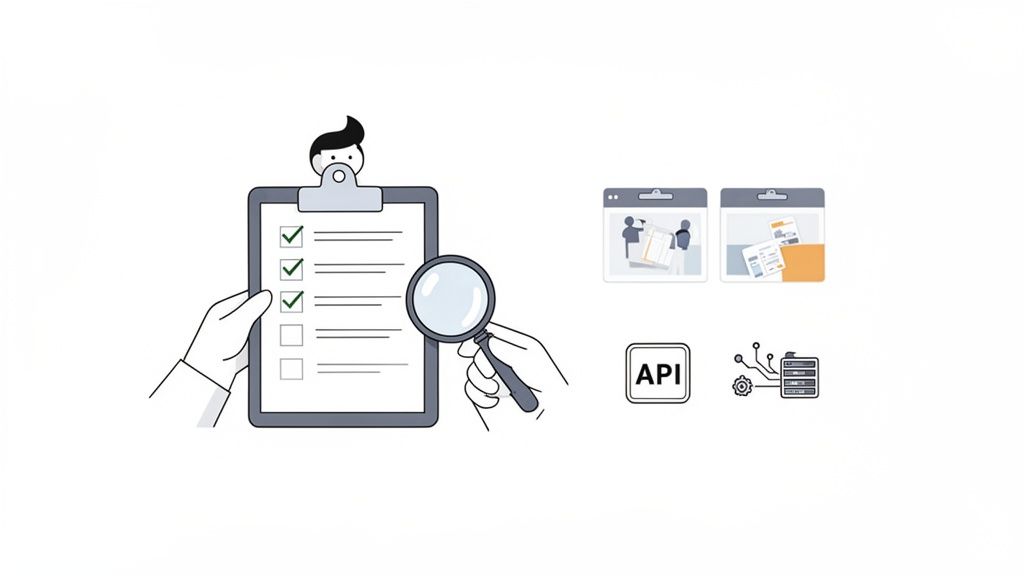
To help you stay organized, we've put together a simple checklist to guide you through the vetting process. Use this to compare agencies side-by-side and make a decision you can be confident in.
Agency Vetting Checklist
This checklist isn't just about ticking boxes; it's about finding a partner who is as invested in your success as you are. The right agency will feel like an extension of your own team.
Define and Align on Performance Metrics
Finally, success has to be measurable. From the very first conversation, you and your potential agency should be completely aligned on what a "win" looks like and how you'll track it. This creates a shared vision and holds everyone accountable for the project's results.
Before any work kicks off, sit down together and define the KPIs that matter most to your business. This might include:
- Conversion Rate
- Average Order Value (AOV)
- Customer Acquisition Cost (CAC)
- Site Speed and Core Web Vitals
By setting these benchmarks upfront, you create a clear framework for measuring progress and making data-driven decisions throughout the partnership. It ensures every design choice and line of code has a purpose: improving your bottom line.
Scaling Your Store From Growth To Enterprise
For any ambitious brand, that first taste of real growth is exhilarating. But it's also just the starting line. The real test is what comes next: scaling up your operations, tech, and customer experience without everything coming crashing down.
This is the point where a Shopify development agency stops being just a "builder" and becomes a genuine strategic partner. They're the ones in the trenches with you, guiding your brand's evolution from a promising store to an enterprise-level powerhouse.
The first big leap on this journey is usually the migration to Shopify Plus. Think of it less like an upgrade and more like a total operational overhaul. A good agency makes this transition feel effortless, unlocking a suite of enterprise tools that can automate ridiculously complex workflows, let you completely customize the checkout, and handle massive traffic spikes without even blinking.
Expanding Your Reach And Capabilities
As your brand grows, your tech needs get a lot more complicated. A top-tier agency's job is to architect a tech stack that actually fuels your vision, not one that holds it back. This means graduating from standard themes and apps to something far more sophisticated.
Two key areas where an agency really shines are:
- International Expansion: Going global is so much more than just adding international shipping rates. An agency can set up a multi-storefront architecture, letting you create completely localized shopping experiences for different regions—unique languages, currencies, and even product catalogs, all managed from one central dashboard.
- Headless Commerce: For brands that need absolute creative control and blazing-fast performance, a headless setup is the answer. This approach separates your front-end "storefront" from the back-end commerce engine, giving your team total freedom to build custom, content-rich experiences that a standard theme could never touch.
An agency helps you figure out if these advanced moves are right for you, weighing the benefits of total flexibility against the added complexity and cost.
Upgrading to Shopify Plus and exploring headless commerce aren't just expenses; they're strategic investments in the future of your business. They lay the scalable foundation you absolutely need to compete at the enterprise level, ensuring your technology can keep up with your ambition.
Integrating For Operational Excellence
You only achieve true scale when your entire business ecosystem is humming along in perfect harmony. A seasoned agency is a master of integration, connecting your Shopify store with the critical back-office systems you rely on.
This could mean linking up with your Enterprise Resource Planning (ERP) software for unified financial data or your Warehouse Management System (WMS) for perfectly streamlined fulfillment. As you grow, getting a handle on operational metrics is everything. A skilled Shopify agency can implement systems for better business intelligence, including a deeper understanding inventory turnover ratio to maximize your profitability.
With over 4.8 million active stores on Shopify, the need for this kind of professional expertise has never been higher. And when you see that Shopify Plus powers enterprise brands enjoying an average YoY growth of 126%, it's clear that a skilled agency is essential for implementing the custom themes and optimizations that capture that market share. Our own guide to Shopify Plus development services dives even deeper into these enterprise-level solutions.
The Future of eCommerce: AI and Modern App Integrations
The world of eCommerce doesn’t sit still. What’s working today could be outdated tomorrow. Brands with real vision know this, which is why they partner with a Shopify development agency that thinks less like a reactive coder and more like a proactive growth partner—always on the lookout for tech that drives real revenue and efficiency.
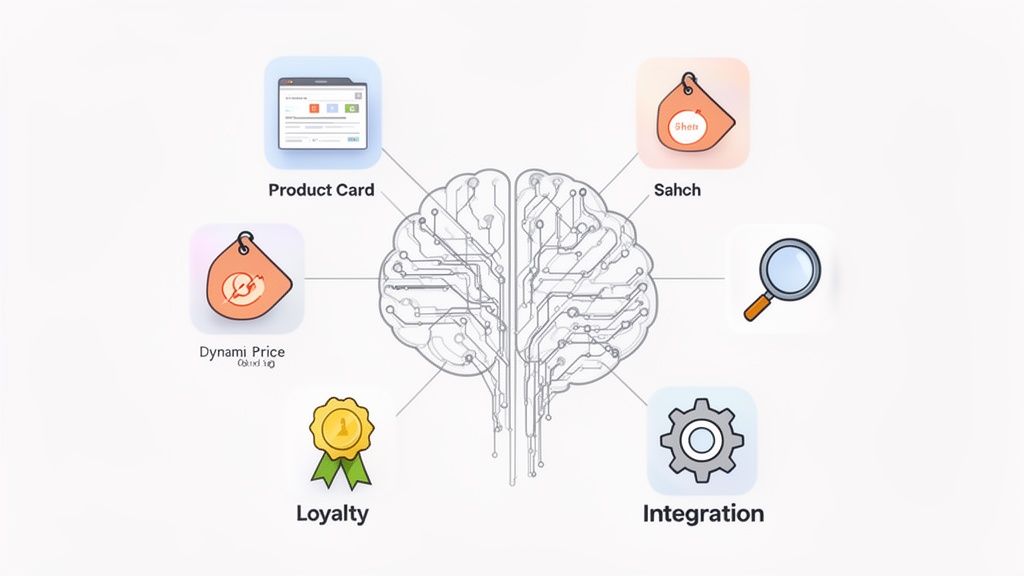
This isn’t just about using standard themes and apps anymore. It’s about stepping into the world of artificial intelligence and building a hand-picked app ecosystem. These aren't just buzzwords; when implemented correctly, they're powerful tools that give you a serious competitive edge.
Demystifying AI in Practical Terms
Let’s be clear: AI in eCommerce isn’t about sci-fi robots. It's about using data to make smarter, faster decisions that massively improve the customer experience and, in turn, your bottom line. An expert agency can weave AI-powered tools into your store to deliver features that feel almost magical to your customers.
Think of it like this: a standard product recommendation is like a store clerk pointing you to an aisle. An AI-powered recommendation engine, on the other hand, is like a personal shopper who knows your entire purchase history, what you've browsed, and what similar customers ended up loving. They present the perfect item at the perfect time.
Here are a few ways this plays out in the real world:
- Intelligent Product Recommendations: AI digs into user data to create hyper-personalized suggestions that are proven to increase average order value.
- Smarter On-Site Search: Instead of just matching keywords, AI-driven search understands what a user means, corrects typos, and delivers far more relevant results, keeping shoppers on your site.
- Dynamic Pricing: Algorithms can adjust prices on the fly based on demand, what competitors are doing, and current inventory levels to maximize your margins.
The best agencies use AI not as a gimmick, but as a strategic tool to automate personalization at scale. This creates a more relevant, engaging shopping experience that builds real customer loyalty and keeps them coming back.
Building a Curated App Ecosystem
Beyond AI, the best agencies understand that no single platform does everything perfectly. The Shopify App Store is massive, but just piling on apps is a surefire way to get a slow, clunky website. The real art is in building a lean, powerful, and perfectly integrated app ecosystem that’s custom-fit to your business.
A strategic agency will help you sift through the noise, selecting and integrating best-in-class apps for critical functions and making sure they all play nicely together. This curated approach prevents code bloat and conflicts while giving you specialized tools for the job.
This is where their expertise really shines, especially for things like:
- Subscription Management: Setting up solid recurring revenue models with proven platforms like ReCharge or Skio.
- Loyalty and Rewards Programs: Driving customer retention with powerful tools like Yotpo or LoyaltyLion.
- Advanced Reviews and UGC: Using social proof to build trust and boost conversions.
Ultimately, a top-tier Shopify development agency acts as your technology partner, always keeping you ahead of the curve. They don’t just build what you ask for; they show you what’s possible, making sure your store is built not just for today’s market, but for tomorrow’s opportunities.
Got Questions? We’ve Got Answers.
Stepping into the world of eCommerce development can feel like a minefield of questions. Let's clear the air and give you the straightforward answers you need before you partner with a Shopify development agency.
How Much Does a Shopify Development Agency Cost?
There's no single price tag on this one. The cost is tied directly to what you need and the agency's depth of experience. A custom build can run anywhere from $5,000 to over $20,000, but it’s better to think about how you'll work together.
A one-off project, like a full site redesign, will have a fixed cost. On the other hand, a subscription model that focuses on continuous growth and optimization will be a recurring monthly fee. The right way to look at it is not as a cost, but as a strategic investment in the most powerful revenue-generating asset your brand has.
What’s the Timeline for a Custom Shopify Store Build?
Every project has its own rhythm, but a typical custom Shopify store build takes between 8 and 16 weeks from the first kickoff call to launch day. This timeline really depends on the complexity of the features you're after and how quickly your team can get feedback and content back to the agency.
This is where a seasoned agency really shines. They’ve managed this process hundreds of times and follow a proven, streamlined workflow designed to sidestep bottlenecks and keep everything moving forward. It’s all about launching on time and on budget, without the drama.
The real value an agency brings isn't just speed; it's predictability. They have the experience to see challenges coming from a mile away and manage the project with a level of control that a solo developer or an in-house team often can't match. That structured approach is what makes for a smooth, successful launch.
Can an Agency Migrate My Store From Another Platform?
Absolutely. In fact, this is a core specialty for any top-tier agency. Whether you’re moving from Magento, BigCommerce, or WooCommerce, a professional Shopify development agency can pull off a seamless migration.
It's a meticulous process, and they don't cut corners. Key steps include:
- Data Mapping: Carefully moving all your product, customer, and order data over without a single byte getting corrupted.
- SEO Preservation: Setting up 301 redirects to make sure you don't lose an ounce of your hard-earned search engine rankings.
- Rigorous Testing: Running thorough quality assurance checks to guarantee the user experience is flawless from day one on the new platform.
This kind of expertise ensures your business can move to a more powerful platform without hitting pause on sales or losing mission-critical data.
What’s the Real Difference Between a Freelancer and an Agency?
It all boils down to scale, reliability, and the sheer breadth of expertise you get. A freelancer is a single specialist—and often a very talented one—but at the end of the day, they're just one person.
An agency, on the other hand, is a dedicated, multi-disciplinary team. You’re not just hiring a coder; you're getting:
- A Project Manager
- A UI/UX Designer
- A team of Developers
- A Quality Assurance Specialist
- An eCommerce Strategist
This team approach brings a whole new level of reliability, a wider range of skills under one roof, and the kind of comprehensive support you need for high-stakes growth projects where a single point of failure just isn't an option.
Ready to turn your Shopify store into a growth engine? ECORN provides the expert design, development, and CRO services you need to scale. Our flexible subscription plans are built to evolve with your brand. Discover how our team can help you win on Shopify.


How to Choose the Right eCommerce Website Development Firm
E Business Strategy Implementation
Conversion Tracking Setup for Shopify Stores
BigCommerce vs Shopify Plus Which Enterprise Wins in 2026
Shopify Theme Kit: Setup, Commands, and Migration Guide
Shopify Extension Development: A Practical 2026 Guide
Shopify Speed Score Explained and How to Improve It
Shopify Mobile Optimization: The 2026 Playbook
How to Add Subcategory in Shopify for Better UX
How to Implement Structured Data for Ecommerce in 2026
SEO App Mobile: Shopify Store Optimization Guide
Shopify Plus Support: What It Includes and How to Choose
Google Ads for Shopify: The Complete 2026 Playbook
Shopify New York: How to Find and Hire the Right Agency
Google Search Console for Shopify: The Complete Setup
First Party Data Collection for eCommerce Growth
FAQ Online Store Guide: Build and Measure It Right
Do FB Ads Work for eCommerce in 2026?
One Page Checkout for Shopify: Design and Implementation
Shopify GraphQL vs REST: The 2026 Developer Decision
Shopify Ecommerce Consulting: Strategy, Pricing &
Are Reddit Ads Worth It for eCommerce Brands
Shopify Title and Meta Description: A Practical 2026 Guide

Product Video Best Practices for Shopify Brands
Real-Time Inventory Management: A 2026 Guide
AI Chatbot Integration for Shopify Stores
Affiliate Program Management: A Shopify Guide
10 Best Performance Monitoring Tools for Shopify in 2026
Digital Asset Management for eCommerce Brands in 2026
Every Type of Facebook Ads Explained for eCommerce Growth
Product Information Management Explained for Shopify Brands
Support Ticket System: A Guide for Shopify Stores

10 Best Customer Service Tools for Shopify in 2026

Can I Start a Business with No Money? a 2026 Blueprint

What Sells Good on Etsy: Best Niches for 2026

Shopify Add to Cart Button: A Practical 2026 Guide

Customer Feedback Automation: A Practical eCommerce Guide
Critical Rendering Path: A Guide for Shopify Stores

How to Promote on TikTok for eCommerce in 2026

B2B eCommerce Consulting That Drives Real Revenue
10 Best Practices for Site Navigation in 2026
Return vs Refund for Shopify Stores: A Practical Guide
What Is Customer Lifetime Value and Why It Matters
What Is Voice of Customer Research for eCommerce

SMS Marketing for Ecommerce That Actually Converts

Master How to Improve Email Deliverability in 2026

Top 7 eCommerce Partners NYC for Shopify Brands in 2026
Machine Learning for Ecommerce: Boost Your Shopify Store

Beauty Market Research: Your 2026 Growth Guide
Shopify International Expansion: A 2026 Roadmap
What Does CRO Stand for in Business: Understanding CRO

Shopify Visual Merchandising: A Playbook for Higher Sales
Shopify Landing Page Design: Master Conversion in 2026
10 Best AI SEO Optimization Tools for Shopify in 2026

Agentic AI for Ecommerce: Boost Your Sales in 2026
Mastering Email Marketing Data for eCommerce Growth
Conversion Rate Optimisation Australia: Boost Your Sales
Conversion Rate Optimization AI: Your Shopify Store Guide

10 Product Bundling Strategies for Shopify in 2026
How to Increase Customer Lifetime Value: A Shopify Playbook
AI Customer Service Automation: Shopify Guide 2026
Clean Website Design: A Shopify Conversion Playbook

Omnichannel Retail Strategy: A Shopify Playbook
Product Data Enrichment: A Guide for Shopify Brands
Instagram Shopping Features a Guide for Shopify Stores
What Is Revenue Optimization: A Holistic RevOps Guide
Benefits of Conversion Rate Optimization: Boost Your
WordPress to Shopify Migration: Your 2026 Seamless Switch
Boost Sales: Ecommerce Payment Processing Guide 2026
Unified Commerce Platform: Benefits, KPIs & Shopify Guide
How to Reduce Bounce Rate eCommerce: Your 2026 Guide
Shopify API Integration: A Practical End-to-End Guide

How to Implement Data Governance: A 2026 Guide
Shopify Store Development Cost: A 2026 Breakdown
What Is Server Side Tracking: The Shopify Guide 2026
Marketing Automation Workflows: A Shopify Guide for 2026
Shopify: How to Reduce Technical Debt

Shopify UX Design Change: A Playbook for Growth
User Generated Content Strategy: Shopify Playbook

Shopify Pause and Build Plan Cost: A Complete 2026 Guide
Compare at Price on Shopify: A Complete Guide for 2026
Where Can I Sell My Prints? 10 Best Platforms for 2026
Shopify Order Management System: The Ultimate Guide 2026
What Is Marketing Attribution? an eCommerce Guide for 2026

10 Best Black Friday Sales Sheets for 2026

Discover the Top Social Media Marketing Agencies For
Consumer Confidence Definition for eCommerce in 2026
What Is Social Commerce? Your 2026 Guide to Boosting Sales
A Social Ad Campaign Playbook for eCommerce Growth
7 Best FAQ Page Examples for SaaS & eCommerce

Market Research in Fashion Industry: A Guide for Shopify
Shopify Migration Services: Expert Guide for 2026
Mastering FB Retargeting Ads for Shopify in 2026
What Is Omnichannel Ecommerce
Master Your Shopify Plus Migration: The 2026 Guide
Shopify Integration Services: A Merchant's 2026 Guide
Shopify Collection Description: A Guide to SEO & Sales
Shopify Plus Contact: Reach Sales & Support Effectively

Top Luxury Shopify Stores: Design & UX Strategies
How to Improve Customer Experience: A Shopify Roadmap


newsletter in your inbox