

Let's be honest—'customer segmentation' sounds like a dry marketing term pulled straight out of a textbook, but it's one of the most powerful tools in your eCommerce arsenal.
What Is Customer Segmentation Anyway?
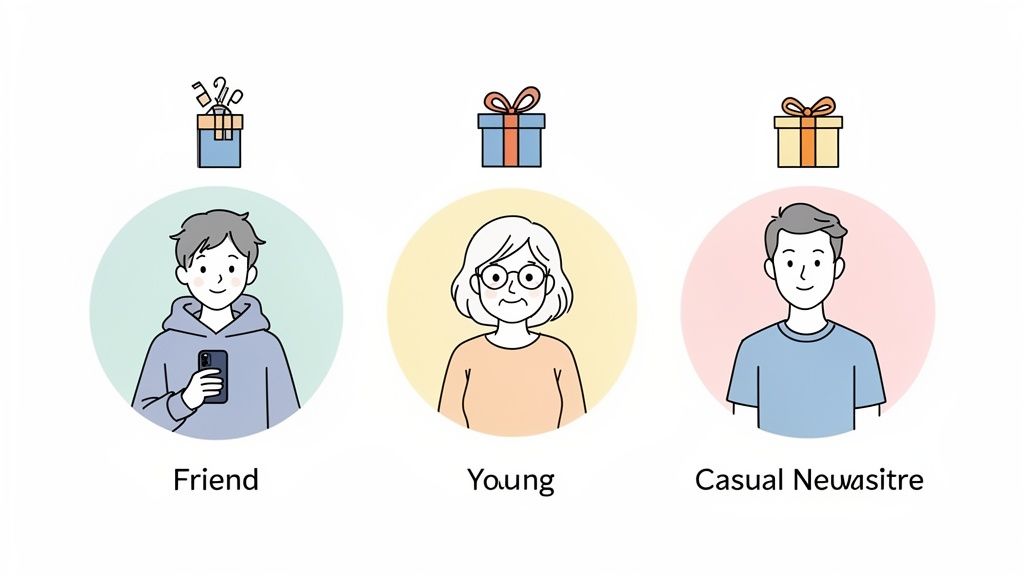
Think of it this way: you wouldn't give the same gift to your best friend, your grandmother, and a new acquaintance. You just know their unique tastes, their history with you, and what would make them feel special.
Customer segmentation is just applying that same intuitive, personal understanding to your business. It’s the strategic practice of ditching the one-size-fits-all megaphone and finally recognizing that your audience is made up of unique individuals with different needs, behaviors, and motivations.
Why It Matters For Your Store
Without segmentation, you’re essentially marketing with a blindfold on. You're sending the same email, showing the same pop-up, and running the same ad for a first-time visitor as you are for a loyal VIP who has purchased ten times.
This generic approach doesn't just feel impersonal; it actively hurts your bottom line. Today’s shoppers expect and reward personalization. In fact, 65% of consumers expect companies to use the data they have to provide them with clear, actionable insights and offers.
When you start grouping customers into meaningful segments, you can finally craft experiences that actually resonate.
The core idea is simple: Treat different groups of customers differently. This shift in perspective is the foundation for building stronger relationships, boosting loyalty, and ultimately driving real, sustainable growth for your Shopify store.
The Power Of Grouping
Imagine you run an online store that sells high-performance running gear. A one-size-fits-all email blast about a new marathon shoe will likely fall flat for most of your list. But what if you could break that list down?
- New Subscribers: Send them a "Welcome" series introducing your brand's mission and maybe offering a small discount on their first purchase of any item.
- Recent First-Time Buyers: Follow up with helpful content, like how to care for their new shoes, and suggest complementary products like performance socks or hydration packs.
- High-Value VIPs: Give them exclusive early access to the new marathon shoe before it launches to the public. Make them feel like insiders.
Suddenly, your marketing stops being noise and starts being helpful, relevant, and far more effective. That is what customer segmentation is all about—understanding who your customers are and speaking directly to their specific journey with your brand.
The Four Core Types of Customer Segmentation
Knowing the theory behind customer segmentation is one thing, but the real magic happens when you actually put it to work. To do that, we need to dig into the four fundamental models that are the bedrock of any solid segmentation strategy.
Think of these as different lenses for looking at your customer base. Each one reveals something new about who they are, what they care about, and how they shop. They work together to build a complete picture, starting with the simple "who" and "where" and moving all the way to the much more powerful "why" and "how."
Demographic Segmentation: Who Are Your Customers?
This is the classic starting point for a reason. Demographic segmentation slices up your audience based on observable, statistical traits. It's the most direct way to answer the question, "Who is actually buying my stuff?"
Common data points include:
- Age: Are you selling to Gen Z, Millennials, or Baby Boomers?
- Gender: Do your products resonate more with men, women, or a non-binary audience?
- Income Level: Is your pricing geared towards budget-conscious shoppers or those looking for premium, luxury goods?
- Education Level: This can often correlate with specific interests and purchasing power.
- Occupation: A construction worker has very different product needs than a software developer.
For a Shopify store, this data is your foundation for shaping messaging and imagery. A skincare brand targeting women 45+ will use completely different language and visuals than one going after men aged 18-25. It’s the first, essential layer of understanding.
Geographic Segmentation: Where Are Your Customers?
Next up, we have geographic segmentation, which groups customers based on where they live. This is about way more than just a pin on a map—it’s about understanding how location shapes needs and buying habits. You can go as broad as a country or as specific as a zip code.
Consider these factors:
- Country or Region: Different places mean different shipping costs, regulations, and cultural norms.
- Climate: A brand selling outerwear will push heavy parkas to customers in cold climates and lightweight raincoats to those in wetter regions.
- Urban vs. Rural: A city dweller might need compact, space-saving furniture, while someone in the countryside might be shopping for larger, more durable equipment.
Here's a simple but powerful example: a Shopify store selling swimwear. Using geographic segmentation, they can fire off a targeted email campaign in January to customers in Australia who are smack in the middle of summer. At the same time, they can run a "get ready for your winter getaway" sale for customers shivering in North America.
Psychographic Segmentation: Why Do They Buy?
Now we're getting to the really good stuff. Psychographic segmentation goes beyond who and where to uncover the why behind a purchase. It groups people based on their intrinsic traits—their lifestyle, values, interests, and personality.
Psychographic insights tell you what your customers truly care about. It's about getting inside their heads and aligning your brand with their worldview.
This kind of data is more qualitative. You can gather it through surveys, customer interviews, or by analyzing social media activity and brand affinities. Key psychographic variables include:
- Lifestyle: Are they fitness junkies, homebodies, world travelers, or busy parents?
- Values & Beliefs: Do they prioritize sustainability, ethical sourcing, or American-made products?
- Interests & Hobbies: Are they into gaming, gardening, high fashion, or gourmet cooking?
Imagine an online coffee retailer. They could identify a segment of "Eco-Conscious Connoisseurs" who value single-origin, fair-trade beans. A simple discount won't move the needle for them. They'd be far more compelled by a campaign that tells the story of the farm where the beans were grown and highlights the brand's commitment to sustainable practices. This model builds a powerful, emotional connection.
This approach isn't just for eCommerce. A 2023 GlobeScan study segmented global consumers into archetypes like "Conscious Consumers," showing how understanding values can drive action in any field. You can read more about the versatility of customer segmentation research to see how deep this goes.
Behavioral Segmentation: How Do They Act?
Last but not least, we have what is arguably the most powerful model for any eCommerce brand: behavioral segmentation. This method groups customers based on their direct interactions with your store and brand. It doesn't care about who they are; it focuses entirely on what they do.
This data is pure gold because it's based on actual, measurable actions. Key behavioral data points include:
- Purchase History: What have they bought? How often do they buy? What's their average order value?
- Website Engagement: Which pages do they visit? How long do they stick around? Have they ever abandoned a cart?
- Email Interaction: Do they open your emails and click on links, or do your campaigns go straight to the trash?
- Brand Loyalty: Are they a first-time buyer, a loyal repeat customer, or a high-value VIP?
With this data, you can create campaigns that are incredibly relevant and timely. For example, you can build a segment of "Frequent Browsers, Rare Buyers"—customers who visit your site all the time but almost never pull the trigger. This group is clearly interested. A targeted campaign with a special incentive or a "What are you waiting for?" message could be the exact nudge they need to finally convert. Behavioral segmentation lets you respond directly to customer actions, creating a dynamic and truly personal shopping experience.
How To Put Customer Segmentation Into Action
Alright, so you get the theory behind customer segmentation. But how do you actually do it? Moving from ideas on a whiteboard to a real, money-making strategy can feel like a huge leap, but it’s actually a pretty straightforward process when you break it down.
Think of this as your roadmap. We're not talking about flipping your entire marketing operation on its head overnight. It's about starting with one clear goal, using the data you already have, and building momentum one segment at a time. Let's walk through exactly how to get this done.
Start With a Clear Business Goal
Before you even think about looking at a spreadsheet, you need to know why you're doing this. What's the point? Without a specific goal, your segmentation efforts will just be a fun academic exercise with no real impact. A solid goal is specific, measurable, and tied directly to a business outcome you care about.
Forget vague ideas like "improve marketing." Get sharp and set a precise target.
Here are a few examples to get you thinking:
- Reduce Cart Abandonment: Aim to slash your abandoned cart rate by 15% in the next quarter.
- Increase Customer Lifetime Value (CLV): Set a goal to boost the average CLV of your repeat buyers by 20% over the next six months.
- Boost Repeat Purchase Rate: Try to get more first-time buyers to make a second purchase within 60 days.
See how that focuses your energy? If your goal is to cut down on abandoned carts, your first segments will naturally be about the people who add items to their cart but bail before checkout. Simple.
Gather Your Existing Customer Data
You don’t need to invest in some crazy expensive, complicated software to get started. Most of the tools you're already using are sitting on a goldmine of information. Your job is just to pull it all together.
Start by looking in these key places:
- Shopify Analytics: This is home base. It’s packed with data on purchase history, average order value, customer location, and which products people buy together.
- Email Marketing Platform (e.g., Klaviyo, Mailchimp): These tools are tracking everything from who opens your emails to who clicks and, most importantly, who buys from a specific campaign.
- Google Analytics: This gives you the dirt on what people are actually doing on your site—which pages they visit, how long they stick around, and where they came from in the first place.
- Customer Surveys: Even a simple tool like Typeform or a Shopify survey app can help you gather that juicy psychographic data directly from your customers.
The trick is just to centralize this stuff. Honestly, exporting a few reports into a simple spreadsheet is often more than enough to start spotting some obvious patterns and potential segments.
This diagram gives you a great visual for how the main segmentation models fit together.
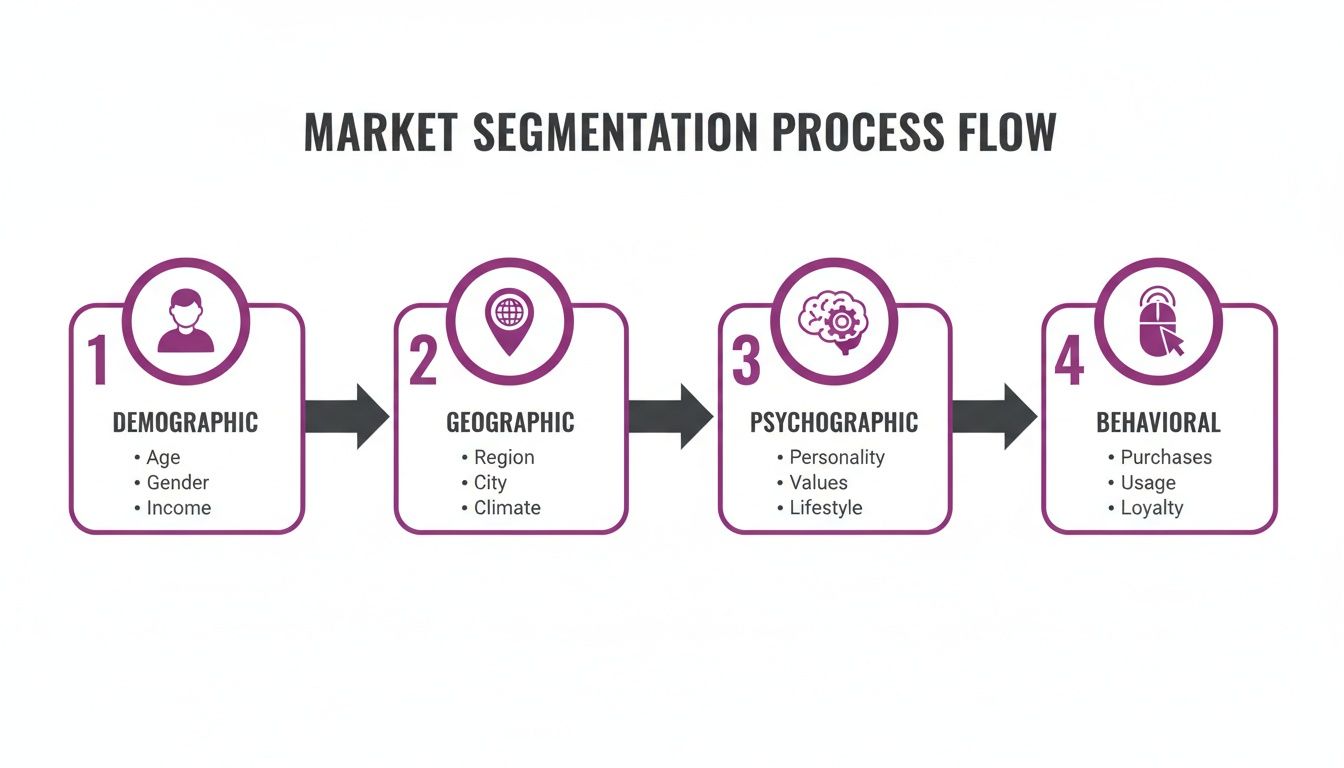
It shows how you can layer different data types, from basic demographics to more complex behaviors, to build a really rich picture of who your customers are.
Build Your First High-Impact Segments
Okay, you’ve got your goal and you’ve got your data. Now it's time to build your first segments. The key here is not to get carried away. Start with a few powerful groups that are easy to spot and offer a clear path to action.
Here are three killer segments you can probably build today:
- VIP Customers: These are your rockstars, your biggest fans. You can define them by lifetime spend (like the top 5% of spenders) or how often they buy (maybe anyone with more than 5 purchases). The goal here is all about retention and turning them into advocates.
- At-Risk Customers: These are the ones who seem to have forgotten about you. They used to buy, but they haven't made a purchase in a while (say, 90 days). Your mission is to win them back.
- First-Time Buyers: This group is at a critical fork in the road. They’ve made one purchase. Now what? Your job is to roll out the red carpet with an amazing post-purchase experience and turn them into loyal, repeat customers.
Key Takeaway: Seriously, don't try to create a dozen segments at once. Nail these foundational groups first. Prove that your strategy works, and then you can get fancy and expand.
If you're looking to go deeper, check out these 10 actionable customer segmentation techniques for some more advanced ideas.
Launch, Test, and Learn
With your segments defined, it's go-time. This is where you connect those groups to targeted campaigns that are designed to hit the goal you set way back in step one.
For each segment, create a specific, tailored action:
- For VIPs: Give them exclusive "early access" to your next product drop. Make them feel special.
- For At-Risk Customers: Send a simple, "Hey, we miss you!" campaign with a sweet, time-sensitive offer to lure them back.
- For First-Time Buyers: Kick off a welcome email series that’s actually helpful. Offer tips on using their new product and share a bit of your brand’s story.
The proof is in the pudding. On average, segmented campaigns get 14.3% higher email open rates than generic blasts. That’s a huge lift that translates directly to more clicks and more sales.
Most importantly, measure everything. Run A/B tests to see how your segmented campaign performs against a control group (the generic version you would have sent anyway). Keep a close eye on your key metrics—open rates, conversion rates, and whatever primary goal you set. This data-driven feedback loop is what turns a good segmentation strategy into a great one, allowing you to constantly tweak, refine, and drive even better results.
Turning Segments into Sales and Loyalty
So, you’ve put in the work and created your customer segments. It's like having a detailed map of your audience, showing you all the high-value peaks, quiet valleys, and promising new territories. But a map is useless if you don't actually use it to go somewhere. The real magic happens when you turn those insights into actions that drive sales and build real customer relationships.
This is where your strategy gets legs. We're talking about connecting the dots between who your customers are and how you talk to them. It’s the bridge between data, conversion rate optimization (CRO), and genuine personalization.
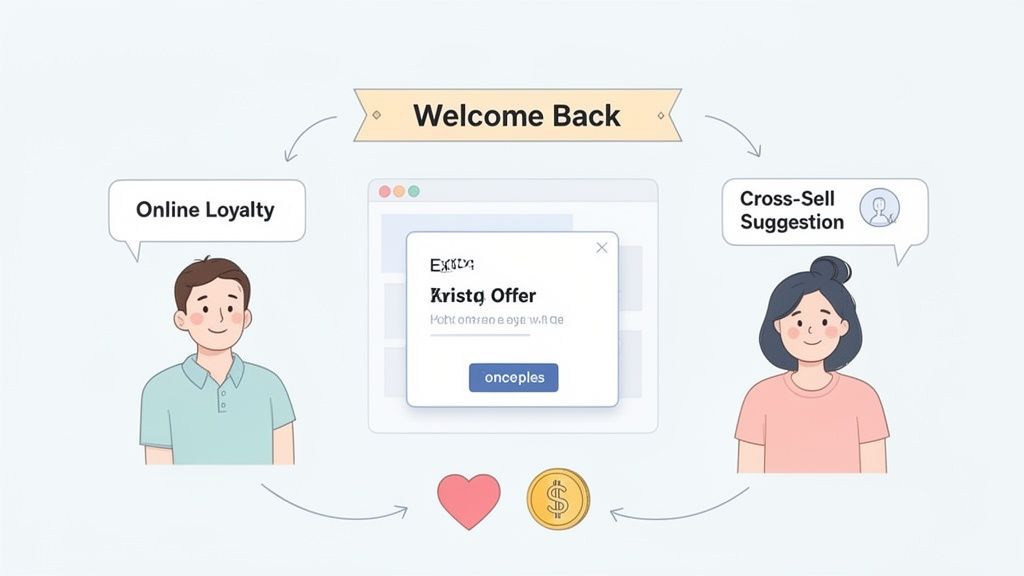
From Generic to Personal Experiences
Think about the standard, unsegmented eCommerce site. Every single visitor sees the same homepage, gets the same emails, and is hit with the same pop-up offers. It's a one-size-fits-all approach, and frankly, it leaves a ton of money on the table.
Now, let's bring your new segments into the picture. That generic journey can now become a series of personalized, high-impact moments. Each interaction feels like it was designed just for that person, making them feel seen and understood.
This isn’t just a nice-to-have; it delivers results. A solid 80% of companies report a direct sales lift after implementing segmentation. When you can talk directly to your high-value groups—like Shopify Plus stores looking for AI integrations—your marketing just works better. For a deeper look, you can explore more statistics on segmentation effectiveness.
Activating Your Segments with CRO Tactics
CRO is so much more than tweaking button colors. It's about getting the right message in front of the right person at the right time. Here’s how segmentation can power your CRO efforts.
Scenario 1: The First-Time Visitor
- Before Segmentation: A new visitor lands on your site and immediately gets blasted with a "10% Off Your First Order" pop-up. They haven’t even had a chance to browse. Annoying, right?
- After Segmentation: You target the "New Visitor" segment with an exit-intent pop-up. As they’re about to leave, a message appears: "Wait! We'd love for you to join our community. Here's 10% off to get you started." It’s timely, less pushy, and acknowledges they're new here.
Scenario 2: The High-Value VIP
- Before Segmentation: Your most loyal customer lands on the same homepage as everyone else, which is pushing entry-level products they outgrew ages ago.
- After Segmentation: You’ve identified your "VIPs" (say, customers with a lifetime value over $1,000). When they log in, they see a custom hero banner: "Welcome back, [Name]! Here's an exclusive first look at our new collection." This small gesture reinforces their status and gets them excited to shop.
These kinds of strategic tweaks are the building blocks of a smarter, more profitable store.
Building Deeper Loyalty Through Post-Purchase Flows
The customer journey doesn't stop when the credit card is swiped. That post-purchase window is a golden opportunity to turn a one-time buyer into a raving fan. And segmentation is the key to unlocking it.
By tailoring your follow-up communication, you transform a transactional relationship into a relational one. You're not just confirming an order; you're starting a conversation that encourages the next purchase and builds genuine brand affinity.
Let's break down a practical example.
Segment: "Purchased Product X"
- Generic Follow-Up: A standard "Thanks for your order!" email. Snooze.
- Email 1 (Day 3): Offers a video tutorial or a helpful guide on getting the most out of Product X.
- Email 2 (Day 14): Asks for a product review and features some great user-generated content from other happy customers.
- Email 3 (Day 30): Suggests a complementary item (Product Y) that pairs perfectly with Product X, maybe with a small, exclusive discount.
- Recency: How recently did they buy?
- Frequency: How often do they buy?
- Monetary: How much do they spend?
- High-Value VIPs: Your ride-or-dies, the customers who spend the most and buy most often.
- First-Time Buyers: A super important group you need to charm into coming back for a second purchase.
- Inactive Customers: The ones who've gone quiet and might need a little nudge to remember how great you are.
This thoughtful sequence provides real value and gently nudges the customer toward their next purchase, boosting their lifetime value. For more ideas on this, check out our guide on how to build customer loyalty.
By connecting your segments to these targeted actions, you unlock the true power of your customer data. It becomes a system that consistently drives sales and fosters a loyal community around your brand.
The Future Is Here: AI and Predictive Segmentation
Traditional segmentation models are incredibly useful, but they all share one big limitation: they’re based on the past. They tell you what a customer has done. But what if you could reliably predict what they’re going to do next?
This isn't science fiction anymore. It’s the new reality of customer segmentation, all powered by Artificial Intelligence (AI) and machine learning.
AI doesn’t just crunch the same numbers you can see. It dives deeper, finding subtle patterns and connections that are completely invisible to the human eye. This lets it forecast future actions with an accuracy that feels almost like magic. Instead of creating static lists that are outdated the minute you export them, AI builds dynamic segments that shift and evolve in real-time as your customers do.
For ambitious Shopify stores, this proactive approach changes the game entirely.
Moving From Reactive to Predictive
Think about it. Imagine being able to automatically spot customers who are showing the classic warning signs of churn—long before they actually stop buying. AI can flag these "at-risk" folks based on tiny changes like declining engagement, longer gaps between purchases, or ignoring certain emails.
This gives you a critical window to step in with a targeted win-back campaign and save the relationship.
Predictive segmentation is all about getting ahead of the curve. Instead of reacting to a lost sale, you’re actively preventing it by anticipating customer needs and frustrations before they even surface.
But it’s not just about preventing the bad stuff. AI is also brilliant at identifying your next big spenders. By analyzing the browsing and buying habits of your current VIPs, machine learning models can spot first-time shoppers who are acting in similar ways. It’s like getting a tap on the shoulder saying, "Hey, this one is a 'potential high-value customer.'"
You can then roll out the red carpet for this segment, nurturing them with a specialized experience designed to maximize their lifetime value.
Making Advanced Strategies Accessible
Not too long ago, complex models like RFM (Recency, Frequency, Monetary) analysis were walled off, reserved for enterprise giants with teams of data scientists. RFM is a classic for a reason, scoring customers based on three simple but powerful metrics:
Today, AI-powered tools automate this entire process, making it dead simple for any growing brand to use. These platforms can instantly segment your audience into clear groups like "Champions," "Loyal Customers," and "Hibernating," complete with recommended actions for each. It’s no surprise that around 70% of marketers now use machine learning to uncover these kinds of hidden patterns.
At the end of the day, AI-driven segmentation is about gaining a serious competitive advantage. It empowers you to create hyper-personalized product recommendations, anticipate inventory demand, and optimize your ad spend with a level of precision that was simply impossible a few years ago.
For a deeper dive into how this all works, check out our guide on predictive analytics for eCommerce. By looking forward instead of backward, you can build a more resilient, profitable, and customer-obsessed business.
Common Questions About Customer Segmentation
Jumping into any new strategy is going to kick up some dust. And when it's a strategy as game-changing as customer segmentation, getting straight answers can mean the difference between a stalled project and a serious boost to your bottom line.
So, let's clear the air and tackle the most common questions we hear from ecommerce founders and marketers. This should help you sidestep the usual pitfalls and get your segmentation plan off the ground with confidence.
How Many Customer Segments Should I Create?
This is where people often get tripped up. There's no magic number, and a classic rookie mistake is creating way too many, way too soon.
The best way to start is small and focused. Aim for three to five core segments that actually represent distinct, valuable groups in your customer base.
Think about the low-hanging fruit—groups you can take meaningful action on right now. For example:
The golden rule here is quality over quantity. If you can’t immediately think of a unique email, offer, or experience for a segment, it probably doesn't need to exist yet. You can always build out more complex segments once you've nailed the basics.
What Is The Difference Between Market and Customer Segmentation?
Great question, as these two get confused all the time.
Market segmentation is the 10,000-foot view. It’s about carving up the entire potential market—including people who have never even heard of your brand. You use it for big-picture strategy, like deciding which new audiences to target with your Meta ads or figuring out if you should expand into a new country.
Customer segmentation, on the other hand, is zoomed all the way in. It deals only with your existing customer list—the people who have already bought from you. The goal here is all about retention, increasing customer lifetime value (CLV), and driving repeat purchases by making the experience more personal for the people you already know.
One helps you find new people; the other helps you keep the ones you've already won.
Market segmentation is like fishing in the ocean, trying to find the right spots to cast your net. Customer segmentation is like organizing the fish you've already caught into different tanks to keep them healthy and thriving.
Can I Do This Without Expensive Tools?
Absolutely. In fact, you should start without shelling out for fancy software. You can get incredibly far with the tools you're probably already using.
Your Shopify Analytics dashboard is a goldmine, packed with data on purchase history, customer behavior, and location right out of the box.
On top of that, your email service provider—whether it's Klaviyo, Mailchimp, or something else—has powerful segmentation features built right in. These platforms are literally designed to slice and dice your audience based on their engagement and purchase data. Master what these tools can do first before you even think about paying for a dedicated, high-end platform.
Ready to turn segmentation insights into a high-performing Shopify store? ECORN specializes in CRO, development, and AI-driven strategies that help brands scale efficiently. Explore our flexible subscription packages and see how we can help you grow.


10 Social Selling Platforms for Shopify Merchants

Shopify Website Design Examples: 7 Stores Worth Studying
7 Ecommerce Newsletter Examples for Shopify Brands
One Product Shopify Store: Build and Scale
Mobile Pop Up Strategy for Shopify Stores That Converts
Sitemap for Shopify: How to Find, Optimize, and Submit It
7 Single Product Websites Worth Emulating
Product Variants Shopify: The Complete 2026 Guide
Ecommerce Analytics Consulting for Growth
What Is AI Integration for eCommerce
How to Choose the Right eCommerce Website Development Firm
E Business Strategy Implementation
Conversion Tracking Setup for Shopify Stores
BigCommerce vs Shopify Plus Which Enterprise Wins in 2026
Shopify Theme Kit: Setup, Commands, and Migration Guide
Shopify Extension Development: A Practical 2026 Guide
Shopify Speed Score Explained and How to Improve It
Shopify Mobile Optimization: The 2026 Playbook
How to Add Subcategory in Shopify for Better UX
How to Implement Structured Data for Ecommerce in 2026
SEO App Mobile: Shopify Store Optimization Guide
Shopify Plus Support: What It Includes and How to Choose
Google Ads for Shopify: The Complete 2026 Playbook
Shopify New York: How to Find and Hire the Right Agency
Google Search Console for Shopify: The Complete Setup
First Party Data Collection for eCommerce Growth
FAQ Online Store Guide: Build and Measure It Right
Do FB Ads Work for eCommerce in 2026?
One Page Checkout for Shopify: Design and Implementation
Shopify GraphQL vs REST: The 2026 Developer Decision
Shopify Ecommerce Consulting: Strategy, Pricing &
Are Reddit Ads Worth It for eCommerce Brands
Shopify Title and Meta Description: A Practical 2026 Guide
Product Video Best Practices for Shopify Brands
Real-Time Inventory Management: A 2026 Guide
AI Chatbot Integration for Shopify Stores
Affiliate Program Management: A Shopify Guide
10 Best Performance Monitoring Tools for Shopify in 2026
Digital Asset Management for eCommerce Brands in 2026
Every Type of Facebook Ads Explained for eCommerce Growth
Product Information Management Explained for Shopify Brands
Support Ticket System: A Guide for Shopify Stores

10 Best Customer Service Tools for Shopify in 2026

Can I Start a Business with No Money? a 2026 Blueprint
What Sells Good on Etsy: Best Niches for 2026

Shopify Add to Cart Button: A Practical 2026 Guide

Customer Feedback Automation: A Practical eCommerce Guide
Critical Rendering Path: A Guide for Shopify Stores

How to Promote on TikTok for eCommerce in 2026

B2B eCommerce Consulting That Drives Real Revenue
10 Best Practices for Site Navigation in 2026
Return vs Refund for Shopify Stores: A Practical Guide
What Is Customer Lifetime Value and Why It Matters
What Is Voice of Customer Research for eCommerce

SMS Marketing for Ecommerce That Actually Converts

Master How to Improve Email Deliverability in 2026
Top 7 eCommerce Partners NYC for Shopify Brands in 2026
Machine Learning for Ecommerce: Boost Your Shopify Store
Beauty Market Research: Your 2026 Growth Guide

Shopify International Expansion: A 2026 Roadmap
What Does CRO Stand for in Business: Understanding CRO

Shopify Visual Merchandising: A Playbook for Higher Sales

Shopify Landing Page Design: Master Conversion in 2026
10 Best AI SEO Optimization Tools for Shopify in 2026

Agentic AI for Ecommerce: Boost Your Sales in 2026
Mastering Email Marketing Data for eCommerce Growth
Conversion Rate Optimisation Australia: Boost Your Sales
Conversion Rate Optimization AI: Your Shopify Store Guide

10 Product Bundling Strategies for Shopify in 2026
How to Increase Customer Lifetime Value: A Shopify Playbook
AI Customer Service Automation: Shopify Guide 2026
Clean Website Design: A Shopify Conversion Playbook

Omnichannel Retail Strategy: A Shopify Playbook
Product Data Enrichment: A Guide for Shopify Brands
Instagram Shopping Features a Guide for Shopify Stores
What Is Revenue Optimization: A Holistic RevOps Guide
Benefits of Conversion Rate Optimization: Boost Your
WordPress to Shopify Migration: Your 2026 Seamless Switch
Boost Sales: Ecommerce Payment Processing Guide 2026
Unified Commerce Platform: Benefits, KPIs & Shopify Guide
How to Reduce Bounce Rate eCommerce: Your 2026 Guide
Shopify API Integration: A Practical End-to-End Guide
How to Implement Data Governance: A 2026 Guide
Shopify Store Development Cost: A 2026 Breakdown
What Is Server Side Tracking: The Shopify Guide 2026
Marketing Automation Workflows: A Shopify Guide for 2026
Shopify: How to Reduce Technical Debt

Shopify UX Design Change: A Playbook for Growth
User Generated Content Strategy: Shopify Playbook

Shopify Pause and Build Plan Cost: A Complete 2026 Guide
Compare at Price on Shopify: A Complete Guide for 2026
Where Can I Sell My Prints? 10 Best Platforms for 2026
Shopify Order Management System: The Ultimate Guide 2026
What Is Marketing Attribution? an eCommerce Guide for 2026
10 Best Black Friday Sales Sheets for 2026

Discover the Top Social Media Marketing Agencies For
Consumer Confidence Definition for eCommerce in 2026
What Is Social Commerce? Your 2026 Guide to Boosting Sales
A Social Ad Campaign Playbook for eCommerce Growth
7 Best FAQ Page Examples for SaaS & eCommerce


newsletter in your inbox