

At its core, link building for an eCommerce store is about getting hyperlinks from other websites to point to your online shop. Think of each link as a trust signal—a digital "vote of confidence" that tells search engines your store is the real deal.
This process is absolutely crucial for getting your product and category pages to rank higher, driving traffic that's actually ready to buy, and carving out your brand's space in a seriously crowded market.
Why Backlinks Are Your eCommerce Superpower

I get it. For many store owners, "link building" sounds like some technical, mind-numbing task buried deep on an endless to-do list. But it's much more than that. It's about building digital relationships that directly fuel your growth.
Every single high-quality backlink tells Google that your store is a credible, authoritative source. That's how you start competing with the big retail giants, even on a smaller budget.
Let’s play out a scenario. Imagine two online stores both selling handmade leather bags. One has zero backlinks. The other just got featured in a popular fashion blog's "Top 10 Leather Bags for 2024" roundup.
That second store doesn't just get a flood of interested customers clicking over from the blog. It also gets a massive credibility boost in the eyes of search engines. That, right there, is the power of link building for eCommerce.
The Shift from Quantity to Quality
Back in the day, SEO was a simple numbers game—the more links you had, the better you ranked. Thankfully, things have changed. Today, the game is far more sophisticated. A single, relevant link from an authoritative industry publication is worth more than hundreds of spammy links from irrelevant directories.
This is fantastic news for specialized eCommerce stores. It means you don't need a monstrous marketing budget to make an impact. Instead, you can focus on earning genuine endorsements that drive real-world results.
A healthy backlink profile helps with:
- Improved Search Rankings: Backlinks are one of Google's top-three ranking factors. They have a direct line to how high your product and category pages appear for the keywords that lead to sales.
- Qualified Referral Traffic: A link from a niche blog or a glowing product review sends people who are already warmed up to what you sell. The result? Higher conversion rates.
- Enhanced Brand Authority: When reputable sites link to you, their credibility rubs off on your brand. This builds trust with both new customers and search engines.
A strong backlink profile isn't just an SEO metric; it's about building a defensible brand that people and search engines trust. It’s the difference between being another stall in a crowded market and becoming a go-to destination.
Laying the Right Foundation
Before you even think about outreach, you have to get your own house in order. A solid technical and on-page SEO foundation is non-negotiable.
Running through a comprehensive ecommerce SEO checklist ensures your site is ready for both users and search engine crawlers. Trust me, trying to build links to a poorly optimized site is like pouring water into a leaky bucket—you'll lose most of the value before it even has a chance to work.
The goal here is a sustainable strategy that builds on itself over time, creating a powerful engine for long-term organic growth.
Creating Assets People Actually Want to Link To
Let's get one thing straight: effective link building for your eCommerce store doesn't start with firing off a bunch of emails. It starts with creating something so genuinely useful, interesting, or valuable that other websites want to link to it. You simply can't expect to get far by asking for links directly to your product pages. You need to create "linkable assets" that serve a bigger purpose than just the next sale.
Think of these assets as the foundation of any sustainable link-building strategy. They become magnets, pulling in authoritative links naturally over time. Instead of constantly being on the hunt for opportunities, you'll be building resources that do the heavy lifting for you, establishing your brand as an expert in your niche.
Thinking Beyond the Standard Blog Post
While having a blog is a great start, a lot of eCommerce stores fall into the trap of churning out generic, uninspired posts that never get any real traction. To actually build links, your content has to solve a real problem, answer a tough question, or offer unique insights that people can't easily find somewhere else.
The trick is to shift your mindset from just "doing content marketing" to "creating resources." Every single asset you build should have a specific audience and a clear link-building goal attached to it.
"A linkable asset is your contribution to the web. It's the reason a journalist, blogger, or industry expert would choose to cite your store over a competitor's. Without it, your outreach is just noise."
We’ve seen this work time and again. For example, an outdoor gear brand reported a whopping 78% increase in traffic to its category pages within six months after they started focusing on creating linkable assets. Their strategy wasn't rocket science—it included super-detailed guides on choosing hiking backpacks and a unique data study on solo female hiking. This approach naturally attracted backlinks from relevant travel and lifestyle blogs. You can explore more insights about their digital PR initiatives to see how powerful this can be.
High-Impact Linkable Asset Ideas for Ecommerce Stores
So, what does a powerful linkable asset actually look like for an online store? It definitely varies by niche, but the core principle is always value. Below is a quick comparison of some high-impact ideas that consistently attract top-tier backlinks.
The common thread here is that each of these asset types provides immense value, making them natural targets for links from other sites that want to provide their own readers with credible information.
Here are a few of the most effective types that consistently get results:
In-Depth Buying Guides: Go way beyond a simple product description. Create the definitive resource for a product category. If you sell coffee equipment, this could be "The Ultimate Guide to Pour-Over Coffee," packed with comparisons, grind charts, and step-by-step techniques.
Interactive Quizzes and Tools: People love engaging, personalized content. A skincare brand could build a "Find Your Perfect Skincare Routine" quiz that suggests products based on skin type and concerns. A home goods store might create a simple "Rug Size Calculator" for different room layouts. These tools are incredibly useful and get shared like crazy.
Original Data Studies and Reports: Nothing builds authority faster than unique data. You can survey your customer base, analyze your own sales data, or conduct industry research to produce a report that no one else has. A fitness apparel brand could publish "The 2024 Home Fitness Trends Report," which journalists and bloggers would be eager to cite.
A Framework for Creating Your Assets
Building a successful linkable asset isn't about getting lucky; it's a structured process. If you follow a clear framework, you can consistently produce content that moves the needle.
Ideation and Research: First, get inside your audience's head. What are their biggest pain points? What questions are they typing into Google? Use keyword research tools, dive into forums like Reddit, and see what your competitors are doing to find content gaps you can fill.
Content Creation and Optimization: Got an idea? Great. Now, your goal is to make it the absolute best resource on that topic. That means using high-quality images, organizing it with clear headings, and writing in an engaging, human tone. And of course, make sure it’s optimized for the keywords you’re targeting.
Promotion and Outreach: Hitting "publish" is only half the job. Now you have to get it in front of people. Share it across your social channels, feature it in your newsletter, and—most importantly—reach out to relevant websites and show them why it would be a fantastic resource for their audience.
This is a repeatable process that ensures your efforts are strategic and your assets are set up for success. A single, well-executed asset can keep earning backlinks for years, making it one of the highest-ROI activities in your entire link building eCommerce playbook.
Mastering Outreach Without Sounding Like a Robot
https://www.youtube.com/embed/1hpqcvTvUTI
You’ve created a fantastic linkable asset. That's a huge win, but it's only half the battle in the world of link building for eCommerce. Now for the part that makes most people nervous: actually asking for the link.
Let's be real—bad outreach feels spammy, and it's a total waste of time. But when you reframe it as professional networking, it becomes one of the most powerful tools you have. You're not just begging for links; you're building genuine relationships that can pay off for years to come.
The goal isn't to blast out a hundred generic emails and hope for the best. It's about making a human connection, showing you appreciate someone's work, and making it crystal clear why linking to your content is a win for their audience.
Finding the Right People to Connect With
Before you type a single word, you have to know who you’re talking to. Your best prospects are people whose audience overlaps with yours. Think of them as the gatekeepers to the high-quality, relevant backlinks you're after.
Your outreach list should be more creative than just "blogs." Consider people like:
- Niche Bloggers and Content Creators: These folks have built a dedicated following around super-specific topics, whether it's sustainable fashion or brewing the perfect cold brew at home.
- Product Reviewers: Anyone creating detailed reviews, gift guides, or "best of" lists in your niche is a prime target, especially if your product brings something new to the table.
- Journalists and Editors: If your asset is packed with original data or a unique study, these are the people who can get it in front of a much larger audience.
- Complementary eCommerce Brands: Teaming up with non-competing brands that serve the same customer base can lead to some amazing cross-promotional and linking opportunities.
The key is to identify specific people who would find your content genuinely useful, not just websites.
Crafting an Outreach Email That Actually Gets a Reply
Your email has one job: get a positive response. That means it needs to be personal, straight-to-the-point, and focused on the value you're offering them. We can all spot a generic template from a mile away, and they go straight to the trash folder.
A great outreach email has a simple, human-friendly flow. Start with a genuine, personalized compliment. Show them you’ve actually engaged with their content—mention a specific article or point they made.
Next, get to your request quickly and clearly. Explain why you're reaching out and introduce your linkable asset, whether it's a guide, a tool, or new data.
Here’s the most important part: you have to spell out the benefit for them. How does adding your link make their content better, more thorough, or more helpful for their audience? Answering that question is what turns a "no" into a "yes."

This example works because it's short, personal, and immediately shows the recipient what's in it for them—a quick and easy way to improve their existing content.
Pro Tip: Your subject line is everything. Ditch boring stuff like "Link Request." Go for something that sparks curiosity, like "A question about your coffee guide" or "Resource for your readers." It feels much more personal.
Setting Up a Scalable Outreach Workflow
As you start reaching out more, you can't just rely on your memory. A simple, organized workflow is absolutely essential for managing your link building eCommerce efforts without losing your mind. And you don't need expensive software to do it.
A basic spreadsheet in Google Sheets or Airtable is perfect when you're starting out. Just create a tracker with columns for:
- Target Website: The site you're contacting.
- Contact Name & Email: The specific person you're messaging.
- Status: Keep it simple (e.g., Pitched, Followed Up, Link Acquired).
- Date of First Contact: So you know when to follow up.
- Notes: Jot down any personal details or key conversation points.
This simple system prevents you from accidentally pitching the same person twice and helps you follow up at just the right time. A polite follow-up a week after your first email can make a huge difference in your response rate.
Remember, the best opportunities often come from nurturing these new relationships. Collaborating with influential figures is a huge part of this. For a much deeper look at this, check out our ultimate guide to influencer marketing for eCommerce to see how these connections can drive ROI far beyond a single backlink. The real goal is to turn a one-time link into a long-term partnership.
Proven Link Building Tactics for Online Stores

Alright, you've got your linkable assets ready to go. Now it's time to switch gears from creation to promotion. This is where the real work of link building ecommerce begins, using proven tactics to get your content in front of the right people. These are the strategies that actually move the needle, building a strong, diverse backlink profile that boosts rankings and, ultimately, your bottom line.
There are a million ways to build links, but some methods just work better for online stores. The secret is to stop just asking for links and start creating compelling reasons for high-authority sites to feature your brand. It's a game of strategy, creativity, and a healthy dose of persistence.
Harness the Power of Digital PR
Forget what you know about old-school press releases. Digital PR is all about creating newsworthy stories that journalists and top-tier publications genuinely want to write about. For an eCommerce brand, this is hands-down one of the most effective ways to land powerful, editorial links that can have a massive impact on your SEO.
This isn't just my opinion. In a survey of over 500 SEO professionals, a whopping 48.6% named digital PR as the single most effective link building tactic. That makes it twice as popular as guest posting and asset creation combined, which tells you everything you need to know about its power.
So, how do you cook up a newsworthy campaign?
- Run a Unique Survey: Poll your audience on a topic related to your niche. If you sell sustainable fashion, you could publish a report on consumer attitudes towards eco-friendly materials. This creates a unique dataset that journalists love to cite.
- Offer Expert Commentary: Position your founder or in-house experts as the go-to source for media quotes. Using services like HARO (Help a Reporter Out) is a direct line to journalists looking for experts, often leading to high-quality mentions.
- Analyze Your Own Data: Your sales data is a goldmine. A coffee subscription brand could release a report on "America's Most Caffeinated Cities" based on customer locations. It's fun, it's shareable, and it's a story.
The best Digital PR campaigns aren't about your products. They're about the interesting stories surrounding your industry. The goal is to become part of a bigger conversation, and the links will follow naturally.
Reclaim Your Unlinked Brand Mentions
This is easily one of the quickest and most satisfying wins in all of link building. An unlinked brand mention is exactly what it sounds like: another website writes about your company or product but forgets to add a hyperlink back to your site. They've already done the hard part of featuring you; your job is to just give them a gentle nudge.
You can find these opportunities using tools like Ahrefs or BuzzSumo, which can alert you whenever your brand is mentioned online. When you spot a mention without a link, a simple, friendly email is all it takes.
Example Email Snippet
"Hi [Name],
Thank you so much for mentioning [Your Brand Name] in your recent article about [Article Topic]! We were so excited to see it.
I noticed that our brand name wasn't linked to our website. Would you be open to adding a link so your readers can easily find us? Here’s the best URL to use: [Your Preferred URL]
Thanks again for the feature!"
This works so well because it's a tiny request that actually makes their article more helpful for their readers. It's a win-win.
Secure Features in Gift Guides and Roundups
Getting your products featured in "Best Of" lists, holiday gift guides, and product roundups is a classic link building ecommerce play for a reason—it works. These articles attract buyers who are ready to pull out their credit cards, and the links you get are incredibly relevant.
Success here is all about timing and relevance. You need to start your outreach months before major holidays or shopping seasons. Find blogs and publications that have run similar roundups in the past, then pitch your product with a clear, concise case for why it's a perfect fit for their list and their audience.
To make your pitch impossible to ignore, be sure to include:
- High-Quality Product Photos: Give them everything they need to make your product look amazing.
- A Compelling Product Description: Get straight to the point about what makes your product special.
- An Offer for a Review Unit: Sending a sample can dramatically increase your chances of getting included.
Write Strategic Guest Posts
Guest posting is far from dead, it has just grown up. The old strategy of getting a link from any site that would take your content is over. Today, it’s about contributing genuinely valuable content to authoritative, relevant blogs in your niche or even in adjacent industries.
Think about it: if you sell high-end kitchen knives, don't just write for other knife blogs. Pitch a popular food blog an article on "Mastering Essential Knife Skills," or a home organization blog a piece on "How to Properly Store and Care for Your Knives." This introduces your brand to a whole new audience while earning a fantastic backlink. For anyone wanting to really go deep on this, checking out expert strategies for building brands through links can provide some next-level thinking.
Each of these tactics plays a crucial role. By combining the high-authority power of digital PR, the targeted relevance of gift guides, and the quick wins from unlinked mentions, you build a well-rounded strategy that drives real, sustainable growth.
Using Internal Links to Boost Your Key Pages
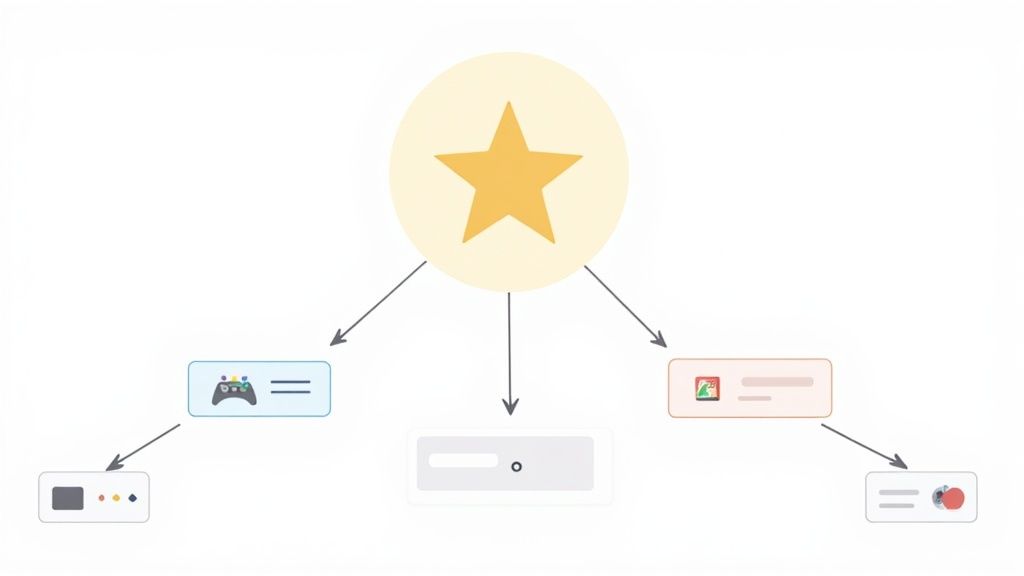
While everyone gets excited about landing big external backlinks, one of the most powerful and overlooked strategies is sitting right under your nose. Your site's internal linking structure is a hidden superpower, giving you direct control over how authority flows through your own website. It’s your chance to channel all that hard-earned link equity directly to the pages that actually make you money.
Think of it like this: your homepage and popular blog posts are reservoirs of authority, constantly being filled by the external links you earn. Internal links are the irrigation channels you dig to send that valuable authority exactly where it needs to go—your crucial product and category pages. It’s a simple, high-impact tactic that gives your commercial pages the lift they need to start climbing the rankings.
Channeling Authority with Strategic Linking
The goal here isn't to just link pages together randomly; you need a game plan. High-authority pages on your site, like your homepage or that viral guide you published last year, have the most "link equity" to share. By intentionally linking from these powerhouses to your key category or product pages, you're essentially giving them a strong vote of confidence in Google's eyes.
For example, if you have a popular blog post titled "The Ultimate Guide to Choosing Running Shoes," it should absolutely contain direct links to your "Men's Trail Running Shoes" and "Women's Road Running Shoes" category pages. This simple action tells search engines that those category pages are incredibly important and relevant to the topic.
Your internal links are the signposts that guide both users and search engines to your most valuable content. A well-planned structure ensures no page is left behind and that authority is distributed for maximum impact.
This process helps your commercial pages inherit some of the authority from your informational content, making them far more competitive for valuable, high-intent keywords.
Building Topic Clusters for SEO Dominance
Ready to take it up a notch? Start creating topic clusters. This is a more advanced approach where you create a central "pillar page" on a broad topic (like your "Coffee Grinders" category page) and then surround it with related "cluster content" (think blog posts like "Burr vs. Blade Grinders," "How to Clean Your Grinder," and "Best Grinders for Espresso").
The key is to then link all of that cluster content back to the central pillar page. This structure does two critical things:
- It organizes your content logically for your visitors, making your site a breeze to navigate.
- It demonstrates your deep expertise on a topic to search engines, seriously boosting the authority of that pillar page for its main keyword.
This model is a fantastic way to ensure your most important category pages become the undisputed authorities in their niche.
Using Anchor Text That Actually Works
The clickable text you use for your internal links, known as anchor text, matters a lot. It gives both people and search engines immediate context about where that link is going. You have to stop using generic phrases like "click here." Seriously.
Instead, get descriptive and use keyword-rich anchor text.
- Poor Anchor Text: To learn more about our products, click here.
- Good Anchor Text: We offer a wide range of sustainable bamboo toothbrushes.
This tiny change helps reinforce the relevance of the linked page for its target keywords. It's a small detail with a big impact.
Auditing for Orphaned Pages
Finally, you need to play detective and find any "orphaned pages" on your site. These are pages that have zero internal links pointing to them. Since search engine crawlers discover new content by following links, an orphaned page is effectively invisible.
You can use SEO tools to crawl your site and quickly identify these lost pages. Once you find them, the fix is easy: integrate them back into your site structure by linking to them from relevant category pages or blog posts. Don't let their value go to waste.
Measuring Your Results & Sidestepping Common Pitfalls
So, you've launched your link-building campaign. That's a huge step, but how do you actually know if all that hard work is paying off? Without tracking the right things, you're essentially flying blind. You won't know what's working, what's a waste of time, and whether you're getting a real return on your investment.
Just as crucial is knowing what not to do. A clumsy link-building strategy can backfire, potentially hurting your site's standing with search engines. The real goal here is to build a safe, sustainable engine for growth—and that means measuring your wins while actively dodging the common mistakes.
Key Performance Indicators That Actually Matter
Don't get bogged down chasing vanity metrics. To see the real impact of your link building, you only need to focus on a handful of key performance indicators (KPIs) that connect directly to SEO progress and, more importantly, your bottom line.
Here’s what I keep a close eye on for my clients:
- Growth of Referring Domains: This is probably my number one metric. Tracking the number of unique websites linking back to you is the clearest sign that your store's authority is growing. A steady, upward trend here tells you the campaign is healthy.
- Improvements in Keyword Rankings: Are your money pages actually climbing the search results? Use a good rank tracker to monitor your positions for the high-value keywords you’re targeting with your product and category pages. Seeing movement here is the first sign your links are kicking in.
- Organic Traffic Increases: At the end of the day, this is what it's all about. In Google Analytics, look for a tangible lift in organic traffic, especially to the specific pages you've been building links to. This is where you confirm that better rankings are turning into more potential customers.
- Referral Traffic: While it's usually secondary to organic, don't sleep on the traffic coming directly from the links you've built. These visitors are often highly qualified and can convert into immediate sales.
Measuring success is just about connecting the dots. When you see your referring domains go up, followed by a jump in keyword rankings, and then a bump in organic traffic... that’s when you know your strategy is firing on all cylinders.
Steering Clear of Common Link Building Mistakes
Building links is a must, but grabbing the wrong kind can actively poison your site's reputation. Navigating link building for eCommerce means having a laser focus on quality and a sharp eye for red flags. Sure, some studies show a top-3 ranking might require around 780 backlinks, but that number just proves how vital a quality-over-quantity mindset is. You can learn more about ecommerce link building benchmarks to see why being strategic is everything.
Here are the biggest mistakes I see people make all the time:
Acquiring Spammy or Irrelevant Links: This is the cardinal sin. A link from a low-quality, completely unrelated site (think: a link to your Shopify store selling high-end skincare from some random gambling blog) screams "spam" to Google. Always, always prioritize links from reputable, topically relevant websites.
Over-Optimizing Anchor Text: Using the exact same keyword-stuffed anchor text over and over again is a huge red flag. It just looks unnatural. A healthy backlink profile has a nice, diverse mix of anchors: branded terms ("Your Store Name"), naked URLs (your actual web address), and a variety of keyword phrases.
Focusing Only on Homepage Links: Your homepage will naturally attract links, but it shouldn't be your only target. A natural link profile has links pointing to all sorts of pages. You should be actively building links to your most important category pages, top-selling product pages, and any linkable assets you've created.
Ignoring Internal Linking: This one is a huge missed opportunity. Your own website is one of the most powerful tools you have. If you aren't strategically linking from your high-authority blog posts or guides to your key commercial pages, you're leaving money on the table by not passing authority where it really counts.
By tracking the right KPIs and making a conscious effort to avoid these blunders, you'll build a powerful, resilient backlink profile. This is how your link building ecommerce efforts turn into sustainable growth, driving more traffic and sales for years to come.
At ECORN, we specialize in turning Shopify stores into market leaders. From expert development and CRO to strategic eCommerce consulting, our flexible subscription packages are designed to help you scale efficiently. Discover how we can enhance your project with our dedicated team of specialists.


10 Best Podcast Ecommerce Shows for Store Growth in 2026
Shopify Developer Hourly Rate: What to Pay in 2026
Critical Shopify Setup Errors That Are Secretly Sabotaging Your Store
Ecommerce Conversion Tracking: The Complete How-To Guide
Shopify Design Agency: How to Pick the Right Partner
Mastering Multi Store Management on Shopify
Scale Shopify Store
10 Shopify App Ideas Worth Building in 2026
Conversion Rate Optimization for Landing Pages: The Playbook
Shopify Plus Automation: A Guide for 2026
10 Social Selling Platforms for Shopify Merchants
Shopify Website Design Examples: 7 Stores Worth Studying
7 Ecommerce Newsletter Examples for Shopify Brands
One Product Shopify Store: Build and Scale
Mobile Pop Up Strategy for Shopify Stores That Converts
Sitemap for Shopify: How to Find, Optimize, and Submit It
7 Single Product Websites Worth Emulating
Product Variants Shopify: The Complete 2026 Guide
Ecommerce Analytics Consulting for Growth
What Is AI Integration for eCommerce
How to Choose the Right eCommerce Website Development Firm
E Business Strategy Implementation
Conversion Tracking Setup for Shopify Stores
BigCommerce vs Shopify Plus Which Enterprise Wins in 2026
Shopify Theme Kit: Setup, Commands, and Migration Guide
Shopify Extension Development: A Practical 2026 Guide
Shopify Speed Score Explained and How to Improve It
Shopify Mobile Optimization: The 2026 Playbook
How to Add Subcategory in Shopify for Better UX
How to Implement Structured Data for Ecommerce in 2026
SEO App Mobile: Shopify Store Optimization Guide
Shopify Plus Support: What It Includes and How to Choose
Google Ads for Shopify: The Complete 2026 Playbook
Shopify New York: How to Find and Hire the Right Agency
Google Search Console for Shopify: The Complete Setup
First Party Data Collection for eCommerce Growth
FAQ Online Store Guide: Build and Measure It Right
Do FB Ads Work for eCommerce in 2026?
One Page Checkout for Shopify: Design and Implementation
Shopify GraphQL vs REST: The 2026 Developer Decision
Shopify Ecommerce Consulting: Strategy, Pricing &
Are Reddit Ads Worth It for eCommerce Brands
Shopify Title and Meta Description: A Practical 2026 Guide
Product Video Best Practices for Shopify Brands
Real-Time Inventory Management: A 2026 Guide
AI Chatbot Integration for Shopify Stores
Affiliate Program Management: A Shopify Guide
10 Best Performance Monitoring Tools for Shopify in 2026
Digital Asset Management for eCommerce Brands in 2026
Every Type of Facebook Ads Explained for eCommerce Growth
Product Information Management Explained for Shopify Brands
Support Ticket System: A Guide for Shopify Stores

10 Best Customer Service Tools for Shopify in 2026

Can I Start a Business with No Money? a 2026 Blueprint
What Sells Good on Etsy: Best Niches for 2026

Shopify Add to Cart Button: A Practical 2026 Guide

Customer Feedback Automation: A Practical eCommerce Guide
Critical Rendering Path: A Guide for Shopify Stores

How to Promote on TikTok for eCommerce in 2026

B2B eCommerce Consulting That Drives Real Revenue
10 Best Practices for Site Navigation in 2026
Return vs Refund for Shopify Stores: A Practical Guide
What Is Customer Lifetime Value and Why It Matters
What Is Voice of Customer Research for eCommerce

SMS Marketing for Ecommerce That Actually Converts

Master How to Improve Email Deliverability in 2026
Top 8 eCommerce Partners NYC for Shopify Brands in 2026
Machine Learning for Ecommerce: Boost Your Shopify Store

Beauty Market Research: Your 2026 Growth Guide

Shopify International Expansion: A 2026 Roadmap
What Does CRO Stand for in Business: Understanding CRO

Shopify Visual Merchandising: A Playbook for Higher Sales

Shopify Landing Page Design: Master Conversion in 2026
10 Best AI SEO Optimization Tools for Shopify in 2026

Agentic AI for Ecommerce: Boost Your Sales in 2026
Mastering Email Marketing Data for eCommerce Growth
Conversion Rate Optimisation Australia: Boost Your Sales
Conversion Rate Optimization AI: Your Shopify Store Guide

10 Product Bundling Strategies for Shopify in 2026
How to Increase Customer Lifetime Value: A Shopify Playbook
AI Customer Service Automation: Shopify Guide 2026
Clean Website Design: A Shopify Conversion Playbook

Omnichannel Retail Strategy: A Shopify Playbook
Product Data Enrichment: A Guide for Shopify Brands
Instagram Shopping Features a Guide for Shopify Stores
What Is Revenue Optimization: A Holistic RevOps Guide
Benefits of Conversion Rate Optimization: Boost Your
WordPress to Shopify Migration: Your 2026 Seamless Switch
Boost Sales: Ecommerce Payment Processing Guide 2026
Unified Commerce Platform: Benefits, KPIs & Shopify Guide
How to Reduce Bounce Rate eCommerce: Your 2026 Guide
Shopify API Integration: A Practical End-to-End Guide
How to Implement Data Governance: A 2026 Guide
Shopify Store Development Cost: A 2026 Breakdown
What Is Server Side Tracking: The Shopify Guide 2026
Marketing Automation Workflows: A Shopify Guide for 2026
Shopify: How to Reduce Technical Debt

Shopify UX Design Change: A Playbook for Growth
User Generated Content Strategy: Shopify Playbook
Shopify Pause and Build Plan Cost: A Complete 2026 Guide


newsletter in your inbox