

In the hyper-competitive world of ecommerce, simply having great products and a beautiful storefront isn't enough to guarantee success. To stand out, capture high-value organic traffic, and build a sustainable brand, you need authority. In the eyes of search engines like Google, that authority is built on a foundation of high-quality backlinks pointing to your site. Generic advice, however, often misses the mark for online retailers whose success hinges on product visibility and category page performance.
You need more than just links; you need a blueprint of the most effective link building tactics for ecommerce brands. These are strategies designed not only to boost your domain authority but also to drive relevant, purchase-intent traffic directly to your digital shelves. This guide moves beyond the theoretical and dives straight into a curated roundup of actionable tactics tailored for product-centric businesses. Our approach to unlocking growth for ecommerce stores necessitates a commitment to strategic link building, focusing on quality and relevance over sheer volume.
Inside, you will find a comprehensive list of strategies, complete with real-world examples and step-by-step implementation tips. We will cover how to secure links from:
- Product reviews and roundup articles
- High-authority resource pages
- Strategic brand partnerships and co-marketing campaigns
- Customer case studies and success stories
Whether you're a burgeoning Shopify store or an established multi-channel retailer, these proven methods will help you build a powerful backlink profile that translates directly into sustained rankings, increased traffic, and tangible revenue growth.
1. Product Review and Roundup Links
One of the most powerful and effective link building tactics for ecommerce brands involves securing placements in third-party product reviews, roundups, and comparison articles. This strategy places your product directly in front of an engaged audience actively seeking recommendations. When a trusted publication like Wirecutter or a niche blogger features your product, they link back to your product page, providing a high-authority backlink and valuable referral traffic that often has a high conversion rate.

This method works because it leverages the credibility of established editorial platforms. Consumers trust these sources to curate the "best of" lists, making a feature a powerful form of social proof. For example, a mention in a Strategist (from New York Magazine) gift guide or a positive review on TechCrunch can significantly boost both brand visibility and sales.
Why It's a Top-Tier Tactic
This approach is particularly valuable for eCommerce because it achieves multiple goals simultaneously. You're not just building a backlink; you are generating qualified traffic, building brand authority, and creating a valuable marketing asset you can promote across your own channels. A link from a major publication is a vote of confidence that can influence both search engine rankings and customer purchase decisions for years.
How to Implement This Strategy
Successfully getting your products featured requires a proactive and organized approach. Generic outreach emails are rarely effective.
- Create a Polished Media Kit: Develop a professional media kit that includes high-resolution product images, a compelling brand story, key product features, and competitive differentiators. Make it easy for journalists to find everything they need.
- Identify and Vet Your Targets: Use tools like Ahrefs or Semrush to find websites that rank for "best [your product type]" or "[competitor] alternatives." Create a prioritized list of relevant publications, journalists, and bloggers.
- Streamline the Review Process: Offer to send free product samples for testing. The easier you make it for reviewers to experience your product, the higher your chances of getting covered.
- Build Authentic Relationships: Instead of a cold pitch, follow key journalists and editors on social media. Engage with their content thoughtfully over time before you make your request. A warm introduction is always more effective.
- Monitor and Amplify: After a feature goes live, track the backlink and monitor referral traffic and conversions in your analytics. Share the positive press on your social media, email newsletters, and even on your product pages to maximize its impact.
2. Content Marketing and Resource Pages
Beyond selling products, one of the most sustainable and effective link building tactics for ecommerce brands is to become a trusted source of information. Creating valuable, comprehensive content assets like in-depth guides, original research, or useful tools naturally attracts backlinks from industry publications, educational platforms, and resource directories. This strategy establishes your brand as an authority, building trust that extends to your products.
This method moves beyond direct product promotion to solve broader customer problems. For example, a skincare brand could publish a definitive guide on "The Science of Hydration for Different Skin Types," or a coffee retailer could release an original study on "The Impact of Grinding Methods on Caffeine Extraction." This content becomes a "linkable asset" that others want to reference, cite, and share.
Why It's a Top-Tier Tactic
This strategy positions your eCommerce brand as a thought leader, not just a retailer. The links earned through content marketing are typically high-quality, editorially given links from authoritative domains. These backlinks carry significant SEO weight and can drive highly relevant, top-of-funnel traffic that you can nurture into customers. It's a long-term investment that builds both domain authority and brand equity. To explore this topic further, you can learn more about how a robust ecommerce content strategy on ecorn.agency can drive growth.
How to Implement This Strategy
Creating content that earns links requires a strategic approach focused on value and originality. Simply writing a blog post is not enough.
- Identify Content Gaps: Use SEO tools to find keywords and topics your audience searches for but where existing content is weak or outdated. Focus on creating the definitive resource for that topic.
- Leverage Original Data: Conduct your own surveys, analyze internal sales data, or perform industry research. Unique data is highly linkable, as journalists and bloggers will cite your findings as a primary source.
- Create Evergreen Resources: Develop comprehensive guides, glossaries, or "how-to" tutorials that remain relevant over time. A furniture store, for instance, could create an interactive "Wood Type Identification Guide."
- Promote Your Content Strategically: Your content won't get links if no one sees it. Reach out to websites that have linked to similar content in the past and show them why your resource is more current or comprehensive.
- Update and Relaunch: Keep your cornerstone content pieces fresh with updated statistics and information. Relaunching an updated guide can generate a new wave of backlinks and social shares.
3. Broken Link Building and Recovery
Broken link building is a proactive tactic where you find broken external links (links leading to 404 error pages) on authoritative websites in your niche and offer your own relevant content as a replacement. This creates a win-win scenario: you help the site owner fix a broken user experience, and in return, you acquire a high-quality backlink that was previously pointing to a competitor or outdated resource.
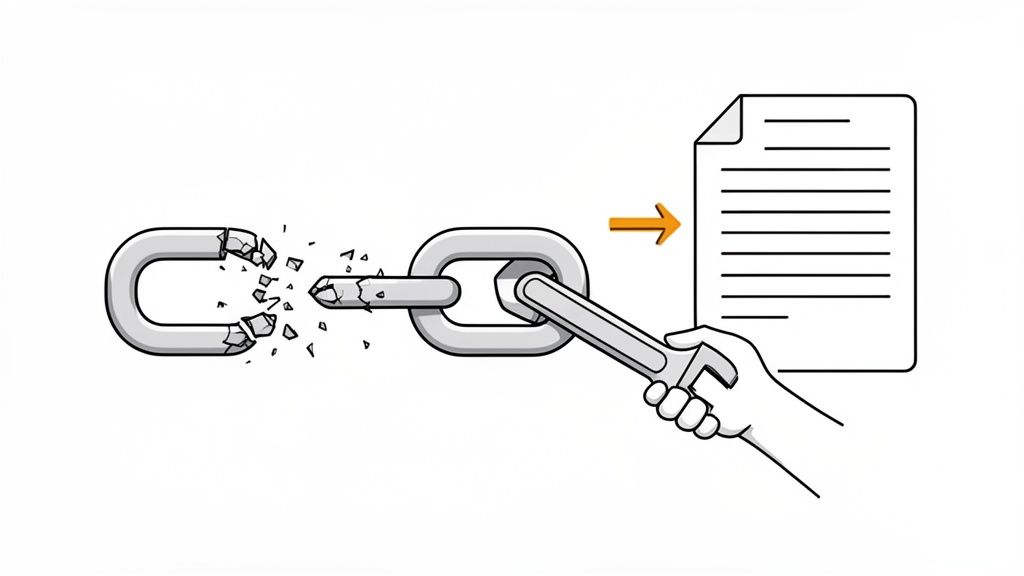
This strategy is highly effective because it provides immediate value to the webmaster. Instead of just asking for a link, you're offering a helpful solution to a technical problem on their site. For an ecommerce brand, this could mean finding a popular blog's "Best Camping Gear" guide that links to a defunct competitor's tent and suggesting your superior tent product page as the replacement.
Why It's a Top-Tier Tactic
This is one of the more powerful and effective link building tactics for ecommerce brands because it leverages existing link equity. The link you're acquiring has already been deemed valuable enough by the site owner to be included. You are essentially stepping into a pre-vetted spot, which often carries more weight than a newly created link. This method is excellent for building the authority of your product category pages and in-depth buying guides.
How to Implement This Strategy
A successful broken link building campaign requires research, precision, and a value-first outreach approach. Generic requests will be ignored.
- Identify High-Authority Targets: Use SEO tools like Ahrefs' "Broken Outgoing Links" report or Semrush to analyze top-ranking blogs, industry publications, and resource pages in your niche. Focus on sites with high domain authority (40+) for maximum impact.
- Find Broken Links: Scan your target sites for broken links. Look for outdated product roundups, gift guides, or resource pages that mention competitors who have gone out of business or discontinued a specific product.
- Create or Offer a Superior Replacement: Before reaching out, ensure you have a perfect replacement page. This could be a product page, a category page, or a detailed blog post that is a clear upgrade from the old, broken resource.
- Craft Personalized Outreach: Your email should be concise and helpful. Clearly state the exact location of the broken link and politely suggest your content as a valuable alternative. Personalize every message to show you've done your homework.
- Track and Follow Up: Keep a spreadsheet of your outreach efforts. If you don't receive a response within one to two weeks, send a gentle, polite follow-up. Tracking your success rate will help you refine your process over time.
4. Strategic Brand Partnerships and Co-Marketing
Another highly effective link building tactic for ecommerce brands involves forging collaborative relationships with complementary, non-competing companies. Through co-marketing campaigns, you can tap into a new, relevant audience while earning powerful backlinks from your partner's website. This could involve creating a joint product bundle, a co-branded guide, or simply a featured partnership page.
This strategy works by leveraging shared audiences and mutual trust. For example, a sustainable fashion brand like Allbirds could partner with a reusable water bottle company. By co-creating content about "living a sustainable lifestyle," they can cross-promote to each other's customers and link back to one another's sites, signaling relevance and authority to search engines.
Why It's a Top-Tier Tactic
Brand partnerships offer a symbiotic relationship where both parties gain significant value beyond just a backlink. This approach allows you to expand your marketing reach, build brand affinity, and generate high-quality, relevant referral traffic. A link from a respected partner acts as a strong endorsement, validating your brand's credibility and quality in the eyes of both new customers and search algorithms. This is especially potent for growing Shopify stores looking to scale their presence.
How to Implement This Strategy
A successful partnership requires clear communication and a focus on mutual benefit. Simply asking for a link won't work; you need to propose a collaboration that provides real value.
- Identify Aligned Partners: Look for brands that serve a similar customer demographic but are not direct competitors. Your product and theirs should complement each other logically.
- Create a Compelling Proposal: Develop a clear partnership proposal that outlines the co-marketing idea, highlights the mutual benefits (e.g., audience exposure, shared content), and specifies what you will provide.
- Start with Small Collaborations: Test the waters with a smaller initiative, like a joint social media giveaway or a guest blog post, before committing to a larger campaign. This helps build trust and ensures you work well together.
- Develop Clear Agreements: Formalize the partnership with an agreement that details the deliverables, promotional responsibilities, and where and how links will be placed. Clarity prevents future misunderstandings.
- Amplify Your Collaboration: Once the partnership is live, cross-promote it heavily across all channels, including email newsletters, social media, and dedicated landing pages. You can learn more about finding the right partners and making collaborations successful by exploring how Shopify agency partnerships work.
5. Expert Roundup and Cited Authority
Another powerful link building tactic involves positioning your brand's key personnel as industry experts. Instead of promoting a product directly, you promote your team's knowledge, securing links by contributing quotes and insights to roundup articles, expert opinion pieces, and authoritative industry reports. Publications are constantly seeking credible sources to add depth to their content, and they reward these contributions with a backlink to your website.
This method works by leveraging personal authority to build domain authority. When your founder is quoted in Forbes discussing supply chain trends or your head of marketing contributes to a HubSpot roundup on customer retention, the resulting backlink is seen by search engines as a strong vote of confidence. It signals that your brand is a knowledgeable and trusted entity within its niche.
Why It's a Top-Tier Tactic
This is one of the most effective link building tactics for ecommerce brands because it builds more than just links; it builds brand equity and thought leadership. These high-authority placements generate backlinks from respected media outlets and industry publications that are difficult to earn otherwise. This strategy enhances your brand's reputation, making it a go-to source for both customers and journalists, which can lead to more organic press opportunities in the future.
How to Implement This Strategy
Becoming a cited authority requires a strategic and proactive approach to public relations and content marketing. You need to identify your experts and actively seek out platforms for their insights.
- Identify Your In-House Experts: Pinpoint individuals in your company (founders, department heads) and the specific topics they can speak on with authority. Create a polished media bio for each expert outlining their credentials.
- Leverage Journalist Query Services: Sign up for services like HARO (Help a Reporter Out) or Qwoted. Monitor daily queries for topics relevant to your expertise and provide concise, high-quality responses to journalists on a deadline.
- Target Roundup Opportunities: Use search operators like
"expert roundup" + [your industry]or"expert tips" + [your topic]to find publications actively seeking contributions. Pitch your expert for inclusion in upcoming articles. - Build Relationships with Journalists: Follow and engage with reporters who cover your industry on platforms like X (formerly Twitter) and LinkedIn. Offer them unique data or a fresh perspective on a trending topic to build a rapport.
- Amplify Your Features: Once your expert is featured, promote the article across all your channels. Share it on social media, in your newsletter, and add the publication's logo to an "As Featured In" section on your website to maximize its credibility-building impact.
6. Customer Case Studies and Success Stories
One of the most authentic and effective link building tactics for ecommerce brands is developing detailed case studies that showcase real customer success. This strategy involves documenting how your product solved a specific problem or delivered significant value for a client, then publishing that story on your site. These third-party validated accounts serve as powerful social proof that attracts high-quality backlinks from industry media, business blogs, and partner websites.
This method transforms your happy customers into your best marketing assets. When a business-focused blog writes about improving operational efficiency, they are more likely to link to a compelling case study from a brand like Zendesk demonstrating measurable time savings for a client than to a generic product page. These stories provide tangible proof of your product's value, making them an irresistible resource for content creators.
Why It's a Top-Tier Tactic
Case studies are a magnet for authoritative B2B and niche industry links because they provide data-backed evidence, not just marketing claims. This content format builds immense trust and credibility. For an ecommerce brand, a powerful success story isn't just a link building tool; it's a high-impact sales tool that can be used by your sales team, featured in newsletters, and repurposed into social media content, providing an excellent return on investment.
How to Implement This Strategy
Creating a link-worthy case study requires more than just a positive quote. It demands a structured approach focused on storytelling and quantifiable results.
- Target Customers with Quantifiable Wins: Identify customers who have achieved impressive, measurable results using your product. Look for specific metrics like a 30% increase in revenue, a 50% reduction in cart abandonment, or significant time saved.
- Develop a Standardized Template: Create a consistent case study template that outlines the customer's challenge, the solution your product provided, and the specific results achieved. This ensures quality and makes the content easy to digest.
- Incorporate Authentic Elements: Add legitimacy by including direct customer quotes, high-quality photos of the customer or their business, and even short video testimonials. Authenticity is key to building trust with both readers and potential link partners.
- Create Multiple Format Variations: Repurpose each case study into different formats to broaden its appeal. Develop a detailed webpage version, a downloadable PDF, a summary infographic, and a short video to maximize reach and link opportunities.
- Promote to Industry Publications: Actively pitch your finished case studies to relevant industry blogs and publications. Frame your pitch around the story and the valuable data it contains, offering it as a resource for an article they might be writing.
7. Industry Event Sponsorship and Coverage
A powerful, yet often overlooked, link building tactic for ecommerce brands involves strategically sponsoring industry events, conferences, and community gatherings. This method generates high-quality backlinks from event websites, press coverage, and attendee blogs, while simultaneously positioning your brand as a leader and trusted name within your niche. Whether it's a major trade show like Shoptalk or a niche virtual summit, your logo and link will appear on high-traffic pages.
This strategy works by aligning your brand with established, authoritative events. Sponsoring an event like those hosted by the National Retail Federation (NRF) or Shopify Plus instantly provides a credibility boost. Attendees, speakers, and media outlets covering the event will naturally link back to the sponsors' list, creating a network of relevant and authoritative inbound links that search engines value highly.
Why It's a Top-Tier Tactic
Event sponsorship is a multifaceted investment that pays dividends beyond a single backlink. It combines brand building, networking, lead generation, and SEO into one cohesive effort. You gain direct access to your target audience, build relationships with other industry players, and generate authentic buzz. A link from a respected conference page is a strong signal of industry authority, making it one of the more effective link building tactics for ecommerce brands looking to solidify their market position.
How to Implement This Strategy
A successful event sponsorship requires more than just writing a check. It demands a proactive plan to maximize your return on investment and link acquisition.
- Choose Events Strategically: Select events whose attendees match your ideal customer profile. Research the event's past sponsors, media coverage, and website domain authority to ensure it aligns with your brand and SEO goals.
- Secure Speaking Opportunities: If possible, negotiate a speaking slot as part of your sponsorship package. This elevates your brand from a passive sponsor to an active thought leader, attracting more attention and organic links from session recaps and attendee posts.
- Develop a Press & Content Plan: Create a press release announcing your sponsorship and any special activities you'll be hosting (e.g., a product launch or exclusive research reveal). Plan blog and social media content to promote your participation before, during, and after the event.
- Network for Links: Connect with journalists, bloggers, and influencers attending the event. Build genuine relationships that can lead to post-event media coverage and additional backlink opportunities.
- Document and Amplify Your Presence: Use photos and videos from the event to create recap content for your blog and social channels. This content can earn its own backlinks and demonstrates your brand's active role in the industry.
8. Local SEO and Directory Listings
For eCommerce brands with physical locations or a strong regional focus, local SEO and directory listings are foundational link building tactics. This strategy involves creating and optimizing profiles on local business directories, industry-specific aggregators, and citation sites. Each completed profile generates a backlink, strengthens your local search presence, and builds trust with both search engines and potential customers in a specific geographic area.
This method moves beyond generic online visibility to capture high-intent local traffic. When someone searches for "boutique clothing store near me," Google relies on signals from platforms like Google Business Profile, Yelp, and local chamber of commerce sites to determine which businesses are most relevant. A complete and consistent presence across these directories signals legitimacy and authority.
Why It's a Top-Tier Tactic
This is one of the most effective link building tactics for eCommerce brands that bridge the online and offline worlds. It directly supports bottom-of-the-funnel customer actions, like in-store visits or local delivery orders. Furthermore, these "citation" links, while often no-follow, are a crucial trust signal for search engines, contributing to your site's overall domain authority and helping you rank for geographically targeted keywords. It’s a powerful way to build a defensive moat around your local market.
How to Implement This Strategy
A successful local SEO campaign hinges on consistency and completeness. Inaccurate or incomplete information can confuse customers and dilute your search authority.
- Ensure NAP Consistency: Your Name, Address, and Phone number (NAP) must be identical across every single listing, from Google to the smallest niche directory. Use a tool to manage and monitor this.
- Prioritize High-Value Directories: Start with the most critical platforms: Google Business Profile, Apple Maps, Bing Places, and Yelp. Then, move to industry-specific directories (e.g., Capterra for SaaS) and local business associations.
- Fully Optimize Your Profiles: Don't just list your NAP. Add high-quality photos of your storefront and products, a detailed business description, hours of operation, and links to your social media and website.
- Encourage and Manage Reviews: Proactively ask satisfied customers to leave reviews on key profiles like Google and Yelp. Respond professionally to all reviews, both positive and negative, to show you are engaged.
- Seek Local Content Placements: Beyond directories, aim to get featured in local content. For example, a baby clothing brand could contribute to a guide like a Dallas Local Guide for Families to reach parents in a target metro area.
8 Ecommerce Link-Building Tactics Compared
Building Your Ecommerce Link Profile, One Quality Backlink at a Time
The journey to a dominant organic presence is paved with high-quality, relevant backlinks. As we've explored, the landscape of effective link building tactics for ecommerce brands is not about chasing a high volume of low-quality links. Instead, it’s about strategically weaving a web of authority that signals trust to search engines and, more importantly, drives qualified, ready-to-buy traffic to your store. The eight tactics detailed in this guide serve as a comprehensive blueprint, moving beyond generic advice to provide a tangible framework for growth.
From the foundational power of securing placements in product reviews and gift guides to the sophisticated approach of strategic brand partnerships, each method offers a unique pathway to building your domain authority. Remember that these strategies are not mutually exclusive; the most successful brands create a synergistic link building engine by combining multiple approaches.
Synthesizing Your Link Building Strategy
The key takeaway is that sustainable link building is an extension of great marketing. It’s about creating value, building relationships, and positioning your brand as an indispensable resource in your niche.
Let's distill the core principles from the tactics we've covered:
- Value-First Approach: Tactics like creating in-depth resource pages, publishing insightful customer case studies, and contributing to expert roundups are all rooted in providing genuine value to an audience. A link becomes the natural byproduct of creating something worth referencing.
- Relationship Building: Securing strategic partnerships, engaging with journalists for product roundups, and even participating in local community events all hinge on your ability to build authentic professional relationships. These connections often yield far more than a single backlink, opening doors to future collaborations.
- Proactive Outreach: Link building is rarely a passive activity. Whether you're using broken link building to reclaim lost equity, pitching your products for review, or reaching out to potential partners, a systematic and personalized outreach process is critical for success.
- Asset Creation: Your products are assets, but so are your blog posts, case studies, and expert insights. The most effective link building tactics for ecommerce brands often require you to create a "linkable asset" first, giving other websites a compelling reason to point their audience your way.
Your Actionable Path Forward
Feeling overwhelmed by the options is normal. The goal isn't to implement all eight strategies tomorrow. Instead, adopt a phased approach that aligns with your current resources and business goals.
Start by identifying the low-hanging fruit. For a new brand, this might mean focusing heavily on local SEO and directory listings to build a foundational presence, while simultaneously pitching your hero product to relevant bloggers for reviews. For a more established brand, the focus might shift to more resource-intensive plays like co-marketing campaigns or sponsoring major industry events to secure high-authority coverage.
Key Insight: The true power of a backlink isn't just the "link juice" it passes. It's the referral traffic it drives, the brand authority it builds, and the new audience it introduces to your products. Every quality link is a vote of confidence and a new channel for customer acquisition.
Ultimately, mastering these concepts is non-negotiable for long-term ecommerce success. A robust link profile acts as a competitive moat, making it harder for new entrants to challenge your search rankings. It's a direct investment in your brand's digital real estate, an asset that appreciates over time, continuously delivering organic traffic and sales long after the initial effort is made. By focusing on quality, relevance, and value, you can transform your link building efforts from a simple SEO task into a powerful engine for sustainable brand growth.
Executing a multi-faceted link building campaign requires expertise, time, and persistent effort. If you're ready to accelerate your growth and implement these strategies with a team that lives and breathes ecommerce SEO, ECORN can help. Our specialists focus on building high-authority backlink profiles that drive both rankings and revenue. Explore how we build powerful link building strategies for brands like yours at ECORN.


Mastering Multi Store Management on Shopify
Scale Shopify Store
10 Shopify App Ideas Worth Building in 2026
Conversion Rate Optimization for Landing Pages: The Playbook
Shopify Plus Automation: A Guide for 2026
10 Social Selling Platforms for Shopify Merchants

Shopify Website Design Examples: 7 Stores Worth Studying
7 Ecommerce Newsletter Examples for Shopify Brands
One Product Shopify Store: Build and Scale
Mobile Pop Up Strategy for Shopify Stores That Converts
Sitemap for Shopify: How to Find, Optimize, and Submit It
7 Single Product Websites Worth Emulating
Product Variants Shopify: The Complete 2026 Guide
Ecommerce Analytics Consulting for Growth
What Is AI Integration for eCommerce
How to Choose the Right eCommerce Website Development Firm
E Business Strategy Implementation
Conversion Tracking Setup for Shopify Stores
BigCommerce vs Shopify Plus Which Enterprise Wins in 2026
Shopify Theme Kit: Setup, Commands, and Migration Guide
Shopify Extension Development: A Practical 2026 Guide
Shopify Speed Score Explained and How to Improve It
Shopify Mobile Optimization: The 2026 Playbook
How to Add Subcategory in Shopify for Better UX
How to Implement Structured Data for Ecommerce in 2026
SEO App Mobile: Shopify Store Optimization Guide
Shopify Plus Support: What It Includes and How to Choose
Google Ads for Shopify: The Complete 2026 Playbook
Shopify New York: How to Find and Hire the Right Agency
Google Search Console for Shopify: The Complete Setup
First Party Data Collection for eCommerce Growth
FAQ Online Store Guide: Build and Measure It Right
Do FB Ads Work for eCommerce in 2026?
One Page Checkout for Shopify: Design and Implementation
Shopify GraphQL vs REST: The 2026 Developer Decision
Shopify Ecommerce Consulting: Strategy, Pricing &
Are Reddit Ads Worth It for eCommerce Brands
Shopify Title and Meta Description: A Practical 2026 Guide

Product Video Best Practices for Shopify Brands
Real-Time Inventory Management: A 2026 Guide

AI Chatbot Integration for Shopify Stores
Affiliate Program Management: A Shopify Guide
10 Best Performance Monitoring Tools for Shopify in 2026
Digital Asset Management for eCommerce Brands in 2026
Every Type of Facebook Ads Explained for eCommerce Growth
Product Information Management Explained for Shopify Brands
Support Ticket System: A Guide for Shopify Stores

10 Best Customer Service Tools for Shopify in 2026

Can I Start a Business with No Money? a 2026 Blueprint
What Sells Good on Etsy: Best Niches for 2026

Shopify Add to Cart Button: A Practical 2026 Guide

Customer Feedback Automation: A Practical eCommerce Guide
Critical Rendering Path: A Guide for Shopify Stores

How to Promote on TikTok for eCommerce in 2026

B2B eCommerce Consulting That Drives Real Revenue
10 Best Practices for Site Navigation in 2026
Return vs Refund for Shopify Stores: A Practical Guide

What Is Customer Lifetime Value and Why It Matters
What Is Voice of Customer Research for eCommerce

SMS Marketing for Ecommerce That Actually Converts

Master How to Improve Email Deliverability in 2026
Top 7 eCommerce Partners NYC for Shopify Brands in 2026
Machine Learning for Ecommerce: Boost Your Shopify Store

Beauty Market Research: Your 2026 Growth Guide

Shopify International Expansion: A 2026 Roadmap
What Does CRO Stand for in Business: Understanding CRO

Shopify Visual Merchandising: A Playbook for Higher Sales

Shopify Landing Page Design: Master Conversion in 2026
10 Best AI SEO Optimization Tools for Shopify in 2026

Agentic AI for Ecommerce: Boost Your Sales in 2026
Mastering Email Marketing Data for eCommerce Growth
Conversion Rate Optimisation Australia: Boost Your Sales
Conversion Rate Optimization AI: Your Shopify Store Guide

10 Product Bundling Strategies for Shopify in 2026
How to Increase Customer Lifetime Value: A Shopify Playbook
AI Customer Service Automation: Shopify Guide 2026
Clean Website Design: A Shopify Conversion Playbook

Omnichannel Retail Strategy: A Shopify Playbook
Product Data Enrichment: A Guide for Shopify Brands
Instagram Shopping Features a Guide for Shopify Stores
What Is Revenue Optimization: A Holistic RevOps Guide
Benefits of Conversion Rate Optimization: Boost Your
WordPress to Shopify Migration: Your 2026 Seamless Switch
Boost Sales: Ecommerce Payment Processing Guide 2026
Unified Commerce Platform: Benefits, KPIs & Shopify Guide
How to Reduce Bounce Rate eCommerce: Your 2026 Guide
Shopify API Integration: A Practical End-to-End Guide
How to Implement Data Governance: A 2026 Guide
Shopify Store Development Cost: A 2026 Breakdown
What Is Server Side Tracking: The Shopify Guide 2026
Marketing Automation Workflows: A Shopify Guide for 2026

Shopify: How to Reduce Technical Debt

Shopify UX Design Change: A Playbook for Growth
User Generated Content Strategy: Shopify Playbook

Shopify Pause and Build Plan Cost: A Complete 2026 Guide
Compare at Price on Shopify: A Complete Guide for 2026

Where Can I Sell My Prints? 10 Best Platforms for 2026
Shopify Order Management System: The Ultimate Guide 2026
What Is Marketing Attribution? an eCommerce Guide for 2026
10 Best Black Friday Sales Sheets for 2026


newsletter in your inbox