


Before you even think about picking colors or sketching out logo ideas, let’s get one thing straight: your brand identity is the entire experience a customer has with your business. It's the vibe they get from your visuals, the personality in your emails, and the promise your products make—and keep.
In the ridiculously crowded world of eCommerce, a killer brand identity is what turns a casual browser into a loyal fan.
Why a Strong Brand Identity Is More Than Just a Logo
So many entrepreneurs get tripped up here. They think a cool logo and a trendy color palette are the finish line. Nope. While those visual elements are definitely part of the puzzle, they're just the outward expression of a much deeper strategy.
A truly effective brand identity is the complete package—it’s how your business shows its mission, values, and personality to the world.
Think of it as the soul of your company. It’s what makes you instantly recognizable, relatable, and trustworthy. For an eCommerce store, this is non-negotiable. You don't have a physical storefront where you can shake hands and build rapport, so your digital brand identity has to do all the heavy lifting.
This guide is your roadmap to building a brand identity that genuinely connects with customers and, just as importantly, drives growth. We can break the whole process down into three core phases: strategy, design, and implementation.
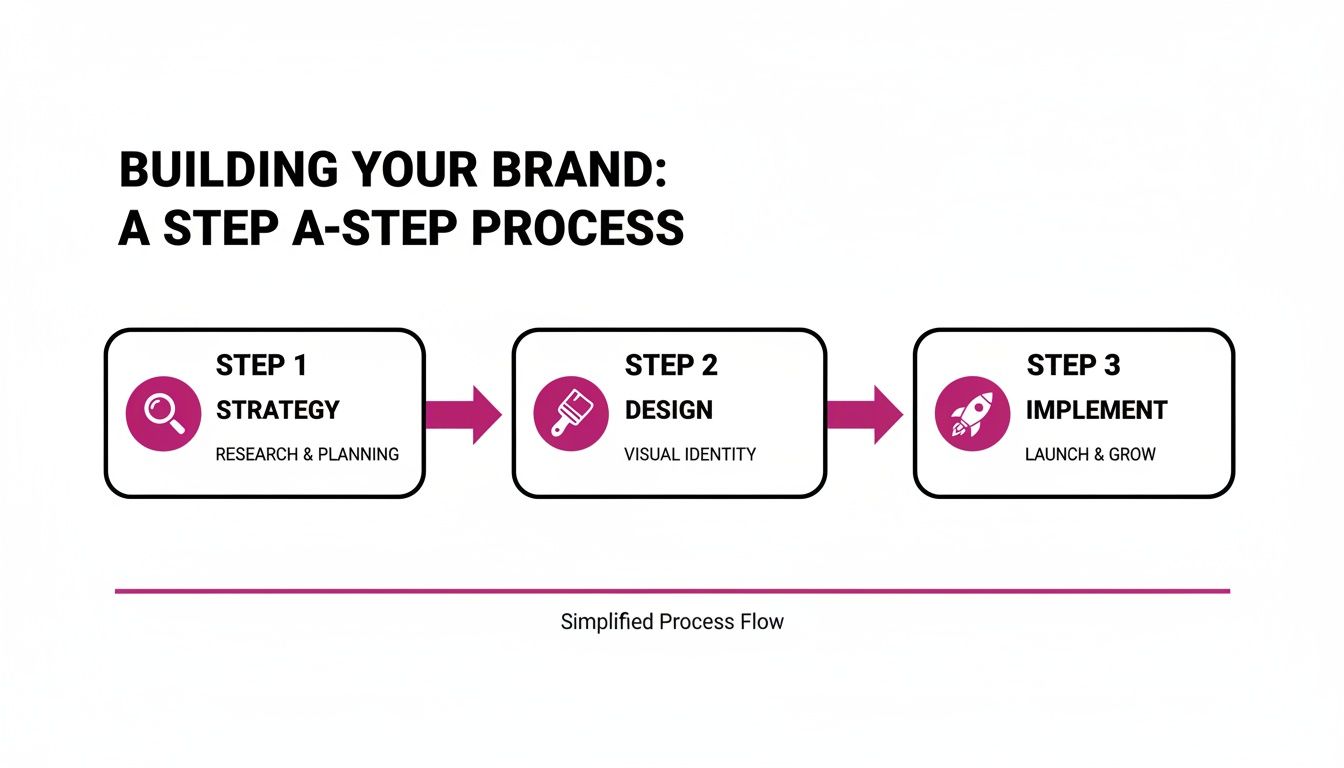
This flow really drives home the point that great design and execution are built on a rock-solid strategy. Skipping the first step just leads to expensive rework and an inconsistent mess down the line.
The Business Case for a Cohesive Identity
Pouring time and effort into building a strong identity isn't just some fluffy creative project; it's a smart business move with real returns. A cohesive brand experience builds credibility and trust, which is the absolute bedrock of customer loyalty. When customers trust you, they come back. Simple as that.
Plus, a well-defined identity gives you pricing power. Brands like Apple or Nike don't just sell gadgets and shoes. They sell an experience, a status, and a promise of quality that their identity constantly reinforces. That perception of value is built brick by brick through deliberate, consistent branding. As you start planning, it's worth looking into platforms that offer powerful branding capabilities to see what's possible.
A strong brand identity acts as your silent ambassador. It works around the clock to communicate your value, differentiate you from competitors, and forge an emotional connection with your audience long before they ever click "add to cart."
The Financial Impact of Great Branding
The numbers don't lie—the financial upside is huge. Look at global brand value metrics and you'll see the tangible ROI. The value of the world's top 5,000 brands shot up from $11 trillion in 2023 to over $13 trillion in 2024. That's a leap of more than 20% in just one year.
This explosive growth makes it clear: learning how to create a brand identity isn't a "nice-to-have." It's a strategic must for anyone serious about leading the market.
To get a clearer picture of the process, I've broken down the brand-building journey into four distinct phases. This framework helps organize the work from abstract ideas all the way to a tangible, living brand.
The Four Phases of Building a Brand Identity
Each of these phases builds on the last. Rushing through the early stages will only cause problems later, so take the time to get the foundation right before moving on to the more creative design elements.
Uncovering Your Brand's Authentic Core
The best brands feel real because they are. They aren’t just built on clever marketing slogans or a slick logo; they’re built on a solid foundation of truth. This is the part where you have to roll up your sleeves and dig deep to define what your business genuinely stands for. Honestly, this needs to happen long before you even think about design. It’s the single most important step in creating a brand identity that actually lasts.
Think of this foundational work as your brand’s north star. Whenever you hit a tough decision down the road—which marketing channel to invest in, what kind of product to launch next—you can always come back to this core identity to find the right answer. Without it, you’re just guessing.
Define Your Mission, Vision, and Values
This isn't just corporate fluff for a slide deck. It's the very DNA of your brand, the internal compass that guides every single decision you make.
- Your Mission (The "Why"): What's your purpose beyond just making money? For an eCommerce brand selling sustainable home goods, a mission might be, "To make eco-friendly living accessible and beautiful for every family."
- Your Vision (The "Where"): This is your big, audacious goal for the future. Where are you headed? That same brand’s vision could be, "A world where every home is a healthy, sustainable sanctuary."
- Your Values (The "How"): These are your non-negotiable principles. How will you operate? Values could be things like "Radical Transparency," "Community First," or "Uncompromising Quality."
Nailing these down gives you a crystal-clear picture of who you are and what you're all about. It’s the bedrock of an authentic brand.
Get to Know Your Ideal Audience
You can’t build a brand for everyone. If you try, you’ll end up with something bland and forgettable that doesn't really connect with anyone. The key is to get hyper-specific about who you're trying to reach. This means digging much deeper than basic demographics like age and location.
You need to get into their heads and understand their psychographics—what are their hopes, fears, frustrations, and dreams? What keeps them up at night? What does a "win" look like in their day?
A fantastic way to do this is by building detailed customer avatars. We actually walk you through the entire process in our guide on how to create buyer personas, which gives you a framework for documenting these crucial insights. This deep understanding is what allows you to build a brand that speaks directly to them and makes them feel truly seen.
Analyze Your Competitive Landscape
Once you have a handle on yourself and your customer, it's time to scope out the competition. The goal here isn't to copy them. It's to find the gaps. You're looking for unmet needs and opportunities to do something different.
Fire up a competitive analysis, but go beyond just their products and prices. Look at:
- Messaging: What's their brand voice? Are they serious and authoritative, or are they fun and irreverent?
- Visuals: What colors, fonts, and imagery are they using? What kind of mood does it set?
- Positioning: Who are they talking to? Are they the budget option, the luxury choice, or something in between?
This analysis will help you spot a unique space in the market where your brand can truly own it. Maybe all your competitors are hammering on technical specs and performance, leaving a wide-open lane for a brand that focuses on community and the customer experience.
By thoroughly analyzing your competitors, you can find the "blue ocean"—a unique market position where you can stand out, face less direct competition, and build a truly memorable brand.
Craft Your Brand Positioning Statement
Okay, time to pull it all together. All this research culminates in a single, powerful brand positioning statement. This is an internal-facing sentence that acts as the ultimate guide for your entire brand strategy. It clearly spells out your unique value to your target audience.
A classic template that works wonders looks like this:
For [Your Target Audience], [Your Brand Name] is the only [Market Category] that [Your Unique Differentiator/Promise] because [Reason to Believe].
Let’s go back to our sustainable home goods brand. Their positioning statement might be: "For environmentally-conscious millennials, 'Evergreen Home' is the only online store that offers stylish, affordable, and plastic-free home essentials because we partner directly with ethical artisans to curate our exclusive collection."
This statement is your strategic anchor. It ensures that every piece of your brand identity—from your logo to your customer service emails—is perfectly aligned, consistent, and reinforcing your unique place in the market.
Designing Your Visual Identity System
Once you've nailed down your brand's core strategy, it's time for the fun part: turning those abstract ideas into a tangible, memorable visual language. This isn't just about picking pretty colors or a cool font. It's about building a cohesive visual system where every single piece works together to create instant recognition and communicate what makes you special. This is where your brand really starts to come alive.
Think of your visual identity as the face of your company. It’s what people will see on your website, your social media, and your product packaging. Getting it right means creating a look that isn't just nice to look at, but is a true reflection of your brand's personality and market position.
Your Logo: The Cornerstone of Your Visual Brand
Your logo is the most recognizable single asset you'll own. It’s a visual shorthand for everything your company stands for—your first impression and your most lasting symbol. Don't rush this. There are a few common types, each with its own strengths.
- Wordmarks: These are font-based logos that lean on the business name itself, like Google or Coca-Cola. They work best for brands with unique, catchy names.
- Lettermarks (Monograms): These use the brand's initials, like HBO (Home Box Office) or NASA. It’s a smart move for businesses with long or hard-to-pronounce names.
- Combination Marks: This is the most popular route, mixing a symbol or icon with a wordmark. Think of brands like Adidas or Target. This approach is incredibly versatile and helps build a strong association between your name and your symbol.
A big question I get asked a lot is whether to hire a pro designer or use an AI tool. AI logo generators are everywhere now, with the market growing from $0.48 billion in 2024 to a projected $0.59 billion in 2025. These tools are great for brainstorming and getting some initial ideas on the table without breaking the bank.
But honestly? Real success almost always needs a human touch to make sure the final design truly connects with your brand's core values. You can learn more about how AI is changing visual identity design to see just how much it's shaking up the industry.
Building Your Color Palette
Color is a psychological powerhouse. The colors you choose will trigger specific emotions and associations, so this decision can't be random. You need to think about the feeling you want to create for your customers.
For example, blue often signals trust and dependability, which is why you see it so much with tech and financial companies. Green is tied to nature, health, and growth—perfect for wellness or sustainable brands. Red can create a sense of urgency and excitement, often used by food and entertainment brands to grab your attention.
Don't just pick your favorite colors. Build a palette that strategically reflects your brand's personality and connects with the emotional drivers of your target audience. A well-chosen palette makes your brand feel right instantly.
Start by locking in one or two primary colors that really capture your core personality. From there, add two or three secondary colors for accents, backgrounds, and call-to-action buttons. Finally, pick a few neutrals (like shades of grey, beige, or off-white) for text and to give the design room to breathe.
Choosing Your Brand Typography
Typography is your brand’s voice, made visible. The fonts you pick say a lot about your personality—are you modern and minimalist, or classic and trustworthy? A good font pairing not only looks sharp but, critically for an eCommerce store, ensures everything is readable across all devices.
When selecting fonts, keep it simple and aim for an effective pairing:
- A Primary Font: This is for your main headings. It should be distinctive and packed with your brand's character. A bold, sans-serif font can feel modern and direct, while a serif font often feels more traditional and established.
- A Secondary Font: You'll use this for your body text, like product descriptions. The absolute top priority here is readability. It needs to be clean, easy on the eyes at smaller sizes, and complement your heading font without fighting it for attention.
Always, always test your fonts on both desktop and mobile screens to make sure they look crisp and clear. Poor readability will kill your conversion rates faster than almost anything else. The goal is a typographic system that's both beautiful and functional, reinforcing who you are while making it easy for customers to shop.
All of these visual elements—your logo, colors, and fonts—need to work together in harmony. Once you have them defined, the next step is to document them so everyone on your team uses them consistently. You can get a head start by checking out our detailed guide on how to create brand guidelines, which will be your brand's bible as you grow.
Finding Your Brand Voice and Messaging
Your visual identity gets people to look, but your words get them to listen. And, ultimately, to buy.
If your visual system is the face of your brand, your brand voice is its personality. It’s how you come across in every single piece of communication—from a punchy homepage headline all the way down to the microcopy on a checkout button. A consistent voice builds that crucial sense of familiarity and trust, making your brand feel less like a faceless corporation and more like a person they know.
Think about the brands you love. Dollar Shave Club’s witty, almost irreverent tone is unmistakable. Patagonia sounds like a seasoned, inspiring adventurer who’s seen it all. Neither of those happened by accident. They were deliberate choices, meticulously applied everywhere. This is where you find a voice that’s authentic to your brand’s values and, just as importantly, resonates with your ideal customer.
Defining Your Brand Voice with a Simple Chart
So, how do you get from abstract ideas about personality to a concrete, usable voice? A brand voice chart is one of the most practical tools in the box. It’s a simple way to translate a personality trait into tangible dos and don'ts for anyone writing your copy.
It’s not enough to just say, "we're friendly." You have to get specific. Does "friendly" mean you're peppering copy with emojis and slang, or does it mean you’re warm and encouraging? Nailing this down is a huge part of figuring out what is brand voice and how to find yours, and it shapes your entire messaging strategy.
Here’s a simple framework to get you started:
Pick three to four core traits that truly align with your brand's personality and fill this out. This simple document becomes an invaluable guide for your team, ensuring everyone sounds like they're coming from the same place.
Building a Clear Messaging Hierarchy
Once your voice is defined, you can build out your core messaging. This isn't just a random collection of taglines and marketing-speak; it's a strategic hierarchy that communicates your value at different stages of the customer journey.
- Tagline: This is your brand's battle cry. A short, memorable phrase that captures your entire essence. Nike’s "Just Do It" is the gold standard—it’s not about shoes, it's about a mindset.
- Value Proposition: This is your promise, stated clearly and concisely. It has to answer the customer’s all-important question: "What's in it for me?" For a meal kit service, this might be, "Healthy, chef-designed meals delivered to your door in 30 minutes or less."
- Supporting Pillars: Think of these as the 3-4 key themes or benefits that prove your value proposition. For that same meal kit service, the pillars might be 1) Unbeatable Convenience, 2) Fresh, Healthy Ingredients, and 3) Exciting Culinary Variety.
Your messaging hierarchy works like an inverted pyramid. The tagline grabs attention, the value proposition makes a clear promise, and the supporting pillars provide the proof and detail that convince customers to believe in that promise.
This structured approach makes sure your communication is not only consistent in tone but also strategically focused on what your audience actually cares about. Every email, social post, and product description should tie back to these core messages, reinforcing who you are at every single touchpoint.
Bringing Your Brand to Life on Your eCommerce Store
All the strategy, design work, and messaging frameworks are just theory until you put them into practice. This is the moment your brand stops being a document and becomes a living, breathing experience for your customers. Your eCommerce store is the main stage where it all happens.
Bringing your brand to life is so much more than just uploading a new logo and tweaking a few colors in your Shopify theme. It's about systematically weaving your brand’s personality into every pixel and every word. The goal is a seamless, immersive experience that feels authentic and builds trust from the moment someone lands on your site.
Applying Your Visual Identity System
Your visuals are the first thing people notice—the most immediate signal of who you are. When you apply them consistently and professionally, you're telling customers you’re credible and you care about the details. This initial rollout is critical, as it sets the tone for the entire customer journey.
- Logo Placement: Your logo needs to show up consistently in the header on every single page, as well as the footer. And don't forget the favicon! That tiny icon in the browser tab is a small but mighty branding opportunity.
- Color Palette Implementation: Head into your theme’s settings and update the colors. Use your primary colors for the big stuff—headers, footers, and call-to-action buttons. Secondary and neutral colors work best for backgrounds, text, and other less critical elements to create a clean, balanced look.
- Typography Setup: Configure your theme to use your chosen brand fonts for headings and body text. Pay close attention to size, weight, and spacing. A beautiful font that’s a pain to read is a conversion killer, especially on mobile.
The demand for strong visual branding is exploding. The corporate identity design market is projected to jump from $8.62 billion in 2024 to $9.86 billion in 2025. That number alone shows just how seriously businesses are taking this. Explore more on the corporate identity design market trends to see how this investment is shaping the competitive landscape.
Weaving Your Brand Voice into Every Corner
Okay, your store looks the part. Now it's time to make it sound like your brand. A consistent tone of voice is what builds a real relationship with your audience. Nothing shatters the illusion faster than a witty product description followed by a robotic, sterile checkout process. It just erodes trust.
Think of every piece of text on your site as another touchpoint in a conversation with your customer.
Your brand voice shouldn't stop at the marketing copy. It needs to permeate everything, including the often-overlooked functional text. The copy on a 404 error page, a confirmation email, or a simple form field is a chance to reinforce your personality and delight your customer.
To pull this off, you need to do a content audit of your entire site, paying special attention to the little corners that often get missed.
Key Areas for Voice Implementation
Enhancing User Experience Through Brand Identity
Finally, a strong brand identity directly improves user experience (UX) and, by extension, your conversion rates. When your visuals and messaging are consistent, your site becomes more intuitive to navigate. Customers know what to expect, which reduces friction and makes them feel more confident hitting that "buy now" button.
Think about how your brand assets can actively guide the user through your store.
- Consistent Imagery: Using a consistent style for your product photography and lifestyle images creates a polished, professional feel. This visual harmony helps users immediately grasp your product quality and the lifestyle you're selling.
- Clear Calls to Action (CTAs): Your brand colors should be used strategically to make your CTAs pop. When the "Add to Cart" button is always the same recognizable color, users don't have to think twice about where to click.
- Trust Signals: A cohesive brand identity, applied across every single page, is a massive trust signal. It shows there's a legitimate, professional business behind the website, which is absolutely crucial for converting first-time visitors who might be hesitant to share their credit card info.
Common Questions About Creating a Brand Identity
Even with the best roadmap laid out, building a brand identity always kicks up a few practical questions. How much is this really going to cost? How long will it take? And what happens if my brand needs to change a few years down the line?
Getting straight answers to these questions is key to managing the process without pulling your hair out. It helps set realistic expectations from day one.
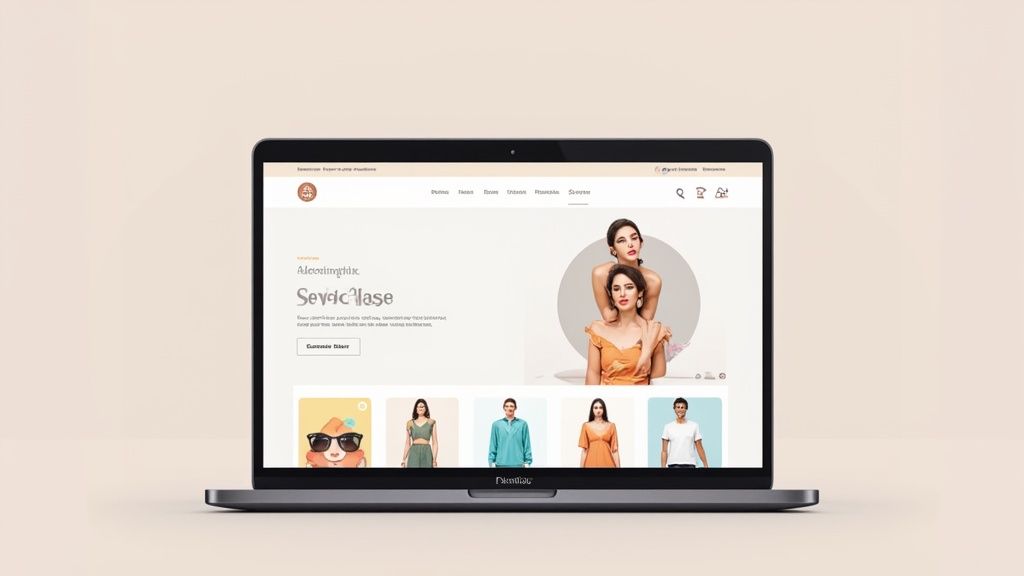
Think of this section as the practical FAQ for getting through the real-world hurdles of brand building. We'll cut through the fluff and give you the insights you need to move forward with confidence, especially when strategy starts turning into reality.
How Much Should I Budget for Brand Identity?
This is the big one, but the answer doesn't have to be terrifying. The cost of creating a brand identity can swing wildly, from a couple hundred bucks for a DIY setup to tens of thousands for a full-service agency. Your budget really just depends on your business stage, what you need, and the resources you have.
Here’s a realistic look at what you can expect:
- DIY Approach ($100 - $500): If you're pre-launch or fully bootstrapped, tools like AI logo generators and brand kit creators can get you off the ground fast. It’s a viable option to get to market, but just know it often lacks the strategic thinking that makes a brand truly stick.
- Freelance Designer ($1,500 - $5,000): This is a fantastic middle-ground for growing businesses. Hiring an experienced freelancer gets you a professional logo, a thought-out color palette, and basic brand guidelines without the agency price tag.
- Boutique Agency ($5,000 - $20,000+): When you're ready to scale or looking to rebrand an established business, a small agency is your best bet. This route typically covers the whole nine yards: market research, brand strategy, messaging, and a complete visual identity system.
The most important shift in mindset is to see this as an investment, not an expense. A strong brand identity pays for itself over and over again in customer loyalty and perceived value.
How Long Does It Take to Create a Brand Identity?
Patience is everything here. Rushing the process is one of the biggest mistakes you can make, because it almost always results in a shallow identity that just doesn't connect with anyone. The actual timeline will depend on the scope and who's doing the work.
But a realistic timeframe usually breaks down like this:
- Research & Strategy (1-3 weeks): This is all about deep dives into your audience, competitors, and market position. Whatever you do, don't skip this.
- Visual Design & Messaging (2-4 weeks): The creative fun begins. This is where your logo, colors, fonts, and brand voice are developed and refined based on feedback.
- Implementation & Guidelines (1-2 weeks): The final leg. Here, you apply the new identity to key places (like your website) and create the style guide to keep everything consistent moving forward.
A well-crafted brand identity isn't built overnight. Expect the entire process to take anywhere from four to nine weeks. This gives you enough runway for the thoughtful strategy and creative work needed to build something that lasts.
Can My Brand Identity Evolve Over Time?
Absolutely. In fact, it should. A brand is a living, breathing thing—not some static PDF you lock in a drawer. Markets shift, customer tastes change, and your business will grow. A great brand identity is built on a solid, timeless foundation but has the flexibility to adapt.
Just think of it as a brand evolution, not a revolution. Complete rebrands are expensive and can seriously confuse loyal customers. The goal is to make subtle updates that keep your brand feeling current and relevant without ditching what makes it yours.
Starbucks, for example, has tweaked its logo several times over the decades. Each change was a simplification to reflect a more modern, global feel, but they never abandoned the iconic siren. That’s how they stay recognizable while keeping up with design trends.
How Do I Know If My Brand Identity Is Working?
Measuring brand identity success isn't about one magic metric. It’s about looking at a collection of signs that show your brand is actually connecting with your audience and helping you hit your business goals.
You can get a good read on its effectiveness by tracking a mix of qualitative and quantitative data:
- Brand Awareness: Keep an eye on metrics like direct website traffic, social media mentions, and how many people are searching for your brand name. If these are trending up, your brand is becoming more memorable.
- Customer Feedback: What are people saying about you? Dive into reviews, social media comments, and customer service chats. When you see positive sentiment and people mentioning your brand's personality, you know you're on the right track.
- Conversion Rates: While not a direct measure, a strong and trustworthy brand identity often leads to better conversion rates, higher average order value, and more repeat customers over time.
At the end of the day, a successful brand identity simply makes it easier to attract the right customers and turn them into raving fans.
Ready to build an eCommerce brand that not only looks incredible but is engineered to grow? ECORN specializes in Shopify design, development, and conversion rate optimization to bring your brand identity to life. Let's build your standout brand together.


Ecommerce Loyalty Program Software How to Choose and Launch
Shopify Plans Comparison for Every Business Stage
How to Improve User Experience for eCommerce Growth
Shopify Checkout Optimization That Converts More
Shopify Inventory Sync: A Practical Setup Guide
Shopify App Integration Playbook That Scales
Shopify CMS Integration: Your 2026 Guide to Options
Shopify Store Audit: Find Hidden Conversion Leaks
Shopify Plus Experts: How to Hire the Right Team
Chargeback Protection Shopify: A Practical 2026 Guide
8 Examples of Conversion Rate Optimization
How to Conversion Rate Optimization for Shopify Stores
Shopify Design Essentials Every Store Owner Needs
Ecommerce Terms of Service: How to Draft and Implement
How to Implement Structured Data for Ecommerce in 2026
SEO App Mobile: Shopify Store Optimization Guide
Shopify Plus Support: What It Includes and How to Choose
Google Ads for Shopify: The Complete 2026 Playbook
Shopify New York: How to Find and Hire the Right Agency
Google Search Console for Shopify: The Complete Setup
First Party Data Collection for eCommerce Growth
FAQ Online Store Guide: Build and Measure It Right
Do FB Ads Work for eCommerce in 2026?
One Page Checkout for Shopify: Design and Implementation
Shopify GraphQL vs REST: The 2026 Developer Decision
Shopify Ecommerce Consulting: Strategy, Pricing &
Are Reddit Ads Worth It for eCommerce Brands
Shopify Title and Meta Description: A Practical 2026 Guide
Product Video Best Practices for Shopify Brands
Real-Time Inventory Management: A 2026 Guide
AI Chatbot Integration for Shopify Stores
Affiliate Program Management: A Shopify Guide
10 Best Performance Monitoring Tools for Shopify in 2026
Digital Asset Management for eCommerce Brands in 2026
Every Type of Facebook Ads Explained for eCommerce Growth
Product Information Management Explained for Shopify Brands
Support Ticket System: A Guide for Shopify Stores

10 Best Customer Service Tools for Shopify in 2026

Can I Start a Business with No Money? a 2026 Blueprint
What Sells Good on Etsy: Best Niches for 2026

Shopify Add to Cart Button: A Practical 2026 Guide

Customer Feedback Automation: A Practical eCommerce Guide
Critical Rendering Path: A Guide for Shopify Stores

How to Promote on TikTok for eCommerce in 2026

B2B eCommerce Consulting That Drives Real Revenue
10 Best Practices for Site Navigation in 2026
Return vs Refund for Shopify Stores: A Practical Guide
What Is Customer Lifetime Value and Why It Matters
What Is Voice of Customer Research for eCommerce

SMS Marketing for Ecommerce That Actually Converts

Master How to Improve Email Deliverability in 2026
Top 7 eCommerce Partners NYC for Shopify Brands in 2026
Machine Learning for Ecommerce: Boost Your Shopify Store
Beauty Market Research: Your 2026 Growth Guide
Shopify International Expansion: A 2026 Roadmap
What Does CRO Stand for in Business: Understanding CRO
Shopify Visual Merchandising: A Playbook for Higher Sales
Shopify Landing Page Design: Master Conversion in 2026
10 Best AI SEO Optimization Tools for Shopify in 2026

Agentic AI for Ecommerce: Boost Your Sales in 2026
Mastering Email Marketing Data for eCommerce Growth
Conversion Rate Optimisation Australia: Boost Your Sales
Conversion Rate Optimization AI: Your Shopify Store Guide

10 Product Bundling Strategies for Shopify in 2026
How to Increase Customer Lifetime Value: A Shopify Playbook
AI Customer Service Automation: Shopify Guide 2026
Clean Website Design: A Shopify Conversion Playbook

Omnichannel Retail Strategy: A Shopify Playbook
Product Data Enrichment: A Guide for Shopify Brands
Instagram Shopping Features a Guide for Shopify Stores
What Is Revenue Optimization: A Holistic RevOps Guide
Benefits of Conversion Rate Optimization: Boost Your
WordPress to Shopify Migration: Your 2026 Seamless Switch
Boost Sales: Ecommerce Payment Processing Guide 2026
Unified Commerce Platform: Benefits, KPIs & Shopify Guide
How to Reduce Bounce Rate eCommerce: Your 2026 Guide
Shopify API Integration: A Practical End-to-End Guide
How to Implement Data Governance: A 2026 Guide
Shopify Store Development Cost: A 2026 Breakdown
What Is Server Side Tracking: The Shopify Guide 2026
Marketing Automation Workflows: A Shopify Guide for 2026
Shopify: How to Reduce Technical Debt

Shopify UX Design Change: A Playbook for Growth
User Generated Content Strategy: Shopify Playbook
Shopify Pause and Build Plan Cost: A Complete 2026 Guide
Compare at Price on Shopify: A Complete Guide for 2026
Where Can I Sell My Prints? 10 Best Platforms for 2026
Shopify Order Management System: The Ultimate Guide 2026
What Is Marketing Attribution? an eCommerce Guide for 2026
10 Best Black Friday Sales Sheets for 2026

Discover the Top Social Media Marketing Agencies For
Consumer Confidence Definition for eCommerce in 2026
What Is Social Commerce? Your 2026 Guide to Boosting Sales
A Social Ad Campaign Playbook for eCommerce Growth
7 Best FAQ Page Examples for SaaS & eCommerce

Market Research in Fashion Industry: A Guide for Shopify
Shopify Migration Services: Expert Guide for 2026
Mastering FB Retargeting Ads for Shopify in 2026
What Is Omnichannel Ecommerce
Master Your Shopify Plus Migration: The 2026 Guide


newsletter in your inbox