

The real difference in the Shopify vs. BigCommerce debate boils down to this: Shopify is your go-to for getting a direct-to-consumer (DTC) brand off the ground quickly and easily, leaning heavily on its massive app store. On the flip side, BigCommerce comes loaded with powerful built-in functionality, making it a better fit for established businesses, B2B sellers, and anyone who wants to avoid relying on a patchwork of third-party apps.
Choosing Your Ecommerce Platform: The Core Decision
Picking an ecommerce platform is one of the most foundational decisions you'll make for your business. It dictates your day-to-day operations, your ability to scale, and your long-term costs. Forget the marketing fluff—this is a practical, head-to-head breakdown of what actually matters when you put these two giants side-by-side. The goal isn’t to find the “best” platform, but the best one for you.
To get it right, you have to understand the core philosophy behind each one. If you want to dig deeper into the high-level thinking that goes into this choice, our guide on how to choose an ecommerce platform is a great place to start.
Shopify vs. BigCommerce At a Glance
Before we get into the nitty-gritty details, this quick table sums up the major differences. Think of it as your cheat sheet for seeing which platform vibes with your business model right from the start.
This table gives you a solid starting point, but the real story is in the details.
Shopify's clean, modern homepage perfectly captures its appeal to entrepreneurs and creators who are focused on building a beautiful brand from the ground up.
This design-forward approach reinforces its identity as the accessible, stylish platform for modern commerce. Now, let’s break down how these differences play out in the real world.
Understanding Market Share and Platform Ecosystems
When you’re sizing up Shopify vs. BigCommerce, it’s easy to get lost in feature lists. But one of the most critical factors isn't a feature at all—it's the ecosystem. A platform's market share has a huge ripple effect on everything from the number of available apps and skilled developers to the quality of community support you can find. It’s a pretty solid clue about its long-term stability and the resources you’ll have to work with.
Shopify's dominance in the market is impossible to ignore. As of 2025, it commands a hefty 10.32% of the global ecommerce platform market. That number gets even more impressive when you zoom in on the United States, where it captures nearly 29% of the market. With around 4.8 million active stores, this massive user base creates a powerful, self-feeding ecosystem. You can dig deeper into Shopify's market penetration stats to see the full picture.
The Shopify Ecosystem Advantage
So, what does this widespread adoption actually mean for a store owner? It's a direct pipeline to opportunity. The sheer number of stores creates a massive demand for tools, leading to an absolutely enormous app marketplace with over 10,000 applications.
If you need a specific marketing automation tool, a complex inventory system, or a one-of-a-kind customer loyalty program, chances are good someone has already built an app for it. This gives you incredible flexibility to customize your store, though you'll often have to pay for that privilege with monthly app subscriptions.
The real power of Shopify’s massive ecosystem is the talent pool it attracts. It's just plain easier to find experienced developers, designers, and marketing agencies who live and breathe Shopify. That competition often means better quality and more affordable rates for you.
BigCommerce's Strategic Position
While Shopify wins the numbers game, BigCommerce has smartly carved out its own space as a serious contender, especially for stores with more complex operations. It really resonates with mid-market and enterprise businesses—particularly in B2B—that would rather have powerful features built-in than bolt them on with apps.
BigCommerce's ecosystem is smaller, but it's also more curated and focused. The platform made a conscious choice to include advanced features right out of the box, like sophisticated product options and native multi-currency support, which reduces your dependency on third-party solutions. It’s a more controlled, all-in-one approach.
In the end, it really comes down to your business philosophy. If you want a sprawling, diverse ecosystem with endless ways to customize through apps, Shopify's market leadership is a huge plus. But if you’d prefer a powerhouse platform with more built-in muscle to keep your tech stack lean, BigCommerce is a powerful and strategic alternative.
Decoding Pricing Models and Total Cost of Ownership
Looking at the monthly sticker price for a platform is just scratching the surface. To really figure out which is the better deal in the Shopify vs. BigCommerce showdown, you need to understand the Total Cost of Ownership (TCO). This includes everything—transaction fees, app subscriptions, themes—the whole shebang.
The two platforms come at pricing from completely different places. Shopify’s plans are built around the features you get, but they also include transaction fees of 0.5% to 2% on every sale unless you use their in-house payment processor, Shopify Payments. It's a clear nudge to keep everything within their ecosystem.
On the other hand, BigCommerce famously advertises zero transaction fees across all its plans, a huge draw for many merchants. The catch? Their pricing tiers are directly linked to your annual sales volume. Cross a certain revenue threshold, and you're automatically bumped up to a more expensive plan.
Hidden Costs and Scaling Expenses
This fundamental difference is a massive fork in the road for any growing business. What looks cheap today can get expensive fast as you scale.
For example, a fast-growing store on BigCommerce could get hit with an unexpected plan upgrade, suddenly spiking its monthly costs. Conversely, a Shopify merchant might see their TCO climb as they add essential third-party apps to get the same functionality that BigCommerce offers out of the box.
A lower upfront cost doesn't always mean a cheaper platform in the long run. You must account for app subscriptions, premium themes, and potential transaction fees to see the full financial picture.
This is where you have to look beyond just the fees. Recent analyses have shown that Shopify actually has an edge here, with an estimated 31% better TCO than BigCommerce. This isn't just about fees; it's driven by better operational efficiency and faster server performance, which has a real impact on sales. Add to that the platform’s roughly 12% higher conversion rates, and you start to see a clear revenue advantage that can easily make up for any extra app costs. You can learn more about Shopify's performance advantages over BigCommerce.
Which Pricing Model Fits You Best
So, how do you know which model is right for you? It really boils down to your growth plans and what you prioritize.
- Choose Shopify if: You plan on using Shopify Payments, care deeply about conversion rates, and want access to the biggest app store on the market. You'll need to budget for monthly app fees, but the overall TCO often ends up being lower as your store grows.
- Choose BigCommerce if: You absolutely must use a specific third-party payment gateway and want to avoid transaction fees at all costs. This model is often a better fit for businesses with steady, predictable growth that won’t trigger those sudden, mandatory plan upgrades.
Ultimately, the best thing you can do is map out your projected sales and the features you’ll need over the next year. This simple exercise will quickly show you which platform’s pricing philosophy truly aligns with your financial strategy and help you sidestep any costly surprises later on.
Comparing Core Features and Built-In Functionality
When you get down to brass tacks, the core philosophy of each platform becomes crystal clear just by looking at their out-of-the-box features. This isn't just a simple checklist; it's a fundamental difference in how they think you should build an online store. The whole Shopify vs. BigCommerce debate really boils down to this: do you want a powerful, all-in-one toolkit right from the start, or do you prefer a sleek, streamlined base that you can build upon with apps?
BigCommerce unapologetically markets itself as the "batteries included" platform. It packs an impressive number of advanced features into its standard plans, saving you the hassle and cost of installing extra apps. For merchants with complex operational needs from day one, this is a massive advantage.
BigCommerce: The Power of Native Functionality
Let’s say you sell custom furniture with hundreds of different fabric and finish combinations. With BigCommerce, handling those intricate product options is something you can do right out of the box. No app needed.
Key native features in BigCommerce include:
- Complex Product Options: You can manage up to 600 variants for a single product natively. This is a game-changer for stores selling highly configurable items.
- Multi-Currency Selling: Let your international customers browse and buy in their local currency without bolting on a third-party app.
- Real-Time Shipping Quotes: Pull accurate shipping costs directly from major carriers and display them in the cart, which can seriously help your conversion rates.
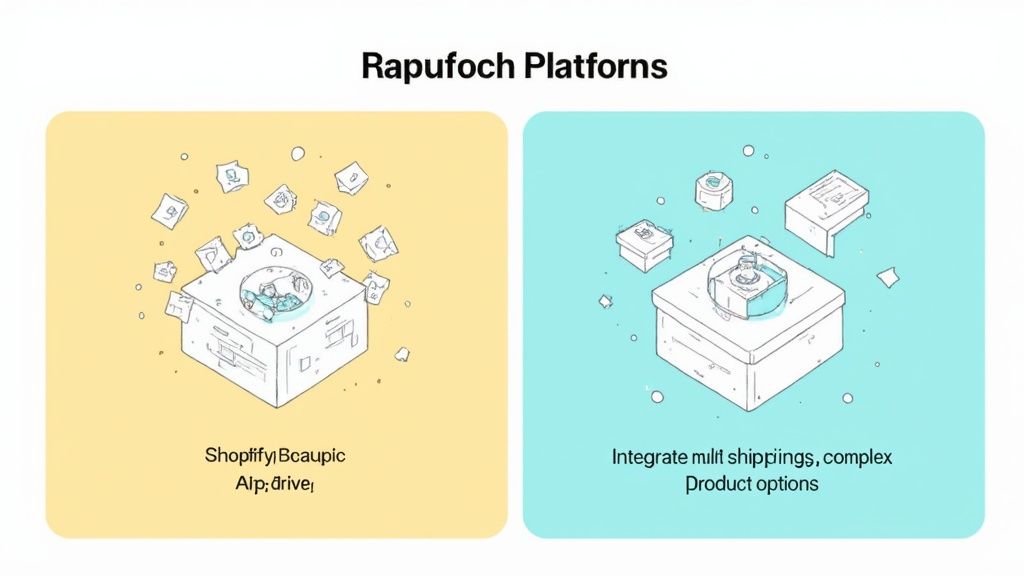
The strategy behind BigCommerce is to cut down on your reliance on third-party apps. This can lower your monthly bills and help you avoid the "app fatigue" that comes from juggling multiple subscriptions and worrying about software conflicts.
Shopify: The App-Driven Powerhouse
Shopify takes the complete opposite route. It gives you a sleek, powerful, and incredibly user-friendly core platform, then lets you handle specialized tasks through its world-class App Store. This approach offers incredible flexibility, allowing you to piece together a tech stack that’s a perfect fit for your business.
A fashion brand, for instance, might prioritize an advanced visual search app, while a food subscription box business absolutely needs a solid recurring payments app. Shopify lets you pick and choose your tools, but remember—this flexibility comes at a price, as many of those essential apps have their own monthly fees. When you're comparing core features, payment processing and integrations are crucial; digging into the leading payment gateways for small businesses can give you a better feel for these critical functions.
Even with a smaller global market share of around 3.2%, BigCommerce holds its ground by appealing directly to merchants who crave that built-in power. Enterprise clients, who actually make up about 75% of its revenue, often pick BigCommerce specifically for its robust native B2B features, helping it earn high satisfaction rates from its users.
In the end, the right choice really hinges on your business model. If your store needs complex features right away, BigCommerce offers a more integrated and often more cost-effective solution. But if you value flexibility above all and want to build a completely custom toolkit from a huge ecosystem of apps, Shopify's model is tough to beat.
Looking at Design Flexibility and Store Customization
Your storefront is the digital handshake with your customers, which makes creative control a huge deal when stacking Shopify up against BigCommerce. Both platforms give you the tools to build a gorgeous store, but they come at it from two totally different mindsets.
Shopify is famous for its slick, user-friendly theme editor and a massive library of over 220 polished, mobile-ready themes. Its drag-and-drop system is so intuitive that even founders who've never touched a line of code can get a professional-looking site live in no time. It's all about accessibility, making it the perfect choice for brands that want to get to market fast with a visually stunning store.
Getting Technical with Customization Frameworks
Over on the BigCommerce side of things, the game is all about its powerful Stencil framework. Sure, it has a visual page builder too, but Stencil is built to give developers deep access to the theme files on the backend. This is where you can start implementing really complex logic or unique features right into the theme itself—a massive plus for businesses with very specific design needs.
Just look at BigCommerce’s own homepage; it practically screams that it's for established brands that need a powerhouse of built-in features to manage complex operations.
This isn’t just marketing; it’s a reflection of a platform designed for merchants who need that granular control under the hood.
Here’s the bottom line: Shopify is all about ease of use and a guided design path. BigCommerce, on the other hand, offers a much higher ceiling for technical customization if you have the developer resources to take advantage of it.
Think of it this way: a new clothing boutique could launch a killer site on Shopify over a weekend just by picking a premium theme. But an auto parts store that needs a sophisticated "does this part fit my car?" finder and custom product filters? They'll probably find BigCommerce’s Stencil framework is the only way to build that kind of specialized functionality right into the store's DNA. It really comes down to what you value more: streamlined simplicity or deep, developer-led control.
Assessing Scalability and Enterprise Performance
A platform that handles your current business volume is one thing, but how does it hold up when you really start to hit your stride? That’s the real test. When we look at Shopify vs BigCommerce, both platforms have powerful enterprise-level plans, but they get there in fundamentally different ways. The path you choose will likely define how your business operates for years to come.
Shopify Plus is built for high-velocity, direct-to-consumer brands that live and die by speed, conversion rates, and a slick, customizable checkout. It’s engineered to handle colossal traffic surges—think Black Friday levels—without even flinching. For a brand like Skullcandy, jumping to Shopify Plus cut their new product launch time from a day and a half down to just 30 minutes.
Enterprise Paths: Shopify Plus vs. BigCommerce Enterprise
Shopify's whole philosophy for scaling is to give you a rock-solid, incredibly fast foundation and then let you bolt on whatever functionality you need through its massive app ecosystem. This means you can process a staggering number of orders while still leaning on specialized apps for things like loyalty programs or sophisticated marketing automation, often without needing a developer on standby.
BigCommerce Enterprise, on the other hand, bets on its powerful built-in feature set and top-tier API performance. It's a beast for businesses with seriously complex catalogs or those diving head-first into headless commerce. Its native ability to manage huge product variant lists and B2B functions without needing third-party apps is a huge plus for merchants with complicated back-end operations.
The decision for enterprise merchants really comes down to where you need the most power. Shopify Plus is king for high-conversion front-end experiences and operational speed, while BigCommerce Enterprise flexes its muscles on the back-end for intricate product catalogs and headless builds.
This distinction is more than just academic. Take the brand 4ocean, for example. They initially moved to BigCommerce to handle their growth but ran into a wall when simple site updates required expensive developer time. They eventually came back to Shopify. What they learned was that true scalability isn't just about handling traffic—it’s about keeping your team nimble and empowering marketing to move quickly without constant IT bottlenecks.
Ultimately, the right choice depends entirely on your growth strategy. If your roadmap is all about rapid DTC expansion and using a rich app ecosystem to fuel marketing and operations, Shopify Plus was practically built for you. But if your growth is tied to wrangling a complex, multi-faceted product catalog or building a completely custom headless storefront, BigCommerce Enterprise offers the powerful, API-first foundation you'll need to pull it off.
The Final Verdict: When to Choose Each Platform
Picking between Shopify and BigCommerce isn’t about crowning a single “best” platform. It’s about finding the right strategic partner for where your business is today and where you want it to go. After digging into the details of pricing, features, and scalability, the choice really boils down to your business model, how comfortable you are with technology, and your long-term vision.
Ultimately, this decision rests on a core philosophy: do you prefer a streamlined, app-heavy ecosystem that you can build out over time, or do you want a feature-rich, all-in-one powerhouse from day one? Your answer to that question will point you directly to the platform that feels less like a tool and more like an extension of your team.
Choose Shopify For Your Business
Shopify is the undisputed champion for direct-to-consumer (DTC) brands that live and breathe speed, beautiful design, and a massive app marketplace. It’s the go-to platform if your main goal is to get to market fast with a stunning storefront and then add more complex functionality as you scale.
You should go with Shopify if:
- You're a DTC brand laser-focused on social selling and building a powerful online presence.
- You need an intuitive, user-friendly interface that lets your marketing team move quickly without waiting on developers.
- You want access to a nearly endless app ecosystem for any customization or integration you can dream up.
- You plan to use Shopify Payments to simplify your checkout, eliminate extra transaction fees, and benefit from one of the highest-converting checkouts on the web.
Choose BigCommerce For Your Business
BigCommerce really shines for businesses that have more complex operational needs right from the start. It’s purpose-built for merchants who want to minimize their dependence on third-party apps by having robust, powerful tools baked directly into the platform’s core.
BigCommerce is the right move if:
- You're a B2B company or have a hybrid B2B/DTC model that needs features like custom pricing lists and quoting.
- You manage a large or complex product catalog with hundreds of variants and require powerful native management tools without needing an app.
- You want to keep your tech stack lean and your monthly app costs predictable by prioritizing powerful built-in features.
- You have developer resources on hand and want deep customization capabilities through its flexible Stencil theme framework.
This decision tree infographic is a great way to visualize the choice at the enterprise level, comparing Shopify Plus against BigCommerce Enterprise.
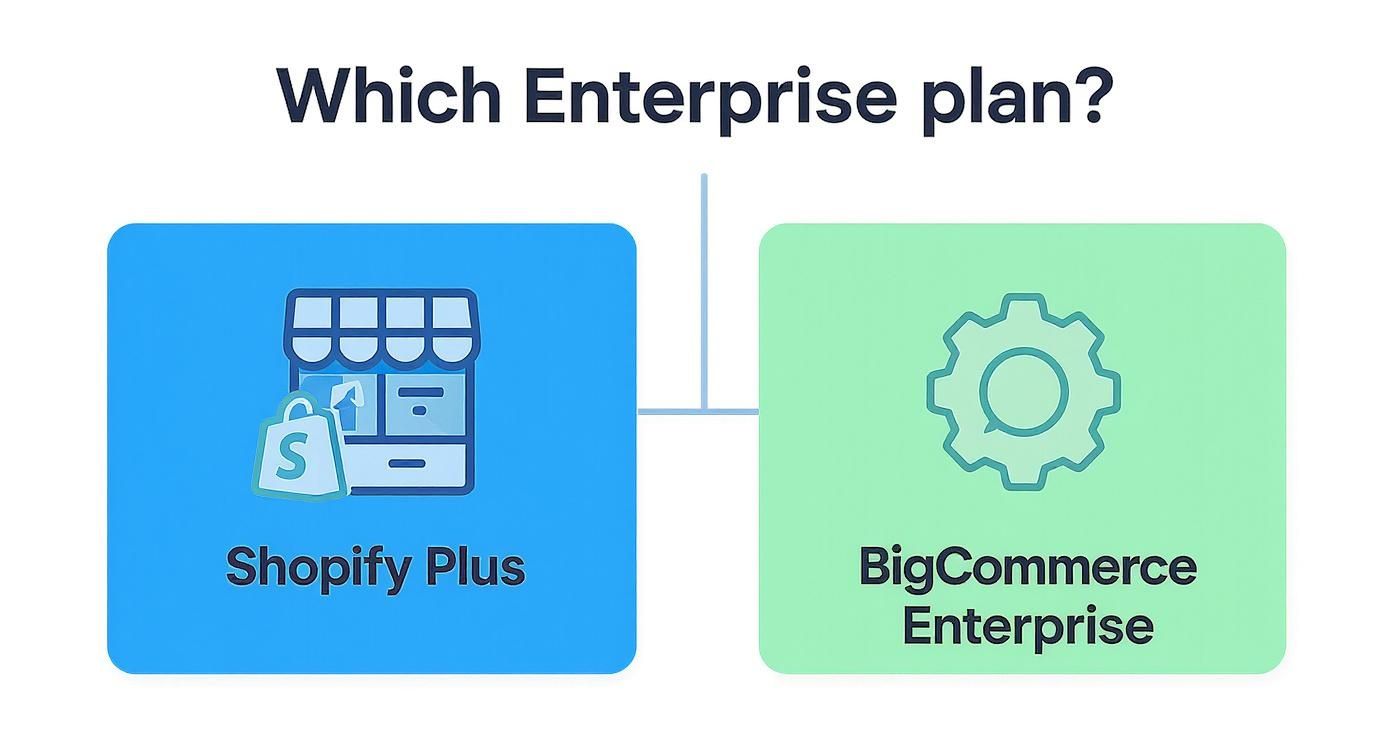
As you can see, Shopify Plus is a clear winner for brands needing deep checkout customization, while BigCommerce Enterprise is tailored for complex, feature-heavy operations right out of the box. If you've made your decision and a platform switch is in your future, our guide can help you successfully migrate from BigCommerce to Shopify.
No matter which platform you choose, having the right development partner is crucial for growth. At ECORN, we specialize in creating scalable, high-performing Shopify stores that drive results. Explore our services to see how we can help build your brand.


What Is AI Integration for eCommerce
How to Choose the Right eCommerce Website Development Firm
E Business Strategy Implementation
Conversion Tracking Setup for Shopify Stores
BigCommerce vs Shopify Plus Which Enterprise Wins in 2026
Shopify Theme Kit: Setup, Commands, and Migration Guide
Shopify Extension Development: A Practical 2026 Guide
Shopify Speed Score Explained and How to Improve It
Shopify Mobile Optimization: The 2026 Playbook
How to Add Subcategory in Shopify for Better UX
How to Implement Structured Data for Ecommerce in 2026
SEO App Mobile: Shopify Store Optimization Guide
Shopify Plus Support: What It Includes and How to Choose
Google Ads for Shopify: The Complete 2026 Playbook

Shopify New York: How to Find and Hire the Right Agency
Google Search Console for Shopify: The Complete Setup
First Party Data Collection for eCommerce Growth
FAQ Online Store Guide: Build and Measure It Right
Do FB Ads Work for eCommerce in 2026?
One Page Checkout for Shopify: Design and Implementation
Shopify GraphQL vs REST: The 2026 Developer Decision
Shopify Ecommerce Consulting: Strategy, Pricing &
Are Reddit Ads Worth It for eCommerce Brands
Shopify Title and Meta Description: A Practical 2026 Guide

Product Video Best Practices for Shopify Brands
Real-Time Inventory Management: A 2026 Guide
AI Chatbot Integration for Shopify Stores
Affiliate Program Management: A Shopify Guide
10 Best Performance Monitoring Tools for Shopify in 2026
Digital Asset Management for eCommerce Brands in 2026
Every Type of Facebook Ads Explained for eCommerce Growth
Product Information Management Explained for Shopify Brands
Support Ticket System: A Guide for Shopify Stores

10 Best Customer Service Tools for Shopify in 2026

Can I Start a Business with No Money? a 2026 Blueprint

What Sells Good on Etsy: Best Niches for 2026

Shopify Add to Cart Button: A Practical 2026 Guide

Customer Feedback Automation: A Practical eCommerce Guide
Critical Rendering Path: A Guide for Shopify Stores

How to Promote on TikTok for eCommerce in 2026

B2B eCommerce Consulting That Drives Real Revenue
10 Best Practices for Site Navigation in 2026
Return vs Refund for Shopify Stores: A Practical Guide
What Is Customer Lifetime Value and Why It Matters
What Is Voice of Customer Research for eCommerce

SMS Marketing for Ecommerce That Actually Converts

Master How to Improve Email Deliverability in 2026

Top 7 eCommerce Partners NYC for Shopify Brands in 2026
Machine Learning for Ecommerce: Boost Your Shopify Store

Beauty Market Research: Your 2026 Growth Guide

Shopify International Expansion: A 2026 Roadmap
What Does CRO Stand for in Business: Understanding CRO

Shopify Visual Merchandising: A Playbook for Higher Sales

Shopify Landing Page Design: Master Conversion in 2026
10 Best AI SEO Optimization Tools for Shopify in 2026

Agentic AI for Ecommerce: Boost Your Sales in 2026
Mastering Email Marketing Data for eCommerce Growth
Conversion Rate Optimisation Australia: Boost Your Sales
Conversion Rate Optimization AI: Your Shopify Store Guide

10 Product Bundling Strategies for Shopify in 2026
How to Increase Customer Lifetime Value: A Shopify Playbook
AI Customer Service Automation: Shopify Guide 2026
Clean Website Design: A Shopify Conversion Playbook

Omnichannel Retail Strategy: A Shopify Playbook
Product Data Enrichment: A Guide for Shopify Brands
Instagram Shopping Features a Guide for Shopify Stores
What Is Revenue Optimization: A Holistic RevOps Guide
Benefits of Conversion Rate Optimization: Boost Your
WordPress to Shopify Migration: Your 2026 Seamless Switch
Boost Sales: Ecommerce Payment Processing Guide 2026
Unified Commerce Platform: Benefits, KPIs & Shopify Guide
How to Reduce Bounce Rate eCommerce: Your 2026 Guide
Shopify API Integration: A Practical End-to-End Guide

How to Implement Data Governance: A 2026 Guide
Shopify Store Development Cost: A 2026 Breakdown
What Is Server Side Tracking: The Shopify Guide 2026
Marketing Automation Workflows: A Shopify Guide for 2026

Shopify: How to Reduce Technical Debt

Shopify UX Design Change: A Playbook for Growth
User Generated Content Strategy: Shopify Playbook

Shopify Pause and Build Plan Cost: A Complete 2026 Guide
Compare at Price on Shopify: A Complete Guide for 2026
Where Can I Sell My Prints? 10 Best Platforms for 2026
Shopify Order Management System: The Ultimate Guide 2026
What Is Marketing Attribution? an eCommerce Guide for 2026
10 Best Black Friday Sales Sheets for 2026

Discover the Top Social Media Marketing Agencies For
Consumer Confidence Definition for eCommerce in 2026
What Is Social Commerce? Your 2026 Guide to Boosting Sales
A Social Ad Campaign Playbook for eCommerce Growth
7 Best FAQ Page Examples for SaaS & eCommerce

Market Research in Fashion Industry: A Guide for Shopify
Shopify Migration Services: Expert Guide for 2026
Mastering FB Retargeting Ads for Shopify in 2026
What Is Omnichannel Ecommerce

Master Your Shopify Plus Migration: The 2026 Guide
Shopify Integration Services: A Merchant's 2026 Guide
Shopify Collection Description: A Guide to SEO & Sales

Shopify Plus Contact: Reach Sales & Support Effectively

Top Luxury Shopify Stores: Design & UX Strategies


newsletter in your inbox