

Here's the rewritten section, designed to sound like an experienced human expert:
Let’s be direct: zero-party data is the information your customers choose to share with you. It’s not inferred, it’s not tracked—it’s given. Think of things like style preferences, purchase intentions, or personal details they offer in exchange for a genuinely better, more relevant shopping experience.
The Shift Away From Cookies to Customer Trust
The ground is shifting under our feet. For years, eCommerce brands ran on a simple formula for understanding customers: track them across the web with third-party cookies. This invisible network painted a picture of a user's interests, though it was often a blurry and inaccurate one. Well, that era is officially over.
With major browsers killing off third-party cookies and privacy laws like GDPR getting tougher, the old playbook is useless. This isn't just some minor technical update; it’s a complete reset of how we connect with people online. If your brand relied on following users from site to site, you're now facing a huge problem. How do you recommend the perfect product when your main source of intel just vanished?
A New Era Built on Transparency
This new reality forces us to move away from creepy, covert tracking and start having actual conversations with our customers. It's a chance to build relationships on trust, not assumptions. This is exactly where zero-party data shines. The term, originally coined by Forrester Research, is all about the information customers willingly hand over, expecting a better experience in return. You can get more background on this shift over at econsultancy.com.
Instead of guessing what someone might want based on their browsing history, you can just… ask them. It sounds simple, but this direct approach is a game-changer.
- Unmatched Accuracy: The information comes straight from the source. No more guesswork. Your personalization efforts are now based on fact, not a fuzzy algorithm’s best guess.
- Enhanced Trust: When you ask for permission and you're upfront about how you'll use the data, you show respect. That respect builds the kind of loyalty that lasts.
- Deeper Personalization: Knowing a customer's specific needs—their budget, their style, their pain points—lets you deliver recommendations that feel genuinely helpful, not intrusive.
In essence, zero-party data turns personalization from a guessing game into a collaboration. It allows brands to treat customers not as data points to be tracked, but as partners in creating a better shopping journey.
This is a massive evolution from passive observation to active engagement. The brands that will win in this new landscape are the ones that embrace this change, turning privacy from a headache into a real competitive advantage. By putting direct, consensual data collection first, they can build the kind of authentic customer relationships that were never possible in the age of the cookie.
Mapping The Customer Data Landscape
To really get why zero-party data is such a game-changer, you have to understand where it fits in the wider world of customer information. Not all data is created equal. How it's collected has a massive impact on its accuracy, its usefulness, and the level of trust you build (or break) with your audience.
Imagine you’re trying to find the perfect birthday gift for a friend. You have a few ways to figure out what they want, and each one lines up pretty well with a different type of customer data. Let's walk through them, starting with the biggest long shot and ending with a sure thing.
Third-Party Data: The Stranger’s Opinion
Third-party data is information scooped up by companies that have zero direct relationship with your customers. Think of massive data aggregators that scrape user information from countless websites, bundle it up, and sell it off. It’s a huge, impersonal net cast across the internet to create vague segments like "fitness enthusiasts" or "new homeowners."
In our gift analogy, this is like asking a complete stranger what your friend might like. They might give you a generic suggestion based on your friend's age or zip code, but it’s a shot in the dark and often completely wrong. Frankly, with privacy crackdowns and the death of tracking cookies, this whole approach is going extinct.
Second-Party Data: A Friend's Suggestion
Second-party data is a bit more personal. It's essentially another company’s first-party data that they share or sell to you through a direct partnership. For instance, a luxury hotel chain might partner with an airline to share insights about their mutual customers who enjoy high-end travel. It’s definitely more reliable than third-party data because you know exactly where it came from.
This is like asking a mutual friend for a gift idea. Their suggestion is much better than a stranger’s because they actually know the person, but their knowledge is still limited to their own interactions. It’s a step in the right direction, but you’re still getting an indirect, incomplete picture.
The diagram below really nails the fundamental shift we're seeing—moving away from the old, creepy tracking model to a new one built on trust.
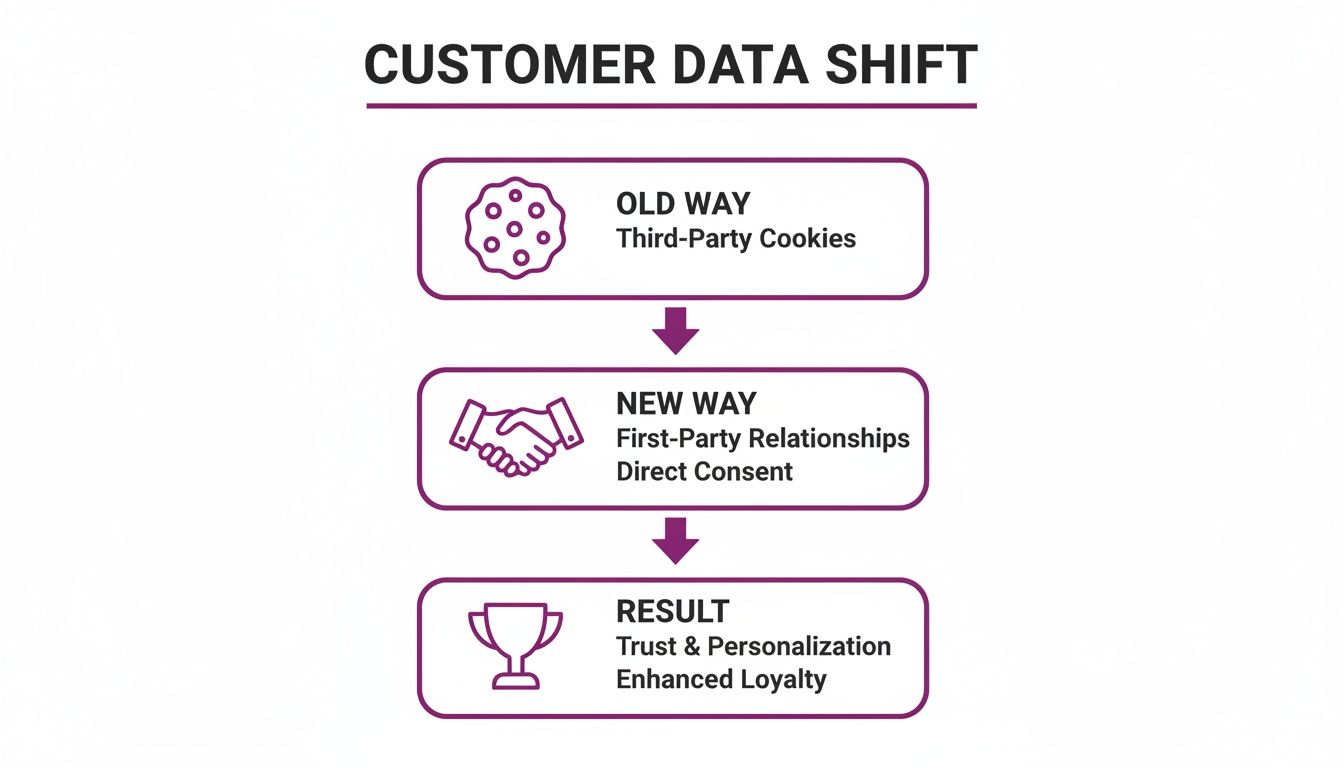
As you can see, shifting from impersonal methods like cookie tracking to direct engagement builds a foundation of trust that drives better results and serious loyalty.
First-Party Data: Observing Their Actions
First-party data is all the information you collect directly from your audience as they interact with your brand. This is your bread and butter: purchase history, products viewed on your site, items added to a cart, or which emails they open. It's incredibly valuable because it’s based on real behavior and genuine interest.
Back to our gift hunt, this is like being a detective and secretly observing your friend. You might see them browsing for a specific watch online or notice they just bought a new pair of running shoes. You’re gathering solid clues based on what they actually do, which is way more accurate. But you're still making an inference—you assume they want another watch, but you can't be 100% sure.
First-party data shows you what your customers do. Zero-party data tells you why they do it and what they plan to do next.
Zero-Party Data: The Wishlist
And that brings us to the holy grail: zero-party data. This is the information that customers intentionally and proactively share with you. They are literally telling you their preferences, needs, purchase intentions, and personal tastes.
This is the ultimate gift-giving hack: your friend just hands you their exact wishlist. No guesswork. No assumptions. No risk of getting it wrong. You know precisely what they want because they told you themselves. This is the gold standard for creating personalized experiences that actually connect. You just ask, and in return, you get the clearest possible picture of their intent—all while building a stronger, more trusting relationship.
To bring it all together, here’s a quick cheat sheet comparing the different data types and what they mean for your eCommerce brand.
Comparing Customer Data Types for eCommerce
As you can see, each data type has its place, but the trend is undeniably moving toward data that is earned directly from the customer. Zero-party data sits at the top of this pyramid, offering unmatched accuracy and building the strongest foundation of trust.
How Zero-Party Data Drives Real Business Results
Knowing what zero-party data is gets a lot more interesting when you see the direct impact it has on your bottom line. This isn't just some abstract idea about privacy; it's a practical strategy that can seriously boost your store's profitability.
When you collect information customers willingly share, you're essentially getting a clear roadmap to giving them exactly what they want. This fundamentally changes how they shop with you, moving you away from generic marketing and toward creating experiences that feel personal and genuinely helpful. The result is a cascade of positive outcomes that fuel your store's growth.
Boosting Conversion Rates with Precision
Imagine a customer lands on your clothing store’s homepage. Instead of hitting them with everything you sell, a quick pop-up quiz asks, “What’s your style? Minimalist, Bohemian, or Classic?”
Based on their answer, the entire homepage instantly repopulates with products that match their taste. That’s zero-party data in action. You're not guessing their preference based on a few random clicks; you're acting on their declared interest.
By cutting out the noise and showing them hyper-relevant products right away, you drastically shorten the path from discovery to purchase. This kind of precision leads to a significant lift in conversion rates because the customer immediately feels understood and sees things they’re far more likely to buy.
Key Takeaway: When you use zero-party data to personalize the shopping journey from the very first click, you eliminate friction and decision fatigue, making it much easier for customers to say "yes" and check out.
Increasing Average Order Value
Personalization doesn't just get the first sale—it also drives up the average amount each customer spends. Once you know a customer's specific goals or preferences, you can make smarter, more compelling product recommendations that just make sense.
Think about these scenarios:
- Skincare: A customer tells you via a quiz that their main concern is "dry skin." You can then recommend a complete routine—a hydrating cleanser, a serum, and a moisturizer—instead of just one product.
- Home Goods: Someone indicates they are redecorating their living room in a "mid-century modern" style. Your product pages can then feature a "Shop the Look" section with complementary furniture and decor.
- Nutrition: A customer shares their fitness goal is to "build muscle." You can bundle protein powder with creatine and a shaker bottle, maybe offering a slight discount for the package.
By understanding the why behind their visit, you can strategically cross-sell and upsell with items that add real value to their purchase, naturally increasing their cart size.
Cultivating Greater Customer Lifetime Value
This might be the most powerful result of all: the impact on long-term loyalty and customer lifetime value (LTV). Zero-party data turns a transactional relationship into a collaborative one. When customers feel a brand actually listens to them and consistently delivers relevant experiences, they have a powerful reason to keep coming back.
This creates a positive feedback loop. A customer shares their preferences, you deliver a great experience, and they feel more confident sharing more information in the future. This deepens your understanding and allows for even better personalization over time.
The competitive advantage here is massive. Research consistently shows that shoppers who provide rich zero-party data profiles have measurably higher conversion rates, increased LTV, and better repeat purchase rates than those who don't. To dig deeper into this, you can explore the findings on building a data strategy customers trust.
This cycle of trust and value is the key to transforming one-time buyers into lifelong brand advocates who spend more over their entire relationship with your brand.
Proven Methods for Collecting Zero Party Data
Knowing the value of zero-party data is one thing, but actually collecting it is a whole different ball game. The secret is to stop relying on passive tracking and start using active, engaging methods that offer a clear-cut value exchange.
When customers feel they're getting something worthwhile in return—like sharper recommendations or an experience that feels made just for them—they’re much more likely to share. Here are the most effective ways to do this on your Shopify store.
Launch Interactive On-Site Quizzes
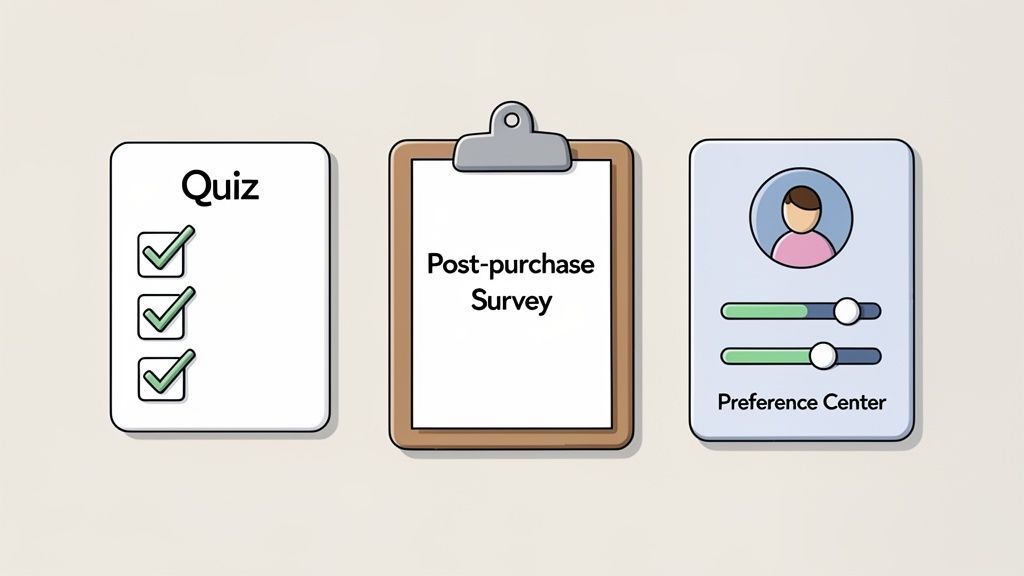
Quizzes are hands-down one of the most powerful tools for gathering zero-party data. Why? Because they're fun, interactive, and give the customer something valuable right away. Instead of filling out a boring form, a quiz feels more like a personalized consultation that guides shoppers to the perfect product. This approach works wonders across countless industries, from beauty to home goods.
Imagine a coffee brand running a "Find Your Perfect Blend" quiz. It could ask about flavor preferences (bold, fruity, nutty), brewing methods (espresso, pour-over), and even caffeine tolerance. At the end, the customer gets a tailored product recommendation, and you walk away with priceless insights you can use in all your future marketing. It’s a classic win-win.
Use Post-Purchase Surveys Effectively
The moments right after a customer clicks "buy" are pure gold. They're already engaged with your brand, and the experience is fresh in their mind. A well-timed post-purchase survey can capture crucial info that helps you understand why they bought and how to make their next visit even better.
But don't just ask, "How was your experience?" Get specific with questions that pull in actionable zero-party data:
- Purchase Drivers: "What was the main reason you chose this product today?"
- Customer Profile: "Who were you shopping for? (Yourself, a gift, etc.)"
- Future Intent: "What other products are you interested in exploring?"
These simple questions, dropped onto the order confirmation page or in the first confirmation email, deliver deep insights without feeling intrusive.
Pro Tip: Keep surveys short and sweet. Asking just one or two key questions will maximize the number of people who actually complete them. You can always ask for more later on.
Build Robust Customer Preference Centers
A preference center is a dedicated spot in a customer's account where they can tell you exactly what they want to hear about and how often. This is the ultimate way to put the customer in the driver's seat. It shows you respect their inbox and their time, which builds a massive amount of trust while you collect incredibly accurate data.
A great preference center lets users manage:
- Email Frequency: Let them choose daily, weekly, or monthly updates.
- Content Type: Do they want promotions, new arrivals, or blog content?
- Product Categories: Let them select specific product lines they care about (e.g., women's apparel but not men's).
This approach doesn't just boost your email engagement and cut down on unsubscribes; it gives you a direct line to what your customers explicitly want.
Integrate Data Collection into Your Welcome Series
Your welcome email series is one of the most potent tools in your arsenal. New subscribers are at their peak interest level, making it the perfect time to ask for a bit more information. Instead of just blasting them with promotional emails, use one of your first messages to invite them to personalize their experience.
A fantastic way to do this is by linking directly to a quiz or your preference center. The message can be simple and focused on the benefit: "Help us get to know you better so we can send you offers and recommendations you'll actually love." This tactic is a cornerstone for many brands and is a key part of the ultimate strategies to build an email list for ecommerce. By baking this step in early, you set the stage for a personalized relationship from day one.
Reward Engagement Through Loyalty Programs
Loyalty programs are another brilliant channel for collecting zero-party data. You can offer points or rewards in exchange for customers sharing information, which turns the whole process into a fun game rather than a chore.
For example, you could offer 50 loyalty points for filling out a style profile, 25 points for sharing their birthday, or 100 points for completing a survey about their shopping habits. Each piece of information helps you build a richer customer profile, leading to better personalization while rewarding your most dedicated shoppers and building a real community around your brand.
Activating Your Data for Personalized Experiences
Collecting zero-party data is like gathering the best ingredients for a gourmet meal; the real magic happens when you start cooking. This activation stage is where you transform raw customer preferences into personalized, high-impact experiences that make shoppers feel seen and understood. It's how you turn isolated data points into a cohesive strategy that drives sales and builds lasting loyalty.
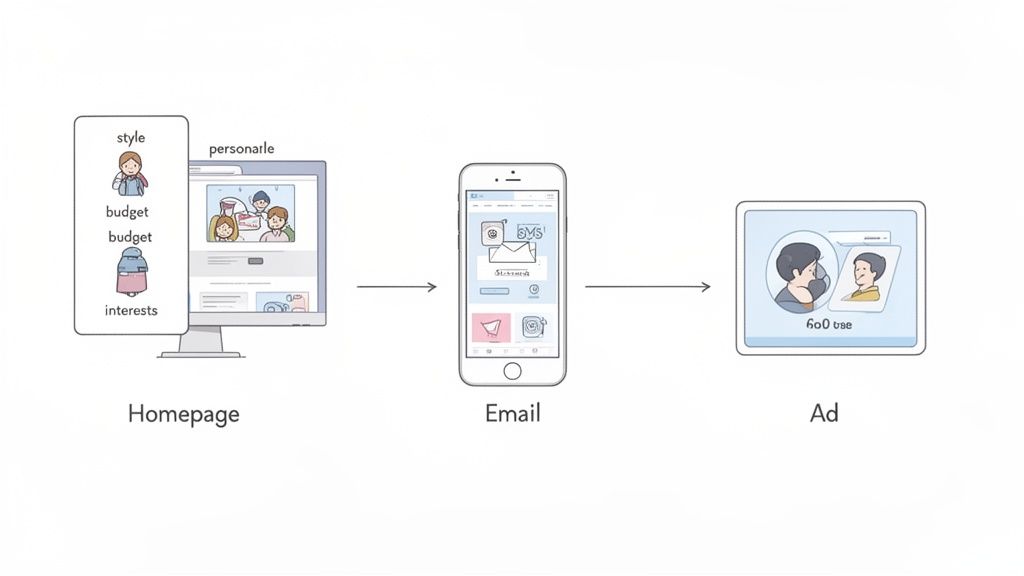
The goal is to stop marketing at your customers and start creating experiences for them. When someone tells you they prefer "eco-friendly products," every interaction you have with them from that point on should reflect that knowledge. This proactive approach shows you're not just grabbing information—you're actually listening and responding.
Building Hyper-Targeted Segments
The most direct way to put your zero-party data to work is through segmentation in your email and SMS platforms. Instead of blasting your entire list with the same generic promotion, you can create dynamic segments based on what customers have explicitly told you.
This opens the door for incredibly precise and relevant messaging that resonates on a much deeper level. Just imagine the possibilities:
- Interest-Based Campaigns: A skincare brand can send a targeted email about its new vegan product line exclusively to customers who identified "plant-based ingredients" as a top priority.
- Goal-Oriented Flows: A fitness apparel company can spin up a specific SMS campaign for shoppers who said their primary goal is "running marathons," showcasing high-performance gear they'll actually care about.
- Budget-Conscious Offers: For customers who indicated a specific price sensitivity in a quiz, you can send early-bird notifications about sales or feature more affordable collections in your newsletters.
This level of precision doesn't just boost engagement and conversions; it also dramatically cuts down on message fatigue and unsubscribes. You end up sending fewer, better messages that people genuinely want to open.
By translating direct customer feedback into smart segments, you ensure every communication is relevant. This simple act of listening demonstrates respect for your customer's inbox and their preferences, fostering a much stronger brand relationship.
Personalizing Your On-Site Experience
Why wait for an email to show you understand your customers? You can use zero-party data to dynamically change your website in real-time, creating a unique journey for each visitor the moment they land on your homepage.
Think about a customer who completes a style quiz and shares that their preferred look is "minimalist." Your website could instantly adjust to showcase clean, simple product designs on the homepage, in category pages, and within product recommendations. This seamless personalization makes customers feel like the store was curated just for them, which makes a purchase far more likely.
To really get the most out of zero-party data for these tailored journeys, many brands use specialized tools. It's worth exploring a guide to ecommerce personalization software to find solutions that can help you turn explicit customer preferences into more sales.
Creating High-Performing Ad Audiences
Your zero-party data is also a goldmine for optimizing your paid ad campaigns. By syncing your newly created segments to platforms like Facebook and Google, you can build incredibly effective custom and lookalike audiences.
For example, you could create a custom audience from customers who identified as "gift shoppers" during a holiday quiz and hit them with ads focused on your best-selling gift sets. Even better, you can create a lookalike audience based on your most valuable segment—maybe customers who shared detailed preferences and have a high lifetime value. This lets you find new, high-intent shoppers who mirror the traits of your best customers.
For a deeper dive into connecting these data sources, check out our guide on https://www.ecorn.agency/blog/customer-data-integration-solutions. This process turns your ad spend from a wide, hopeful net into a precision tool, seriously improving your return on investment.
Building Trust Through Ethical Data Collection
With great data comes great responsibility. Sure, zero-party data is inherently more compliant because it's handed over voluntarily, but how you handle it is what separates a trusted brand from an intrusive one. The foundation of any solid data strategy isn't just about what you collect—it’s about how you build and maintain customer trust along the way.
This means being radically transparent. When a customer takes a quiz or fills out their preferences, they’re essentially making a pact with your brand. They expect that the info they share will be used to create a better, more relevant experience, not exploited or sold off behind their back.
Navigating Privacy and Consent
Being upfront is non-negotiable. You need to clearly state what data you're collecting and exactly how you plan to use it to make their life better. This isn’t about burying legalese in a privacy policy nobody reads; it's about using plain, simple language right at the point of collection.
Key Takeaway: Ethical data collection is a value exchange. You have to clearly articulate what the customer gets in return for their information, whether it's killer product recommendations, exclusive content, or just a smoother shopping journey.
This approach ensures you’re not just harvesting data but actively strengthening your customer relationships. It also keeps your practices in line with major privacy regulations. Staying on the right side of the law is crucial for any data collection, and it’s worth brushing up on key principles like GDPR compliance in data collection to ensure you’re building on a foundation of transparency and trust.
Ultimately, your commitment to handling data ethically becomes a powerful part of your brand identity. When you respect customer privacy and make explicit consent your top priority, you turn data collection from a transaction into a partnership. That’s how you foster the kind of loyalty that actually lasts.
Got Questions About Zero-Party Data?
As you start thinking about building out your own strategy, a few questions always seem to pop up. Let’s tackle the big ones head-on so you can move forward with confidence and avoid some common stumbling blocks.
What Is the Difference Between First Party and Zero Party Data?
This is a great question, and the answer comes down to intent versus inference. First-party data is information you get by watching what a customer does—things like their purchase history or the pages they browse on your site. From that behavior, you infer what they might like.
Zero-party data, on the other hand, is information a customer explicitly and intentionally hands over to you. They are literally telling you what they want, what they need, or what their goals are, usually through something like a quiz or survey. Think of it as the difference between watching someone window-shop and having them hand you their detailed wishlist.
Will Customers Actually Share This Information?
Yes, they absolutely will—but there’s a catch. They’ll only share if they see a clear "what's in it for me." Customers are surprisingly willing to tell you their preferences when they believe it will lead to a better, more personalized shopping experience. This could mean getting more relevant product recommendations, exclusive offers, or helpful content that actually solves a problem for them.
The secret is creating a transparent value exchange. Be upfront about how you'll use their data to improve their journey, and they'll be far more likely to engage.
How Much Data Is Too Much to Ask For?
It’s always best to start small and gather information progressively. Don't hit them with a 20-question survey right out of the gate. Instead, focus on asking for just one or two key data points that you can use for immediate personalization. For a clothing brand, this might be as simple as asking for a customer’s preferred style.
You can always circle back later to collect more details through post-purchase surveys or by letting them update their profile in a customer preference center. The golden rule is simple: never ask for information you don't have a clear plan to use to make their experience better.
Ready to turn customer insights into revenue? The team of Shopify experts at ECORN specializes in creating personalized eCommerce experiences that drive growth. We can help you build and activate a zero-party data strategy that fosters trust and boosts your bottom line. Learn more about our CRO and development services.


Headless Ecommerce Development Services Explained

How to Build a Shopify Clothing Website That Converts
How to Launch a Box Subscription Business in 2026

Luxury Skincare Branding Playbook That Converters
10 Best Podcast Ecommerce Shows for Store Growth in 2026
Shopify Developer Hourly Rate: What to Pay in 2026
Critical Shopify Setup Errors That Are Secretly Sabotaging Your Store
Ecommerce Conversion Tracking: The Complete How-To Guide
Shopify Design Agency: How to Pick the Right Partner
Mastering Multi Store Management on Shopify
Scale Shopify Store
10 Shopify App Ideas Worth Building in 2026
Conversion Rate Optimization for Landing Pages: The Playbook
Shopify Plus Automation: A Guide for 2026
10 Social Selling Platforms for Shopify Merchants
Shopify Website Design Examples: 7 Stores Worth Studying
7 Ecommerce Newsletter Examples for Shopify Brands
One Product Shopify Store: Build and Scale
Mobile Pop Up Strategy for Shopify Stores That Converts
Sitemap for Shopify: How to Find, Optimize, and Submit It
7 Single Product Websites Worth Emulating
Product Variants Shopify: The Complete 2026 Guide
Ecommerce Analytics Consulting for Growth
What Is AI Integration for eCommerce
How to Choose the Right eCommerce Website Development Firm
E Business Strategy Implementation
Conversion Tracking Setup for Shopify Stores
BigCommerce vs Shopify Plus Which Enterprise Wins in 2026
Shopify Theme Kit: Setup, Commands, and Migration Guide
Shopify Extension Development: A Practical 2026 Guide
Shopify Speed Score Explained and How to Improve It
Shopify Mobile Optimization: The 2026 Playbook
How to Add Subcategory in Shopify for Better UX
How to Implement Structured Data for Ecommerce in 2026
SEO App Mobile: Shopify Store Optimization Guide
Shopify Plus Support: What It Includes and How to Choose
Google Ads for Shopify: The Complete 2026 Playbook
Shopify New York: How to Find and Hire the Right Agency
Google Search Console for Shopify: The Complete Setup
First Party Data Collection for eCommerce Growth
FAQ Online Store Guide: Build and Measure It Right
Do FB Ads Work for eCommerce in 2026?
One Page Checkout for Shopify: Design and Implementation
Shopify GraphQL vs REST: The 2026 Developer Decision
Shopify Ecommerce Consulting: Strategy, Pricing &
Are Reddit Ads Worth It for eCommerce Brands
Shopify Title and Meta Description: A Practical 2026 Guide
Product Video Best Practices for Shopify Brands
Real-Time Inventory Management: A 2026 Guide
AI Chatbot Integration for Shopify Stores
Affiliate Program Management: A Shopify Guide
10 Best Performance Monitoring Tools for Shopify in 2026
Digital Asset Management for eCommerce Brands in 2026
Every Type of Facebook Ads Explained for eCommerce Growth
Product Information Management Explained for Shopify Brands
Support Ticket System: A Guide for Shopify Stores

10 Best Customer Service Tools for Shopify in 2026

Can I Start a Business with No Money? a 2026 Blueprint
What Sells Good on Etsy: Best Niches for 2026

Shopify Add to Cart Button: A Practical 2026 Guide

Customer Feedback Automation: A Practical eCommerce Guide
Critical Rendering Path: A Guide for Shopify Stores

How to Promote on TikTok for eCommerce in 2026

B2B eCommerce Consulting That Drives Real Revenue
10 Best Practices for Site Navigation in 2026
Return vs Refund for Shopify Stores: A Practical Guide
What Is Customer Lifetime Value and Why It Matters
What Is Voice of Customer Research for eCommerce

SMS Marketing for Ecommerce That Actually Converts

Master How to Improve Email Deliverability in 2026
Top 8 eCommerce Partners NYC for Shopify Brands in 2026
Machine Learning for Ecommerce: Boost Your Shopify Store
Beauty Market Research: Your 2026 Growth Guide
Shopify International Expansion: A 2026 Roadmap
What Does CRO Stand for in Business: Understanding CRO
Shopify Visual Merchandising: A Playbook for Higher Sales
Shopify Landing Page Design: Master Conversion in 2026
10 Best AI SEO Optimization Tools for Shopify in 2026

Agentic AI for Ecommerce: Boost Your Sales in 2026
Mastering Email Marketing Data for eCommerce Growth
Conversion Rate Optimisation Australia: Boost Your Sales
Conversion Rate Optimization AI: Your Shopify Store Guide

10 Product Bundling Strategies for Shopify in 2026
How to Increase Customer Lifetime Value: A Shopify Playbook
AI Customer Service Automation: Shopify Guide 2026
Clean Website Design: A Shopify Conversion Playbook

Omnichannel Retail Strategy: A Shopify Playbook
Product Data Enrichment: A Guide for Shopify Brands
Instagram Shopping Features a Guide for Shopify Stores
What Is Revenue Optimization: A Holistic RevOps Guide
Benefits of Conversion Rate Optimization: Boost Your
WordPress to Shopify Migration: Your 2026 Seamless Switch
Boost Sales: Ecommerce Payment Processing Guide 2026
Unified Commerce Platform: Benefits, KPIs & Shopify Guide
How to Reduce Bounce Rate eCommerce: Your 2026 Guide
Shopify API Integration: A Practical End-to-End Guide
How to Implement Data Governance: A 2026 Guide
Shopify Store Development Cost: A 2026 Breakdown
What Is Server Side Tracking: The Shopify Guide 2026
Marketing Automation Workflows: A Shopify Guide for 2026


newsletter in your inbox