


Ever heard of dynamic pricing? It’s a strategy where your product prices aren’t just set in stone. Instead, they flex in real-time based on what the market is doing—think demand, competitor moves, and how much stock you have left. The most classic example is airline tickets. Notice how the price for that beach getaway creeps up as the flight fills? That's dynamic pricing in its natural habitat.
Unpacking the Basics of Dynamic Pricing
At its heart, dynamic pricing is the complete opposite of the old-school, one-price-for-everyone model. It gives eCommerce stores the agility to react to the market on the fly. This way, your prices are always fine-tuned to hit a specific goal, whether that’s boosting profits, clearing out last season’s inventory, or just staying a step ahead of the competition. It’s about swapping guesswork for smart, data-backed decisions that reflect what a product is really worth at any given moment.
This idea isn't exactly new. Airlines and hotels have been playing this game for decades. But what is new is how technology and AI have brought this powerful strategy to online stores of all sizes, including those on Shopify. The global market for dynamic pricing software, already valued at $3.05 billion, is projected to rocket to $6.02 billion by 2029. That’s a massive signal of just how crucial this is becoming in modern retail. You can find more details in the complete research findings on dynamic pricing software market trends if you're curious.
Before we get too deep, it's helpful to see the core ideas broken down.
Dynamic Pricing at a Glance
This table gives a quick rundown of the essential components, what drives them, and the ultimate goals of this pricing strategy.
Seeing it laid out like this makes it clear: this is all about using data to make smarter, faster, and more profitable pricing decisions without constant manual work.
Key Drivers Behind Price Changes
So, what actually causes these prices to change? A few key factors are usually at play, and understanding them is the first step to figuring out how this could work for your own store.
- Customer Demand: This is the big one. Prices can climb for hot items during peak seasons like Black Friday. When things quiet down, you can lower them to entice shoppers and keep sales flowing.
- Competitor Pricing: You can use automated tools to keep an eye on what your competitors are charging. From there, you can decide to match their prices, undercut them, or even price higher to position your brand as a more premium option.
- Inventory Levels: Got low stock on a best-seller? The price can nudge up to maximize revenue. On the flip side, if you have way too much of an item, you can drop the price to sell through it quickly.
- Time of Day/Week: This might sound granular, but some stores find that customers are willing to spend more on a Saturday afternoon than a Tuesday morning. Tiny adjustments based on timing can capture that extra revenue.
The real magic of dynamic pricing is its ability to automatically find that perfect sweet spot between what a customer is willing to pay and your own revenue goals. It takes the manual, reactive price-slashing out of the equation.
This simple visual from Wikipedia perfectly illustrates the economic principle behind it all.
Instead of a single static price—where you miss out on people willing to pay more and alienate those who would only buy at a discount—you create multiple price points. This strategy lets you capture far more revenue by meeting different customers exactly where they are.
While dynamic pricing is incredibly powerful, it's just one tool in your arsenal. To really become a pricing pro, it helps to understand the full landscape. Exploring different approaches, like these 8 Ecommerce Pricing Strategies to Maximize Profits, will give you the context to see how and where dynamic adjustments can best fit into your overall business plan.
Understanding How Dynamic Pricing Actually Works
Dynamic pricing isn't some black-box magic; it's a calculated strategy, fueled by data and smart algorithms.
Think of it like a skilled chef tasting and tweaking a recipe. Instead of using a fixed recipe every single time, they adjust the ingredients based on what's fresh at the market, the specific occasion, and who they’re cooking for. Dynamic pricing does the same for your products, constantly adjusting prices based on real-time market "ingredients."
At its heart, this strategy uses algorithms that crunch huge amounts of data to find the sweet spot for your pricing at any given moment. These aren't just simple if-then rules. Modern systems use sophisticated machine learning to spot patterns and make predictions a human team could never catch on their own.
This diagram breaks down the core data pillars—demand, competition, and inventory—that a dynamic pricing engine is always watching.
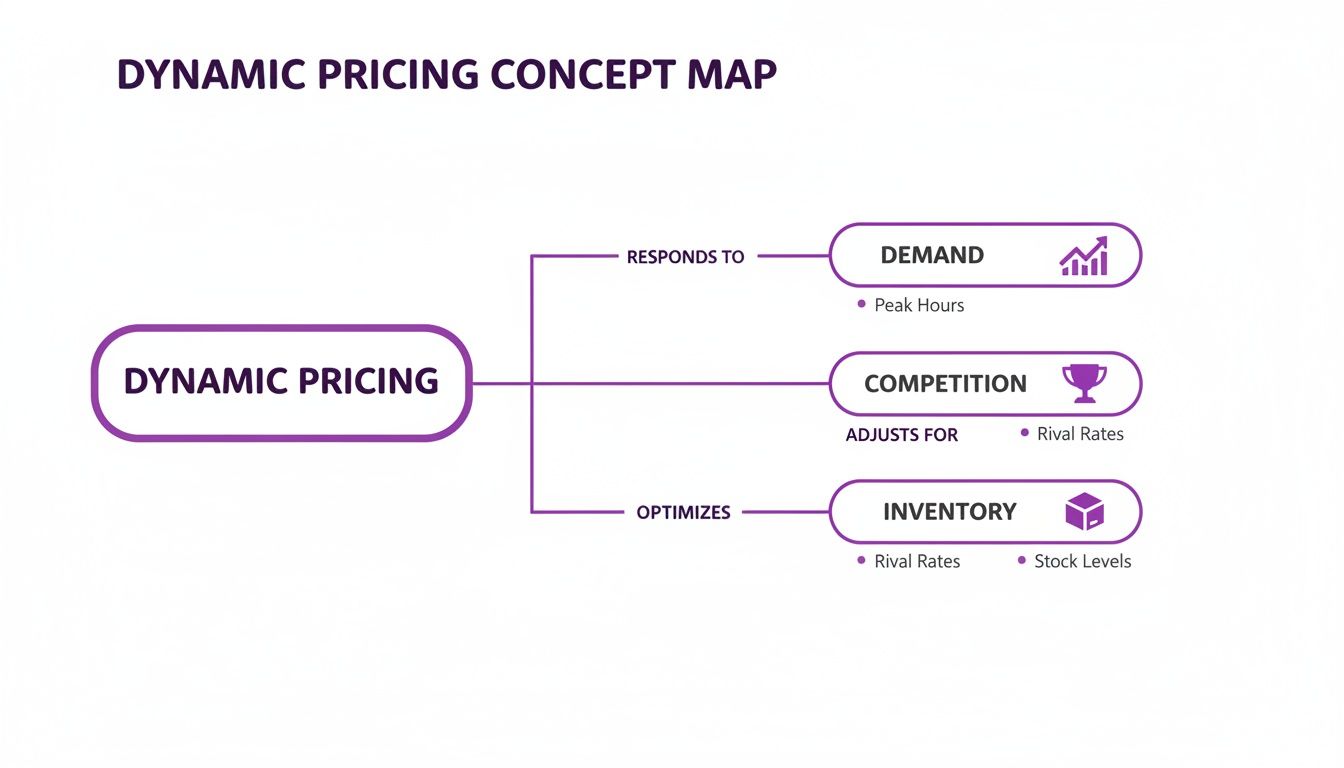
As you can see, it's a constant feedback loop. Each factor influences the others, leading to continuous, intelligent price adjustments that drive your business goals forward.
Common Dynamic Pricing Models
While the tech behind it can get complex, the strategies themselves are often pretty intuitive. Most approaches fall into a few key buckets, each designed for a different business goal.
Here are the most common types you’ll run into:
Time-Based Pricing: This model shifts prices based on the time of day, week, or even season. For a Shopify store, that could look like a flash sale on a slow Tuesday afternoon or automatically bumping up the price on swimwear as summer heats up. It's all about capitalizing on predictable ebbs and flows in demand.
Segmented Pricing: This is where you offer different prices to different customer groups. A classic example is giving a 10% discount to first-time shoppers to seal the deal, or creating a special price just for your most loyal customers. This strategy simply acknowledges that not every customer values a product the same way.
Competitor-Based Pricing: One of the most straightforward approaches. Your system keeps an eye on what your competitors are charging for similar products and adjusts your prices in response. You can set rules to consistently beat their price by a certain margin, match them, or even price your product slightly higher to position it as a premium option.
The goal isn't always to be the cheapest. It's about being priced correctly in relation to the market and your brand's value. A smart system helps you stay in that perfect spot without needing to check competitor sites all day.
The Role of Algorithms and AI
This is where the real power kicks in. Algorithms are the engines that take all the data—from your inventory levels and website traffic to a competitor's stock availability and market trends—and automatically execute your pricing strategy.
For instance, an algorithm might see that a competitor's best-selling sneaker just sold out. It could instantly raise the price of your similar sneaker by 7%, knowing that shoppers are now looking for an alternative. This happens in minutes, capturing an opportunity you'd likely miss otherwise.
And these algorithms get smarter. By looking at your historical sales data, they learn how price tweaks affect conversion rates for different products and customer types. This predictive ability is what separates basic rule-setting from genuine optimization.
Putting It All Together for Your Store
Imagine you sell coffee beans on Shopify. A dynamic pricing system could weave these models together to maximize your revenue around the clock.
- Segmented: It recognizes a returning customer and shows them a familiar price, building loyalty.
- Competitor-Based: It scans two key competitors and sees they both raised their prices by $1. Yours automatically nudges up by $0.75, staying competitive but boosting your margin.
- Time-Based: It’s 8 AM, prime coffee-buying time. The price inches up slightly to match the morning demand surge.
- Inventory-Based: It sees you only have 10 bags left of that popular single-origin roast. The price increases to make the most profit from the limited stock.
This all happens on its own, ensuring your prices are constantly being optimized for profit, sales, and market positioning. It turns pricing from a static, once-a-quarter task into a dynamic, revenue-driving asset.
Weighing the Pros and Cons for Your Shopify Store
Jumping into dynamic pricing isn't just a technical tweak; it’s a fundamental shift in how you do business. It offers some serious firepower, but it also comes with risks that need to be managed carefully. Before you even think about flipping the switch for your Shopify store, you need to understand both sides of the coin. It's a classic balancing act between boosting profits and maintaining your brand’s reputation.
The biggest draw, without a doubt, is the direct hit to your bottom line. By syncing your prices with what’s actually happening in the market, you can squeeze every last drop of revenue out of each sale. This is worlds away from static pricing, where you’re either leaving money on the table when demand spikes or losing sales entirely during a quiet spell.
The Upside: Driving Growth and Efficiency
The benefits of dynamic pricing ripple across your entire business, transforming your price tag from a static number into an active tool for growth. Instead of a "set it and forget it" approach, your price becomes a responsive lever you can pull to hit specific goals.
Here’s where a growing Shopify brand really stands to gain:
Maximized Revenue and Profit Margins: This is the headliner. Say a product goes viral after an influencer mentions it. Dynamic pricing can automatically bump up the price to match that surge in demand, padding your profit margin on every single unit sold. It's not uncommon for stores to see a significant revenue lift with this strategy.
Efficient Inventory Management: Slow-moving stock is a killer for cash flow. Dynamic pricing helps you clear out seasonal or aging inventory by methodically dropping prices just enough to find the sweet spot where customers start buying. This beats waiting and then having to run a massive, profit-shredding clearance sale down the road.
Enhanced Competitiveness: Trying to manually keep tabs on your competitors' prices is a fool's errand, especially as you scale. An automated system keeps you perfectly positioned. Whether your goal is to be the cheapest on the block or to hold your ground as a premium brand, you'll never be caught flat-footed by a competitor's surprise sale.
The Downside: Navigating Potential Risks
But it’s not all smooth sailing. The same agility that makes dynamic pricing so powerful can also create problems if you aren't transparent and careful. If you ignore the potential pitfalls, you could seriously damage customer trust and tarnish your brand's reputation.
The biggest worry? How customers perceive it. If a shopper sees a price jump overnight for no apparent reason, they’re going to feel cheated. That can lead to a storm of negative reviews and kill customer loyalty—something that’s especially dangerous for newer brands built on community and trust.
The real challenge is finding the right balance between automation and human oversight. An algorithm is great at optimizing for profit, but it has no idea what your customers are feeling or what your brand stands for. You need to set clear rules to prevent price changes that might make a quick buck but alienate your entire customer base in the long run.
On top of that, there are some technical and strategic hurdles to clear:
Implementation Complexity: Getting a dynamic pricing engine up and running isn’t as simple as installing an app. It demands clean data, a clear set of business rules, and solid integration with your Shopify inventory and analytics tools.
Risk of Price Wars: An overly aggressive, competitor-focused strategy can easily trigger a "race to the bottom." If your system is set to automatically undercut a rival, and their system does the same, you can watch your margins evaporate in a battle nobody really wins.
Legal and Ethical Lines: While dynamic pricing itself is perfectly legal, it can wander into tricky territory like price discrimination if you’re not careful. Transparency is absolutely critical. For customers, when it's done right, dynamic pricing can mean better deals and personalized offers. But for that to happen, you need clear rules to avoid a backlash. Master of Code offers more insights on AI's role in pricing agility that are worth a read.
At the end of the day, a successful dynamic pricing strategy is one that's built to last. It requires a thoughtful approach that puts long-term customer relationships on the same level as immediate revenue goals.
Learning from Dynamic Pricing in the Real World
Theory is one thing, but seeing dynamic pricing out in the wild is where its power really clicks. You run into it every day, probably without even thinking about it. The best part? You can borrow the playbooks from the big brands and scale them down for your own Shopify store. These aren't just abstract ideas; they're proven, money-making tactics.
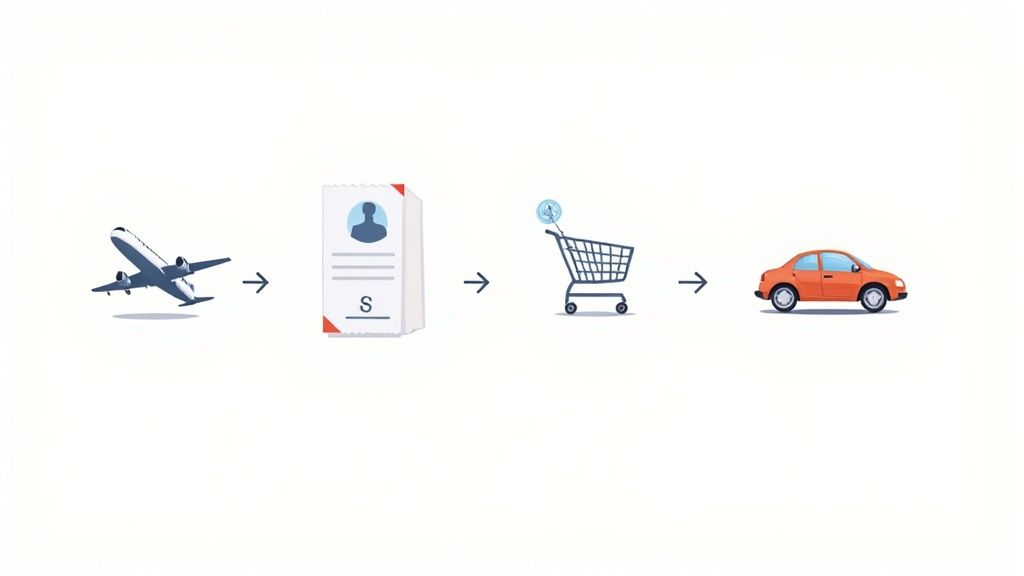
The classic example everyone points to is the travel industry. Airlines have perfected the art of tweaking ticket prices based on how many seats are left, how soon the flight is, and, of course, seasonal demand. A flight to Miami is always going to cost more in December than it does in May. This is yield management in its purest form—making sure every seat sells for the highest price the market is willing to pay.
Hotels and short-term rentals play the same game, managing their occupancy rates with surgical precision. To see how this works on the ground, you can dig into some effective Dynamic Pricing Airbnb strategies and see how they maximize revenue per room.
Lessons from eCommerce and Ride-Sharing Giants
When we shift to digital storefronts, Amazon is the undisputed champion. The retail behemoth reportedly changes prices on over 10 million products daily. Its algorithms are constantly scanning competitor pricing, inventory levels, and customer demand signals to stay one step ahead. It’s a modern take on the same strategy that boosted airline load factors by 5-10% way back in the 1980s.
Then there’s Uber, which put dynamic pricing right on our phones with its "surge pricing" model. When demand for rides suddenly outpaces the supply of drivers—think rush hour or right after a big concert—prices automatically tick up. This coaxes more drivers onto the road while ensuring anyone who really needs a ride can get one, even if it costs more. It’s a brilliant, real-time response to a simple supply-and-demand problem.
The big takeaway from these giants is simple: pricing shouldn't be static. It should be a living, breathing part of your business that reacts to what's happening both inside your store and out in the market.
Bringing Dynamic Pricing to Your Shopify Store
You don't need Amazon's massive budget or Uber's global scale to make this work. The logic is exactly the same, just applied to your specific niche. The trick is to pinpoint the unique demand triggers in your market and build a few simple rules around them.
Here are a few ways this could look for a growing Shopify brand:
A Fashion Boutique: Say you sell a popular line of sundresses. As spring rolls into summer, you could set a time-based rule to automatically bump prices by 15% to match that peak seasonal demand. Later, as fall approaches, another rule could gradually lower them to clear out the last of the stock without resorting to a desperate, deep-discount sale.
A Gadget Store: Imagine your main competitor for a hot-selling set of headphones goes out of stock. A competitor-based pricing app could spot this and instantly raise your price by 10%, capturing shoppers who are now scrambling for an alternative. Once they restock, your price can automatically slide back down.
A Coffee Roaster: You notice your organic single-origin beans are a massive hit with first-time buyers. You could create a segmented price rule that offers a $5 discount on that specific product only to new visitors. It’s a great way to lock in that crucial first purchase while your loyal, returning customers continue to pay the standard price.
Each of these scenarios borrows directly from the playbooks of the industry leaders. They show how any Shopify store can make its pricing smarter, more responsive, and, at the end of the day, a lot more profitable.
A Practical Guide to Implementing Dynamic Pricing on Shopify
Moving from knowing what dynamic pricing is to actually using it on your Shopify store can feel like a pretty massive leap. But with the right mindset and tools, it’s a totally manageable—and often profitable—process. The trick isn't to flip a switch and change everything overnight. It’s about starting small, testing with intention, and building on what works.
Before you even think about apps and algorithms, the first step is a bit of internal housekeeping. You need clean, reliable data. Period. This means having accurate historical sales numbers, a solid handle on your inventory counts, and a decent understanding of who your customers are. Without that foundation, even the smartest software is just guessing.
You also need to be crystal clear on your goals. What are you actually trying to achieve here? Are you aiming to squeeze out more revenue, clear slow-moving stock, or just keep pace with competitors on a few key products?
Your main goal will dictate every single rule you set up. A strategy to maximize profit on a bestseller is going to look completely different from one designed to quickly offload last season's collection. Define what success looks like before you start.
Choosing the Right Shopify App
Once your goals are locked in, it's time to look at the tools that will do the heavy lifting. The Shopify App Store is packed with some seriously powerful dynamic pricing solutions, each with its own focus. Let's be real: manually tracking competitors and tweaking prices just isn't an option for a growing brand. The right app automates this whole circus, acting like your 24/7 pricing analyst.
Just searching for "dynamic pricing" on the App Store gives you a good look at the landscape.

You can see that the best apps tend to zero in on specific jobs—like competitor price tracking, bulk price edits, or running scheduled sales. This makes it much easier to find one that fits what you’re trying to do.
As you shop around, here's what to look for:
- Rule-Based Logic: Can you easily set up "if-this-then-that" rules? Think: "If Competitor X's price drops below $50, match it," or "If this SKU's inventory falls below 10 units, bump the price by 15%."
- Competitor Scraping: How well does the app keep an eye on your rivals? You need a tool that pulls in clean, accurate data on what your competitors are charging and their stock levels.
- Solid Integration: The app absolutely must play nicely with your Shopify inventory and analytics. It needs to pull real-time data to make smart pricing decisions.
- Analytics and Reporting: A great app doesn't just change prices in the dark; it shows you the results. Look for clean dashboards that track the important stuff like revenue, profit margin, and conversion rates on the products you're testing.
Top Shopify Dynamic Pricing Apps Compared
Finding the perfect app can feel like searching for a needle in a haystack. To help you cut through the noise, we've compared some of the top contenders on the Shopify App Store. This table breaks down their key features, how they charge, and who they're best suited for.
Ultimately, the "best" app is the one that aligns with your specific goals and budget. Many offer free trials, so don't be afraid to take a couple for a spin to see which interface feels most intuitive for you and your team.
Your First Implementation Steps
The absolute golden rule of implementation is to start small. Please, do not roll out a new pricing strategy across your entire catalog at once. That's a recipe for chaos. Starting small minimizes risk and lets you gather real-world data on what works for your customers and your products.
Here’s a simple, four-step playbook to get you going:
- Select a Test Group: Pick a small handful of products to be your guinea pigs. Ideally, choose items with a pretty stable sales history so you have a clear baseline to measure against. For your first test, stay away from your absolute best-sellers or brand-new products.
- Set Up Simple Rules: Start with just one or two straightforward rules based on your main goal. If you're trying to stay competitive, create a rule to match the price of one key rival. If it’s about inventory, set a rule to slightly raise the price when stock gets low. Keep it simple.
- Monitor and Measure: This is the most important part. For a set time—say, 30 days—keep a close eye on your KPIs. Is your profit margin holding up? Has the conversion rate budged? What's the customer reaction? Use the app's analytics to check in daily.
- Analyze and Iterate: After the test period, dig into the results. Did the strategy actually work? If you matched a competitor, did it drive more sales, or did it just kill your margins? Use these insights to tweak your rules. Maybe you need to add a price floor to protect profits, or maybe the percentage increase wasn't aggressive enough.
This methodical, test-and-learn cycle builds confidence and gives you a proven blueprint you can use when you're ready to expand. It's also worth remembering that dynamic pricing is just one piece of the puzzle. To really make it sing, you need to understand how it fits into your overall eCommerce pricing strategies. By combining these approaches, you can build a pricing plan for your Shopify store that is both resilient and highly effective.
How to Measure Success and Avoid Common Pitfalls
Getting your dynamic pricing strategy live is really just the starting line. Now the real work begins: measuring, tweaking, and making sure your new pricing is actually doing what you want it to do. If you aren't tracking the right numbers, you're essentially flying blind, with no real way to know if your price adjustments are boosting profits or just confusing your customers.
Success isn’t simply about changing prices on the fly—it’s about making the right changes. That means you need to decide on your key performance indicators (KPIs) from the get-go. Looking at revenue alone just won't cut it; you need a much clearer picture of what's happening under the hood.
Key Metrics for Tracking Performance
To get a true sense of how your dynamic pricing is working, you have to look past the top-line sales figures. Your analytics dashboard should become your new best friend, but you’ll want to zero in on a few specific metrics.
Start by keeping a close eye on these KPIs:
- Profit Margin: This is the big one. Are your price changes actually making you more money on each sale, or are they just driving revenue while your margins get thinner?
- Conversion Rate: Pay close attention to how conversions shift for products with dynamic pricing. A small price drop might give you a nice little conversion bump, but a sharp increase could send shoppers running for the exit.
- Customer Lifetime Value (CLV): You have to play the long game. Aggressive price swings might lock in a one-time sale, but they can easily alienate loyal customers and drive down their lifetime value.
Drilling down into this data is where you'll find the gold. You might discover that small, frequent price tweaks on a certain product category lead to a 5% increase in profit margin without making a dent in your conversion rate. That's the kind of insight that turns a decent strategy into a great one.
Avoiding Common Mistakes and Building Trust
Even with the best data, it's surprisingly easy to trip up in ways that can hurt your brand and your bottom line. One of the most common pitfalls is changing prices too often or too dramatically. This can leave customers feeling like they're being played, which is a quick way to lose their trust.
Another classic mistake is setting up rules that trigger a "race to the bottom" with your competitors. Constantly trying to undercut everyone else might win you a few sales today, but it often spirals into a price war where nobody wins and margins disappear for everyone.
To make dynamic pricing work for you long-term, customer trust has to be your north star. Transparency is everything. If your prices fluctuate based on demand, think about just saying so on your product pages. A simple note like "Prices may vary based on demand" can make a world of difference.
While hyper-personalized pricing can be incredibly effective, it lives and dies by strong data governance. For instance, in fiercely competitive markets, many industries are jumping on these strategies to stay ahead, but they have to tread carefully to avoid public backlash. You can learn more about how strategic implementation counters these risks in complex industries. By focusing on sustainable, transparent practices, you can build a strategy that creates lasting value instead of just short-term gains at the expense of customer loyalty.
Got Questions About Dynamic Pricing?
Thinking about dynamic pricing but still have a few lingering questions? That’s smart. It’s a powerful strategy, but it’s natural to want to clear things up before diving in. Here are some of the most common questions we hear from Shopify store owners.
Is This Actually Legal and Ethical?
Yes, dynamic pricing is completely legal. It’s the same strategy airlines, hotels, and even sports venues have used for years. Think about it—a flight in December costs more than one in February. That’s dynamic pricing in action.
The ethical lines get blurry only when prices are changed based on protected personal data. But adjusting your prices based on market demand, what your competitors are doing, or how much stock you have left? That’s just standard, accepted business practice.
Won't This Freak Out My Customers?
This is a big one, and it's a valid concern. The good news is, customers are more used to this than you might think. They see it happen with Uber surge pricing and concert tickets all the time. They get that demand affects price.
The key is to avoid shocking them with huge, unexplained price jumps. Start with small, subtle adjustments. Most shoppers won't even notice a price changing by a few percent here and there, but you’ll definitely see the positive impact on your profit margins.
The goal isn’t to surprise anyone. It's about making sure your prices reflect their true market value at any given moment.
Do I Need a PhD in Data Science to Pull This Off?
Not at all. The old days of needing a data analyst to manage pricing are long gone. Modern dynamic pricing apps on Shopify are built for merchants, not mathematicians.
They have simple, user-friendly interfaces where you set the rules. You can create straightforward commands like, "match my top competitor's price," or "raise the price by 10% when I have fewer than 20 units left." The app does all the heavy lifting in the background.
In fact, AI-powered pricing tools have been shown to boost profits by an average of 10% and increase sales by 13%. As more and more stores get on board, using your data to make smarter pricing decisions is quickly becoming a must-have. You can learn more about how AI is shaping pricing strategies to see just how essential this is becoming.
Ready to make your pricing work smarter for you? The team of Shopify experts at ECORN can help you roll out a dynamic pricing strategy that fits your brand and drives real growth. Get in touch today and let's see how we can optimize your store.


Shopify Plus Ecommerce Agency: How to Pick the Right One

Shopify Themes Retina: How to Serve 2x Images

How to Cross Sell on Shopify Without Friction

Best Shopify Theme for Custom Products Compared
Multi Store Inventory Management: A Practical Guide

SEO Consulting for Ecommerce: A Practical Guide

Shopify Theme Updater App: A Safe Update Playbook

Shopify Git Integration: A Developer's Guide to 2026
Headless Ecommerce Development Services Explained

How to Build a Shopify Clothing Website That Converts
How to Launch a Box Subscription Business in 2026

Luxury Skincare Branding Playbook That Converters

10 Best Podcast Ecommerce Shows for Store Growth in 2026
Shopify Developer Hourly Rate: What to Pay in 2026
Critical Shopify Setup Errors That Are Secretly Sabotaging Your Store
Ecommerce Conversion Tracking: The Complete How-To Guide

Shopify Design Agency: How to Pick the Right Partner
Mastering Multi Store Management on Shopify
Scale Shopify Store

10 Shopify App Ideas Worth Building in 2026
Conversion Rate Optimization for Landing Pages: The Playbook
Shopify Plus Automation: A Guide for 2026
10 Social Selling Platforms for Shopify Merchants

Shopify Website Design Examples: 7 Stores Worth Studying

7 Ecommerce Newsletter Examples for Shopify Brands
One Product Shopify Store: Build and Scale

Mobile Pop Up Strategy for Shopify Stores That Converts

Sitemap for Shopify: How to Find, Optimize, and Submit It

7 Single Product Websites Worth Emulating
Product Variants Shopify: The Complete 2026 Guide
Ecommerce Analytics Consulting for Growth
What Is AI Integration for eCommerce
How to Choose the Right eCommerce Website Development Firm

E Business Strategy Implementation
Conversion Tracking Setup for Shopify Stores
BigCommerce vs Shopify Plus Which Enterprise Wins in 2026
Shopify Theme Kit: Setup, Commands, and Migration Guide
Shopify Extension Development: A Practical 2026 Guide
Shopify Speed Score Explained and How to Improve It

Shopify Mobile Optimization: The 2026 Playbook

How to Add Subcategory in Shopify for Better UX
How to Implement Structured Data for Ecommerce in 2026

SEO App Mobile: Shopify Store Optimization Guide

Shopify Plus Support: What It Includes and How to Choose

Google Ads for Shopify: The Complete 2026 Playbook

Shopify New York: How to Find and Hire the Right Agency

Google Search Console for Shopify: The Complete Setup

First Party Data Collection for eCommerce Growth
FAQ Online Store Guide: Build and Measure It Right
Do FB Ads Work for eCommerce in 2026?

One Page Checkout for Shopify: Design and Implementation
Shopify GraphQL vs REST: The 2026 Developer Decision
Shopify Ecommerce Consulting: Strategy, Pricing &

Are Reddit Ads Worth It for eCommerce Brands

Shopify Title and Meta Description: A Practical 2026 Guide

Product Video Best Practices for Shopify Brands
Real-Time Inventory Management: A 2026 Guide

AI Chatbot Integration for Shopify Stores

Affiliate Program Management: A Shopify Guide
10 Best Performance Monitoring Tools for Shopify in 2026
Digital Asset Management for eCommerce Brands in 2026
Every Type of Facebook Ads Explained for eCommerce Growth
Product Information Management Explained for Shopify Brands
Support Ticket System: A Guide for Shopify Stores

10 Best Customer Service Tools for Shopify in 2026

Can I Start a Business with No Money? a 2026 Blueprint

What Sells Good on Etsy: Best Niches for 2026

Shopify Add to Cart Button: A Practical 2026 Guide

Customer Feedback Automation: A Practical eCommerce Guide
Critical Rendering Path: A Guide for Shopify Stores

How to Promote on TikTok for eCommerce in 2026

B2B eCommerce Consulting That Drives Real Revenue

10 Best Practices for Site Navigation in 2026
Return vs Refund for Shopify Stores: A Practical Guide
What Is Customer Lifetime Value and Why It Matters
What Is Voice of Customer Research for eCommerce

SMS Marketing for Ecommerce That Actually Converts

Master How to Improve Email Deliverability in 2026

Top 8 eCommerce Partners NYC for Shopify Brands in 2026
Machine Learning for Ecommerce: Boost Your Shopify Store

Beauty Market Research: Your 2026 Growth Guide

Shopify International Expansion: A 2026 Roadmap

What Does CRO Stand for in Business: Understanding CRO

Shopify Visual Merchandising: A Playbook for Higher Sales

Shopify Landing Page Design: Master Conversion in 2026

10 Best AI SEO Optimization Tools for Shopify in 2026

Agentic AI for Ecommerce: Boost Your Sales in 2026
Mastering Email Marketing Data for eCommerce Growth

Conversion Rate Optimisation Australia: Boost Your Sales
Conversion Rate Optimization AI: Your Shopify Store Guide

10 Product Bundling Strategies for Shopify in 2026
How to Increase Customer Lifetime Value: A Shopify Playbook
AI Customer Service Automation: Shopify Guide 2026

Clean Website Design: A Shopify Conversion Playbook

Omnichannel Retail Strategy: A Shopify Playbook

Product Data Enrichment: A Guide for Shopify Brands

Instagram Shopping Features a Guide for Shopify Stores

What Is Revenue Optimization: A Holistic RevOps Guide

Benefits of Conversion Rate Optimization: Boost Your
WordPress to Shopify Migration: Your 2026 Seamless Switch


newsletter in your inbox