

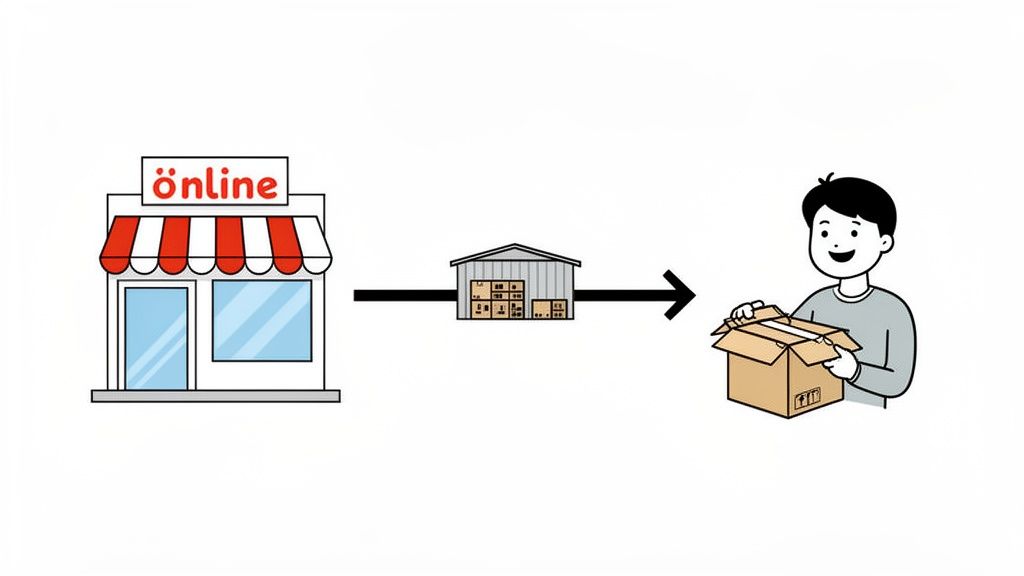
In its simplest form, the direct-to-consumer (DTC) model is exactly what it sounds like: a brand sells its products directly to its customers. This approach cuts out all the traditional middlemen—retailers, wholesalers, and distributors.
Think of it like a local farmer selling produce at a market instead of going through a massive grocery store chain. That direct connection is everything. It gives brands complete ownership over the customer journey from start to finish.
Understanding The Direct To Consumer Model
The Direct to Consumer model, often shortened to DTC or D2C, marks a huge shift in how brands get their products into the hands of customers. Instead of fighting for shelf space and relying on third-party retailers, DTC brands take the reins themselves. They build their own websites, run their own marketing campaigns, and handle their own fulfillment and customer service.
This hands-on method lets them control every single interaction, making sure the brand’s story, values, and product quality come through loud and clear every time. A big piece of making this work is understanding what is omnichannel commerce, which is all about creating a seamless, unified experience for the customer no matter where they interact with the brand.
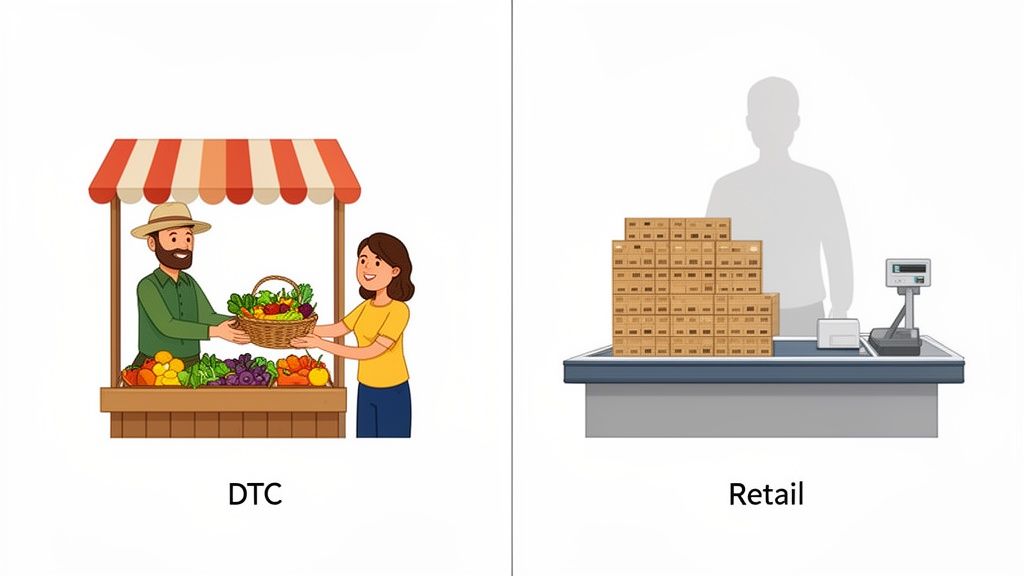
Key Characteristics Of a DTC Business
So, what really sets a DTC brand apart? It comes down to a few core principles that just don't exist in the old-school retail world.
- Own the Customer Relationship: Brands talk directly with their customers. This is invaluable for gathering feedback, building real loyalty, and turning buyers into fans.
- Control the Brand Message: There’s no risk of a retailer misrepresenting the brand or diluting the message. It’s pure, unfiltered communication.
- Direct Access to First-Party Data: Every click, every purchase, every interaction—it’s all data that goes straight to the brand. This is gold for informing new products and smarter marketing.
- Higher Profit Margins: When you remove the middleman, you also remove their cut of the revenue. More of each sale goes directly into the brand’s pocket.
The market has absolutely exploded in response to this model. The global D2C market was valued at $225.5 billion and is on track to hit a staggering $880.1 billion by 2034, growing at a compound annual growth rate (CAGR) of 14.7%.
The essence of DTC isn't just selling online; it's about owning the entire customer experience. From the first ad someone sees to the moment they unbox their product, the brand is the one curating every single step.
Of course, this total control is a double-edged sword. It offers a massive opportunity, but it also means the brand is suddenly responsible for things partners used to handle, like logistics, marketing, and customer acquisition.
DTC vs Traditional Retail At a Glance
To really see the difference, it helps to put the two models side-by-side. The table below breaks down the core operational and strategic differences between going direct and using traditional retail channels.
As you can see, the DTC model puts the brand firmly in the driver's seat. While it demands more from an operational standpoint, the rewards—from higher margins to deeper customer loyalty—can be game-changing.
Why DTC Is Powering Modern eCommerce Growth
The move to a direct-to-consumer model is more than just a trend—it's a seismic shift in how brands do business. They're not just cutting out the middleman to be different; they're taking the reins of their own destiny. This control is everything, and it unlocks three core advantages that are absolutely fueling the growth we're seeing across eCommerce today.
At its heart, DTC works because it forges a real, direct relationship between a brand and its customers. This isn't just about adding people to an email list. It’s about creating a two-way street, a conversation that helps you build a sustainable and profitable business from the ground up.
Mastering Customer Data
When you sell your product through a big-box retailer, you're flying blind. The retailer gets all the juicy customer data—who bought your product, when they bought it, and what else they threw in the cart. You get almost none of it. But in a DTC model, every last bit of that information is yours. This is called first-party data, and frankly, it's gold.
Having direct access to this data creates a powerful feedback loop. You can see exactly how shoppers behave on your site, which products they obsess over, and which marketing messages actually make them pull out their wallets.
- Product Refinement: Got a new product that's getting tons of clicks but no "add to carts"? Your data might tell you the price is off or the description is confusing. You can fix that—today.
- Personalized Marketing: Knowing someone's purchase history and browsing habits means you can stop shouting generic ads into the void. Instead, you can create targeted campaigns that speak directly to what that person actually cares about.
- Anticipating Needs: Over time, you'll spot patterns in your data that can help you predict what your customers will want next. This lets you develop new products they’re already primed to love, long before they even think to ask for them.
Building an Authentic Brand
When you own the entire customer journey, you get to tell your story, your way, at every single step. From the look and feel of your website to the tone of a customer service email—and even the experience of unboxing the product—every touchpoint reinforces who you are and what you stand for.
You just can't get that level of control in a traditional retail setting, where your product is just one of many sitting on a shelf, and the shopping experience is completely out of your hands.
By managing every interaction, DTC brands cultivate a genuine community around their products. This builds a kind of loyalty that goes way beyond a simple transaction, turning one-time buyers into your most passionate advocates.
Boosting Profitability and Innovation
Let's not forget the bottom line. The financial impact of going direct is a huge driver of growth. When you remove wholesalers and retailers from the equation, you also eliminate the markups they take. That means your profit margins on every single sale are significantly higher.
This isn't just about pocketing more cash. It's about creating a self-fueling engine for growth. Those higher margins can be plowed right back into the business where it counts:
- Innovation: More cash on hand means more money for R&D, which leads to better products.
- Marketing: You can afford to invest more in acquiring new customers and scaling up.
- Customer Experience: You have the resources to build an unbeatable service and delivery experience, which only deepens customer loyalty.
This cycle of strategic reinvestment is clearly working. In 2023, D2C brands pulled in around $135 billion in e-commerce sales, a number that’s expected to leap to $187 billion by 2025. This explosive growth shows just how much today’s shoppers value the personal, direct-from-the-source experience. You can learn more by checking out a detailed report on the growth of DTC brand sales.
Building Your Operational DTC Foundation
Turning a DTC idea into a profitable reality means building a rock-solid operational backbone. This isn't just about having a killer product; it's about creating a seamless engine that handles everything from the moment a customer lands on your site to the second their package arrives.
This foundation really comes down to three essential pillars. Think of it like building a house. Your tech stack is the plumbing and electrical, fulfillment is the physical structure and delivery routes, and customer experience is the interior design that makes people want to stay. Get these right from the start, and you'll avoid costly headaches later on.
Choosing Your Technology Stack
The right technology is the central nervous system of any DTC brand. It automates processes, gathers crucial data, and creates the digital storefront where all the magic happens. Your goal should be to build a scalable, integrated system that grows with you.
At the very heart of this stack is your eCommerce platform. This is your digital headquarters, so it needs to be reliable, powerful, and easy for your team to use.
- eCommerce Platform: Solutions like Shopify, BigCommerce, or Adobe Commerce provide the essential framework for your online store—everything from product pages to checkout and payment gateways.
- Marketing Automation: You need tools for email and SMS marketing. Think platforms like Klaviyo or Mailchimp. They are absolutely critical for building direct relationships and driving repeat purchases.
- Analytics and Reporting: Integrating a platform like Google Analytics is non-negotiable. It gives you the first-party data needed to understand customer behavior, track what’s working, and make smart decisions.
This is how the key advantages of a DTC model—data, brand, and profit—create a powerful growth loop.
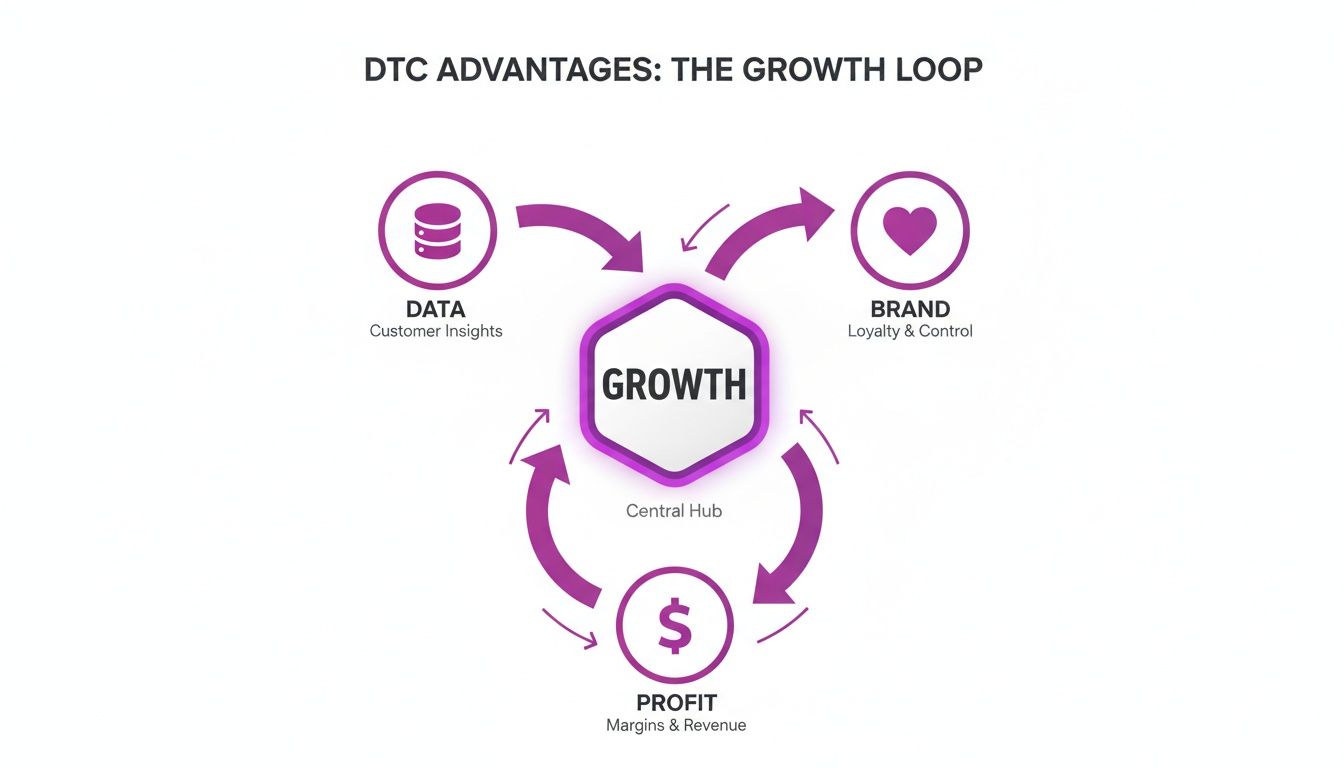
By owning these three areas, a DTC brand creates a self-reinforcing cycle where better data leads to a stronger brand, which in turn drives higher profits that you can pour right back into the business.
Mastering Fulfillment and Logistics
Once an order is placed, your fulfillment and logistics process kicks into high gear. This is honestly one of the biggest operational hurdles for new DTC brands, since you're solely responsible for getting that product into the customer's hands. How you manage this directly impacts customer satisfaction and your bottom line.
There are really three main models to consider, each with its own pros and cons depending on where your business is at.
The moment a customer clicks "buy" is not the end of the sale; it's the beginning of the fulfillment promise. Flawless logistics is non-negotiable for building trust and earning repeat business in the DTC world.
Let's break down the main fulfillment strategies:
Designing The Customer Experience
Finally, the customer experience (CX) is the glue that ties everything together. In the DTC model, you own the entire relationship. That means every single touchpoint—from your ads to your packaging—must reflect your brand's values. A great operational foundation means putting CX first; you can see exactly how to improve customer satisfaction for your DTC brand.
This goes way beyond just having a nice-looking website. It's about the entire user journey, from discovery all the way to post-purchase support. Of course, a high-converting site design is crucial, but what happens after the sale is just as important.
Responsive, proactive customer support can turn potential problems into opportunities to build intense loyalty. Investing in a positive customer experience isn't a cost center—it's one of the most powerful retention tools you have.
Creating A Winning DTC Marketing Strategy
When you go direct to consumer, you lose the safety net of a retail partner's foot traffic. Suddenly, you're not just selling a product; you're the engine driving every single visitor, lead, and sale to your digital doorstep. This means you need to build a powerful marketing machine from the ground up—one designed not just for one-off sales, but for creating lasting customer relationships.
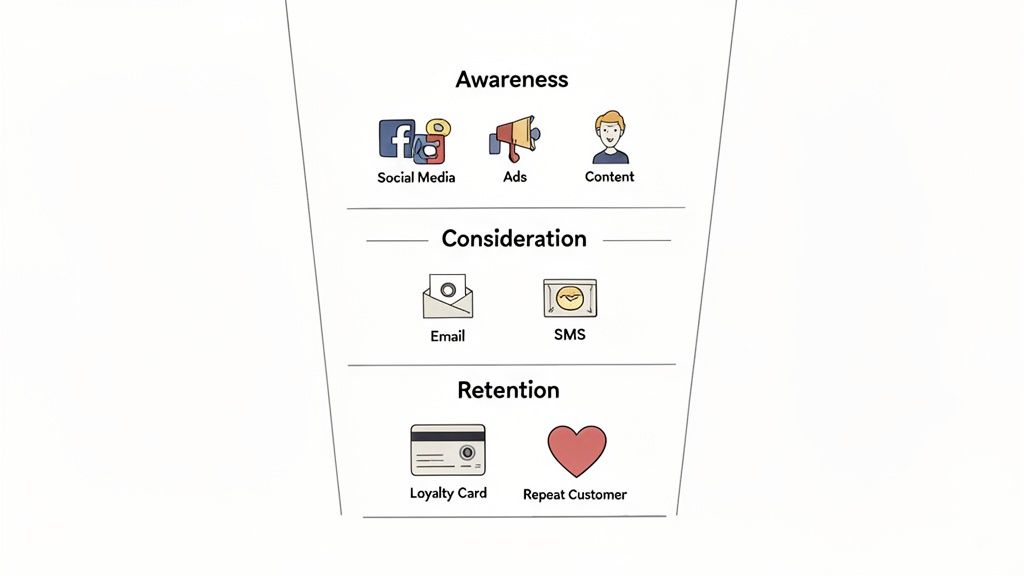
A winning strategy is all about mapping the entire customer journey. You need a clear plan that takes a total stranger from "who are you?" to becoming a lifelong fan of your brand. Success comes from a smart mix of attracting new people affordably while getting the most value out of the customers you already have.
Top of Funnel: Getting on Their Radar
First things first: you have to introduce your brand to people who don't even know you exist. This top-of-funnel (ToFu) stage is about casting a wide but carefully targeted net to grab attention and pull initial traffic to your store. The goal here isn't a hard sell; it's about education, connection, and making a great first impression.
Effective tactics for this stage usually include:
- Targeted Performance Ads: Platforms like Meta (Facebook and Instagram) and Google Ads are your best friends here. You can dial in specific demographics and interests to show your compelling ads to the right people.
- Authentic Social Media Engagement: This is about building a real community. Share content that shows off your brand’s personality, sparks conversations, and encourages your followers to create their own content featuring your products.
- Value-Driven Content Marketing: Create blog posts, videos, or handy guides that solve a genuine problem for your ideal customer. This positions you as a helpful expert, not just another company trying to sell something.
Before you pour money into ads, make sure you have a solid brand identity. It's impossible to connect with the right audience if you don't know who you are first. Nailing down how to create a brand identity is a critical first step.
Middle of Funnel: Turning Interest into Action
Okay, so you've grabbed someone's attention. Now what? The next challenge is to guide them toward making a purchase. This middle-of-funnel (MoFu) stage is all about building trust and proving your value. You're nurturing these warm leads, answering their questions (sometimes before they even ask), and overcoming any hesitation they might feel.
This is where your direct communication channels become your secret weapon.
In DTC, email and SMS aren't just for blasting discounts. They are sophisticated tools for storytelling, building one-to-one connections, and guiding customers through their decision-making process.
By using data from their first visit, you can segment your audience and send personalized messages that feel genuinely helpful, not spammy. Think automated emails for abandoned carts or targeted texts about a new product line to someone who browsed that specific category.
Bottom of Funnel: Keeping Them Coming Back
Getting that first sale is a huge win, but the most profitable DTC brands are masters of the bottom-of-funnel (BoFu) game. This is where you shift your focus to retention, turning one-time buyers into loyal, repeat customers who rave about you to their friends. Remember, it costs way less to keep a customer than to find a new one.
This focus is paying off big time across the industry. By 2025, total US D2C sales are expected to hit a massive $239.75 billion, making up 19.2% of all retail eCommerce. And with social commerce now fueling 19.4% of sales, platforms like Instagram are no longer optional—they're essential for both finding and keeping customers. You can explore more of these DTC trends for 2025 and beyond to see where the market is headed.
Proven retention strategies include:
- Loyalty and Rewards Programs: Give people a reason to come back with points, exclusive access, or members-only discounts.
- Exceptional Post-Purchase Experience: The journey doesn't end at checkout. Proactive shipping updates, a memorable unboxing experience, and dead-simple returns build massive trust.
- Community Building: Create a space, like a private Facebook group or forum, where your customers can connect with each other and your team. This fosters a powerful sense of belonging.
Ultimately, a winning DTC marketing strategy is a constant balancing act. You have to keep a close eye on your Customer Acquisition Cost (CAC) and your Customer Lifetime Value (LTV). The simple goal is to make sure the value a customer brings you over time is much higher than what you spent to get them in the first place. That’s the formula for sustainable, profitable growth.
Learning From Real World DTC Success Stories
Theory is great, but seeing a direct-to-consumer model fire on all cylinders in the real world is where the real lessons are. Success leaves clues. When we break down the strategies of brands that have absolutely crushed it with DTC, we find actionable playbooks we can all learn from.
These stories aren't just about selling products online. They’re about how building a direct line to your customer becomes a massive competitive advantage. From industry titans to scrappy newcomers, the formula is surprisingly consistent: own your customer relationship, tell a story that resonates, and solve a real problem.
Let's look at how three very different brands used the DTC model to turn their industries upside down.
Warby Parker: The Value Proposition Disruptor
Remember what it was like to buy glasses before Warby Parker? It was an expensive, clunky process controlled by a handful of massive companies. Warby Parker saw a chance not just to sell glasses on the internet, but to fix a fundamentally broken system.
Their entire approach was built on a simple, powerful value proposition. By designing their own frames and cutting out the middlemen—the licensing fees and ridiculous retail markups—they could sell high-quality, stylish prescription glasses for a tiny fraction of the old-school price.
But they knew price wasn't enough. The biggest mental block for customers was obvious: how can I buy glasses I can't even try on?
- Home Try-On Program: Their solution to this was a stroke of genius and became their signature. They let customers pick five frames to test out at home, for free. This single move eliminated all the risk and friction, making the decision to buy incredibly easy.
- Social Mission: For every pair sold, they donate one to someone in need. This "Buy a Pair, Give a Pair" program wasn't just a marketing gimmick; it was baked into their brand from day one. It forged an emotional bond with customers who wanted their money to make a difference.
Warby Parker proved that a DTC strategy can completely dismantle an industry by attacking core customer frustrations with a better value prop and an even better experience.
Glossier: The Community-First Content Engine
Here’s the thing about Glossier: it wasn't a product company first. It grew out of a hugely popular beauty blog, Into the Gloss. That origin story is the secret to their entire DTC playbook. They had a built-in community and a feedback loop long before they ever sold a single tube of Boy Brow.
This community-first mindset is the engine that drives their growth. Glossier doesn't just push makeup; it hosts a conversation about beauty and uses the insights from that conversation to decide what to make next.
Glossier's genius was realizing that their customers weren't just consumers; they were co-creators, brand ambassadors, and their most valuable marketing channel. Their DTC model is powered by user-generated content and genuine word-of-mouth.
They completely flipped the old product development model on its head. Instead of guessing what people want, they use their direct line to customers to source ideas, get feedback, and build products that people are literally asking for. It guarantees them a hungry audience for every launch.
Allbirds: The Sustainable Niche Master
The footwear market is brutally competitive. So how did Allbirds break through? By carving out a very specific niche with a powerful story: creating the "world's most comfortable shoe" from sustainable, natural materials. Their DTC model was the perfect way to tell that unique story without it getting drowned out on a crowded department store shelf.
Their success boils down to a few key moves:
- Laser-Focused Product: They didn’t launch with a hundred styles. They started with just one hero product—the Wool Runner—and obsessed over making it perfect.
- Transparent Storytelling: Visit their site, and you'll immediately understand their commitment to materials like merino wool and eucalyptus tree fibers. They don't just say they're sustainable; they show you.
- Simplicity in Everything: From the minimalist design of their shoes to the clean, straightforward online buying process, their brand ethos is clear at every single touchpoint.
Allbirds is the perfect example of how a DTC brand can win big by owning a niche, communicating a clear mission, and delivering a superior product experience directly to a passionate fanbase.
The DTC Metrics That Actually Matter
You can't grow what you don't measure. In the direct-to-consumer world, data isn't just a nice-to-have; it's the lifeblood of your business. Understanding your numbers is the only real way to make smart, sustainable decisions that move the needle.
Think of it like flying a plane. You wouldn't just take off and hope for the best. You'd be glued to your instruments—altitude, speed, fuel levels. Your key performance indicators (KPIs) are those instruments. They tell you when to pour more money into ads, when to double down on existing customers, or when a broken checkout flow is killing your sales.
Measuring Customer Acquisition
Getting new customers in the door is the first big hurdle for any DTC brand, and it's almost always the most expensive part of the operation. That’s why tracking your acquisition efficiency isn't just a suggestion—it's non-negotiable.
- Customer Acquisition Cost (CAC): This is your total marketing and sales spend divided by the number of new customers you brought in over a set period. A low CAC is great, but it’s completely meaningless on its own. The real question is whether your CAC is sustainable compared to how much a customer is worth to you over time.
- Conversion Rate: This metric tracks the percentage of your website visitors who actually complete a purchase. A low conversion rate is a blaring alarm bell, signaling problems with your site design, product copy, pricing, or checkout process. Even tiny improvements here can have a massive impact on your bottom line.
Gauging Profitability and Customer Value
Once you’ve got a customer, the game shifts from acquisition to profitability. It's not about that first sale. It’s about maximizing the value each customer brings to your business over their entire relationship with your brand.
The goal of a DTC business isn't just to make a sale; it's to acquire a customer profitably. This requires a delicate balance between what you spend to get them and what they spend with you over time.
To really get a handle on this, you need to be tracking:
- Average Order Value (AOV): This is simply the average amount of money a customer spends each time they check out. Pushing your AOV up with tactics like product bundles, smart upsells, or a "free shipping over $50" threshold is one of the fastest ways to grow revenue without spending another dime on ads.
- Customer Lifetime Value (LTV): This is the ultimate north star for any DTC brand. LTV is the total revenue you can reasonably expect from a single customer over the entire time they shop with you. When your LTV is way higher than your CAC, you've got a healthy, scalable business on your hands. For a deeper look, check out our guide on how to calculate customer lifetime value for data-driven growth.
Tracking Loyalty and Retention
The most successful DTC brands are absolute masters of retention. Why? Because it’s far, far cheaper to keep an existing customer happy than it is to go out and find a new one. These metrics tell you how good you are at turning one-time buyers into die-hard fans.
- Repeat Purchase Rate: What percentage of your customers come back for a second, third, or fourth purchase? A high number here is a clear sign of strong product-market fit and genuine brand loyalty.
- Churn Rate: On the flip side, churn measures the percentage of customers who stop buying from you over a specific period. A rising churn rate is a major red flag that something is wrong—it could be your product, your customer service, or the overall experience you’re providing.
To truly understand the health of your DTC channel, you need a single dashboard that gives you a complete picture of the customer journey.
By keeping a close eye on this core set of numbers, you stop guessing and start knowing. This is how you build a resilient and seriously profitable direct-to-consumer brand.
Frequently Asked Questions About Direct To Consumer
As you start figuring out what a move to DTC means for your business, a few common questions always pop up. Let's tackle them head-on, so you can understand the real-world hurdles and strategic thinking required to launch or scale a DTC channel.
What Are The Biggest Challenges When Starting A DTC Brand?
Jumping into DTC is exciting, but the initial hurdles are very real and usually fall into three buckets. First up is customer acquisition. When you sell through a retailer, they bring the foot traffic. In DTC, you’re on the hook for generating 100% of your own leads, and that takes a serious marketing budget.
Second, you have to get a handle on logistics and fulfillment. Suddenly, you're in the business of managing your own inventory, warehousing, packing, and shipping. It’s a massive operational lift. Nailing this is non-negotiable for keeping customers happy, but it can be expensive and a headache to set up.
Finally, you have to build brand trust from the ground up. You're a new face in a very crowded digital room. Earning customer confidence takes more than just a slick website; it demands a compelling story, a fantastic product, and marketing that feels consistent and authentic.
How Is Marketing For A DTC Brand Different From Traditional Retail?
DTC marketing is a completely different ballgame because you own the entire customer relationship, from the first click to the final delivery. The game shifts from channel marketing—convincing a big-box store to stock your product—to consumer marketing, which is all about forging a direct connection with the person who actually uses it.
This means you’ll be leaning heavily on digital channels:
- Performance Marketing: Using platforms like Meta and Google to find and target your ideal customers.
- Content and SEO: Creating stuff people actually want to read or watch, which brings in organic traffic without paying for every click.
- Email and SMS: Talking directly to your audience to nurture leads and, most importantly, drive repeat business.
DTC marketing is obsessively data-driven. You’re using your own first-party customer data to personalize messages, fine-tune campaigns, and ultimately boost customer lifetime value (LTV). The goal isn't just a single sale; it's about building a loyal community that sticks around.
Can An Established Brand With Retail Partners Launch A DTC Channel?
Absolutely. In fact, many of the most successful brands operate a hybrid model, selling through their retail partners and their own DTC site. The catch? You need a smart strategy to avoid what’s called "channel conflict"—basically, stepping on the toes of your retail partners.
The secret is to differentiate what you offer online. Smart brands do this by offering exclusive products, unique bundles, or personalized options on their DTC site that you just can't get in stores. Clear communication with your partners and a solid pricing strategy are crucial to make sure you're adding to the pie, not just stealing a slice from your retailers. Handled correctly, your DTC channel can even provide invaluable customer insights that help your entire business, including your retail relationships.
Ready to build a high-converting DTC storefront that drives growth? The team at ECORN specializes in Shopify development and conversion rate optimization to help brands scale effectively. Explore our flexible subscription packages and see how we can help you succeed.


Product Variants Shopify: The Complete 2026 Guide
Ecommerce Analytics Consulting for Growth
What Is AI Integration for eCommerce
How to Choose the Right eCommerce Website Development Firm
E Business Strategy Implementation
Conversion Tracking Setup for Shopify Stores
BigCommerce vs Shopify Plus Which Enterprise Wins in 2026
Shopify Theme Kit: Setup, Commands, and Migration Guide
Shopify Extension Development: A Practical 2026 Guide
Shopify Speed Score Explained and How to Improve It
Shopify Mobile Optimization: The 2026 Playbook

How to Add Subcategory in Shopify for Better UX
How to Implement Structured Data for Ecommerce in 2026
SEO App Mobile: Shopify Store Optimization Guide

Shopify Plus Support: What It Includes and How to Choose
Google Ads for Shopify: The Complete 2026 Playbook

Shopify New York: How to Find and Hire the Right Agency
Google Search Console for Shopify: The Complete Setup
First Party Data Collection for eCommerce Growth
FAQ Online Store Guide: Build and Measure It Right
Do FB Ads Work for eCommerce in 2026?
One Page Checkout for Shopify: Design and Implementation
Shopify GraphQL vs REST: The 2026 Developer Decision
Shopify Ecommerce Consulting: Strategy, Pricing &
Are Reddit Ads Worth It for eCommerce Brands

Shopify Title and Meta Description: A Practical 2026 Guide

Product Video Best Practices for Shopify Brands
Real-Time Inventory Management: A 2026 Guide
AI Chatbot Integration for Shopify Stores
Affiliate Program Management: A Shopify Guide
10 Best Performance Monitoring Tools for Shopify in 2026
Digital Asset Management for eCommerce Brands in 2026
Every Type of Facebook Ads Explained for eCommerce Growth
Product Information Management Explained for Shopify Brands
Support Ticket System: A Guide for Shopify Stores

10 Best Customer Service Tools for Shopify in 2026

Can I Start a Business with No Money? a 2026 Blueprint

What Sells Good on Etsy: Best Niches for 2026

Shopify Add to Cart Button: A Practical 2026 Guide

Customer Feedback Automation: A Practical eCommerce Guide
Critical Rendering Path: A Guide for Shopify Stores

How to Promote on TikTok for eCommerce in 2026

B2B eCommerce Consulting That Drives Real Revenue

10 Best Practices for Site Navigation in 2026
Return vs Refund for Shopify Stores: A Practical Guide
What Is Customer Lifetime Value and Why It Matters
What Is Voice of Customer Research for eCommerce

SMS Marketing for Ecommerce That Actually Converts

Master How to Improve Email Deliverability in 2026
Top 7 eCommerce Partners NYC for Shopify Brands in 2026
Machine Learning for Ecommerce: Boost Your Shopify Store

Beauty Market Research: Your 2026 Growth Guide
Shopify International Expansion: A 2026 Roadmap
What Does CRO Stand for in Business: Understanding CRO

Shopify Visual Merchandising: A Playbook for Higher Sales

Shopify Landing Page Design: Master Conversion in 2026
10 Best AI SEO Optimization Tools for Shopify in 2026

Agentic AI for Ecommerce: Boost Your Sales in 2026
Mastering Email Marketing Data for eCommerce Growth

Conversion Rate Optimisation Australia: Boost Your Sales
Conversion Rate Optimization AI: Your Shopify Store Guide

10 Product Bundling Strategies for Shopify in 2026
How to Increase Customer Lifetime Value: A Shopify Playbook
AI Customer Service Automation: Shopify Guide 2026

Clean Website Design: A Shopify Conversion Playbook

Omnichannel Retail Strategy: A Shopify Playbook
Product Data Enrichment: A Guide for Shopify Brands

Instagram Shopping Features a Guide for Shopify Stores
What Is Revenue Optimization: A Holistic RevOps Guide

Benefits of Conversion Rate Optimization: Boost Your
WordPress to Shopify Migration: Your 2026 Seamless Switch
Boost Sales: Ecommerce Payment Processing Guide 2026
Unified Commerce Platform: Benefits, KPIs & Shopify Guide
How to Reduce Bounce Rate eCommerce: Your 2026 Guide
Shopify API Integration: A Practical End-to-End Guide

How to Implement Data Governance: A 2026 Guide
Shopify Store Development Cost: A 2026 Breakdown
What Is Server Side Tracking: The Shopify Guide 2026
Marketing Automation Workflows: A Shopify Guide for 2026
Shopify: How to Reduce Technical Debt

Shopify UX Design Change: A Playbook for Growth

User Generated Content Strategy: Shopify Playbook

Shopify Pause and Build Plan Cost: A Complete 2026 Guide
Compare at Price on Shopify: A Complete Guide for 2026

Where Can I Sell My Prints? 10 Best Platforms for 2026
Shopify Order Management System: The Ultimate Guide 2026
What Is Marketing Attribution? an eCommerce Guide for 2026

10 Best Black Friday Sales Sheets for 2026

Discover the Top Social Media Marketing Agencies For
Consumer Confidence Definition for eCommerce in 2026
What Is Social Commerce? Your 2026 Guide to Boosting Sales
A Social Ad Campaign Playbook for eCommerce Growth

7 Best FAQ Page Examples for SaaS & eCommerce

Market Research in Fashion Industry: A Guide for Shopify
Shopify Migration Services: Expert Guide for 2026
Mastering FB Retargeting Ads for Shopify in 2026
What Is Omnichannel Ecommerce

Master Your Shopify Plus Migration: The 2026 Guide
Shopify Integration Services: A Merchant's 2026 Guide
Shopify Collection Description: A Guide to SEO & Sales


newsletter in your inbox