

Your Black Friday calendar probably already feels too full. Shopify theme updates, merchandising changes, inventory concerns, paid media deadlines, landing pages, SMS coordination, support planning. Email often gets pushed into the final week, then treated like a batch-and-blast channel.
That approach breaks down fast during BFCM. Black friday email marketing works when it's treated like an operating system, not a promo send. In Shopify and Klaviyo, that means building segments early, defining offer logic before design starts, and making sure campaigns and flows work together instead of competing with each other.
Strategic Foundations for Black Friday Email Marketing
Black Friday isn't just crowded. It's structurally different from the rest of the year. More brands start earlier, send more often, and keep promotions live longer. Dotdigital reported that 365 million emails were sent on Black Friday alone in 2024, up 8% from 2023, while the full month of November saw a 5% year-over-year rise in email sends. That matters because the problem isn't just writing a better subject line. The problem is earning attention in an inbox that has been under pressure for weeks.
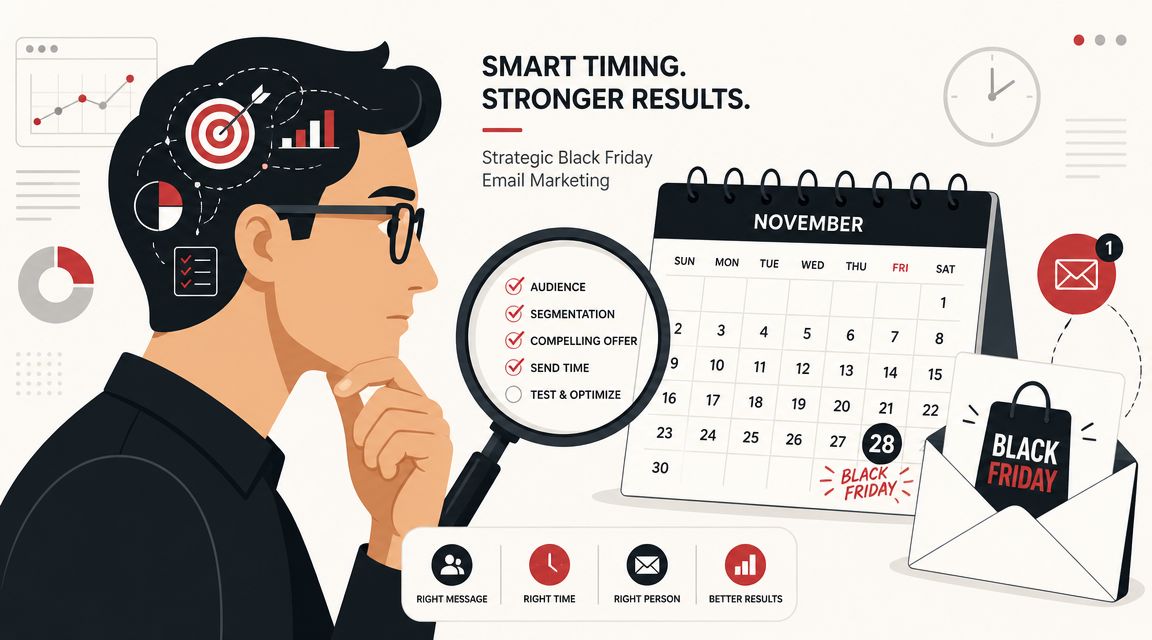
For Shopify brands, the biggest mistake is reacting to the calendar instead of building a plan around buyer behavior. If you wait until Black Friday week to decide who gets what, Klaviyo turns into a scheduling tool instead of a revenue engine. You end up with one offer, one audience, one creative direction, and very little room to adapt once real engagement data starts coming in.
Precision beats volume
Most BFCM underperformance comes from three operational failures:
- Weak audience logic: Everyone gets the same message, whether they bought last week, browsed yesterday, or haven't engaged in months.
- Late creative approval: Teams spend so long debating headlines and discount framing that segmentation and automation get rushed.
- No campaign hierarchy: VIP sends, launch emails, reminders, and flow-triggered messages overlap and cannibalize each other.
A strong plan fixes those before the sale starts. In practice, that means deciding early which segments deserve exclusivity, which products belong in broad sends, and which subscribers should be suppressed from heavy campaign volume.
Practical rule: If your only BFCM strategy is “send more,” you'll pay for it with lower relevance, more fatigue, and weaker conversion from the subscribers who were most likely to buy.
Shopify and Klaviyo give you the advantage if you use them properly
Shopify gives you clean purchase and catalog data. Klaviyo gives you behavior-based segmentation, predictive filtering, dynamic product blocks, and flow control. The stack is already there. The advantage comes from using it with discipline.
Before BFCM starts, define your operating model:
- Who gets early access
- Who gets category-specific creative
- Who should be excluded after purchase
- Which automations stay live during promo periods
- What counts as success beyond opens
Teams that do this well don't improvise on Black Friday morning. They launch a system they built weeks earlier.
Building Your Pre-Sale Campaign and Audience Segments
The month before Black Friday decides whether your main sends convert or just generate traffic. In Klaviyo, the work is less about “building excitement” in the abstract and more about preparing clean segments, warming up engaged audiences, and making sure Shopify customer data is usable when campaign volume spikes.
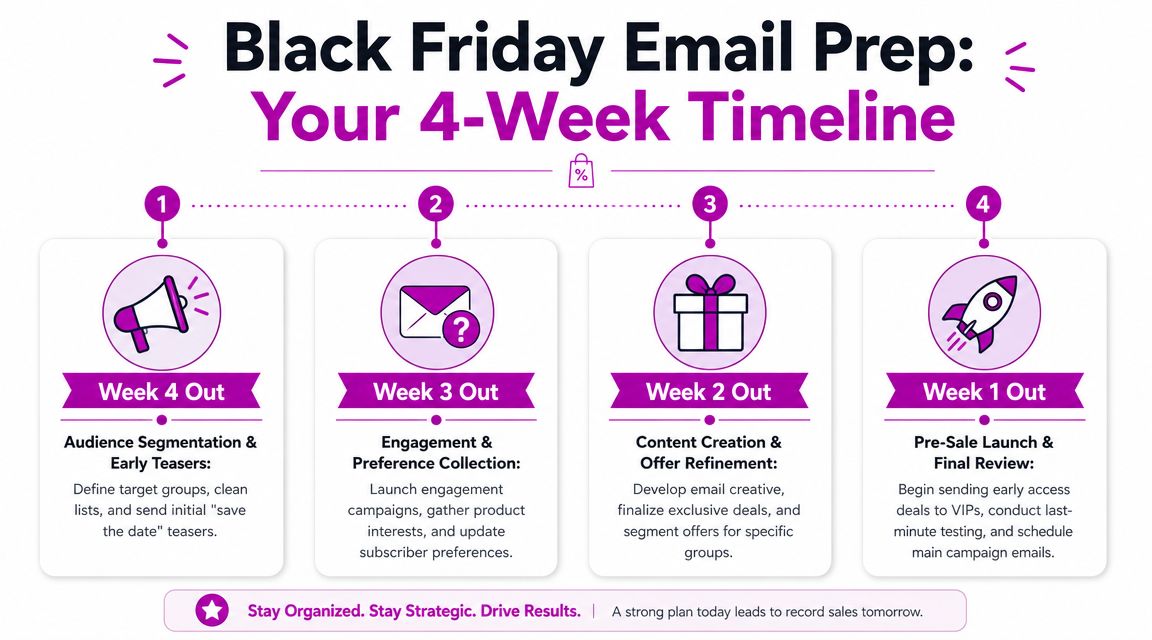
Week 4 out
Start with list quality and segment architecture. Don't open BFCM by designing the hero email. Open it by deciding who should receive which path.
In Klaviyo, build your core Shopify segments first:
- VIP customers: High-value repeat buyers, loyalty members, or customers with strong purchase frequency
- Recent purchasers: Anyone who bought recently and shouldn't immediately get the same broad discount message
- Category loyalists: Customers who repeatedly shop one collection or product type
- High-intent browsers: Subscribers who viewed products or collections recently but didn't convert
- At-risk customers: Past buyers or subscribers whose engagement has faded
Then review suppression logic. If someone hasn't engaged for a long stretch, don't force them into your most important launch sends. BFCM is not the week to test your sender reputation with cold segments.
Use this week for a light teaser, not a hard sell. A simple “save the date” or wishlist-style campaign works well because it starts engagement without spending your best offer too early.
Week 3 out
This is the week to collect intent. Klaviyo is strongest when you can combine Shopify behavior with fresh signals from the inbox itself.
The cleanest version of this is a preference campaign. Ask subscribers what they want to shop, which category they care about, or whether they want early access. If you can tag those interactions back into Klaviyo profiles, your BFCM creative gets sharper immediately.
The brands that win BFCM email don't guess what buyers want. They ask, capture the signal, and use it before the signal goes stale.
After the first wave of engagement, adjust your segments. Some people will move from passive subscribers into engaged audiences. Others still won't respond and may need lighter frequency during sale week.
Place your video support asset later in the section so it complements the timeline rather than interrupting it.
Week 2 out
Creative production should now be tied to segments, not the other way around. Build your modules in Klaviyo so the same email structure can swap products, copy blocks, or urgency messaging depending on audience.
At this stage, finalize:
- Offer structure: Sitewide, collection-specific, bundles, or tiered incentives
- Message hierarchy: What appears above the fold, what gets secondary placement, what gets removed
- Product logic: Best-sellers for broad audiences, browsed or category-matched items for targeted groups
- Suppression rules: Purchasers, recent openers with conflicting sends, customer service-sensitive audiences
This is also when you should QA coupon logic, Shopify collection links, mobile rendering, and UTM consistency. The best segmentation in the world doesn't matter if the wrong collection loads or the discount code creates friction at checkout.
Week 1 out
Now move from prep to controlled launch. Send early access first to the segments that earned it. That might be VIPs, loyalty customers, top spenders, or highly engaged subscribers. Keep the audience intentional. Early access loses its value when everyone gets it.
A practical Week 1 checklist:
- Schedule core campaigns in Klaviyo
- Confirm flow priority rules
- Create exclusion segments for purchasers
- Load fallback product blocks in case inventory shifts
- Test on mobile inboxes before final send approval
If you need inspiration for campaign structures beyond BFCM, this collection of sample email campaigns for ecommerce teams is useful for adapting proven formats into a sale calendar.
Designing Your Black Friday Email Campaign Sequences
Once the audience structure is set, campaign design gets easier because each send has a job. The strongest black friday email marketing calendars don't rely on one heroic launch email. They use a sequence where every message changes the buyer's state, from awareness to anticipation to action.
The four core sends
Use this as the backbone of your Klaviyo campaign calendar.
| Email Type | Timing | Primary Audience | Subject Line Example | CTA Example |
|---|---|---|---|---|
| Teaser | Early in the week before launch | Engaged subscribers and general list | Your Black Friday access starts soon | Build Your Wishlist |
| VIP Early Access | Before public launch | VIPs, loyalty customers, top repeat buyers | Early access is live | Shop Early Access |
| Black Friday Launch | Sale start | Main sale audience | Black Friday starts now | Shop the Sale |
| Final Hours | End of promotion window | Non-purchasers and recent clickers | Last chance before it ends | Get the Deal |
Teaser email
The teaser email shouldn't explain everything. Its job is to create intent and train subscribers to watch for the next send. For Shopify brands, collection-based merchandising helps achieve this. Show the kind of products that will be included, not the full discount logic.
Keep the body simple:
- One headline
- One visual direction
- One primary action
- A secondary cue like “early access,” “limited inventory,” or “best sellers included”
Good teaser subject lines are curiosity-led but still clear. Don't write cryptic copy that could fit any campaign in any month. BFCM inboxes punish ambiguity.
VIP early access email
This is often the most impactful campaign in the sequence because it combines segmentation, exclusivity, and lower inbox competition than the public launch. In Klaviyo, send it only to the segment that truly merits it. If your “VIP” list is just your full engaged audience with a prettier subject line, buyers notice.
A strong VIP email includes:
- A direct acknowledgment that this access is not public
- The offer or collection scope immediately above the fold
- Product recommendations personalized based on prior purchase behavior if possible
- A CTA that lands on a pre-filtered Shopify collection or landing page
If your team needs examples of campaign anatomy and offer framing, this set of proven sample email campaign formats is a useful reference point.
The best VIP emails feel selective. The worst ones feel like a broad campaign wearing a gold label.
Black Friday launch email
The launch email has one requirement. Instant clarity. Subscribers should know the offer, timing, and next click within a few seconds.
For most Shopify brands, the winning structure looks like this:
- Headline with the core offer
- Short support line with timing or exclusions
- Primary CTA
- Product block or collection highlights
- Secondary CTA for shoppers who need more context
This is not the moment for long brand storytelling. Brand voice still matters, but conversion depends on removing effort. If you bury promo details below large lifestyle imagery or force the subscriber to interpret your sale mechanics, you create drop-off.
Final hours email
This email closes the window for people who hesitated. It works best when the audience is tighter than the launch send. Aim it at clickers who didn't purchase, browsers with recent intent, or engaged non-buyers who haven't converted.
Use direct language. “Ends tonight” is stronger than abstract urgency. If inventory is changing fast, swap broad category tiles for product blocks that can adapt more cleanly in Klaviyo.
A simple rule helps here:
- Use teaser to create anticipation
- Use VIP to reward loyalty
- Use launch to convert broad demand
- Use final hours to harvest delayed intent
That sequence is easier to execute when every send has a distinct purpose rather than repeating the same email with a new timer gif.
Advanced Personalization and Key Automation Flows
Personalization during BFCM isn't about dropping a first name into the subject line. It's about changing the email path based on what the customer did. That's where Klaviyo earns its keep.
A useful model comes from a Litmus example featuring Kate Spade. The brand used an in-email poll to capture preference data, then followed with segmented creative based on the vote. That campaign saw an 84% lift in CTR and 47% higher revenue, with voters receiving category-specific follow-ups instead of a generic promotion. The lesson isn't “use polls because Kate Spade did.” The lesson is that immediate use of first-party intent beats static batch messaging.
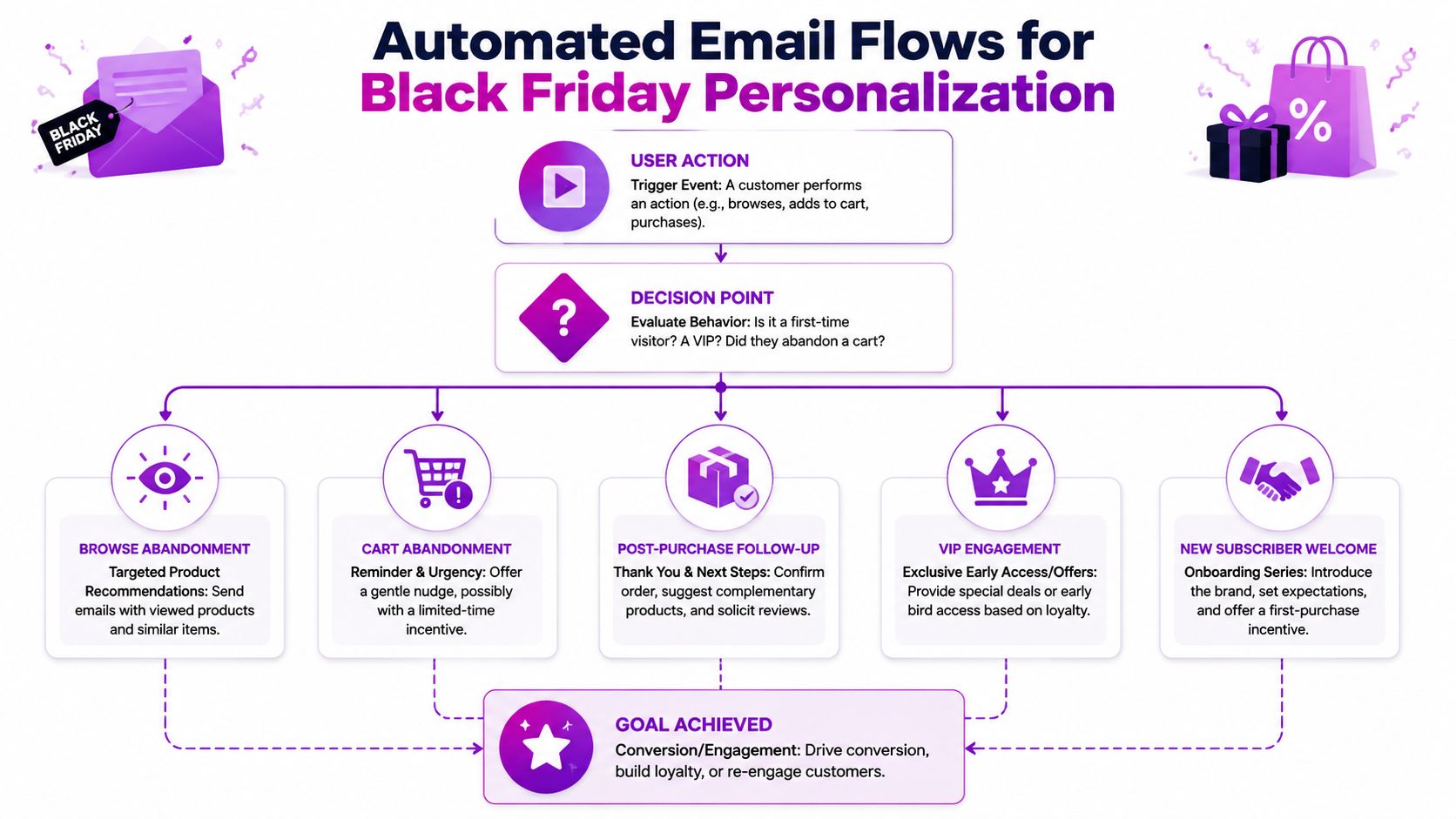
Browse abandonment flow
During BFCM, browse abandonment should be shorter and sharper than your normal evergreen flow. Someone who viewed a product or collection today is competing with dozens of offers by tonight.
In Klaviyo, trigger the flow from viewed product behavior, then personalize with:
- The exact item viewed
- Similar products from the same Shopify collection
- Sale framing if the item is included in the promotion
- A clear return-to-cart or shop-now CTA
Don't overload this email with too many recommendations. One viewed item and a few adjacent options usually outperform a crowded grid.
Cart abandonment flow
Cart abandonment is your recovery engine during BFCM, but only if you keep the logic clean. If the customer already received a launch email and then abandons, the flow should respond to that behavior, not repeat broad sale copy.
What works:
- A reminder with the exact cart contents
- A follow-up that adds urgency if the promo window is closing
- Suppression once purchase happens, immediately
What doesn't work is stacking too many reminders while campaign emails are also firing. The customer experiences that as noise, not relevance.
If campaigns create demand, automations protect revenue that would otherwise leak out of the funnel.
Post-purchase and VIP logic
BFCM isn't over when the order is placed. Shopify brands usually acquire a lot of first-time buyers during this period, and many never hear from them properly again beyond the standard order updates.
Build a BFCM-specific post-purchase flow in Klaviyo that does three things:
- Confirms the order and reassures the customer during a busy fulfillment window
- Cross-sells intelligently based on what they bought, not what you most want to push
- Starts the transition from deal buyer to repeat customer
For top customers, create a separate VIP engagement branch. That can include first look access, category-specific recommendations, or a softer follow-up cadence that respects the fact they already converted.
If your team wants a deeper automation framework beyond holiday use cases, this guide to ecommerce email marketing automation is a strong operational reference.
A/B Testing and Optimizing Your Email Campaigns
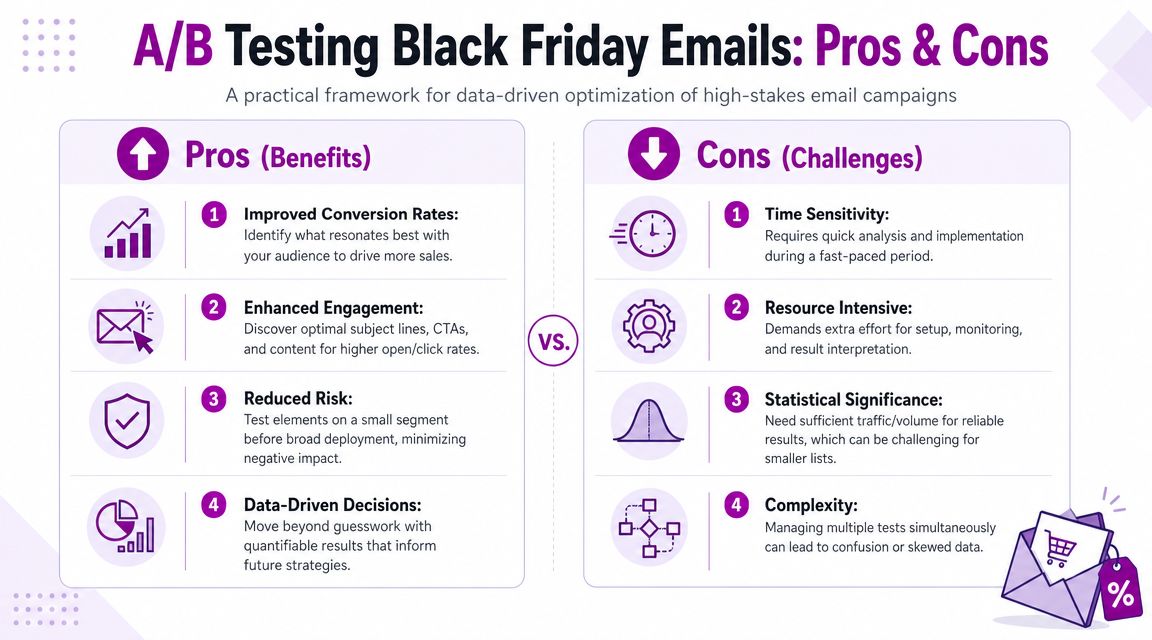
BFCM testing needs discipline. Teams often test too much, too late, or on the wrong variables. Then they mistake noise for insight and carry bad decisions into the next send.
The most useful reminder comes from the realities of device behavior and segmentation. ExactVerify notes that 70% of online orders during Cyber Week come from mobile devices, and that targeted emails have click-through rates 267.21% higher than non-targeted campaigns. That changes what deserves testing priority. Mobile readability and audience targeting aren't cosmetic improvements. They directly affect whether the click happens at all.
What to test first
Start with variables that can alter engagement or conversion fast:
- Subject line framing: direct offer versus exclusivity versus urgency
- Preview text: reinforcement of the offer versus product-led context
- Hero section layout: product-first versus offer-first
- CTA language: broad shopping CTA versus category-specific CTA
- Audience split: all engaged subscribers versus a tighter behavior-based segment
Leave smaller stylistic preferences for later. Button shade debates don't deserve attention before message hierarchy and targeting are settled.
Mobile-first review is part of CRO
A lot of Black Friday emails are still designed on desktop and merely “checked” on mobile. That's backwards. Mobile is the primary buying environment during Cyber Week, so the mobile version should drive the design logic from the start.
Review each campaign in Klaviyo mobile preview with a conversion lens:
| Element | What to look for |
|---|---|
| Header | Offer visible without scrolling too far |
| CTA | Easy to tap, obvious in purpose |
| Promo code | Readable and easy to copy |
| Product blocks | Not overcrowded, clear image hierarchy |
| Footer clutter | Reduced during high-urgency sale sends |
If the subscriber has to pinch, zoom, hunt for the code, or scroll through decorative filler before seeing the value proposition, the email is underperforming before the click even has a chance.
How to run useful tests during a fast sale window
Keep tests simple enough that the result can inform the next send. One variable at a time is still the safest rule during BFCM because too many simultaneous changes blur the takeaway.
A practical testing cadence:
- Pre-launch: Test subject line style and teaser framing
- Early access: Test audience logic and CTA clarity
- Launch day: Test hero format or offer presentation
- Reminder wave: Test urgency language on recent clickers or non-buyers
Run fewer tests, but make each one decision-ready. A test that doesn't change the next send is just reporting activity.
The teams that improve fastest during BFCM aren't the ones running the most experiments. They're the ones choosing tests that can change revenue outcomes within hours.
Measuring BFCM Success and Planning for What's Next
BFCM reporting goes off track when teams stop at opens and click rates. Those metrics can help diagnose performance, but they don't tell you whether the campaign was profitable, whether the right customers converted, or whether your discounting strategy created long-term value.
That matters even more when the market is this large. Klaviyo cites Adobe Analytics data showing that U.S. shoppers spent $10.8 billion online on Black Friday 2024, up 10.2% from 2023. Email remains central in that environment because brands need a scalable owned channel to drive traffic and support the purchase journey. But scale alone isn't success. Profitability and retention are.
The KPIs that deserve attention
Focus your post-BFCM review on metrics that tie activity to commercial outcomes:
- Revenue per recipient: Better than raw revenue because it shows efficiency by audience and campaign
- Conversion rate by segment: Reveals whether VIPs, browsers, category loyalists, or new subscribers responded as expected
- AOV by campaign type: Helps you see whether some sends drove lower-quality orders
- First-time versus repeat customer mix: Important for understanding whether you acquired future value or just discounted to existing demand
- Flow revenue contribution: Especially from cart and browse recovery during promo windows
Open rate still has diagnostic value, but it shouldn't be the headline. If a campaign got opened and didn't convert, the problem may be offer clarity, landing page friction, audience mismatch, or product selection.
Use BFCM as a data capture event
The strongest operators treat BFCM as both a sales event and a segmentation event. Every click, purchase, category preference, and non-response gives you cleaner data for December and beyond.
That means your post-sale plan should include:
- Review requests for new buyers
- Cross-sell or replenishment paths for first-time purchasers
- Re-engagement campaigns for clickers who didn't buy
- A segment refresh based on what customers purchased
- A documented testing log for next year's planning
If your team needs a practical framework for evaluating campaign performance more broadly, Mr. Green Marketing's campaign guide is a useful companion read.
One final point matters more than is often acknowledged. BFCM doesn't end when the discount expires. It ends when you've extracted the learning, built the next retention path, and folded those insights back into your Shopify and Klaviyo system.
If your Shopify team wants help turning this into a working BFCM plan, ECORN can support the full build, from Klaviyo segmentation and automation strategy to campaign execution, landing page alignment, and CRO-focused Shopify implementation.


7 Ecommerce Newsletter Examples for Shopify Brands
One Product Shopify Store: Build and Scale
Mobile Pop Up Strategy for Shopify Stores That Converts
Sitemap for Shopify: How to Find, Optimize, and Submit It
7 Single Product Websites Worth Emulating
Product Variants Shopify: The Complete 2026 Guide
Ecommerce Analytics Consulting for Growth
What Is AI Integration for eCommerce
How to Choose the Right eCommerce Website Development Firm
E Business Strategy Implementation
Conversion Tracking Setup for Shopify Stores
BigCommerce vs Shopify Plus Which Enterprise Wins in 2026
Shopify Theme Kit: Setup, Commands, and Migration Guide
Shopify Extension Development: A Practical 2026 Guide
Shopify Speed Score Explained and How to Improve It
Shopify Mobile Optimization: The 2026 Playbook
How to Add Subcategory in Shopify for Better UX
How to Implement Structured Data for Ecommerce in 2026
SEO App Mobile: Shopify Store Optimization Guide
Shopify Plus Support: What It Includes and How to Choose
Google Ads for Shopify: The Complete 2026 Playbook
Shopify New York: How to Find and Hire the Right Agency
Google Search Console for Shopify: The Complete Setup
First Party Data Collection for eCommerce Growth
FAQ Online Store Guide: Build and Measure It Right
Do FB Ads Work for eCommerce in 2026?
One Page Checkout for Shopify: Design and Implementation
Shopify GraphQL vs REST: The 2026 Developer Decision
Shopify Ecommerce Consulting: Strategy, Pricing &
Are Reddit Ads Worth It for eCommerce Brands
Shopify Title and Meta Description: A Practical 2026 Guide
Product Video Best Practices for Shopify Brands
Real-Time Inventory Management: A 2026 Guide
AI Chatbot Integration for Shopify Stores
Affiliate Program Management: A Shopify Guide
10 Best Performance Monitoring Tools for Shopify in 2026
Digital Asset Management for eCommerce Brands in 2026
Every Type of Facebook Ads Explained for eCommerce Growth
Product Information Management Explained for Shopify Brands
Support Ticket System: A Guide for Shopify Stores

10 Best Customer Service Tools for Shopify in 2026

Can I Start a Business with No Money? a 2026 Blueprint
What Sells Good on Etsy: Best Niches for 2026

Shopify Add to Cart Button: A Practical 2026 Guide

Customer Feedback Automation: A Practical eCommerce Guide
Critical Rendering Path: A Guide for Shopify Stores

How to Promote on TikTok for eCommerce in 2026

B2B eCommerce Consulting That Drives Real Revenue
10 Best Practices for Site Navigation in 2026
Return vs Refund for Shopify Stores: A Practical Guide
What Is Customer Lifetime Value and Why It Matters
What Is Voice of Customer Research for eCommerce

SMS Marketing for Ecommerce That Actually Converts

Master How to Improve Email Deliverability in 2026
Top 7 eCommerce Partners NYC for Shopify Brands in 2026
Machine Learning for Ecommerce: Boost Your Shopify Store
Beauty Market Research: Your 2026 Growth Guide
Shopify International Expansion: A 2026 Roadmap
What Does CRO Stand for in Business: Understanding CRO
Shopify Visual Merchandising: A Playbook for Higher Sales
Shopify Landing Page Design: Master Conversion in 2026
10 Best AI SEO Optimization Tools for Shopify in 2026

Agentic AI for Ecommerce: Boost Your Sales in 2026
Mastering Email Marketing Data for eCommerce Growth
Conversion Rate Optimisation Australia: Boost Your Sales
Conversion Rate Optimization AI: Your Shopify Store Guide

10 Product Bundling Strategies for Shopify in 2026
How to Increase Customer Lifetime Value: A Shopify Playbook
AI Customer Service Automation: Shopify Guide 2026
Clean Website Design: A Shopify Conversion Playbook

Omnichannel Retail Strategy: A Shopify Playbook
Product Data Enrichment: A Guide for Shopify Brands
Instagram Shopping Features a Guide for Shopify Stores
What Is Revenue Optimization: A Holistic RevOps Guide
Benefits of Conversion Rate Optimization: Boost Your
WordPress to Shopify Migration: Your 2026 Seamless Switch
Boost Sales: Ecommerce Payment Processing Guide 2026
Unified Commerce Platform: Benefits, KPIs & Shopify Guide
How to Reduce Bounce Rate eCommerce: Your 2026 Guide
Shopify API Integration: A Practical End-to-End Guide
How to Implement Data Governance: A 2026 Guide
Shopify Store Development Cost: A 2026 Breakdown
What Is Server Side Tracking: The Shopify Guide 2026
Marketing Automation Workflows: A Shopify Guide for 2026
Shopify: How to Reduce Technical Debt
Shopify UX Design Change: A Playbook for Growth
User Generated Content Strategy: Shopify Playbook
Shopify Pause and Build Plan Cost: A Complete 2026 Guide
Compare at Price on Shopify: A Complete Guide for 2026
Where Can I Sell My Prints? 10 Best Platforms for 2026
Shopify Order Management System: The Ultimate Guide 2026
What Is Marketing Attribution? an eCommerce Guide for 2026
10 Best Black Friday Sales Sheets for 2026

Discover the Top Social Media Marketing Agencies For
Consumer Confidence Definition for eCommerce in 2026
What Is Social Commerce? Your 2026 Guide to Boosting Sales
A Social Ad Campaign Playbook for eCommerce Growth
7 Best FAQ Page Examples for SaaS & eCommerce

Market Research in Fashion Industry: A Guide for Shopify
Shopify Migration Services: Expert Guide for 2026


newsletter in your inbox