

You already have customer data. The problem is that most Shopify stores don't operationalize it.
A familiar pattern shows up again and again. The store has orders in Shopify, campaign history in Klaviyo, support conversations in Gorgias, traffic data in Google Analytics, maybe a loyalty app, maybe subscriptions, maybe reviews. Everyone can see activity. Few teams can answer basic commercial questions with confidence. Who is most likely to buy again? Which first-time customers should get a cross-sell instead of a discount? Which returning customers are drifting away?
That gap is where revenue gets lost. Not because the store lacks data, but because the data stays trapped inside tools, dashboards, and one-off exports.
For Shopify merchants, learning how to use customer data to increase sales isn't an enterprise exercise. It's an operating discipline. You don't need a data science team to do it well. You need the right data, clean segments, a few high-impact automations, and a clear way to measure whether those actions change revenue.
Your Store Is a Goldmine of Customer Data
Many merchants think they need more traffic when what they need is better interpretation of the traffic and customers they already have.
If your store gets steady sessions, repeat purchases, email opens, support tickets, and product page views, you already have commercial signals. The issue is that many brands still market as if every customer is the same. They send the same campaign to first-time buyers, loyal customers, discount hunters, and people who haven't purchased in months. Then they wonder why conversion rates flatten and margins get squeezed.
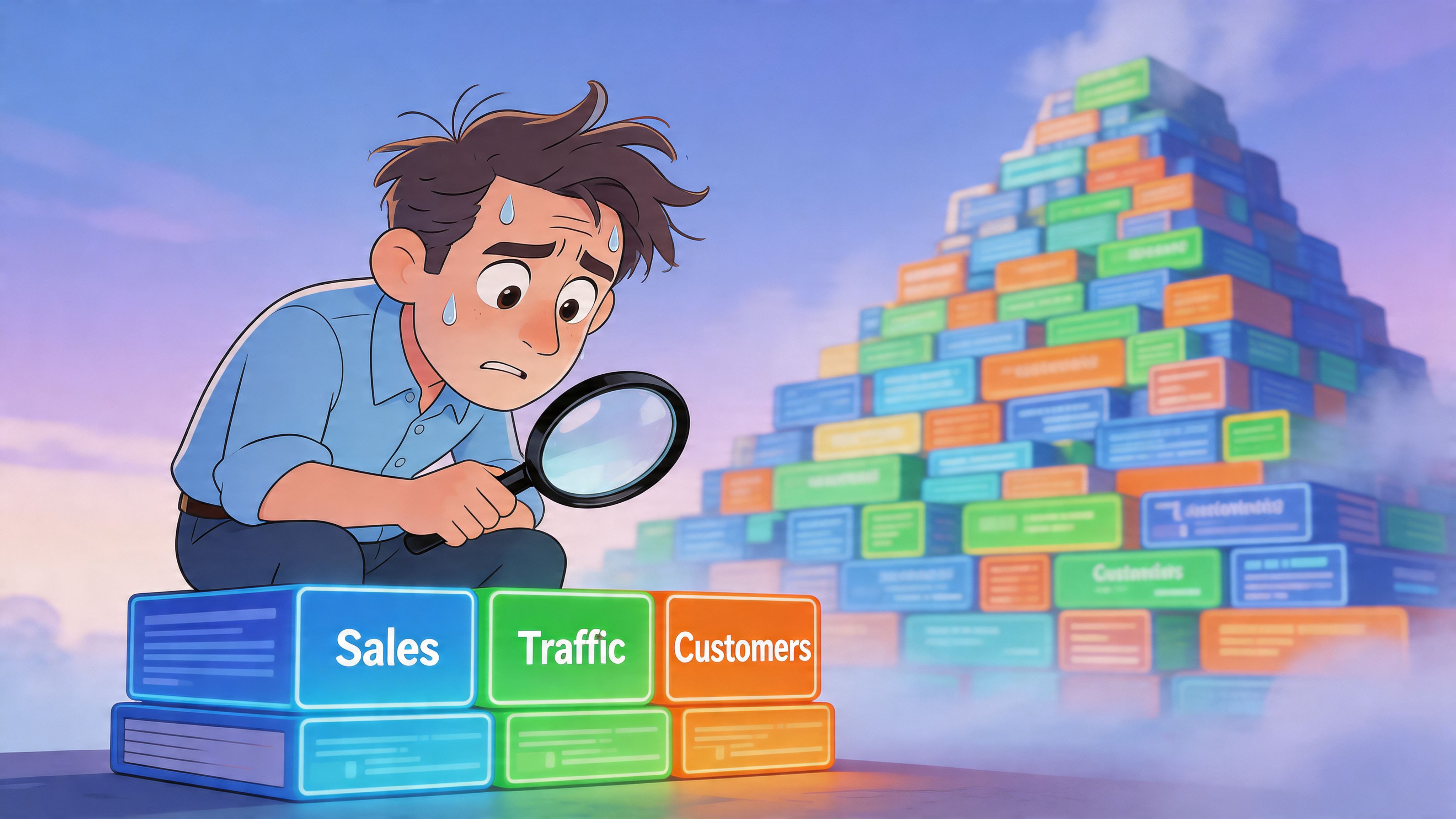
McKinsey found that organizations using customer behavioral insights outperform peers by 85% in sales growth and by more than 25% in gross margin in its research on capturing value from customer data. For an eCommerce operator, that isn't an abstract benchmark. It's a reminder that customer behavior data changes what you sell, who you target, and how much margin you keep.
What merchants usually miss
The most common blind spot isn't data collection. Shopify already records a lot. The blind spot is failing to turn raw activity into decisions.
That usually looks like this:
- Traffic without intent: You know which pages get visits, but not which visits signal buying readiness.
- Orders without context: You know what sold, but not what sequence of products creates higher long-term value.
- Support without insight: You solve tickets, but don't use them to improve merchandising, offers, or retention.
- Campaigns without segmentation: You keep sending broad messages because segment logic hasn't been built into the workflow.
A merchant can be "data-rich" and still operate on instinct.
Practical rule: If your team can't name the top customer segments and the action tied to each one, you don't have a data strategy yet. You have data storage.
Why this matters more on Shopify
Shopify stores have an advantage. The core signals are accessible and the execution layer is close by. When you spot a pattern, you can act on it fast through Shopify Flow, Klaviyo, theme personalization, bundles, subscriptions, search merchandising, or customer tags.
That's why smaller and mid-sized brands can often move faster than bigger companies. They don't need a long analytics program before acting. They need a practical system.
A good system answers a short list of questions:
| Question | Why it matters |
|---|---|
| Who buys most often? | These customers deserve protection and tailored retention offers. |
| Who is likely to buy next? | These shoppers should get timely reminders, bundles, and product recommendations. |
| Who is fading? | These customers need a win-back or a service intervention. |
| What behavior predicts conversion? | That tells you which pages, products, and campaigns deserve more budget. |
The opportunity isn't hidden. It's already inside your store. The work is to structure it.
Building Your Customer Data Foundation
The fastest way to make customer data useful is to stop treating it as one thing. In practice, Shopify merchants work with a few distinct data types, and each one answers a different commercial question.
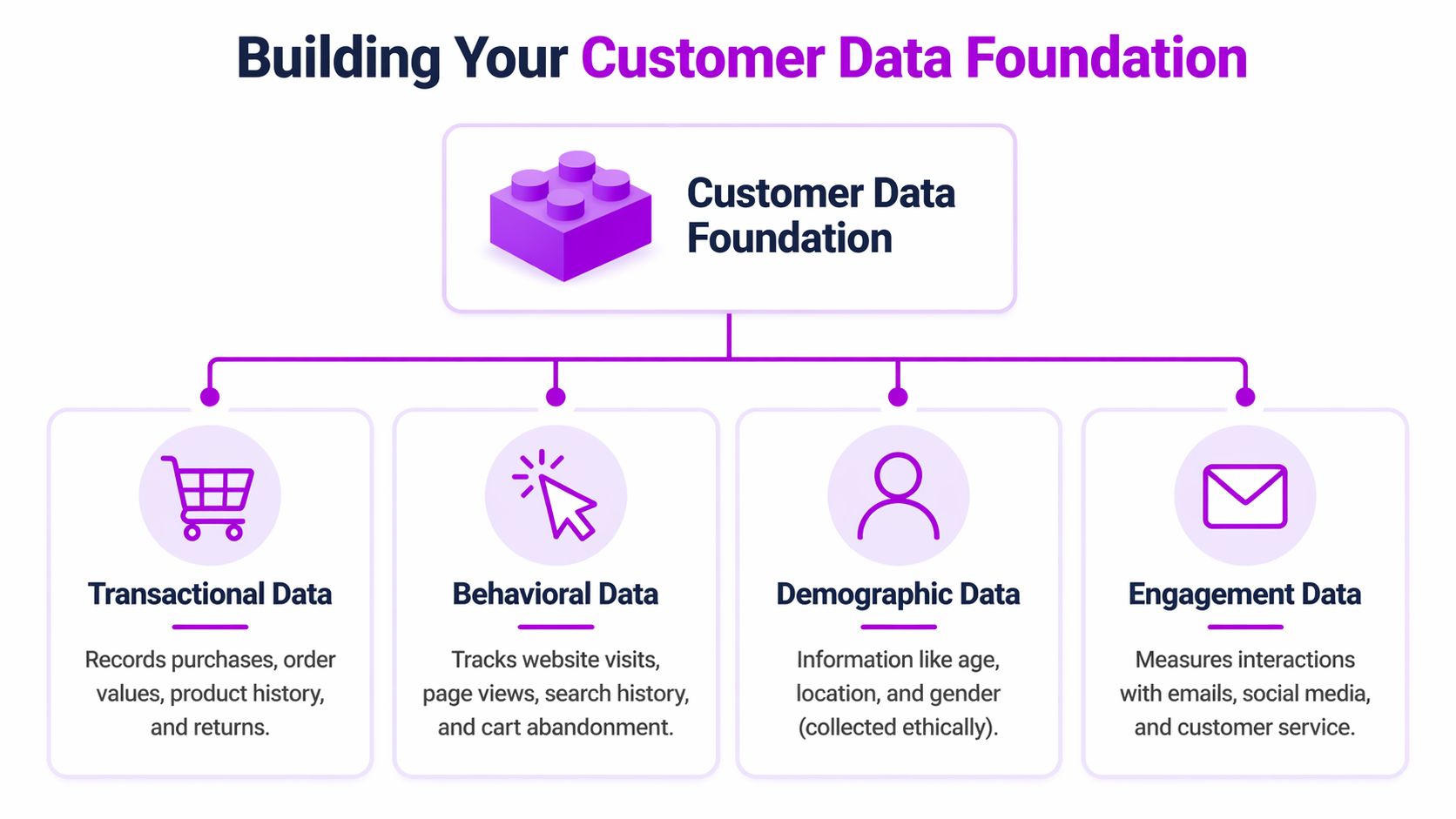
A clean foundation usually includes transactional data, behavioral data, demographic data, and engagement data. I also strongly recommend pulling in qualitative signals from reviews, surveys, and support conversations because that's where objections often show up first.
Transactional data
This is the backbone. It tells you what customers bought.
For a Shopify store, start with:
- Order history: products purchased, order dates, discounts used, refunds, returns
- Customer value signals: average order value, repeat purchase patterns, bundles bought together
- Channel clues: whether sales came from email, paid social, search, direct, or retention flows
You’ll mostly find this in Shopify Analytics, Shopify customer profiles, and order exports. If you use Recharge, Skio, or another subscription app, include subscription starts, pauses, skips, and cancellations. Those events often reveal more than a standard order report.
Transactional data helps answer questions like which customers deserve VIP treatment, which products create second purchases, and whether discount-driven buyers behave differently from full-price buyers.
Behavioral data
Behavioral data shows what customers do before they buy, and what they do when they don't.
In a typical Shopify stack, look at:
- On-site behavior: product views, collection views, searches, time on key pages, add-to-cart activity
- Checkout behavior: cart abandonment, checkout starts, drop-off points
- Intent signals: visits to shipping, returns, FAQ, subscription, or pricing-related pages
These signals usually live across Shopify, Google Analytics, heatmapping tools, and your email platform. Klaviyo is especially useful because it can tie browse abandonment, viewed product, started checkout, and purchased events back to customer profiles.
Behavioral data matters because it gives you timing. Transactional data tells you what happened. Behavioral data tells you what is about to happen, or what nearly happened and then stalled.
Support teams often hear the reason a customer hesitates before marketing sees it in campaign performance.
Demographic and profile data
This category is useful when collected ethically and with restraint. It can sharpen segmentation, but it shouldn't replace behavior.
Relevant profile fields often include location, language, market, first acquisition source, and business-relevant attributes that customers have willingly provided. For Shopify Plus brands selling across markets, regional differences often affect merchandising, shipping messaging, payment methods, and offer structure.
The key is not to overbuild. If a profile field won't change a decision, don't make it central to your model.
Engagement and qualitative data
Many stores leave money on the table, often due to a lack of deep customer understanding. Engagement data shows who is paying attention. Qualitative data shows why they act the way they do.
Useful sources include:
- Email and SMS engagement: opens, clicks, flow participation, campaign response patterns
- Customer service signals: ticket themes, delivery complaints, product confusion, sizing issues
- Reviews and surveys: recurring praise, complaints, product language customers use naturally
- Chat transcripts and call notes: objections that never show up in standard analytics
An underused input is unstructured interaction data. GetAccept notes that AI-powered conversation intelligence from chats, calls, and support tickets can reveal competitor mentions 3x more accurately and that some firms have seen a 25% lift in CLV by acting on those insights in its piece on data-driven decision-making.
That matters for Shopify because support conversations often explain stalled conversions. A merchant may think the problem is price. Ticket language may reveal it's delivery uncertainty, fit confusion, subscription rigidity, or product compatibility.
Where to centralize it
You don't need a massive CDP to start, but you do need one usable view of the customer.
For most merchants, that means connecting Shopify, Klaviyo, Google Analytics, Gorgias, reviews, loyalty, and subscription data into a shared operating layer. If you're mapping how these systems should talk to each other, this guide to customer data integration solutions is a practical place to start. If your CRM is part of the stack, this breakdown of AI Integration with CRM is also worth reading because it shows how teams can turn synced data into operational workflows instead of static records.
A simple working principle helps here:
| Data type | Best use |
|---|---|
| Transactional | Value and purchase pattern analysis |
| Behavioral | Timing and intent detection |
| Demographic | Market and audience refinement |
| Engagement and qualitative | Message, objection, and retention insight |
A strong foundation isn't about collecting everything. It's about collecting what helps you take action.
From Raw Data to Actionable Segments
A Shopify store usually reaches a point where the problem is no longer data collection. The problem is deciding who deserves which message, offer, and experience.
RFM segmentation is the fastest way to get there. It uses three inputs already sitting in Shopify. Recency, Frequency, and Monetary value. For an operator, that matters because it turns a messy customer list into clear commercial priorities.
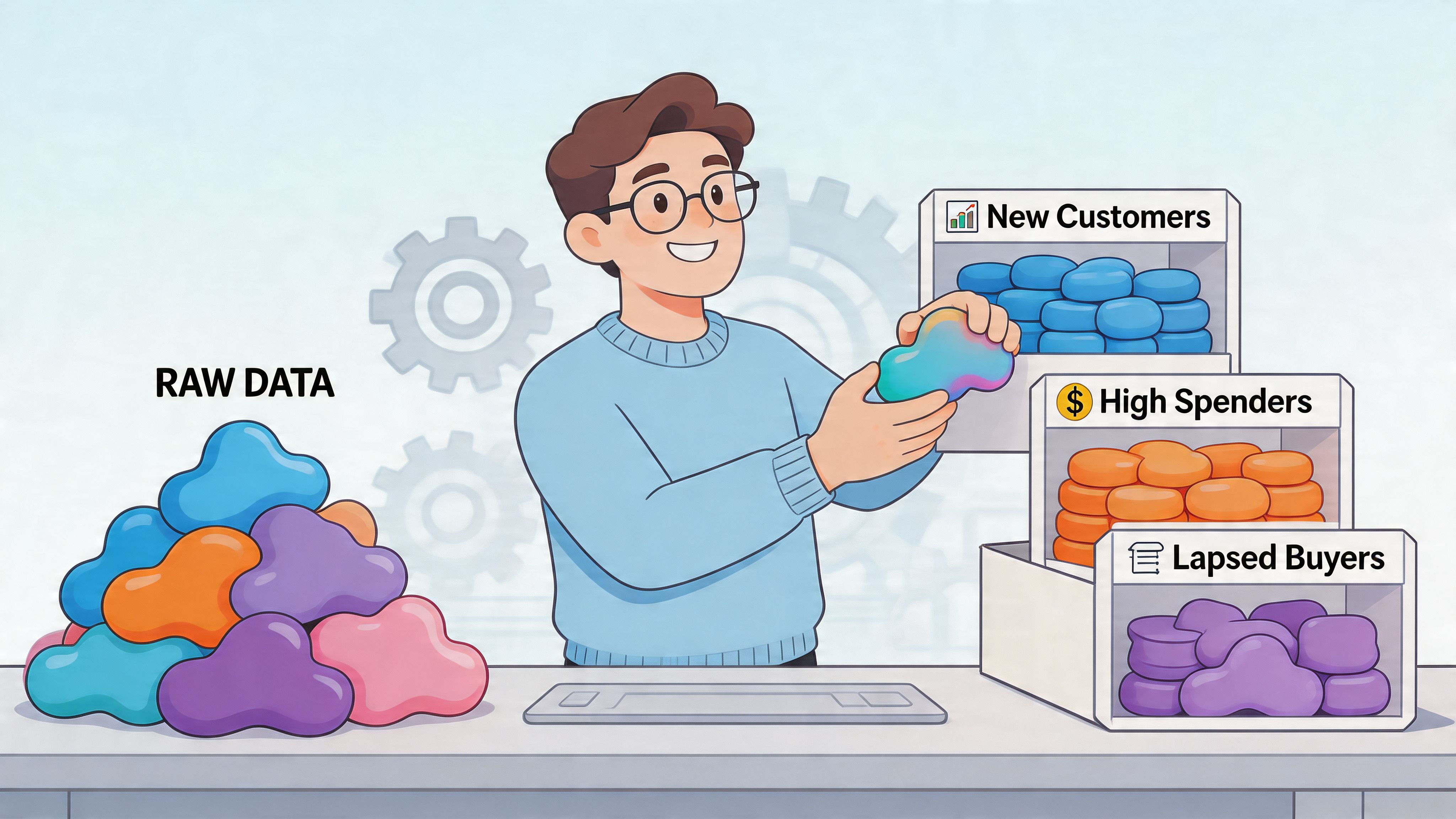
Teams use RFM because it helps answer practical questions fast. Who should get early access instead of a discount? Who is worth a win-back sequence? Who is buying often but still has room to grow in AOV? Who should be suppressed from broad promotional sends because margin is already under pressure?
How to score customers in a Shopify store
The inputs are simple:
- Recency: how long it's been since the last purchase
- Frequency: how often the customer has purchased
- Monetary: how much the customer has spent
Most Shopify merchants score each factor on a basic scale such as 1 to 5, then combine the scores into segments inside a spreadsheet, BI tool, Klaviyo profile property, or an app built for retention analysis. The goal is consistency, not mathematical elegance. If the model is simple enough to refresh every week or every month, the team will use it.
A practical interpretation looks like this:
| Signal | High score means | Low score means |
|---|---|---|
| Recency | Bought recently | Hasn't purchased in a while |
| Frequency | Buys often | Bought once or infrequently |
| Monetary | Spends more | Low total spend |
On Shopify, I usually advise merchants to start with broad groups and tighten later. Five useful segments that get used in campaigns will outperform fifteen segments nobody trusts.
The segments that matter most
Useful segments tend to appear quickly once scoring is in place. The point is not to describe customers in a prettier way. The point is to make better decisions in email, SMS, paid retargeting, and on-site merchandising.
VIP and loyal customers
These customers score high across all three dimensions. They purchased recently, they come back, and they spend above average.
They should not sit in the same campaign logic as the rest of the list. In Shopify, this group usually responds best to early-access drops, curated collections, premium bundles, back-in-stock alerts for proven categories, and service perks that make repeat purchasing easier.
For merchants running loyalty or lifecycle programs, birthday and anniversary offers can still work well if they are tied to customer value and product relevance rather than sent as a blanket discount. Bain & Company has long documented the financial impact of retention, noting that increasing customer retention rates by 5% increases profits by 25% to 95% in many businesses, which is why protecting high-value buyers is usually more profitable than pushing broad acquisition discounts through the entire file.
High-potential customers
This group has momentum but has not matured yet. They may have placed a second order, bought from one category several times, or shown strong engagement without reaching VIP spend levels.
Operators often miss easy revenue. They push a general promotion when the better move is guided progression. Show the next logical product, not the whole catalog. For a skincare store, that might be routine completion. For apparel, it might be fit-based replenishment or matching items. For subscriptions, it might be a cadence upgrade or add-on.
If your team wants to go beyond RFM and combine purchase data with browsing and engagement signals, this guide to lead scoring best practices is a useful reference.
At-risk customers
At-risk customers used to buy, then slowed down or stopped. Their past value still matters, so they need different treatment than first-time visitors or cold prospects.
A generic win-back email rarely does enough. Better flows start with diagnosis. Did they buy a replenishable product and miss the expected reorder window? Did they order once, then open a support ticket about sizing or shipping? Did they stop after a poor post-purchase experience? Those are different problems, and they need different messages.
For Shopify merchants, this often means splitting at-risk customers into smaller operational groups such as late replenishment, one-time buyers with strong engagement, and previously loyal customers whose recency score has dropped. If you want a broader planning model for that, this guide to customer segmentation strategies for ecommerce growth is a useful next read.
What usually goes wrong
Three mistakes come up repeatedly in real accounts.
- Too many segments: The retention manager can name them, but the email calendar, paid team, and merchandising team never use them consistently.
- Static logic: Customers change status all the time. A segment built once and left untouched becomes inaccurate fast.
- Discount-first execution: If every segment gets a coupon, the model is not driving strategy. It is only changing who receives the same incentive.
There is also an operational trade-off here. A more detailed model can improve targeting, but it also creates more campaign work, more QA, and more room for mistakes in apps like Klaviyo, Gorgias, and Shopify Flow. Start with segments the team can activate and review.
Here’s a good explainer if you want a quick walkthrough of segmentation mechanics before building your own model:
RFM works because it is simple to maintain and strong enough to improve campaign decisions quickly. For Shopify merchants, that combination matters more than an advanced model that never makes it into live flows.
Activating Data for Personalization and CRO
Segments don't create revenue on their own. Campaigns do. On-site experiences do. Trigger timing does.
This is the point where a lot of brands stall. They build decent reporting and even decent segments, then keep sending generic campaigns because personalization feels operationally heavy. On Shopify, it doesn't need to be. The work is to tie each segment to a clear action, a specific message, and a storefront experience that matches what that customer is likely to want next.
VIP treatment that actually feels valuable
A generic campaign to a VIP customer usually sounds like every other campaign. It offers the same discount, the same creative, and the same urgency.
A stronger setup looks different. The email subject line references early access. The landing page is curated to top-performing products or a new collection. The on-site banner changes for tagged VIP customers. The post-purchase experience invites them into a higher-value path instead of another promotional cycle.
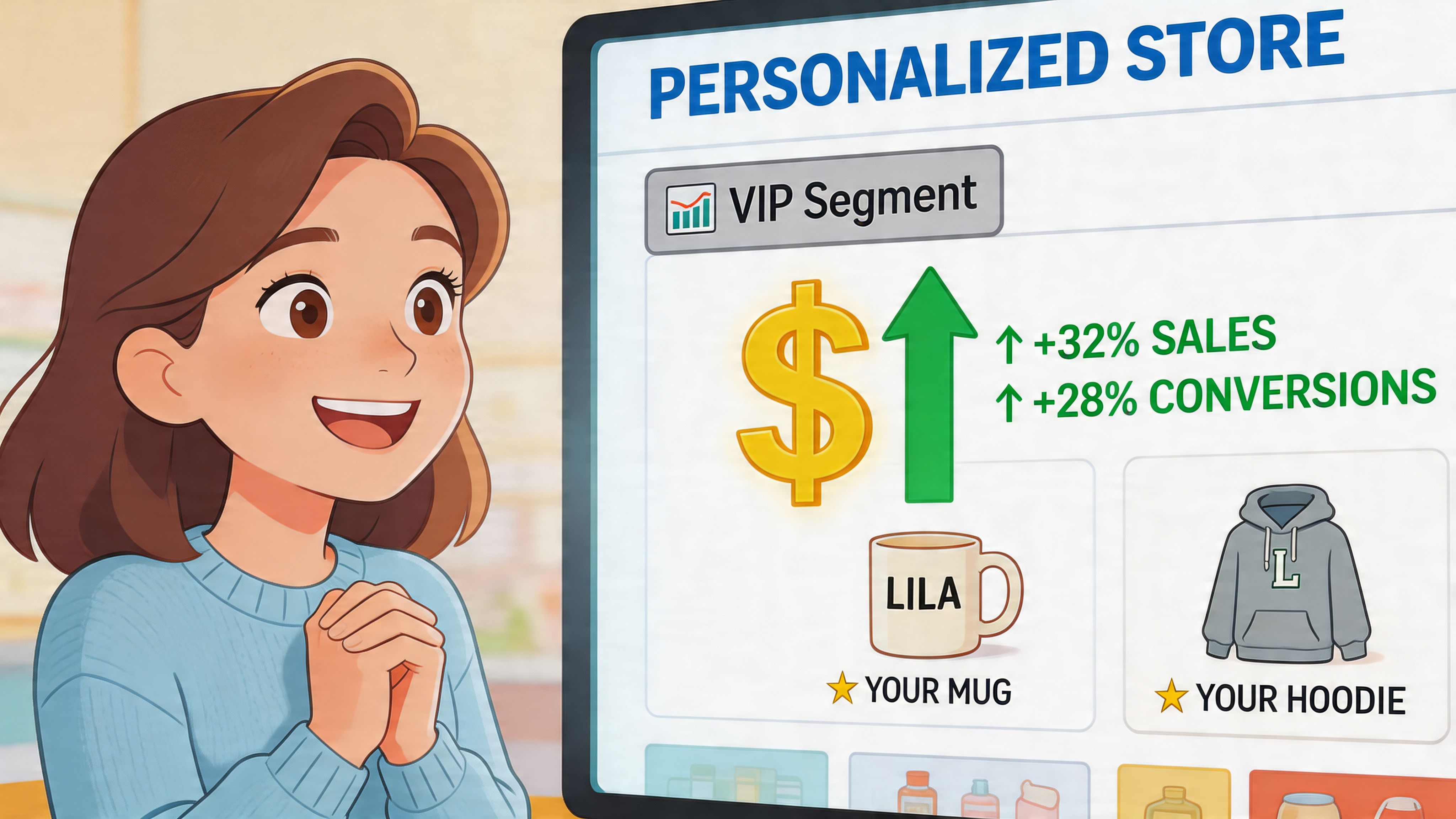
Many retention programs often go wrong at this stage. They confuse exclusivity with discounts. Strong VIP programs often win through access, convenience, product relevance, and recognition.
A simple comparison helps:
| Segment | Weak activation | Strong activation |
|---|---|---|
| VIP | Storewide discount email | Early access drop with curated products |
| High-potential | Generic bestseller send | Cross-sell based on prior purchase pattern |
| At-risk | "We miss you" coupon | Win-back based on category, timing, or support context |
| New customer | Broad newsletter | Structured post-purchase education and next-product path |
High-potential customers need direction
This group usually responds best when the brand reduces decision fatigue.
If someone bought a hero SKU, the next message shouldn't be "shop all." It should point to the natural second product, the complementary item, or the bundle that deepens the relationship. If a customer browsed one category repeatedly but purchased a lower-commitment product first, the recommendation set should reflect that behavior.
Here, personalization also becomes CRO. Product blocks, collection order, homepage modules, cart upsells, and post-purchase offers all improve when they're based on segment logic rather than default merchandising.
A personalized store experience doesn't need to mean a fully dynamic storefront. Often it means changing the next best offer for the customer you already understand.
At-risk customers need diagnosis, not noise
Most win-back flows are too blunt. They fire after a fixed delay and use the same template for everyone.
That's rarely enough. An at-risk customer who used to buy every month should not get the same message as a customer who bought twice during a sale period six months ago. One may need replenishment timing. Another may need a confidence rebuild. Another may have churned because the product didn't fit expectations.
Support and on-site behavior improve this flow a lot. If the customer has revisited FAQs, delivery pages, or a specific product category without converting, the message should reflect that. If they had a service issue, fix that first. Don't send a cheerful campaign that ignores the problem.
Intent data sharpens timing
Good personalization isn't only about who the customer is. It's also about when they're showing intent.
Monday highlights a strong example of what structured customer journey data can achieve. Bright Network generated a £903K pipeline from 77 Marketing Qualified Leads and closed over £300K in revenue by using accurate data to identify in-market signals in its article on customer data and customer experience.
The Shopify equivalent is smaller in scale but similar in logic. If a shopper repeatedly views a category, reaches checkout, visits shipping information, then leaves, that's not a casual visitor. That's someone close enough to justify a sharper intervention. Maybe that means browse abandonment with category-specific products. Maybe it means a trust-building message around delivery or returns. Maybe it means retargeting creative that features the exact product family they considered.
If you want more examples of how to operationalize these triggers across email, SMS, and lifecycle journeys, this overview of commerce marketing automation strategies is a solid companion read.
Where merchants waste effort
Three patterns usually hurt performance:
- Personalizing the copy but not the offer: The email looks customized, but the product selection is generic.
- Segmenting in Klaviyo only: The message changes, but the landing page and on-site experience don't.
- Ignoring post-purchase data: Brands focus on acquisition intent and forget that repeat revenue often comes from better follow-up.
The stores that get this right keep the loop tight. Customer data informs segment. Segment informs campaign. Campaign sends customers to a storefront experience designed for that segment. Results feed back into the next decision.
That is how customer data stops being reporting and starts becoming sales growth.
Shopify Implementation and Quick Wins
A strong strategy still needs a practical setup. For most Shopify brands, the right answer isn't a sprawling stack. It's a lean system where Shopify holds the transactional truth, Klaviyo handles retention and event-triggered messaging, Shopify Flow manages internal automation, and support data feeds back from tools like Gorgias.
The key is to build actions around signals you can trust.
A lean implementation stack
A useful operating stack usually looks like this:
- Shopify: order history, customer profiles, product performance, customer tags
- Klaviyo: viewed product, started checkout, browse abandonment, flows, campaign segmentation
- Shopify Flow: tagging, internal routing, automation between store events and downstream actions
- Gorgias or similar support tool: ticket themes, refund reasons, service friction, repeat complaints
- Reviews and loyalty apps: product feedback, repeat engagement, retention clues
The simplest implementation principle is this. Don't integrate a tool just because it stores data. Integrate it when the data changes what your team will do next.
Flow recipes worth setting up first
You don't need custom development for the first layer of value. A few Shopify Flow recipes can make your store materially smarter.
Tag new high-value customers
Trigger: customer places an order above your internal high-value threshold.
Action path:
- Add customer tag for high-value first purchase
- Notify retention owner or add to a review queue
- Push that tag into Klaviyo for a customized post-purchase flow
This lets you separate customers who should get a premium nurture sequence from those who should receive your default onboarding.
Trigger cart recovery with context
Trigger: checkout started but purchase not completed.
Action path:
- Pass checkout and product data into Klaviyo
- Send an abandonment flow with the exact items viewed or added
- If the customer already belongs to a loyalty or VIP tag, adjust the message tone and offer structure
The message shouldn't treat every abandonment the same. A repeat customer who knows the brand often needs less persuasion and more convenience.
Flag content-engaged buyers
Cognism shares a useful signal in its article on customer data: prospects who engaged with case studies before a sales call had a 40% higher close rate. Shopify merchants can apply the same logic by watching educational content engagement. If a customer reads ingredient guides, sizing pages, usage tutorials, or comparison content before buying, treat that as purchase intent with context.
Action path:
- Tag users who consume high-intent content
- Prioritize them into a more educational email path
- Pair content topics with the right products or bundles
A seven-day quick win checklist
If the store has decent baseline tracking already, I'd begin there.
Day 1: Audit your current customer events. Confirm that purchase, viewed product, started checkout, and support outcomes are flowing into the tools your team uses.
Day 2: Create three working segments only. VIP, high-potential, and at-risk. Don't build ten audiences yet.
Day 3: Launch one improved post-purchase flow. Make it product-specific and push customers toward the natural next item, not the whole catalog.
Day 4: Add Shopify Flow tags for high-value first orders and repeat buyers. Internal visibility matters before advanced personalization does.
Day 5: Rewrite your cart abandonment sequence to reflect product category and customer status. Returning customers should not get the same copy as first-time visitors.
Day 6: Review support tickets from recent non-repeat customers. Pull out recurring objections and feed them into product page copy, FAQ content, or retention emails.
Day 7: Build one segment-specific landing page or collection page. Even a lightly curated page often converts better than sending every audience to the homepage.
The fastest wins usually come from better routing and better follow-up, not from buying another analytics platform.
What to delay until later
Some projects sound advanced but create drag too early:
- Full CDP implementation before you have clear segment actions
- Deep predictive modeling before basic lifecycle flows are working
- Complex dashboard builds that nobody uses in weekly decision-making
- Highly customized personalization that only applies to a tiny audience
For most Shopify stores, good execution starts with clear event tracking, useful tags, three to five meaningful segments, and flows tied to specific customer behaviors. That gets you moving fast without creating an operations burden your team can't maintain.
Measuring Success and Staying Compliant
If you can't tell whether segmented campaigns outperform generic ones, your strategy is still a hypothesis.
The cleanest way to measure customer data work is to compare business outcomes by segment and by journey stage. You don't need dozens of KPIs. You need a few metrics that connect directly to revenue and retention.
Metrics that matter
Start with a short scorecard:
| Metric | What to check |
|---|---|
| Customer lifetime value | Whether segmented customers become more valuable over time |
| Average order value | Whether personalization increases basket size |
| Conversion rate by segment | Whether different audiences respond differently to tailored offers |
| Repeat purchase behavior | Whether post-purchase journeys increase return buying |
| Win-back performance | Whether at-risk flows actually reactivate customers |
If you're running personalized product recommendations, compare them against a generic baseline. If you're tagging VIPs and giving them personalized access, measure whether their repeat purchase behavior stays stronger than the broader list. If you're using support insights to refine pages and emails, watch whether fewer customers stall at the same point.
The point isn't perfect attribution. It's directional confidence tied to revenue.
Compliance is part of the sales strategy
Privacy and compliance often get treated as legal cleanup. That's a mistake. In eCommerce, good data handling builds trust.
Customers are more willing to share information and engage with personalized experiences when the store is clear about consent, collection, and use. That means practical basics. Use consent-aware email and SMS capture. Keep customer records accurate. Make preference management easy. Don't collect fields you don't need. Respect deletion and access requests. Make sure app connections don't expand your data exposure without oversight.
Keep the operating model honest
A compliant data strategy is also a cleaner strategy. It forces discipline.
Ask simple questions regularly:
- Are we collecting this because it changes action?
- Does the customer reasonably expect us to use the data this way?
- Can the team explain where this segment came from?
- Are old tags, stale profiles, or duplicate records distorting our decisions?
The best customer data programs don't just increase sales. They stay usable. Clean enough to trust, simple enough to maintain, and respectful enough to strengthen the brand while they grow revenue.
Frequently Asked Questions
| Question | Answer |
|---|---|
| What's the first customer data project a Shopify store should do? | Start with segmentation tied to action. Build a simple VIP, high-potential, and at-risk model from Shopify order history and use it to change email flows, offers, and landing pages. |
| Do I need a CDP to use customer data well? | No. Many stores can get strong results with Shopify, Klaviyo, Shopify Flow, analytics, and support data. Add more infrastructure when the team has clear use cases that current tools can't support. |
| How often should segments update? | Often enough that they stay useful. In practice, stores should refresh segment logic regularly so recent purchases, inactivity, and changes in value are reflected in campaigns. |
| What kind of data is most overlooked? | Support conversations, reviews, surveys, and chat transcripts. They often reveal objections, product confusion, and operational friction before those issues show up in revenue reports. |
| Should every segment get a discount? | No. Discounts are one tool, not the strategy. VIP customers often respond better to access and curation. High-potential customers often need relevant product guidance. At-risk customers may need trust repair or better timing. |
| How do I know personalization is working? | Compare personalized campaigns and journeys against a generic baseline. Watch conversion rate by segment, average order value, repeat purchase behavior, and customer lifetime value over time. |
| What if my data is messy? | That's normal. Start with the cleanest sources first, usually Shopify orders and core email events. Build only a few segments, validate them manually, then expand once the team trusts the logic. |
If you want help turning this into a working Shopify retention and CRO system, ECORN can help you connect the data you already have to better segmentation, smarter automation, and storefront experiences that convert.


Multi Store Inventory Management: A Practical Guide

SEO Consulting for Ecommerce: A Practical Guide
Shopify Theme Updater App: A Safe Update Playbook
Shopify Git Integration: A Developer's Guide to 2026
Headless Ecommerce Development Services Explained

How to Build a Shopify Clothing Website That Converts
How to Launch a Box Subscription Business in 2026

Luxury Skincare Branding Playbook That Converters
10 Best Podcast Ecommerce Shows for Store Growth in 2026
Shopify Developer Hourly Rate: What to Pay in 2026
Critical Shopify Setup Errors That Are Secretly Sabotaging Your Store
Ecommerce Conversion Tracking: The Complete How-To Guide
Shopify Design Agency: How to Pick the Right Partner
Mastering Multi Store Management on Shopify
Scale Shopify Store
10 Shopify App Ideas Worth Building in 2026
Conversion Rate Optimization for Landing Pages: The Playbook
Shopify Plus Automation: A Guide for 2026
10 Social Selling Platforms for Shopify Merchants

Shopify Website Design Examples: 7 Stores Worth Studying
7 Ecommerce Newsletter Examples for Shopify Brands
One Product Shopify Store: Build and Scale
Mobile Pop Up Strategy for Shopify Stores That Converts
Sitemap for Shopify: How to Find, Optimize, and Submit It
7 Single Product Websites Worth Emulating
Product Variants Shopify: The Complete 2026 Guide
Ecommerce Analytics Consulting for Growth
What Is AI Integration for eCommerce
How to Choose the Right eCommerce Website Development Firm
E Business Strategy Implementation
Conversion Tracking Setup for Shopify Stores
BigCommerce vs Shopify Plus Which Enterprise Wins in 2026
Shopify Theme Kit: Setup, Commands, and Migration Guide
Shopify Extension Development: A Practical 2026 Guide
Shopify Speed Score Explained and How to Improve It
Shopify Mobile Optimization: The 2026 Playbook
How to Add Subcategory in Shopify for Better UX
How to Implement Structured Data for Ecommerce in 2026
SEO App Mobile: Shopify Store Optimization Guide
Shopify Plus Support: What It Includes and How to Choose
Google Ads for Shopify: The Complete 2026 Playbook
Shopify New York: How to Find and Hire the Right Agency
Google Search Console for Shopify: The Complete Setup
First Party Data Collection for eCommerce Growth
FAQ Online Store Guide: Build and Measure It Right
Do FB Ads Work for eCommerce in 2026?
One Page Checkout for Shopify: Design and Implementation
Shopify GraphQL vs REST: The 2026 Developer Decision
Shopify Ecommerce Consulting: Strategy, Pricing &
Are Reddit Ads Worth It for eCommerce Brands
Shopify Title and Meta Description: A Practical 2026 Guide
Product Video Best Practices for Shopify Brands
Real-Time Inventory Management: A 2026 Guide
AI Chatbot Integration for Shopify Stores
Affiliate Program Management: A Shopify Guide
10 Best Performance Monitoring Tools for Shopify in 2026
Digital Asset Management for eCommerce Brands in 2026
Every Type of Facebook Ads Explained for eCommerce Growth
Product Information Management Explained for Shopify Brands
Support Ticket System: A Guide for Shopify Stores

10 Best Customer Service Tools for Shopify in 2026

Can I Start a Business with No Money? a 2026 Blueprint

What Sells Good on Etsy: Best Niches for 2026

Shopify Add to Cart Button: A Practical 2026 Guide

Customer Feedback Automation: A Practical eCommerce Guide
Critical Rendering Path: A Guide for Shopify Stores

How to Promote on TikTok for eCommerce in 2026

B2B eCommerce Consulting That Drives Real Revenue
10 Best Practices for Site Navigation in 2026
Return vs Refund for Shopify Stores: A Practical Guide
What Is Customer Lifetime Value and Why It Matters
What Is Voice of Customer Research for eCommerce

SMS Marketing for Ecommerce That Actually Converts

Master How to Improve Email Deliverability in 2026

Top 8 eCommerce Partners NYC for Shopify Brands in 2026
Machine Learning for Ecommerce: Boost Your Shopify Store
Beauty Market Research: Your 2026 Growth Guide
Shopify International Expansion: A 2026 Roadmap
What Does CRO Stand for in Business: Understanding CRO

Shopify Visual Merchandising: A Playbook for Higher Sales

Shopify Landing Page Design: Master Conversion in 2026
10 Best AI SEO Optimization Tools for Shopify in 2026

Agentic AI for Ecommerce: Boost Your Sales in 2026
Mastering Email Marketing Data for eCommerce Growth
Conversion Rate Optimisation Australia: Boost Your Sales
Conversion Rate Optimization AI: Your Shopify Store Guide

10 Product Bundling Strategies for Shopify in 2026
How to Increase Customer Lifetime Value: A Shopify Playbook
AI Customer Service Automation: Shopify Guide 2026
Clean Website Design: A Shopify Conversion Playbook

Omnichannel Retail Strategy: A Shopify Playbook
Product Data Enrichment: A Guide for Shopify Brands
Instagram Shopping Features a Guide for Shopify Stores
What Is Revenue Optimization: A Holistic RevOps Guide
Benefits of Conversion Rate Optimization: Boost Your
WordPress to Shopify Migration: Your 2026 Seamless Switch
Boost Sales: Ecommerce Payment Processing Guide 2026
Unified Commerce Platform: Benefits, KPIs & Shopify Guide
How to Reduce Bounce Rate eCommerce: Your 2026 Guide
Shopify API Integration: A Practical End-to-End Guide


newsletter in your inbox