

You’re probably here because the storefront is starting to fight the business.
A team wants richer landing pages, faster campaign launches, better localization, or a cleaner mobile checkout flow. Instead, every change runs into theme limits, app conflicts, or rising performance costs. For growing brands, that pattern usually signals a structural issue, not a design issue.
Headless commerce addresses that by separating the frontend experience from the commerce backend. The model gives teams more control over content, performance, and customer journeys, while keeping core commerce operations in place. If you need a practical baseline first, this guide explains what headless commerce means in Shopify terms.
Adoption has also shifted well beyond early experimentation. Headless is now a mainstream option for brands dealing with multi-market growth, heavier content demands, or complex buying flows. Interest alone, though, is a weak reason to commit. Headless adds technical overhead, raises implementation costs, and usually asks more from both developers and marketers.
Real headless commerce examples offer more clarity than generic platform pages. The useful question is not who built a flashy site. It is why they chose a decoupled stack, what they used, what problem it solved, and what another brand can learn from the trade-offs.
That is the lens for this list. Each example breaks down the stack, the business rationale, the visible outcome, and the lesson for brands weighing headless, especially on Shopify. Some of these companies needed better storytelling. Others needed configurability, global governance, or support for complex fulfillment models. In every case, the architecture followed the business requirement.
1. 1. Baboon to the Moon: High-Performance Storytelling on Shopify Headless
Baboon to the Moon sells with attitude. The product pages, campaign visuals, and brand language all need room to breathe. That kind of merchandising usually pushes a standard Shopify theme into a bad trade-off: either you keep the site visually rich and accept slower rendering, or you simplify the experience to protect speed.
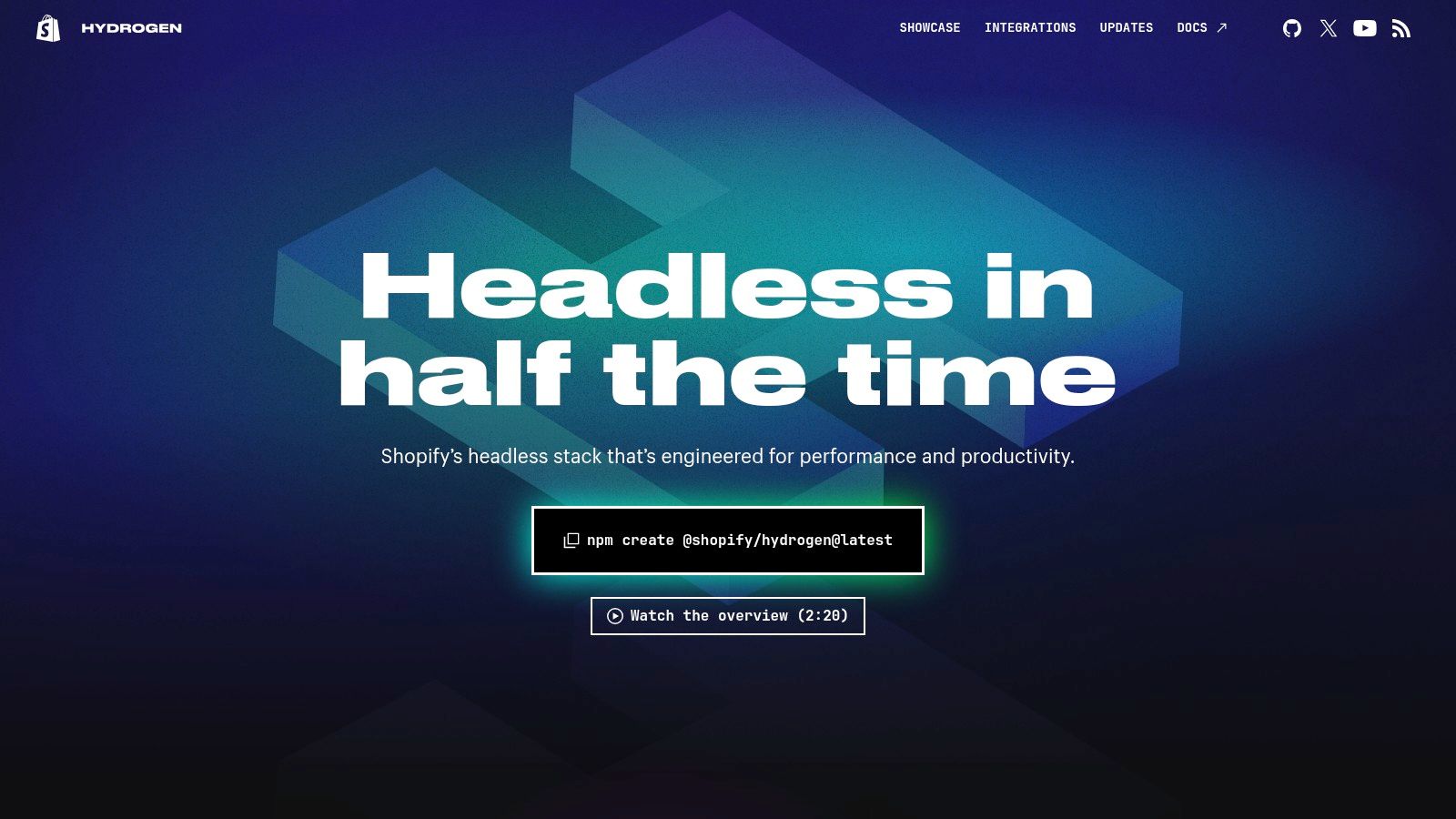
Baboon to the Moon is the kind of brand that makes Shopify headless make sense. When the storefront has to feel editorial, mobile-first, and unmistakably branded, a decoupled frontend gives the design team much more freedom. The backend still handles commerce fundamentals, but the frontend can be built around speed, motion, and content structure instead of theme constraints.
Why this setup fits the brand
For brands like this, Shopify headless usually isn't about replacing Shopify. It’s about removing the storefront ceiling while keeping the operational simplicity of Shopify underneath. That’s an important distinction, especially for teams that already know the platform and don’t want a full commerce replatform.
A useful baseline is understanding what headless commerce is in Shopify terms. In practice, it means product data, carts, and checkout stay connected to Shopify while the frontend is rebuilt with a modern framework that gives developers tighter control over performance and UX.
Brands like Baboon to the Moon don’t win by looking “custom.” They win when custom design still loads fast and merchandises cleanly on mobile.
Strategic teardown
What works well in this model:
- Brand-heavy landing pages: Marketing can create stronger campaigns when design isn't trapped inside reusable theme sections.
- Mobile experience control: Teams can prioritize interaction design, media loading, and navigation behavior more precisely.
- Content-commerce blending: Storytelling and product discovery can sit together instead of feeling like separate parts of the site.
What usually doesn’t work:
- Headless without content discipline: If a team can’t maintain a strong content model, the frontend becomes expensive to manage.
- Rebuilding every theme feature: Not every familiar app behavior ports over cleanly. Some features need custom replacements.
- Treating it as a design-only project: If no one maps search, merchandising, analytics, and app dependencies early, costs rise quickly.
Shopify lesson for growing brands
The practical lesson here isn’t that every visual brand needs headless. It’s that brands with heavy storytelling demands should stop evaluating storefront architecture only through a theme lens. If your campaigns, PDPs, and collection pages all need different logic, headless can reduce compromise.
For Shopify brands, this is often the strongest early signal: the business doesn’t need “more pages.” It needs a frontend that can express the brand without dragging site performance down.
2. 2. Burrow: Modular Furniture Meets a Modular Tech Stack
Burrow sells furniture that customers configure, not just browse. A shopper might start with a sofa, compare layouts, swap components, check dimensions, and judge whether the setup fits a real room. That changes the storefront brief. The site has to support decision-making, not just display products.
Burrow stands out because the architecture follows the merchandising problem closely. In furniture, product education and product selection are tied together. If the frontend cannot handle configuration logic, state changes, and supporting content cleanly, the buying experience gets confusing fast.
Why the headless model fits this category
This is a strong example for Shopify-oriented brands because the reason for going headless is practical. Modular products create more UI states, more content dependencies, and more chances for friction on the path to purchase. A decoupled frontend gives the team tighter control over how those interactions work.
That matters in a category where shoppers often need reassurance before they commit. Material explanations, layout guidance, delivery details, and product configuration all influence conversion. Keeping those pieces connected in the interface is often more valuable than squeezing the whole experience into a standard theme structure.
The broader lesson is simple. Headless makes more sense when the product page behaves like a guided selling tool.
Strategic teardown
What this model gets right:
- Configuration-first UX: The frontend can support more complex product logic without forcing everything through theme constraints.
- Content near the buying decision: Educational content can sit inside the purchase flow instead of living as a separate brand layer.
- Cleaner control over state and interactions: Teams can shape variant selection, bundles, and visual feedback with more precision.
Where teams get into trouble:
- Too much custom surface area: Every custom interaction adds QA paths, maintenance work, and regression risk.
- Higher frontend dependency: Merchandising changes often need developer support unless the content model is planned carefully.
- Weak post-launch ownership: The build looks impressive at launch, then slows down when no one owns performance, testing, and iteration.
What Shopify brands should actually take from it
Burrow is useful as a case study because it shows where headless earns its cost. If your catalog includes configurable products, guided selection, or bundled buying journeys, the storefront starts acting more like an application. That is usually the point where theme flexibility runs out.
The better pattern is to keep Shopify focused on the parts it already handles well, such as catalog, checkout, and operations, while the frontend handles the experience layer your category requires.
Practical rule: If customers need help assembling the right product before they can feel confident buying it, headless deserves serious evaluation.
The trade-off is not theoretical. It is operational. As noted in Netmaxims’ roundup of headless examples, many case studies spend plenty of time on the finished experience and far less on the staffing and maintenance burden after launch. That omission matters. Burrow-style builds can produce a better buying journey, but only for teams prepared to support a more specialized stack over time.
3. 3. Bang & Olufsen: Crafting a Global Luxury Experience with Commercetools
Open a Bang & Olufsen product page from two different markets and the requirement becomes obvious. The brand has to feel consistent, but pricing, catalog rules, language, and merchandising still need to adapt locally. That combination is hard to manage in a traditional storefront setup, especially when premium presentation is part of the product value.
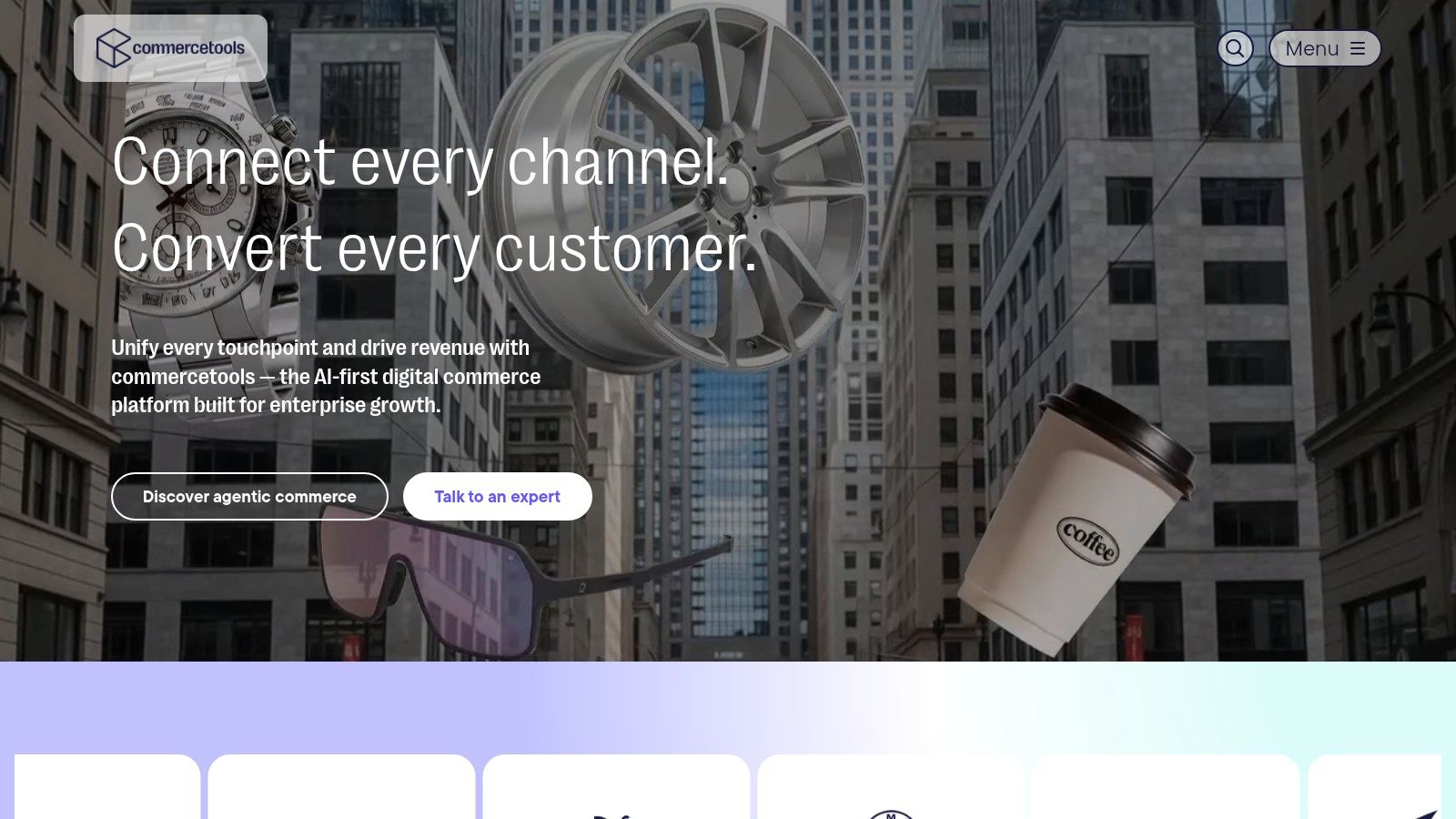
Bang & Olufsen is a useful headless commerce example because the business case is specific. This is not a brand chasing novelty. It is a global retailer with high expectations for design control, regional flexibility, and backend coordination. Commercetools fits that profile because it gives teams API-first commerce services that can support different frontends, markets, and content systems without forcing every experience through one theme structure.
That matters more in luxury than many teams expect. In this category, weak localization, inconsistent merchandising, or slow campaign rollout do not just create UX friction. They weaken brand perception.
Why this stack makes strategic sense
For enterprise brands, commercetools is usually less about frontend freedom by itself and more about operating across complexity with clearer separation between systems. The storefront, content layer, and commerce engine can evolve on different timelines. That is often the point of a composable commerce architecture, especially when regional teams need room to execute without breaking shared global rules.
Bang & Olufsen highlights three practical reasons brands choose this route:
- Market-level flexibility: Teams can support localized assortments, currencies, pricing logic, and promotional rules without rebuilding the entire storefront model for each region.
- Stronger brand control: Design systems and content experiences can be managed at a premium standard instead of being constrained by a one-size-fits-all template.
- Better systems fit: Commerce services can connect to the broader enterprise stack more cleanly, which matters when multiple countries, teams, and channels share the same operational foundation.
The useful lesson here is not "enterprise brand uses enterprise stack." It is that architecture should match the actual source of complexity. For Bang & Olufsen, the challenge is coordinating a luxury experience across markets while keeping the business operable behind the scenes.
The trade-off brands should pay attention to
This kind of build increases governance requirements. Someone has to own content models, release processes, frontend standards, and cross-market QA. If that ownership is weak, flexibility turns into inconsistent execution very quickly.
I see teams misread examples like this in one predictable way. They focus on the polished frontend and miss the organizational maturity underneath it. Commercetools can be a strong fit for brands with regional complexity, multiple systems, and in-house technical leadership. It is usually excessive for a simpler DTC business that mainly needs a faster site and better merchandising control.
Global luxury commerce works best when each market can adapt locally inside a tightly managed brand and systems framework.
That is what makes Bang & Olufsen a strong case study for Shopify brands too. The takeaway is not to copy the stack. It is to ask whether your bottleneck is really theme flexibility, or whether you are dealing with a broader multi-market operating problem that calls for a more composable setup.
4. 4. Pella Windows & Doors: Simplifying B2B2C Sales with Composable Commerce
Pella Windows & Doors sits in a category where the customer journey is rarely linear. Homeowners research. Contractors evaluate specifications. Dealers need different pricing, inventory visibility, and sales support. Trying to force all of that through one conventional storefront usually creates friction for every audience.
That’s why Pella is a useful example. This isn’t a flashy DTC brand choosing headless for storytelling. It’s a complex seller using composable commerce to support different buying motions inside one broader platform strategy.
Why composable matters here
In B2B2C environments, the challenge isn’t only frontend flexibility. It’s process flexibility. Different users need different catalogs, rules, and workflows, yet the business still needs one coherent operational foundation. A composable approach lets teams separate concerns more cleanly and connect the right services to the right journeys.
If you’re comparing headless and composable, this distinction matters. Composable commerce explained in detail is the better lens for cases like Pella, where the architecture has to support multiple business models at once rather than a custom storefront.
What makes this example strategically useful
Pella highlights three conditions where composable commerce starts to make practical sense:
- Audience complexity: Homeowners, pros, and channel partners don’t shop the same way.
- Catalog complexity: Product information often needs to change based on use case, configuration, and account context.
- Operational complexity: Sales and fulfillment workflows have to support more than one buying path.
A monolithic setup can sometimes fake this with layers of customization. It usually becomes painful to maintain.
The lesson for Shopify brands
This matters to Shopify merchants too, especially brands moving upmarket into wholesale, trade, dealer, or account-based selling. You may not need a full enterprise composable stack, but you should pay attention when one storefront starts serving distinctly different customer types with conflicting needs.
Strategic takeaway: When the core problem is workflow diversity, not just visual flexibility, think beyond “headless frontend” and evaluate the broader system design.
The trade-off is obvious. Composable commerce gives you more control over how systems fit together, but it also increases the burden of integration planning, ownership, and support. If your team can’t define who governs the stack, complexity will spread faster than value.
5. 5. Under Armour: Unifying Global Commerce with Salesforce
A global brand launches a campaign across regions, pushes traffic from email, paid social, and mobile, and then runs into a familiar problem. The storefront, customer data, and regional operations are connected in theory, but not well enough in practice. That is the kind of situation where a headless build starts to look less like a design choice and more like an operating model decision.
Under Armour is useful for that reason. The brand points to a common enterprise case for headless commerce: connecting storefront performance more tightly to an existing Salesforce ecosystem that already handles customer data, marketing workflows, and service operations.
What this architecture is trying to solve
For a business with multiple regions, mobile-heavy traffic, and established CRM processes, a decoupled frontend can solve several problems at once. It gives teams more control over mobile speed, creates a more consistent experience across markets, and makes it easier to use Salesforce data in customer-facing journeys.
That business case is stronger than a generic push for a more flexible frontend.
The practical appeal is clear. Enterprise teams want the storefront to reflect customer context without forcing every experience change through a rigid template system. They also want regional teams to move faster without rebuilding core commerce logic market by market.
Why Salesforce makes sense here
Salesforce-led headless setups tend to fit companies with three characteristics:
- The CRM is already central to how the business runs: Customer profiles, campaign logic, service history, and segmentation already influence revenue decisions.
- Mobile performance affects revenue enough to justify custom frontend work: Faster, cleaner mobile experiences matter because the traffic mix demands it.
- The organization can support integration complexity: Headless on Salesforce still requires strong ownership across commerce, engineering, CRM, and regional teams.
This is the trade-off many mid-market brands underestimate. Salesforce can connect a lot of systems, but it does not remove the need for architecture discipline. Someone still has to define data ownership, regional governance, release processes, and the boundary between global standards and local needs.
The lesson for Shopify brands
Under Armour is not a cue for every brand to copy an enterprise Salesforce stack. It is a reminder to match architecture to operating reality.
For Shopify merchants, the takeaway is narrower and more practical. If retention, segmentation, and lifecycle marketing are already advanced, headless can help bring that intelligence closer to the storefront. If the bigger problems are merchandising, collection logic, search quality, or slow theme performance, solve those first. A custom frontend will not compensate for weak data practices or unclear ownership.
Strategic takeaway: Headless pays off faster when the business already knows how customer data should shape the buying experience, and has the team structure to support that decision.
6. 6. Carrefour: Powering Omnichannel Grocery with VTEX
A customer opens the app at 5:30 p.m., expecting two things to be true at the same time. The nearby store has the items in stock, and the promised pickup or delivery window is real. Grocery commerce breaks down fast when either one is wrong.
Carrefour is a useful headless example for that reason. The challenge is not only merchandising or frontend speed. It is coordinating local inventory, fulfillment options, promotions, and marketplace logic inside one customer experience.
Why VTEX fits this kind of business
VTEX is a practical fit for retailers that need commerce, marketplace operations, and order orchestration to work together. That matters in grocery because availability changes constantly, store-level conditions affect what can be sold, and the checkout flow has to reflect operational reality instead of a static catalog.
For Carrefour, that architecture supports more than one retail model. The same digital layer may need to handle first-party assortment, third-party sellers, click and collect, and home delivery without forcing customers through disconnected experiences.
That is the business case. Headless is not only about giving designers more freedom. It lets the frontend present different purchase paths, while the backend handles the harder job of inventory accuracy, routing, and fulfillment logic.
What makes this example strategically useful
Carrefour shows where headless starts to earn its keep. The trigger is usually operational complexity, not brand storytelling.
Teams should pay attention when these conditions show up:
- Product availability changes by store or delivery zone
- Pickup, delivery, and shipping need different cart logic
- First-party and marketplace inventory appear in the same experience
- Promotions, substitutions, or fulfillment rules depend on location
At that point, the storefront stops being a simple presentation layer. It becomes a decision layer tied closely to operational systems.
The trade-off brands should understand
Retail teams often treat omnichannel as a UX project first. In practice, the hard part is systems discipline. Inventory, pricing, order routing, and fulfillment promises have to stay consistent across every touchpoint, or the frontend exposes operational errors faster.
That is the lesson Shopify brands should take from Carrefour. Do not copy the enterprise stack. Copy the decision criteria.
If store inventory, local fulfillment, or multi-source orders are beginning to shape what customers can buy and how they check out, headless becomes easier to justify. If those workflows are still simple, a standard Shopify setup with focused app and theme work is often the better choice.
Strategic takeaway: Headless makes more sense when fulfillment logic is shaping the buying journey, and the business is ready to manage the operational complexity behind it.
7. 7. Chpt3: Weaving Commerce into Content with Commerce Layer
Chpt3 is a different kind of headless example. It isn’t about huge catalog complexity or enterprise systems sprawl. It’s about keeping commerce subordinate to brand storytelling. For a boutique cycling brand built around editorial identity and community, a conventional product-grid-first storefront can feel too blunt.
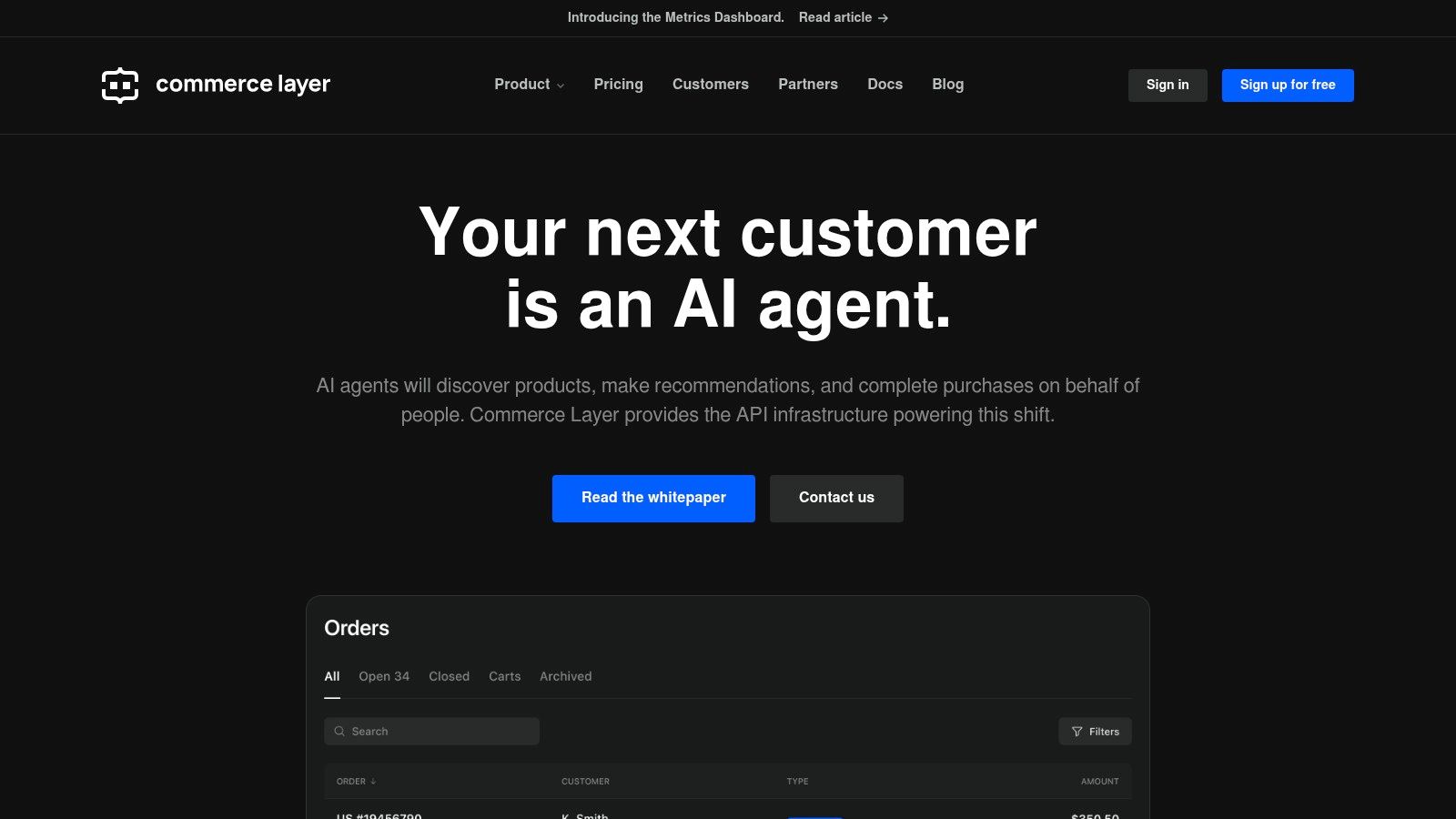
Commerce Layer and similar API-first tools are particularly useful. They let the commerce engine sit behind a content-led experience instead of dictating it.
The business reason this approach works
Chpt3’s likely priority isn’t maximizing SKU density. It’s preserving an editorial tone while still making products purchasable in context. Headless is useful here because the storefront can behave more like a magazine, journal, or campaign environment, with commerce components placed where they support the story rather than interrupt it.
That’s a meaningful distinction. A lot of brands say they want content-commerce integration when what they really mean is “a blog next to a store.” Chpt3 represents the more deliberate version, where content architecture leads and commerce follows.
What Shopify brands can take from this
This model is relevant to brands with a strong point of view, founder story, or cultural niche. Fashion, cycling, outdoor, beauty, and premium lifestyle brands often benefit from this kind of structure when content effectively helps conversion.
One data point that supports the broader case comes from Front-Commerce’s examples. Devialet, another premium brand, reported a 100% increase in conversion rate after implementing headless architecture with Front-Commerce, attributed to improved page speed and checkout flow, according to Front-Commerce’s headless success examples. Chpt3 is a different brand and stack, but the pattern is familiar: premium storytelling works better when performance and UX don’t fight the presentation.
Field note: Content-led headless only works when the editorial layer is disciplined. If every landing page becomes bespoke, the team creates a beautiful maintenance problem.
The hidden trade-off
This kind of architecture is easy to admire and harder to run. It asks more from content operations, design systems, and frontend governance than a conventional store. If the team can’t maintain those disciplines, the result is usually slower iteration, inconsistent merchandising, and expensive creative debt.
For the right brand, though, this is one of the most compelling headless commerce examples because it shows that the payoff isn’t always about complexity at scale. Sometimes it’s about controlling the tone of the buying experience with much more precision.
7 Headless Commerce Case Comparison
| Example | Implementation Complexity 🔄 | Resource Requirements 💡 | Expected Outcomes ⭐📊 | Ideal Use Cases | Key Advantages ⚡ |
|---|---|---|---|---|---|
| 1. Baboon to the Moon | Medium–High, custom Hydrogen frontend and app integration | Shopify Plus, Hydrogen/Oxygen expertise, React devs, app audits | ⭐ Improved Core Web Vitals, faster mobile engagement and conversions 📊 | Brand-led D2C with content-heavy, mobile-first needs | ⚡ Near-instant page loads, strong creative control, Shopify admin continuity |
| 2. Burrow | High, advanced real-time product configurator and composable stack | BigCommerce, Contentful, Next.js/Vercel, configurator engineering | ⭐ Enables interactive configurator that drives conversion 📊 | Complex product customization / configurators | ⚡ Flexible UX, marketing-managed content, supports complex business logic |
| 3. Bang & Olufsen | Very High, full MACH/composable implementation | Commercetools, headless CMS, bespoke frontend, enterprise integrations | ⭐ Scalable global rollout, fast feature velocity across regions 📊 | Global luxury brands with multi-region & omnichannel needs | ⚡ API-first flexibility, long-term scalability and best-of-breed selection |
| 4. Pella Windows & Doors | High, multi-audience UX and pricing rules | Elastic Path Commerce Cloud, headless CMS, custom frontend, pricing/permissions engineering | ⭐ Unified B2B/B2C experiences, streamlined multi-channel sales 📊 | Businesses serving distinct segments (homeowners, contractors, dealers) | ⚡ Single backend for tailored frontends, efficient complex pricing management |
| 5. Under Armour | Medium–High, PWA integrated with Salesforce ecosystem | Salesforce Commerce Cloud (SCAPI), PWA Kit, CRM integration, mobile engineering | ⭐ Faster mobile experience, improved personalization and conversions 📊 | Enterprises deeply invested in Salesforce needing mobile-first experiences | ⚡ Unified customer data with native headless tooling, strong mobile UX |
| 6. Carrefour | Very High, marketplace + complex OMS and fulfillment | VTEX platform specialists, OMS/marketplace ops, logistics & integration teams | ⭐ Rapidly scaled e‑grocery & marketplace with unified inventory 📊 | Large retailers with marketplace and omnichannel fulfillment complexity | ⚡ Native marketplace + OMS reduce integration risk, end-to-end commerce ops |
| 7. Chpt3 | Medium, content-first experience with embedded commerce | Headless CMS (e.g., Sanity), Commerce Layer, Gatsby/Next.js frontend | ⭐ Higher engagement and smoother conversion from content-driven journeys 📊 | Content-first boutique brands that need commerce sprinkled into editorial | ⚡ Lean API-driven commerce, preserves brand storytelling and context |
Considering Headless on Shopify? Your Next Steps
A Shopify team usually reaches the headless question after a familiar pattern. Merchandising wants faster campaign launches. Brand wants more control over layout and storytelling. Performance starts slipping as apps, scripts, and custom theme logic pile up. At that point, the core decision is commercial: will a decoupled storefront remove enough friction to justify the extra build and operating cost?
The strongest candidates are not brands that want something custom. They are brands hitting specific limits in the default storefront model. Common examples include complex product discovery, guided selling, content-heavy landing experiences, multi-region expansion, and separate journeys for retail, wholesale, or trade buyers. If those pressures are mild, a well-architected theme build is often the better choice. If they are constant and revenue-impacting, headless becomes easier to justify.
On Shopify, the two practical paths are clear. One is Shopify’s native route with Hydrogen and Oxygen. That keeps the commerce engine, developer tooling, and hosting model closer to Shopify, which reduces coordination overhead for many Plus teams. The other is a custom headless stack, usually built with a framework like Next.js and hosted outside Shopify. That approach gives more frontend freedom, but it also adds more responsibility around deployment, observability, performance budgets, and long-term maintenance.
The trade-off is straightforward. Hydrogen is usually faster to align with Shopify’s roadmap and easier to support if your team wants a tighter platform fit. A custom stack can make sense when the storefront has requirements that push beyond Shopify’s preferred patterns, or when the business already runs a broader composable setup. Neither option is automatically better. The right choice depends on who will own the frontend after launch, how dependent you are on third-party apps, and whether the expected gain is speed, flexibility, conversion lift, or all three.
Headless can improve performance and conversion, but only when the architecture and operating model are sound. As noted earlier, the upside in the market is real. So is the failure mode. Teams often underestimate the cost of replacing theme-era conveniences such as app embeds, preview workflows, merchandising controls, and content editing processes. Those gaps do not show up in a flashy prototype. They show up three months after launch, when marketers need to move fast and developers become the bottleneck.
That is why discovery deserves more time than vendor demos. Map the customer journeys that drive revenue. Audit every app that affects the storefront, especially search, reviews, subscriptions, personalization, and localization. Define who owns releases, QA, analytics, and incident response. Then decide whether you need a full rebuild or a narrower first phase, such as a campaign hub, a region-specific storefront, or a content layer that sits in front of the existing commerce experience.
For Shopify brands, the best first step is usually a hard scoping exercise, not a build. Get clear on the business case, the required frontend capabilities, and the cost of replacing what your theme currently handles well.
The safest path is working with a team that can pressure-test both the business case and the implementation plan. At ECORN, the focus isn’t to sell headless by default. It is to help Shopify and Shopify Plus brands decide when headless makes sense, what stack fits the requirement, and how to avoid building a more complex system than the business needs.


How to Build a Shopify Clothing Website That Converts

How to Launch a Box Subscription Business in 2026

Luxury Skincare Branding Playbook That Converters
10 Best Podcast Ecommerce Shows for Store Growth in 2026
Shopify Developer Hourly Rate: What to Pay in 2026

Critical Shopify Setup Errors That Are Secretly Sabotaging Your Store
Ecommerce Conversion Tracking: The Complete How-To Guide
Shopify Design Agency: How to Pick the Right Partner
Mastering Multi Store Management on Shopify
Scale Shopify Store

10 Shopify App Ideas Worth Building in 2026

Conversion Rate Optimization for Landing Pages: The Playbook
Shopify Plus Automation: A Guide for 2026
10 Social Selling Platforms for Shopify Merchants

Shopify Website Design Examples: 7 Stores Worth Studying
7 Ecommerce Newsletter Examples for Shopify Brands
One Product Shopify Store: Build and Scale

Mobile Pop Up Strategy for Shopify Stores That Converts

Sitemap for Shopify: How to Find, Optimize, and Submit It

7 Single Product Websites Worth Emulating

Product Variants Shopify: The Complete 2026 Guide
Ecommerce Analytics Consulting for Growth

What Is AI Integration for eCommerce
How to Choose the Right eCommerce Website Development Firm
E Business Strategy Implementation
Conversion Tracking Setup for Shopify Stores
BigCommerce vs Shopify Plus Which Enterprise Wins in 2026
Shopify Theme Kit: Setup, Commands, and Migration Guide
Shopify Extension Development: A Practical 2026 Guide

Shopify Speed Score Explained and How to Improve It
Shopify Mobile Optimization: The 2026 Playbook
How to Add Subcategory in Shopify for Better UX
How to Implement Structured Data for Ecommerce in 2026

SEO App Mobile: Shopify Store Optimization Guide

Shopify Plus Support: What It Includes and How to Choose

Google Ads for Shopify: The Complete 2026 Playbook

Shopify New York: How to Find and Hire the Right Agency

Google Search Console for Shopify: The Complete Setup

First Party Data Collection for eCommerce Growth

FAQ Online Store Guide: Build and Measure It Right
Do FB Ads Work for eCommerce in 2026?

One Page Checkout for Shopify: Design and Implementation
Shopify GraphQL vs REST: The 2026 Developer Decision
Shopify Ecommerce Consulting: Strategy, Pricing &

Are Reddit Ads Worth It for eCommerce Brands
Shopify Title and Meta Description: A Practical 2026 Guide

Product Video Best Practices for Shopify Brands

Real-Time Inventory Management: A 2026 Guide

AI Chatbot Integration for Shopify Stores
Affiliate Program Management: A Shopify Guide
10 Best Performance Monitoring Tools for Shopify in 2026
Digital Asset Management for eCommerce Brands in 2026

Every Type of Facebook Ads Explained for eCommerce Growth
Product Information Management Explained for Shopify Brands
Support Ticket System: A Guide for Shopify Stores

10 Best Customer Service Tools for Shopify in 2026

Can I Start a Business with No Money? a 2026 Blueprint

What Sells Good on Etsy: Best Niches for 2026

Shopify Add to Cart Button: A Practical 2026 Guide

Customer Feedback Automation: A Practical eCommerce Guide
Critical Rendering Path: A Guide for Shopify Stores

How to Promote on TikTok for eCommerce in 2026

B2B eCommerce Consulting That Drives Real Revenue

10 Best Practices for Site Navigation in 2026
Return vs Refund for Shopify Stores: A Practical Guide

What Is Customer Lifetime Value and Why It Matters

What Is Voice of Customer Research for eCommerce

SMS Marketing for Ecommerce That Actually Converts

Master How to Improve Email Deliverability in 2026

Top 8 eCommerce Partners NYC for Shopify Brands in 2026

Machine Learning for Ecommerce: Boost Your Shopify Store

Beauty Market Research: Your 2026 Growth Guide

Shopify International Expansion: A 2026 Roadmap

What Does CRO Stand for in Business: Understanding CRO

Shopify Visual Merchandising: A Playbook for Higher Sales

Shopify Landing Page Design: Master Conversion in 2026
10 Best AI SEO Optimization Tools for Shopify in 2026

Agentic AI for Ecommerce: Boost Your Sales in 2026
Mastering Email Marketing Data for eCommerce Growth

Conversion Rate Optimisation Australia: Boost Your Sales

Conversion Rate Optimization AI: Your Shopify Store Guide

10 Product Bundling Strategies for Shopify in 2026

How to Increase Customer Lifetime Value: A Shopify Playbook
AI Customer Service Automation: Shopify Guide 2026

Clean Website Design: A Shopify Conversion Playbook

Omnichannel Retail Strategy: A Shopify Playbook
Product Data Enrichment: A Guide for Shopify Brands

Instagram Shopping Features a Guide for Shopify Stores
What Is Revenue Optimization: A Holistic RevOps Guide

Benefits of Conversion Rate Optimization: Boost Your
WordPress to Shopify Migration: Your 2026 Seamless Switch

Boost Sales: Ecommerce Payment Processing Guide 2026
Unified Commerce Platform: Benefits, KPIs & Shopify Guide

How to Reduce Bounce Rate eCommerce: Your 2026 Guide
Shopify API Integration: A Practical End-to-End Guide

How to Implement Data Governance: A 2026 Guide
Shopify Store Development Cost: A 2026 Breakdown
What Is Server Side Tracking: The Shopify Guide 2026
Marketing Automation Workflows: A Shopify Guide for 2026

Shopify: How to Reduce Technical Debt


newsletter in your inbox