


Unlocking revenue in a crowded inbox requires more than just sending emails; it demands a clear, repeatable strategy. For Shopify brands, the right email campaign isn't just a message-it's a powerful engine for customer acquisition, retention, and sustained growth. Too often, brands struggle with generic advice that doesn't translate into actual sales. This guide moves beyond theory, providing ten actionable sample email campaigns specifically designed for the modern eCommerce landscape.
Inside, you will find a complete playbook for the entire customer journey. We will break down the exact templates, automation triggers, subject lines, and key performance indicators (KPIs) you need to transform your email list into one of your most valuable assets. Each example is a self-contained blueprint, covering everything from the welcome series that greets new subscribers to the win-back campaigns that reactivate dormant customers.
Whether you're an emerging brand setting up your first flows or a Shopify Plus powerhouse looking to refine your automation, these examples offer a replicable roadmap to drive measurable results. Forget guesswork. We'll explore the specific frameworks and tactics used to scale successful brands, proving that with the right blueprint, exceptional email ROI isn't just possible-it's predictable. This is your direct, no-filler guide to building high-converting emails that work. Let's dive in.
1. Welcome Series / Onboarding Email Campaign
A welcome series is your first, and arguably most important, conversation with a new subscriber. This automated, multi-email sequence is triggered immediately after someone signs up for your list, serving as a digital handshake that introduces your brand, sets expectations, and guides them toward their first purchase. For eCommerce businesses, this is a prime opportunity to convert high-intent subscribers into first-time buyers.
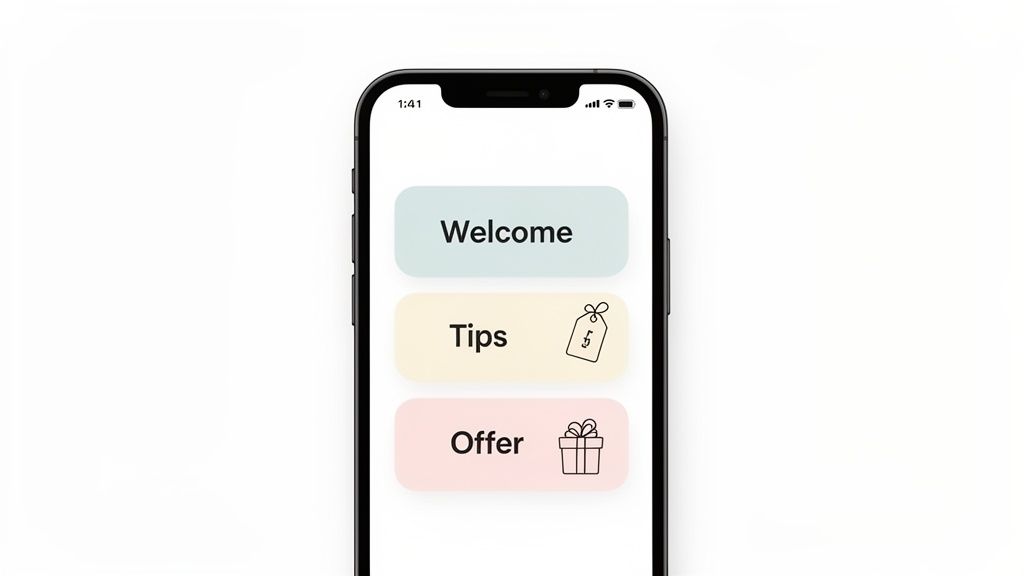
This initial sequence is crucial because subscriber engagement is never higher than in the moments after they've opted in. Brands like Warby Parker and Glossier have set the standard by using their welcome emails to tell a compelling brand story, showcase their core values, and provide social proof, all before pushing for a sale.
Strategic Breakdown & Actionable Tips
The goal of these sample email campaigns is to build a relationship, not just make a one-off sale. By offering value upfront, you establish trust and create a loyal follower.
- Email 1 (Immediate): The Welcome & Offer. Deliver the promised discount or lead magnet immediately. Briefly introduce your brand's mission and what makes you different. Keep the focus on the value you promised.
- Email 2 (Day 2): Brand Story & Social Proof. Share your founder's story or the problem your brand solves. Include customer testimonials or user-generated content (UGC) to build credibility.
- Email 3 (Day 4): Product Showcase & Education. Introduce your best-selling products or categories. Focus on benefits over features. Explain how your products can solve a specific problem for the customer.
- Email 4 (Day 6): Final Offer Reminder. Create a sense of urgency by reminding them their initial discount is expiring. This often provides the final push needed for conversion.
Key Insight: Segment your welcome series based on the sign-up source. A subscriber from a paid ad targeting a specific product should receive a different sequence than someone who signed up organically from your blog.
This approach ensures a warm introduction and systematically moves a subscriber from being brand-aware to becoming a confident first-time customer. Monitor open rates, click-through rates, and conversion rates to fine-tune your sequence.
2. Abandoned Cart Recovery Email Campaign
An abandoned cart recovery campaign is a mission-critical automated sequence for any eCommerce business. Triggered when a customer adds products to their cart but leaves without completing the purchase, these emails are designed to recapture what would otherwise be lost revenue. The core function is to remind shoppers of the items they left behind and persuade them to finalize their order.
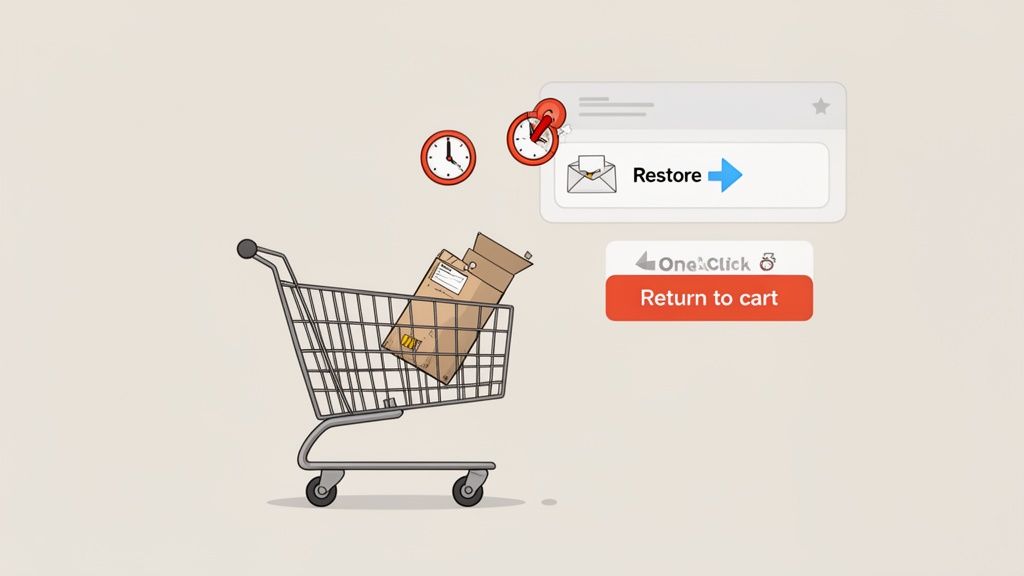
These sample email campaigns are incredibly effective because they target shoppers with high purchase intent. Platforms like Klaviyo and Omnisend have popularized multi-stage sequences that go beyond a simple reminder. They use dynamic product blocks, social proof, and strategic incentives to address common purchase hesitations like shipping costs or payment friction, turning a near-miss into a successful conversion.
Strategic Breakdown & Actionable Tips
The primary goal here is direct revenue recovery. Every email should make it as easy as possible for the customer to return to their cart and check out. A well-crafted sequence can recover a significant percentage of abandoned carts.
- Email 1 (Within 1 Hour): The Gentle Nudge. Send a simple, helpful reminder. Display the exact items left in the cart with clear images and a direct link back to checkout. Avoid offering a discount just yet; many shoppers just need a prompt.
- Email 2 (24 Hours Later): Overcome Objections. If they haven't purchased, address potential friction points. Highlight your return policy, include customer reviews for the items in their cart, or answer frequently asked questions.
- Email 3 (48-72 Hours Later): The Incentive. This is where you introduce a compelling offer. Test free shipping versus a percentage-off discount to see what resonates with your audience. Frame it as a limited-time offer to create urgency.
- Email 4 (Optional - Day 5-7): Final Reminder. A last-chance email reminding them the offer from Email 3 is expiring. Keep it short and to the point with a clear call-to-action.
Key Insight: Segment your abandoned cart flows based on cart value. A high-value cart ($500+) might warrant a more personalized touch or a different incentive structure compared to a low-value cart ($50). This prevents you from unnecessarily giving away margin.
By implementing a structured follow-up, you systematically address customer hesitation and provide multiple opportunities for conversion. You can dive deeper into the tactics for building a powerful sequence by exploring our guide to Shopify abandoned cart emails.
3. Post-Purchase Follow-Up and Product Recommendation Campaign
The post-purchase period is a critical, yet often overlooked, phase of the customer journey. This automated email campaign engages customers immediately after a purchase, transforming a simple transactional moment into a relationship-building opportunity. The sequence begins with an order confirmation, provides essential shipping updates, and then strategically introduces product recommendations to encourage the next sale. This is a foundational tactic for increasing customer lifetime value (LTV).
Amazon pioneered data-driven post-purchase recommendations, making it a standard customer expectation. Today, direct-to-consumer brands like Allbirds and Brooklinen excel at this, using their follow-up emails not just to upsell, but to reinforce the customer's purchase decision and gather valuable feedback. These sample email campaigns turn one-time buyers into repeat customers.
Strategic Breakdown & Actionable Tips
The primary goals are to reassure the customer, maintain excitement, and intelligently guide them toward their next purchase. By providing value beyond the transaction itself, you build brand loyalty and create a natural path for repeat business.
- Email 1 (Immediate): Order Confirmation. Send this instantly. Reassure the customer their order was successful. Include the order summary, a clear link to view the order status, and support contact information. This is a high-engagement email, perfect for a subtle brand story reminder.
- Email 2 (On Shipment): Shipping Notification. Provide the tracking number and an estimated delivery date. This simple, helpful email keeps the customer informed and reduces "where is my order?" support tickets.
- Email 3 (3-7 Days Post-Delivery): Product Recommendations. Once the customer has had time to receive and use their product, send a curated list of recommendations. Use their purchase history to suggest complementary items, not just similar ones. For example, if they bought a coffee maker, recommend specific coffee beans or a grinder.
- Email 4 (14-21 Days Post-Purchase): Review Request. Ask for a product review. Frame it as a way for them to help other customers make smart decisions. Including an incentive, like a small discount on their next purchase, can significantly increase response rates.
Key Insight: Use purchase data to segment your recommendation logic. A first-time buyer who purchased an entry-level product should receive different suggestions than a VIP customer who bought a high-end item. Personalize the "You might also like" section based on what they actually bought.
This disciplined follow-up system confirms the customer's choice, keeps them engaged while they wait, and uses their own data to create a compelling reason to return and shop again.
4. Re-Engagement / Win-Back Email Campaign
A re-engagement or win-back campaign is a strategic sequence designed to reconnect with subscribers who have become inactive. These customers haven't opened, clicked, or purchased in a specific period, and this automated campaign aims to remind them of your brand's value and entice them back into the fold. For any eCommerce business, it’s far more cost-effective to retain an existing customer than to acquire a new one, making this a high-ROI activity.
This campaign is essential for maintaining a healthy and engaged email list. Sending emails to inactive users can hurt your sender reputation and deliverability, so a win-back series serves a dual purpose: it reactivates lapsed customers and helps you clean your list of those who are truly gone. Brands like Netflix excel at this, using personalized subject lines like "Your favorites are waiting" to pull users back in.
Strategic Breakdown & Actionable Tips
The goal of these sample email campaigns is to acknowledge the customer's absence, remind them what they loved about your brand, and provide a compelling reason to return. Honesty and a genuine offer are key to rebuilding the connection.
- Email 1 (Day 30-60): The Gentle Nudge. Start with a friendly, low-pressure "We miss you" email. Acknowledge their absence and highlight what’s new since they last visited, such as best-selling products, new collections, or positive company news.
- Email 2 (Day 33-63): The Incentive. If the first email didn't get a response, introduce a compelling, time-sensitive offer. This could be a significant discount, a free gift with purchase, or loyalty points. Frame it as an exclusive "welcome back" gift.
- Email 3 (Day 37-67): The Urgency & Social Proof. Remind them that their special offer is expiring. Reinforce your brand's value by including recent customer reviews or user-generated content to show what they're missing out on.
- Email 4 (Day 45-90): The Last Chance / Sunset. This is the final attempt. Let them know you'll be removing them from your active mailing list to respect their inbox, but give them a clear one-click option to stay subscribed. This protects your deliverability.
Key Insight: Define "inactivity" based on your business's purchase cycle. A mattress company might set this threshold at 365 days, while a coffee subscription brand might use 45 days. Segmenting your win-back offers based on past purchase value can also make your incentives more effective.
5. Seasonal / Holiday Promotional Email Campaign
Seasonal campaigns are time-sensitive, high-stakes email sequences built around major shopping events like Black Friday, Cyber Monday, Christmas, or Prime Day. These campaigns feature limited-time offers, exclusive deals, and urgency-driven messaging to capitalize on heightened consumer spending and demand. For any eCommerce store, these periods represent a massive opportunity to drive significant revenue in a short time.
Major retailers like Amazon and Target have perfected the art of the multi-week holiday promotion, building anticipation and guiding customers through a carefully planned sales journey. These sample email campaigns are not just about a single "SALE!" email; they are a coordinated effort to capture attention amidst a sea of competition and maximize customer lifetime value.
Strategic Breakdown & Actionable Tips
Success in seasonal campaigns comes from meticulous planning, not last-minute execution. The goal is to be a welcome signal in a noisy inbox by providing genuine value and a seamless shopping experience.
- Email 1 (Pre-Launch): The Hype Builder. Start a week or two before the event. Tease the upcoming sale, hint at exclusive products, and offer VIPs early access. This builds anticipation and primes your audience.
- Email 2 (Launch Day): The Main Offer. Announce the sale is live. Be direct and clear about the discount. Use bold visuals and a prominent call-to-action (CTA). Segment your send based on past purchase behavior for personalized recommendations.
- Email 3 (Mid-Campaign): The Reminder & Social Proof. Remind subscribers about the ongoing sale. Showcase best-sellers, popular deals, and user-generated content or positive reviews to build trust and create a fear of missing out (FOMO).
- Email 4 (Final Hours): The Urgency Push. Send this on the last day of the sale. Use a countdown timer and subject lines like "Last Chance" or "Ending Tonight" to drive immediate action. This is often the highest-converting email in the sequence.
Key Insight: Coordinate your email campaign with all other marketing channels, including SMS, social media ads, and on-site banners. A cohesive, multi-channel message amplifies your promotion and ensures you reach customers wherever they are.
6. Flash Sale / Limited-Time Offer Email Campaign
A flash sale campaign is a high-urgency, short-duration promotion designed to drive immediate action and a surge in sales. These powerful sample email campaigns capitalize on the psychological principles of scarcity and fear of missing out (FOMO), encouraging subscribers to purchase now rather than later. Typically lasting anywhere from a few hours to a couple of days, they are an effective tool for clearing excess inventory, hitting revenue targets, or re-engaging a quiet segment of your list.
This tactic was foundational to the business models of daily deal sites like Groupon and has been perfected by retail giants and nimble eCommerce brands alike. Amazon's "Lightning Deals" and fashion retailer ASOS's time-sensitive promotions demonstrate how effectively these campaigns can create a buying frenzy and boost short-term revenue.
Strategic Breakdown & Actionable Tips
The success of a flash sale hinges on its perceived value and genuine urgency. Overusing this tactic can lead to audience fatigue and devalue your brand, so it's best reserved for strategic moments no more than once or twice a month.
- Email 1: The Announcement. Launch the sale with a clear, bold subject line stating the offer and the deadline (e.g., "⚡ 40% OFF EVERYTHING - 24 Hours Only!"). The email body should be simple, mobile-first, and feature a dynamic countdown timer to visually reinforce the urgency.
- Email 2 (Mid-Sale): The Reminder. Send a reminder about halfway through the sale. You can add a new angle, like showcasing best-sellers that are selling out fast or including user-generated content to build social proof and prompt those on the fence.
- Email 3 (Final Hours): The "Last Chance" Warning. This is your final push. Send this email 3-6 hours before the offer expires. Use urgent language like "Ending Soon," "Last Call," or "Don't Miss Out." Clearly state the exact end time to create a final spike in conversions. For flash sales, an efficient strategy for managing discounts and offers is essential. Implementing a robust coupon management system can streamline the creation and distribution of these limited-time deals within your emails.
Key Insight: Create authentic scarcity. Don't just invent a deadline; tie it to a real constraint, such as "until stock runs out" or a specific holiday shipping cutoff. Customers are savvy and can spot artificial urgency, which erodes trust.
By communicating the offer clearly and building genuine urgency, a flash sale campaign can deliver a significant, immediate impact on your sales and customer activity. Monitor how your audience responds to frequency and discount levels to find the sweet spot for your brand.
7. Segmented / Behavioral Trigger Email Campaign
A segmented or behavioral trigger campaign moves beyond one-size-fits-all messaging to deliver highly personalized content based on user data. This data-driven approach uses customer actions, demographics, or purchase history to send contextually relevant emails. Triggers can include anything from browsing a specific product category to reaching a certain spending threshold, making each communication feel timely and specific to the recipient.
These types of sample email campaigns are the engine behind modern personalization at scale. Instead of sending the same promotion to your entire list, you can send a unique offer to VIP customers, a "we miss you" note to lapsed buyers, or product recommendations to someone who recently browsed a specific page. This level of detail makes the customer feel understood, dramatically improving engagement and conversion rates.
Strategic Breakdown & Actionable Tips
The core principle is to use what you know about a customer to send them what they want, precisely when they want it. By aligning your messaging with customer behavior, you create a more effective and less intrusive marketing experience.
- Email 1 (Triggered): The Browse Abandonment. A user views a product but doesn’t add it to their cart. Trigger an email 1-2 hours later featuring that exact product, related items, and social proof like customer reviews.
- Email 2 (Triggered): The Post-Purchase Follow-Up. After a customer buys, send a thank you email that also includes care instructions, setup guides, or complementary product suggestions to encourage a second purchase.
- Email 3 (Segmented): The VIP Offer. Create a segment for your most loyal customers based on purchase frequency or lifetime value. Send them exclusive access to new products, a special discount, or an invitation to a loyalty program.
- Email 4 (Segmented): The Re-Engagement. Identify subscribers who haven't opened an email or made a purchase in 90 days. Send them a compelling "We Miss You" offer or a survey to understand why they've disengaged. Exploring the full potential of eCommerce email marketing automation can provide even more ideas for these sequences.
Key Insight: Start with simple segmentation before attempting complex behavioral triggers. Grouping customers by Recency, Frequency, and Monetary (RFM) value is a powerful and manageable first step toward more advanced personalization.
By monitoring how different segments perform, you can gather valuable insights into customer preferences and continuously refine your strategy. This method ensures your marketing efforts are efficient, relevant, and drive measurable growth.
8. Newsletter / Educational Content Email Campaign
A newsletter or educational content campaign moves beyond direct sales to build a long-term relationship with your audience. These are regularly scheduled emails, often weekly or bi-weekly, focused on delivering genuine value through useful content, industry insights, product education, or compelling stories. The primary goal isn't immediate conversion but establishing your brand as a trusted authority and staying top-of-mind.
This strategy is about building brand equity and a loyal community. Companies like GoPro excel at this by sharing user-generated adventure stories and tips, which entertains their audience while subtly showcasing the product's capabilities. Similarly, newsletters from industry leaders like Shopify provide actionable business advice, positioning them as essential resources rather than just software providers.
Strategic Breakdown & Actionable Tips
The core principle of these sample email campaigns is the 80/20 rule: 80% of your content should educate, entertain, or inform, while only 20% is promotional. This approach builds trust, making subscribers more receptive when you do present an offer.
- Email Cadence (Weekly/Bi-weekly): Value-First Content. Establish a consistent schedule to build a reading habit. Your content could be a "how-to" guide related to your products, a behind-the-scenes look at your team, or a roundup of interesting industry news.
- Content Focus: Authenticity & Education. Write with a genuine, human voice. Avoid corporate jargon. Share your expertise freely. If you sell high-quality coffee, your newsletter could teach subscribers about different brewing methods or the origin of your beans.
- Soft Call-to-Action (CTA): Guide, Don't Push. While the main goal is not a hard sell, you should include a subtle CTA. This could be a link to a new blog post, a featured product that was mentioned in the educational content, or an invitation to follow on social media.
- Performance Tracking: Engagement over Sales. Monitor metrics like open rate, click-through rate, and unsubscribe rate. These KPIs are better indicators of content resonance than direct conversion, which is a secondary goal for this type of campaign.
Key Insight: Segment your newsletter audience based on their content interests. A customer who has only purchased skincare for acne should receive different educational content than one who has only purchased anti-aging products. This personalization makes your content feel more relevant and valuable.
By consistently delivering value, you create an engaged audience that not only looks forward to your emails but also trusts your brand's recommendations, leading to higher lifetime value and stronger brand loyalty.
9. VIP / Loyalty Program Email Campaign
A VIP or loyalty program email campaign is a targeted communication strategy focused on rewarding and retaining your most valuable customers. Instead of broadcasting to everyone, these emails deliver exclusive content, early access, and special recognition to members of your loyalty program. The primary goal is to foster a sense of community and exclusivity, encouraging repeat purchases and increasing customer lifetime value (LTV).
These campaigns are essential for turning loyal customers into powerful brand advocates. By acknowledging their commitment, you reinforce their decision to shop with you over competitors. Programs like Sephora's Beauty Insider and Amazon Prime have perfected this by creating tiered benefits that make customers feel appreciated and motivated to continue engaging with the brand. It’s a powerful tool for reducing churn among your best customer segment.
Strategic Breakdown & Actionable Tips
The core principle behind these sample email campaigns is reciprocity. By giving your best customers special treatment, you strengthen their loyalty and inspire them to spend more.
- Email 1: The Status Update & Benefit Reminder. Regularly inform members about their current status, points balance, and progress toward the next tier. Remind them of the exclusive benefits they can use right now, such as free shipping or member-only products.
- Email 2: Exclusive Early Access. Grant your VIPs first dibs on new product launches or major sales events (like Black Friday). This creates a powerful sense of privilege and can drive significant revenue before the general public even sees the offer.
- Email 3: The Milestone Celebration. Automate emails to celebrate member milestones like birthdays or their anniversary with your brand. A surprise gift, a special discount, or bonus points can create a memorable and positive experience.
- Email 4: The Exclusive Content/Experience. Go beyond discounts. Offer VIPs exclusive content like a behind-the-scenes look at product development, an invitation to a digital event, or a personalized product recommendation from an expert.
Key Insight: Segment your VIP communications by tier. A top-tier "Gold" member who spends significantly should receive different offers and messaging than an entry-level "Bronze" member. Tailoring the content reinforces the value of advancing to a higher level.
By implementing a dedicated VIP campaign, you create a powerful retention engine. It shows your best customers that you see them as individuals, not just order numbers, which is crucial for building long-term brand affinity.
10. Review Request / Social Proof Email Campaign
A review request campaign is a crucial post-purchase automation that turns customer satisfaction into powerful social proof. These emails are sent after a customer has had enough time to use and experience a product, asking them to leave a review. This strategy is foundational for building trust, as modern shoppers rely heavily on user-generated content (UGC) to make buying decisions.
The core function of these sample email campaigns is to generate a steady stream of fresh reviews for your product pages. This not only influences new buyers but also provides valuable, direct feedback to your team about product quality and customer experience. Platforms like Amazon have made reviews an expected part of online shopping, and direct-to-consumer brands use apps like Judge.me and Yotpo to achieve the same effect.
Strategic Breakdown & Actionable Tips
The primary goal is to make leaving a review as effortless and rewarding as possible. By systematically asking for feedback, you build a library of social proof that works around the clock to convert browsers into buyers and improve your search rankings.
- Email 1 (2-3 Weeks Post-Delivery): The Initial Request. Send the first request after the customer has had ample time to form an opinion. Explain why their feedback is important for your small business and for helping other customers. Make the call-to-action a direct, one-click link to the review form.
- Email 2 (1 Week Later): Gentle Reminder & Incentive. For those who didn't leave a review, send a friendly follow-up. You can introduce a soft incentive here, like an entry into a monthly gift card drawing, which encourages participation without "paying" for positive reviews.
- Email 3 (Optional): High-Value Request. If a customer purchased a premium product, consider a more personalized ask. Request a photo or video review, explaining how visual proof helps others see the product in a real-world context.
- Response & Amplification: Once reviews come in, respond to them publicly, both positive and negative. This shows you are engaged and value all feedback. Feature the best reviews in future marketing emails and on your homepage.
Key Insight: The timing of your review request is critical and product-dependent. A customer buying a skincare product needs 3-4 weeks to see results, while someone buying a t-shirt may only need one week. Tailor your automation triggers based on the product category to maximize response rates.
This campaign creates a self-sustaining loop: happy customers leave reviews, those reviews persuade new customers, and the cycle continues, strengthening your brand's credibility and authority over time.
10 Email Campaigns: Side-by-Side Comparison
Putting Your Email Blueprint into Action
We've journeyed through ten distinct types of sample email campaigns, each serving a unique function in the eCommerce customer lifecycle. From the first handshake of a Welcome Series to the critical nudge of an Abandoned Cart flow, the core principle remains consistent: effective email marketing is a conversation, not a monologue. It’s about delivering the right message to the right person at exactly the right moment.
The power of these examples isn't in direct imitation. A simple copy-and-paste of our templates will fall flat because it misses your brand’s unique voice and your customers' specific needs. Instead, the real value is in understanding the strategic architecture behind each campaign. The goal is to internalize these frameworks so you can build your own high-performing email system. Think of the examples we've detailed not as finished products, but as adaptable blueprints.
Your Strategic Next Steps
Feeling overwhelmed by the possibilities is normal. The key is to start with a single, focused objective. Don't try to build all ten campaigns at once. Instead, identify the most significant point of friction or opportunity in your customer journey right now.
- Low Conversion Rate? Prioritize your Abandoned Cart Recovery campaign. Even a small improvement here can directly impact your bottom line.
- High Churn or Low Repeat Purchases? Focus on a Re-Engagement Campaign or develop a Post-Purchase Follow-Up series that builds a relationship beyond the first sale.
- Struggling to Build Community? Double down on your Newsletter or launch a VIP/Loyalty Program to reward your best customers and make them feel seen.
Once you’ve chosen your starting point, commit to a methodical process. Use the provided goals, KPIs, and A/B testing ideas as your guide. Implement the automation, write copy that reflects your brand’s personality, and then, most importantly, measure everything. The data you collect from your first campaign will be the foundation for your second, creating a cycle of continuous improvement.
From Campaigns to a Conversion Ecosystem
Mastering these individual sample email campaigns is the first step. The ultimate goal is to weave them together into a cohesive, intelligent system that guides customers seamlessly from awareness to advocacy. When your Welcome Series flows logically into educational content, and your behavioral triggers anticipate customer needs, you create an experience that feels personal and valuable.
This level of orchestration transforms your email list from a simple marketing channel into your most valuable business asset. It’s an owned audience that you can communicate with directly, building brand equity and driving predictable revenue without being completely reliant on the fluctuating costs of paid advertising. By applying the strategies outlined in this guide, you are not just sending emails; you are building a resilient, direct-to-customer business engine that will serve your brand for years to come. Your email program can become the consistent, reliable workhorse of your marketing efforts, driving growth one thoughtful message at a time.
Ready to turn these email blueprints into a powerful revenue driver for your Shopify store? The team at ECORN specializes in creating and optimizing the very campaigns detailed in this guide. We combine expert strategy, compelling design, and technical precision to build email marketing systems that convert. Let ECORN help you build an email program that grows your business.


How to Cross Sell on Shopify Without Friction
Best Shopify Theme for Custom Products Compared
Multi Store Inventory Management: A Practical Guide

SEO Consulting for Ecommerce: A Practical Guide
Shopify Theme Updater App: A Safe Update Playbook
Shopify Git Integration: A Developer's Guide to 2026
Headless Ecommerce Development Services Explained

How to Build a Shopify Clothing Website That Converts
How to Launch a Box Subscription Business in 2026

Luxury Skincare Branding Playbook That Converters
10 Best Podcast Ecommerce Shows for Store Growth in 2026
Shopify Developer Hourly Rate: What to Pay in 2026
Critical Shopify Setup Errors That Are Secretly Sabotaging Your Store
Ecommerce Conversion Tracking: The Complete How-To Guide
Shopify Design Agency: How to Pick the Right Partner
Mastering Multi Store Management on Shopify
Scale Shopify Store
10 Shopify App Ideas Worth Building in 2026
Conversion Rate Optimization for Landing Pages: The Playbook
Shopify Plus Automation: A Guide for 2026
10 Social Selling Platforms for Shopify Merchants
Shopify Website Design Examples: 7 Stores Worth Studying
7 Ecommerce Newsletter Examples for Shopify Brands
One Product Shopify Store: Build and Scale
Mobile Pop Up Strategy for Shopify Stores That Converts
Sitemap for Shopify: How to Find, Optimize, and Submit It
7 Single Product Websites Worth Emulating
Product Variants Shopify: The Complete 2026 Guide
Ecommerce Analytics Consulting for Growth
What Is AI Integration for eCommerce
How to Choose the Right eCommerce Website Development Firm
E Business Strategy Implementation
Conversion Tracking Setup for Shopify Stores
BigCommerce vs Shopify Plus Which Enterprise Wins in 2026
Shopify Theme Kit: Setup, Commands, and Migration Guide
Shopify Extension Development: A Practical 2026 Guide
Shopify Speed Score Explained and How to Improve It
Shopify Mobile Optimization: The 2026 Playbook
How to Add Subcategory in Shopify for Better UX
How to Implement Structured Data for Ecommerce in 2026
SEO App Mobile: Shopify Store Optimization Guide
Shopify Plus Support: What It Includes and How to Choose
Google Ads for Shopify: The Complete 2026 Playbook
Shopify New York: How to Find and Hire the Right Agency
Google Search Console for Shopify: The Complete Setup
First Party Data Collection for eCommerce Growth
FAQ Online Store Guide: Build and Measure It Right
Do FB Ads Work for eCommerce in 2026?
One Page Checkout for Shopify: Design and Implementation
Shopify GraphQL vs REST: The 2026 Developer Decision
Shopify Ecommerce Consulting: Strategy, Pricing &
Are Reddit Ads Worth It for eCommerce Brands
Shopify Title and Meta Description: A Practical 2026 Guide
Product Video Best Practices for Shopify Brands
Real-Time Inventory Management: A 2026 Guide
AI Chatbot Integration for Shopify Stores
Affiliate Program Management: A Shopify Guide
10 Best Performance Monitoring Tools for Shopify in 2026
Digital Asset Management for eCommerce Brands in 2026
Every Type of Facebook Ads Explained for eCommerce Growth
Product Information Management Explained for Shopify Brands
Support Ticket System: A Guide for Shopify Stores

10 Best Customer Service Tools for Shopify in 2026

Can I Start a Business with No Money? a 2026 Blueprint
What Sells Good on Etsy: Best Niches for 2026

Shopify Add to Cart Button: A Practical 2026 Guide

Customer Feedback Automation: A Practical eCommerce Guide
Critical Rendering Path: A Guide for Shopify Stores

How to Promote on TikTok for eCommerce in 2026

B2B eCommerce Consulting That Drives Real Revenue
10 Best Practices for Site Navigation in 2026
Return vs Refund for Shopify Stores: A Practical Guide
What Is Customer Lifetime Value and Why It Matters
What Is Voice of Customer Research for eCommerce

SMS Marketing for Ecommerce That Actually Converts

Master How to Improve Email Deliverability in 2026
Top 8 eCommerce Partners NYC for Shopify Brands in 2026
Machine Learning for Ecommerce: Boost Your Shopify Store
Beauty Market Research: Your 2026 Growth Guide
Shopify International Expansion: A 2026 Roadmap
What Does CRO Stand for in Business: Understanding CRO
Shopify Visual Merchandising: A Playbook for Higher Sales
Shopify Landing Page Design: Master Conversion in 2026
10 Best AI SEO Optimization Tools for Shopify in 2026

Agentic AI for Ecommerce: Boost Your Sales in 2026
Mastering Email Marketing Data for eCommerce Growth
Conversion Rate Optimisation Australia: Boost Your Sales
Conversion Rate Optimization AI: Your Shopify Store Guide

10 Product Bundling Strategies for Shopify in 2026
How to Increase Customer Lifetime Value: A Shopify Playbook
AI Customer Service Automation: Shopify Guide 2026
Clean Website Design: A Shopify Conversion Playbook

Omnichannel Retail Strategy: A Shopify Playbook
Product Data Enrichment: A Guide for Shopify Brands
Instagram Shopping Features a Guide for Shopify Stores
What Is Revenue Optimization: A Holistic RevOps Guide
Benefits of Conversion Rate Optimization: Boost Your
WordPress to Shopify Migration: Your 2026 Seamless Switch
Boost Sales: Ecommerce Payment Processing Guide 2026
Unified Commerce Platform: Benefits, KPIs & Shopify Guide


newsletter in your inbox