

You can usually tell when Q4 has arrived before the calendar says it out loud. Your team is rewriting promo banners, customer support is asking about shipping cutoffs, inventory forecasts suddenly matter more than creative opinions, and every app on your Shopify stack starts to feel mission-critical.
That's why “what is q4” matters more than it sounds. For a Shopify brand, Q4 isn't just a finance term. It's the operating window where traffic spikes, buyer intent sharpens, and weak points in your store get exposed fast. If your site converts cleanly and your operations hold up, Q4 can carry your year. If they don't, more traffic just means more expensive mistakes.
Understanding Q4 for eCommerce Brands
Q4 is the fourth and final quarter of a calendar year, covering October 1 through December 31. Companies use this period to track performance, finalize budgets, and prepare annual reports, which makes it the closing stretch for annual business results, as outlined in this Q4 business guide.
For eCommerce brands, that definition is accurate but incomplete. On Shopify, Q4 is the part of the year when promotions, merchandising, ad efficiency, fulfillment capacity, and conversion rate all collide. A founder might think they need “more traffic” for the holiday season, but most stores need better readiness. More qualified traffic only helps if product pages are clear, checkout is smooth, and operations can keep the promise your marketing makes.
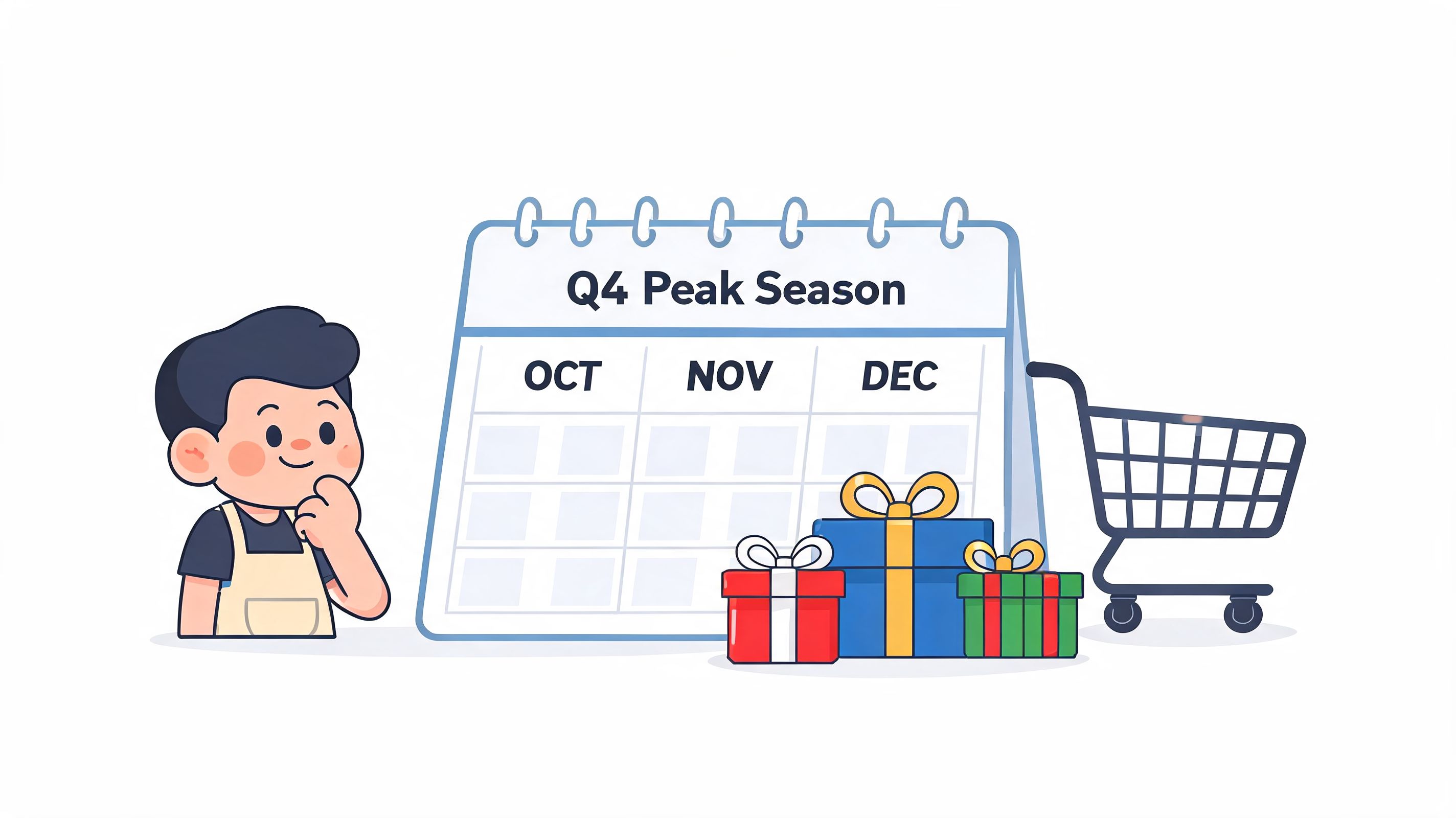
A practical way to think about Q4 is this:
- October sets the foundation. You warm up audiences, tighten the store, and test offers before the biggest buying days arrive.
- November rewards preparation. Black Friday and Cyber Monday compress demand into a short period, and small errors become expensive quickly.
- December tests execution. Shipping clarity, giftability, support response times, and post-purchase communication matter as much as discount depth.
If you're tightening acquisition strategy before the rush, this overview of AdStellar AI for e-commerce growth is useful because it frames how paid media and store performance need to work together, not as separate workstreams.
Practical rule: Don't treat Q4 like a campaign. Treat it like a system. Marketing creates demand, but conversion and operations decide whether demand becomes revenue.
Why Q4 Is the Golden Quarter for eCommerce
Q4 matters because buyer behavior changes. People aren't browsing the way they do in slower parts of the year. They're shopping with deadlines, occasions, gifting intent, and higher urgency. That changes how they evaluate your store.
A shopper in Q4 wants fewer decisions, not more. They respond to clear bundles, simple gift guidance, visible delivery timelines, and offers that remove hesitation. Brands that win this period usually reduce friction better than they increase cleverness.
Demand rises, but so does pressure
In digital advertising and eCommerce, consumer demand and spending peak in Q4, and advertising metrics such as CPMs and RPMs are typically the highest of the year because of holiday demand and brands using the remainder of annual budgets, according to Mediavine's Q4 overview.
That creates a trade-off every Shopify merchant needs to respect. Yes, more shoppers are in market. But you're also competing in a noisier auction environment while customers compare more offers in less time. If your landing pages are slow, your merchandising is vague, or your cart surprises buyers late with shipping friction, Q4 traffic gets expensive fast.
Here's what usually works:
- Tighter product positioning. Your offer needs to make immediate sense on collection pages, product pages, and email clicks.
- Shorter paths to purchase. Holiday shoppers won't tolerate unnecessary navigation, hidden variant info, or confusing bundles.
- Operational trust signals. Shipping windows, return policies, and customer support access often affect conversion more than another promo badge.
What usually doesn't work:
- Launching a full redesign too late.
- Running too many overlapping discounts.
- Sending paid traffic to generic pages with weak holiday framing.
- Waiting until Black Friday week to test site performance.
Q4 can shape what happens after the holidays
A lot of merchants think of Q4 as pure harvesting. That's too narrow. A strong Q4 also improves your starting position in the next quarter because you can turn first-time holiday buyers into repeat customers with better onboarding, replenishment flows, and post-purchase communication.
A bad Q4 experience doesn't just lose one order. It often loses the next order too.
That's why golden-quarter thinking has to go beyond ad spend. If the first purchase feels easy, arrives on time, and matches expectation, your brand enters the new year with a larger customer base that already trusts you. If the first purchase feels risky or messy, you spend Q1 trying to repair trust instead of building on momentum.
The real leverage is preparedness
The biggest misconception about Q4 is that success comes from one big sale weekend. In practice, the strongest brands use Q4 to coordinate four things at once:
- Acquisition
- Merchandising
- Conversion rate optimization
- Operational execution
When those pieces are aligned, the quarter becomes easier to scale. When they're not, every increase in traffic stresses the store harder.
Key Q4 Dates and Sales Events to Master
Most brands plan Q4 too narrowly. They circle Black Friday and Cyber Monday, then treat the rest of the quarter like filler. That leaves money on the table because Q4 works better as a sequence of connected campaigns.
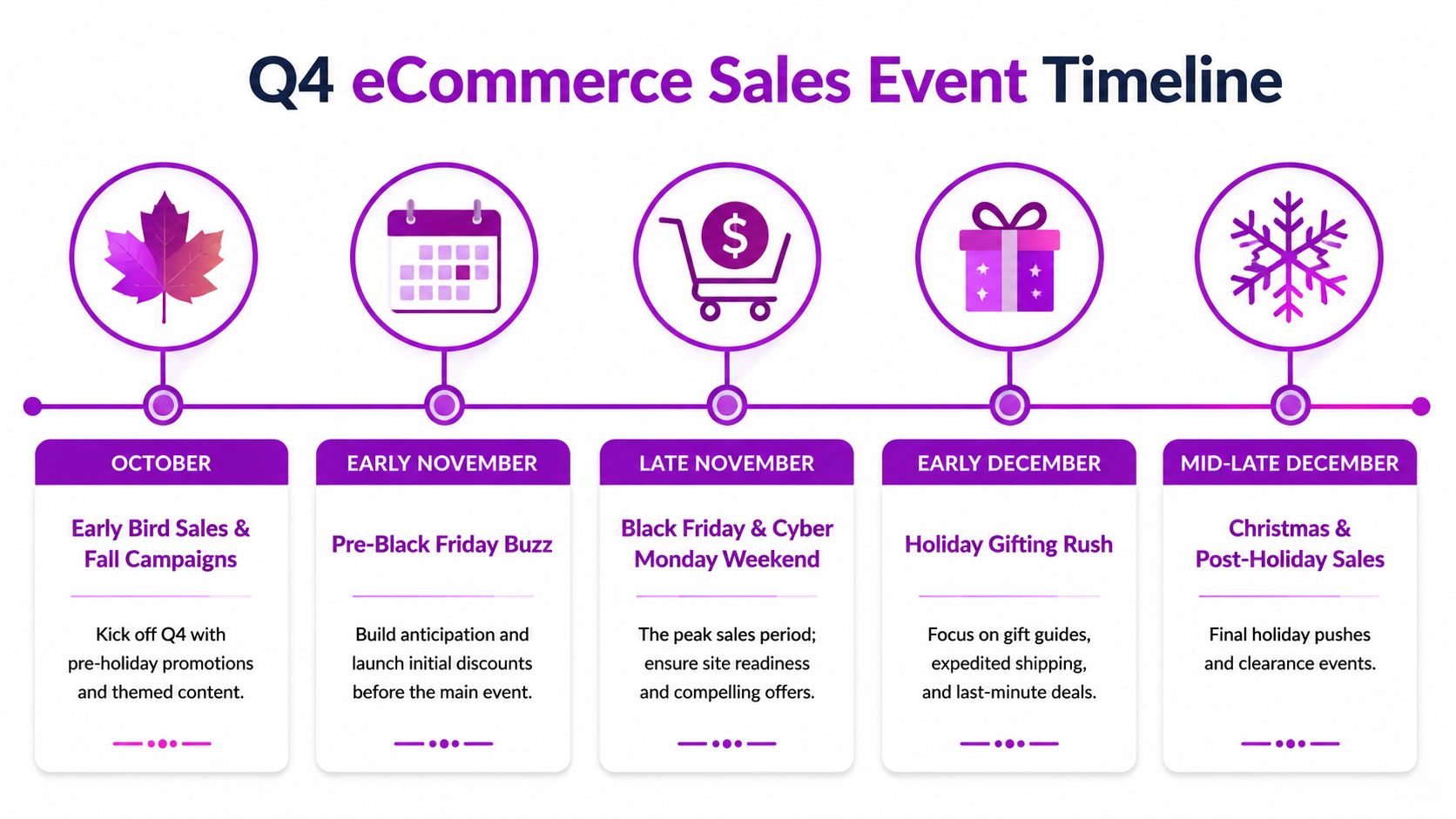
October is the warm-up
October is where disciplined teams get ahead. You're not trying to force peak-volume revenue yet. You're using the month to validate angles, segment engaged audiences, and clean up your store before higher-intent shoppers arrive.
Good October moves include:
- Testing giftable bundles before the heavy promo period
- Refreshing creative across homepage, PDPs, email, and paid landing pages
- Building audience pools through lead capture, quiz flows, and retargeting traffic
- Running softer promotions that don't burn your biggest offer too early
Halloween can work if it fits your category. If it doesn't, don't force it. Seasonal relevance beats gimmicks.
Early November builds buying intent
Many brands either over-discount or go quiet at this point. Neither is ideal. Early November should build anticipation and qualification. Tease your offer structure, educate subscribers, and make sure returning visitors know why they should buy from you during your holiday window.
For brands mapping their campaign flow, this guide on how to prepare for BFCM is a useful planning reference because it helps translate holiday strategy into practical store and campaign tasks.
A smart pre-Black Friday sequence often includes:
- VIP or early-access messaging for subscribers and past customers
- Gift guide merchandising by recipient, price point, or use case
- Shipping expectation banners added before urgency peaks
- Cart and checkout checks under realistic traffic assumptions
If shoppers first understand your offer on Black Friday morning, you started too late.
Late November is your stress test
Black Friday and Cyber Monday are the obvious centerpiece, but the primary issue isn't just demand. It's compression. More sessions, more urgency, more support tickets, more fulfillment pressure, and less margin for technical mistakes all hit at once.
During this period, strong brands simplify:
- Fewer promos
- Clearer headlines
- Cleaner navigation
- Faster decisions on ad reallocation
- Tighter support coverage
If your team debates every change in real time, decision speed becomes a bottleneck.
December is not cleanup month
Early December is still a prime selling window. Gift guides, bundles, replenishment reminders, and shipping confidence all matter here. As carrier deadlines approach, your messaging needs to shift from broad promotion to practical conversion.
That means:
- Calling out delivery timelines clearly
- Highlighting digital products or gift cards when relevant
- Promoting last-minute-ready SKUs
- Adjusting homepage and email creative around urgency
Mid to late December also creates two overlooked opportunities. First, last-minute shoppers still convert if your messaging is realistic. Second, post-Christmas traffic can work well for gift card redemption, self-purchase, and clearance offers.
Q4 is strongest when each moment hands momentum to the next one.
The Analytics and KPIs That Matter Most
Revenue is the headline number in Q4, but it's not the management number. If you only watch top-line sales, you'll notice problems too late. You need metrics that show where demand is leaking.
Watch the conversion path, not just the outcome
Start with conversion rate. In Q4, conversion tells you whether your offer, merchandising, and checkout experience are holding up under pressure. A drop doesn't always mean weak demand. It can mean slower load times, confusing promo logic, poor mobile UX, or trust issues around delivery.
Then look at average order value. This metric tells you whether your bundles, free-shipping thresholds, cart upsells, and gift-focused merchandising are doing their job. If traffic rises but AOV weakens, you may be discounting too bluntly or failing to guide customers toward higher-value carts.
You also need customer acquisition cost in the conversation, especially when paid channels get more competitive. If CAC rises but your landing pages and checkout aren't converting efficiently, the ad account often gets blamed for a store problem.
Technical metrics deserve a seat at the table
A lot of Q4 losses start as technical issues. Site speed, uptime, checkout errors, broken discount logic, and app conflicts can erode performance while top-line traffic looks healthy.
Use your Shopify data alongside platform tools that help you isolate behavior and friction. If your team needs a framework for interpreting the numbers inside Shopify, this guide to the Shopify analytics dashboard is a solid reference point.
Focus your dashboard on a short operating set:
- Conversion rate by device
- Average order value
- Add-to-cart rate
- Checkout completion rate
- Landing page performance
- Site speed and uptime alerts
- Refund and support themes
The best Q4 dashboards help you act the same day. They don't just explain last week.
Use KPIs to make decisions quickly
Metrics only matter if they change behavior. If mobile conversion slips, simplify the PDP and test payment visibility. If checkout completion drops, review shipping clarity and discount application. If AOV softens, adjust bundle placement or cart incentives before you increase spend.
This is also where outside support can help if your team is stretched. Agencies such as ECORN can handle Shopify design, development, and CRO work when merchants need faster diagnosis of store friction during peak periods.
The point is speed. Q4 punishes slow interpretation.
Your Shopify and CRO Readiness Checklist
Q4 readiness on Shopify comes down to one question. Can your store handle more intent without creating more friction?

A lot of merchants focus on ad calendars first. That's backward. Before you scale traffic, audit the store like an operator. Q4 exposes weak inventory planning, bloated theme setups, confusing product pages, and post-purchase gaps faster than any other period.
Inventory and supply chain
You don't need perfect forecasting. You need realistic scenarios and a plan for what happens if demand shifts.
- Rank your hero SKUs first. Identify the products most likely to carry holiday volume and protect availability there before spreading inventory too thin.
- Set backup merchandising paths. If a featured product runs low, know which substitute product, bundle, or gift card flow will replace it.
- Align promos with stock depth. Don't put your strongest offer behind an item that can't support demand.
- Train support on inventory language. Customers need clear answers on restocks, not vague reassurance.
Fulfillment providers like ShipBob help eCommerce brands reduce barriers to purchase and increase conversion by distributing a brand's inventory across a network of fulfillment centers, so peak season orders ship from the region closest to each customer. That placement cut is often what determines whether the delivery windows a store advertises in November hold up without expedited upgrades eating into margin.
Site performance and app hygiene
Numerous Shopify stores face financial setbacks. Q4 is unforgiving of unnecessary scripts, fragile apps, and homepages laden with features that slow mobile performance.
Audit the stack before the rush:
- Remove redundant apps. If two apps do similar jobs, choose one.
- Check theme customizations. Holiday banners, timers, gift messaging, and bundle widgets should not break layout or page speed.
- Test mobile first. Most merchants review desktop too much and discover mobile friction too late.
- Create a rollback plan. Every major Q4 site change should be reversible quickly.
A pretty holiday storefront that loads slowly is still a conversion problem.
On-site merchandising and CRO
Your store should answer the customer's main Q4 questions fast. What should I buy? Is this a good gift? Will it arrive in time? What happens if I need to return it?
Use the homepage, collection pages, and PDPs to reduce those questions.
- Tighten hero messaging. Lead with offer clarity, gift relevance, and delivery confidence.
- Build gift guides. Organize by recipient, price range, or use case. That structure helps indecisive shoppers move faster.
- Show promotional logic clearly. Hidden exclusions create support volume and abandoned carts.
- Use bundles deliberately. The best bundles reduce decision fatigue. They don't force unrelated products together.
For teams refining retention and experience after checkout, this resource on optimizing Shopify post-purchase workflows is worth reviewing because strong post-purchase systems protect the customer experience during peak season.
Before launch, review this walkthrough with your team:
Checkout and payment flow
Checkout work is rarely glamorous, but it's where holiday revenue is won or lost.
- Enable accelerated payment options that your customers already trust.
- Reduce field friction wherever your setup allows.
- Make shipping costs visible early so buyers don't feel trapped late in the flow.
- Test discount codes and automatic promos on multiple devices before launch.
- Review cart drawer behavior if you use one. Some drawers look sleek but interrupt momentum.
If checkout completion is soft, start here before changing your ads.
Post-purchase and customer support
A lot of Q4 advice stops at the buy button. That's a mistake. Holiday shoppers care about what happens after they order because gifting adds stakes.
Set up the basics cleanly:
- Order confirmation emails should reinforce what was purchased and when it's expected.
- Shipping updates should be proactive, especially if any delays appear.
- Returns and exchanges should be easy to find and written in plain language.
- Support macros should cover shipping deadlines, gifting questions, bundle issues, and address changes.
Strong post-purchase systems don't just reduce tickets. They preserve trust when the season gets messy.
An Actionable Pre-Q4 Preparation Timeline
Most Q4 problems start before Q4. The stores that feel calm in November usually did the hard work in late summer and early fall. The timeline below keeps strategy, creative, tech, and operations moving in the right order.
August for strategy and infrastructure
August is for decisions that are expensive to delay. Pick your hero products, define your offer architecture, forecast inventory pressure points, and audit your Shopify setup.
That's also the right time to review your theme, app stack, page templates, support coverage, and fulfillment risks. If you need dev work, CRO research, or design changes, start them here while the timeline is still forgiving.
September for production and testing
September is where planning becomes assets and systems. Produce your holiday creative, build collection pages, prepare email and SMS flows, QA discount logic, and finalize your landing page structure.
You also want a code freeze mindset near the end of the month. That doesn't mean no changes at all. It means no unnecessary experiments that create instability right before traffic ramps.
MonthKey FocusAction ItemsAugustStrategy and infrastructureFinalize promo strategy, identify hero SKUs, place inventory orders, audit apps and theme, scope development work, review fulfillment constraintsSeptemberProduction and testingCreate holiday assets, build landing pages, set up email and SMS flows, QA bundles and discounts, test mobile UX, prepare support macrosOctoberLaunch and validationStart early offers, publish gift guides, verify checkout flows, monitor site performance, finalize staffing plans, confirm shipping communication
October for controlled launch
October is when you go live without going chaotic. Launch early-bird campaigns, pressure-test your storefront under real traffic, and monitor how shoppers respond to bundles, messaging, and gift navigation.
Use this month to spot operational cracks while stakes are lower. If support tickets show confusion around shipping or promos, fix the copy. If a gift guide gets traction, feature it more aggressively. If one offer creates complexity without clear upside, cut it before November.
The best Q4 timeline leaves room for adjustment. It doesn't leave core work unfinished.
Q4 Quick-Start Plans for Your Brand Stage
Not every Shopify brand should attack Q4 the same way. A smaller store needs focus. A larger store needs coordination. The mistake is copying tactics from a brand operating at a completely different level.
Emerging brands
If your brand is still early, keep the plan narrow. One hero offer, one clear landing path, strong product pages, and a checkout that feels effortless will beat a complicated campaign calendar.
Priorities:
- Choose one main promotion
- Merchandise a small set of best sellers
- Improve mobile PDP clarity
- Make shipping and returns easy to understand
Growing brands
Growing brands usually have enough data and traffic to benefit from segmentation, but not enough margin for waste. Consequently, channel coordination matters more than novelty.
Focus on:
- Segmented email and SMS by customer type
- Audience-specific landing pages
- Bundle and AOV strategy
- Daily review of acquisition and conversion together
Established brands
Larger brands often face a different problem. Complexity becomes the bottleneck. There are more teams, more promos, more markets, and more dependencies.
A critical nuance is that Q4 isn't always October through December for every business. Many established businesses use fiscal calendars, so “Q4” can fall in different months, which matters for global planning, financial reporting, supply chains, and marketing coordination, as reflected in the Cambridge definition of Q4.
If you're operating at this stage, prioritize:
- Retention and VIP customer strategy
- Cross-market campaign alignment
- Operational communication across teams
- Calendar clarity between fiscal and promotional planning
The bigger the company, the more dangerous vague assumptions become.
Q4 Frequently Asked Questions
Is it too late to prepare for Q4 if I'm starting in October
No, but you need to cut scope fast. Don't try to rebuild everything. Focus on the changes that affect revenue immediately: homepage messaging, product page clarity, checkout friction, shipping communication, and your primary offer structure.
If you're late, simplify instead of improvising. A focused Q4 setup launched cleanly will outperform a rushed plan with too many moving parts.
How should I communicate shipping delays without hurting conversion
Be direct and early. Put delivery expectations on product pages, in the cart, at checkout where appropriate, and in post-purchase communication. Customers usually handle delays better than uncertainty.
Use plain language. Don't hide behind soft wording. If timing is tight, say that clearly and present alternatives such as faster-shipping items, digital products, or gift cards when they fit your catalog.
Customers forgive constraints more easily than surprises.
What is the single biggest mistake brands make during Q4
They send more traffic into an experience that isn't ready. That includes weak mobile UX, confusing promos, slow pages, thin support coverage, and checkout friction.
Brands often assume demand will cover those issues. It won't. Q4 amplifies them.
Should I discount deeply to compete
Not automatically. Discounting works when it's part of a clear offer strategy. It fails when it replaces merchandising and positioning. Many brands would get more from cleaner bundles, stronger gift guides, and better checkout confidence than from cutting price further.
What should I do right after Cyber Monday
Don't disappear. Shift the message. Move into gifting, delivery confidence, urgency by shipping window, and post-purchase reliability. Then prepare for post-holiday traffic with gift card redemption, self-purchase messaging, and a sensible clearance plan if needed.
If you want help turning your Q4 plan into a store-level execution roadmap, ECORN works on Shopify design, development, and CRO so brands can tighten performance before peak-season traffic hits.


7 Single Product Websites Worth Emulating
Product Variants Shopify: The Complete 2026 Guide
Ecommerce Analytics Consulting for Growth
What Is AI Integration for eCommerce
How to Choose the Right eCommerce Website Development Firm
E Business Strategy Implementation
Conversion Tracking Setup for Shopify Stores
BigCommerce vs Shopify Plus Which Enterprise Wins in 2026
Shopify Theme Kit: Setup, Commands, and Migration Guide
Shopify Extension Development: A Practical 2026 Guide
Shopify Speed Score Explained and How to Improve It
Shopify Mobile Optimization: The 2026 Playbook
How to Add Subcategory in Shopify for Better UX
How to Implement Structured Data for Ecommerce in 2026
SEO App Mobile: Shopify Store Optimization Guide
Shopify Plus Support: What It Includes and How to Choose

Google Ads for Shopify: The Complete 2026 Playbook

Shopify New York: How to Find and Hire the Right Agency

Google Search Console for Shopify: The Complete Setup
First Party Data Collection for eCommerce Growth
FAQ Online Store Guide: Build and Measure It Right
Do FB Ads Work for eCommerce in 2026?
One Page Checkout for Shopify: Design and Implementation
Shopify GraphQL vs REST: The 2026 Developer Decision
Shopify Ecommerce Consulting: Strategy, Pricing &

Are Reddit Ads Worth It for eCommerce Brands
Shopify Title and Meta Description: A Practical 2026 Guide

Product Video Best Practices for Shopify Brands
Real-Time Inventory Management: A 2026 Guide

AI Chatbot Integration for Shopify Stores
Affiliate Program Management: A Shopify Guide
10 Best Performance Monitoring Tools for Shopify in 2026
Digital Asset Management for eCommerce Brands in 2026
Every Type of Facebook Ads Explained for eCommerce Growth
Product Information Management Explained for Shopify Brands
Support Ticket System: A Guide for Shopify Stores

10 Best Customer Service Tools for Shopify in 2026

Can I Start a Business with No Money? a 2026 Blueprint

What Sells Good on Etsy: Best Niches for 2026

Shopify Add to Cart Button: A Practical 2026 Guide

Customer Feedback Automation: A Practical eCommerce Guide
Critical Rendering Path: A Guide for Shopify Stores

How to Promote on TikTok for eCommerce in 2026

B2B eCommerce Consulting That Drives Real Revenue
10 Best Practices for Site Navigation in 2026
Return vs Refund for Shopify Stores: A Practical Guide
What Is Customer Lifetime Value and Why It Matters
What Is Voice of Customer Research for eCommerce

SMS Marketing for Ecommerce That Actually Converts

Master How to Improve Email Deliverability in 2026

Top 7 eCommerce Partners NYC for Shopify Brands in 2026

Machine Learning for Ecommerce: Boost Your Shopify Store

Beauty Market Research: Your 2026 Growth Guide
Shopify International Expansion: A 2026 Roadmap
What Does CRO Stand for in Business: Understanding CRO

Shopify Visual Merchandising: A Playbook for Higher Sales

Shopify Landing Page Design: Master Conversion in 2026
10 Best AI SEO Optimization Tools for Shopify in 2026

Agentic AI for Ecommerce: Boost Your Sales in 2026
Mastering Email Marketing Data for eCommerce Growth

Conversion Rate Optimisation Australia: Boost Your Sales
Conversion Rate Optimization AI: Your Shopify Store Guide

10 Product Bundling Strategies for Shopify in 2026
How to Increase Customer Lifetime Value: A Shopify Playbook
AI Customer Service Automation: Shopify Guide 2026

Clean Website Design: A Shopify Conversion Playbook

Omnichannel Retail Strategy: A Shopify Playbook
Product Data Enrichment: A Guide for Shopify Brands
Instagram Shopping Features a Guide for Shopify Stores
What Is Revenue Optimization: A Holistic RevOps Guide

Benefits of Conversion Rate Optimization: Boost Your
WordPress to Shopify Migration: Your 2026 Seamless Switch
Boost Sales: Ecommerce Payment Processing Guide 2026
Unified Commerce Platform: Benefits, KPIs & Shopify Guide
How to Reduce Bounce Rate eCommerce: Your 2026 Guide
Shopify API Integration: A Practical End-to-End Guide
How to Implement Data Governance: A 2026 Guide
Shopify Store Development Cost: A 2026 Breakdown
What Is Server Side Tracking: The Shopify Guide 2026
Marketing Automation Workflows: A Shopify Guide for 2026
Shopify: How to Reduce Technical Debt

Shopify UX Design Change: A Playbook for Growth
User Generated Content Strategy: Shopify Playbook
Shopify Pause and Build Plan Cost: A Complete 2026 Guide
Compare at Price on Shopify: A Complete Guide for 2026

Where Can I Sell My Prints? 10 Best Platforms for 2026
Shopify Order Management System: The Ultimate Guide 2026
What Is Marketing Attribution? an eCommerce Guide for 2026

10 Best Black Friday Sales Sheets for 2026

Discover the Top Social Media Marketing Agencies For
Consumer Confidence Definition for eCommerce in 2026
What Is Social Commerce? Your 2026 Guide to Boosting Sales
A Social Ad Campaign Playbook for eCommerce Growth

7 Best FAQ Page Examples for SaaS & eCommerce

Market Research in Fashion Industry: A Guide for Shopify
Shopify Migration Services: Expert Guide for 2026
Mastering FB Retargeting Ads for Shopify in 2026
What Is Omnichannel Ecommerce

Master Your Shopify Plus Migration: The 2026 Guide
Shopify Integration Services: A Merchant's 2026 Guide


newsletter in your inbox