

In the hyper-competitive world of eCommerce, appearing on the first page of Google is not just an advantage; it's a necessity. While the allure of quick gains from risky, black-hat tactics can be tempting, they often lead to penalties and long-term damage. True, sustainable growth is built on a solid foundation of proven, ethical strategies. This is where mastering white hat techniques SEO becomes your most powerful growth driver, creating a resilient brand that search engines trust and reward.
This guide moves beyond generic advice to provide a prioritized, actionable roadmap. We will break down ten essential techniques specifically for eCommerce and Shopify stores, ensuring you're not just learning theory but gaining practical steps for immediate implementation. Think of this as your playbook for building a strong online presence that endures algorithm updates and outlasts competitors.
From foundational keyword research and technical site health to advanced content clustering and user experience optimization, you will learn exactly what to do. Each section provides a clear explanation of the technique, its importance for rankings and conversions, and step-by-step instructions. We include real examples, metrics to track, and recommended tools to help you execute flawlessly. Whether you are an emerging brand or an established enterprise, these are the core strategies that will deliver compounding returns, drive qualified traffic, and boost your bottom line.
1. Keyword Research & Strategic Targeting
Keyword research is the cornerstone of any successful SEO strategy, especially for eCommerce. It’s the process of finding and analyzing the actual search terms people enter into search engines. For a Shopify store, this isn't just about driving traffic; it’s about attracting the right traffic that is ready to convert. This white hat SEO technique involves a deep dive into search intent, volume, and competition to build a content strategy that meets customers exactly where they are in their buying journey.
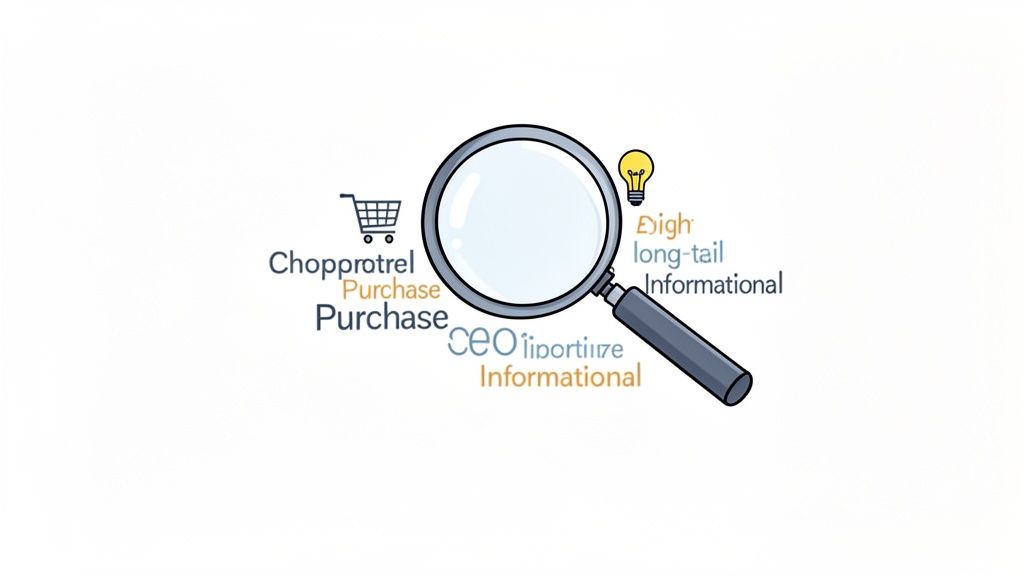
Effective targeting means going beyond broad terms. For example, instead of just "standing desk," a store could target a long-tail phrase like "best standing desk for small home offices." This more specific query indicates a user who is further along in the buying cycle and has a clearer idea of their needs, resulting in a higher conversion probability. Similarly, a brand selling sustainable products could target "eco-friendly shipping materials" to attract a niche, high-intent audience.
Actionable Implementation Tips
- Map Keywords to Intent: Assign keywords to different stages of the funnel. Use high commercial intent keywords (e.g., "buy," "price," "sale") for your product and category pages. Use informational keywords (e.g., "how to," "best," "what is") for blog posts and guides.
- Analyze Competitor Gaps: Use tools like Ahrefs or SEMrush to see which keywords your competitors rank for but you don't. This can reveal valuable opportunities you've overlooked.
- Prioritize Long-Tail Keywords: These longer, more specific search phrases have lower search volume but often much higher conversion rates. They are essential for capturing qualified leads.
- Plan for Seasonality: Identify seasonal trends relevant to your products. A Shopify store should begin creating content for terms like "holiday gift bundles for him" 3-4 months before the peak season to allow time for it to rank.
To truly master strategic targeting, it's essential to consult a detailed guide on keyword research. This foundational skill is critical for ensuring your other white hat techniques for SEO produce measurable results. By understanding your audience's language, you can align your entire content strategy with their needs, building authority and driving sales.
2. High-Quality Content Creation & SEO Copywriting
High-quality content is the fuel for modern SEO. It involves producing original, valuable, and in-depth material that serves both users and search engines. For a Shopify store, this extends beyond just product pages; it includes creating comprehensive buying guides, detailed blog articles, and unique category page copy. This is a fundamental white hat SEO technique because it builds trust, demonstrates expertise, and naturally attracts organic traffic by answering customer questions.

Effective content anticipates and solves problems for your target audience. For instance, a fashion retailer could publish a detailed fabric care guide that ranks for terms like "how to wash merino wool," capturing users who may later purchase those items. Similarly, a subscription box service can create monthly trend reports that position them as industry leaders, attracting both customers and B2B opportunities. The goal is to become a resource, not just a retailer.
Actionable Implementation Tips
- Create Unique Product Descriptions: Go beyond manufacturer specs. Write unique descriptions that highlight the benefits of each feature and tell a story about the product.
- Aim for Superior Content: Analyze the top-ranking pages for your target keyword. Your goal is to create content that is significantly more comprehensive, useful, and up-to-date.
- Write for Humans First: Focus on clear, engaging language that addresses user intent. Weave keywords in naturally rather than forcing them into the text, which is a hallmark of outdated practices.
- Incorporate Original Media: Add value with original images, infographics, and videos. This not only improves user engagement but can also earn backlinks and help you rank in image or video search results.
- Update and Refresh Content: Regularly review your top-performing content. Update it with new information, data, and examples to maintain its relevance and search engine ranking.
"Great content is the best sales tool in the world." - Marcus Sheridan. By investing in quality content, you're not just practicing one of the most effective white hat techniques for SEO; you're building a long-term asset that establishes authority, nurtures leads, and drives conversions around the clock.
3. On-Page Optimization (Title Tags, Meta Descriptions, Headers)
On-page optimization is the practice of fine-tuning individual page elements to clearly signal their topic and value to both search engines and users. This fundamental white hat SEO technique involves strategically placing keywords in crucial HTML elements like title tags, headers, and writing meta descriptions that convince users to click. For an eCommerce store, this ensures that Google understands what a product page is about and that a potential customer sees a compelling reason to visit your page over a competitor's in the search results.
Effective on-page SEO transforms generic pages into highly relevant search results. For instance, a Shopify product page title could be changed from a generic "Product" to a specific and descriptive "Organic Cotton T-Shirt | Sustainable Fashion | [Your Brand Name]." This immediately communicates context. Likewise, a category page's meta description can be improved by including key benefits and unique value propositions, such as mentioning free shipping or a lifetime warranty, directly influencing click-through rates from search engine results pages (SERPs).
Actionable Implementation Tips
- Front-load Title Tags: Place your primary target keyword near the beginning of the title tag. This gives it more weight with search engines and makes it more visible to users scanning search results.
- Write for Clicks: Your meta description is your ad copy on Google. Treat it as such. Include a clear value proposition, a call to action, or unique selling points to encourage clicks.
- Structure with Headers: Use only one H1 tag per page, and make sure it focuses on the page's main topic. Follow a logical hierarchy (H1 → H2 → H3), using subheadings to break up content and target related secondary keywords.
- Customize in Shopify: Don't rely on default settings. Manually edit the "Search engine listing preview" for each product, collection, and blog post in your Shopify admin to implement your optimized titles and meta descriptions.
According to SEO authorities like Moz, strong on-page signals are critical for ranking success. By mastering these elements, you provide a clear roadmap for search crawlers and a better experience for users, forming a key pillar of your white hat techniques for SEO that directly impacts traffic and conversions.
4. Technical SEO & Site Performance Optimization
Technical SEO is the practice of ensuring your Shopify store's infrastructure is optimized for search engine crawlers and provides an excellent user experience. This crucial white hat technique for SEO isn't about content; it's about building a solid foundation. This includes optimizing for speed, mobile responsiveness, and crawlability to remove any technical barriers that could prevent Google from finding, understanding, and ranking your pages.
A technically sound site directly impacts rankings and conversions. For example, a high-traffic eCommerce brand implementing Accelerated Mobile Pages (AMP) can deliver near-instant load times for mobile users, drastically reducing bounce rates. Similarly, a Shopify Plus store can improve its Core Web Vitals by correctly using Shopify’s built-in CDN and implementing lazy loading for product images on collection pages, ensuring the page loads quickly even with hundreds of items.
Actionable Implementation Tips
- Audit Your Site Speed: Use tools like Google PageSpeed Insights and GTmetrix to identify performance bottlenecks. These reports will provide specific recommendations, such as reducing the impact of third-party code.
- Optimize Product Imagery: Compress all images before uploading them to Shopify. Use modern formats like WebP where possible, as they offer superior compression and quality compared to traditional JPEGs and PNGs.
- Implement Lazy Loading: Ensure that images and videos below the fold only load as the user scrolls down the page. This dramatically improves initial page load time, a key factor for user experience and Core Web Vitals.
- Monitor Core Web Vitals: Regularly check your Core Web Vitals report in Google Search Console. Focus on improving LCP (Largest Contentful Paint), FID (First Input Delay), and CLS (Cumulative Layout Shift) to meet Google's thresholds.
- Configure Schema Markup: Add structured data (schema) for products, reviews, and FAQs. This helps search engines understand your content better and can result in rich snippets in search results, improving click-through rates.
Optimizing site speed is a continuous process, not a one-time fix. For a deeper dive into improving your store's performance, it is helpful to explore a thorough guide on Shopify page speed optimization. By prioritizing a fast, accessible, and crawlable website, you ensure your content and product marketing efforts have the best possible chance to succeed.
5. Backlink Building & Link Earning Strategy
Backlink building is the process of acquiring inbound links from other websites to your own. In the context of white hat techniques for SEO, this is not about buying links or using spammy tactics. Instead, it's about earning them through merit. Search engines view high-quality backlinks as votes of confidence, signaling that your content is authoritative, trustworthy, and valuable. For an eCommerce store, a strong backlink profile can significantly boost domain authority, improve search rankings for competitive keywords, and drive qualified referral traffic.
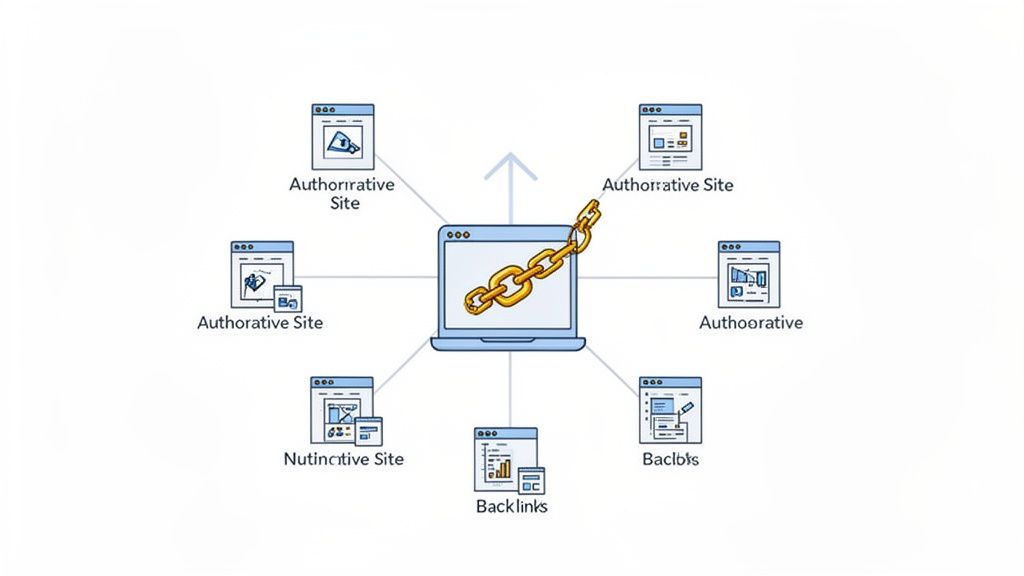
Effective link earning focuses on creating assets that other sites want to reference. For example, an eCommerce brand could publish original research on consumer trends in its niche, which journalists and bloggers might cite and link to. Similarly, a sustainable fashion brand that earns industry certifications or awards can gain valuable links from the awarding bodies' websites. The goal is to create a legitimate reason for another authoritative site to point its audience toward your store, providing mutual value.
Actionable Implementation Tips
- Create Link-Worthy Assets: Develop content that is difficult to replicate and provides genuine value. This includes original research, data-backed reports, free online tools, or comprehensive industry guides that become go-to resources.
- Use Broken Link Building: Employ tools like Ahrefs to find broken links on authoritative websites related to your industry. Reach out to the site owner, inform them of the dead link, and suggest your relevant content as a replacement.
- Guest Post Strategically: Write and publish articles on reputable, high-authority blogs in your niche. Focus on providing real insight, not just on securing a link. The goal is to tap into an existing audience and build brand authority.
- Build Real Relationships: Connect with journalists, bloggers, and influencers in your industry before you need something from them. Engage with their content and build a rapport, making future outreach feel more authentic and less transactional.
True link earning is a long-term play that separates successful brands from the rest. As explained by link-building expert Brian Dean of Backlinko, creating content that is "10x better" than the competition is fundamental. This white hat technique for SEO is not a shortcut; it's a commitment to quality that builds a defensible competitive advantage and lasting search engine trust.
6. Internal Linking Strategy & Site Architecture
An effective internal linking strategy is like building a well-planned road system for your Shopify store. It connects your pages in a logical way, guiding both users and search engine crawlers through your content. This white hat SEO technique is about creating contextual links between your pages to distribute link equity (ranking power), establish an information hierarchy, and help Google understand the relationship between your content, which ultimately improves rankings for your most important pages.
For an eCommerce store, this means strategically connecting your content to guide customers toward a purchase. For instance, a blog post about "The Benefits of Ergonomic Chairs" should link directly to relevant ergonomic chair product pages using descriptive anchor text like "our most popular ergonomic office chair." This not only improves the user experience but also passes authority to your money-making pages, signaling their importance to search engines. Without this structure, valuable pages can become isolated and difficult for crawlers to find and rank.
Actionable Implementation Tips
- Build Topic Clusters: Create a comprehensive "pillar page" on a broad topic (e.g., "The Ultimate Guide to Outdoor Grilling") and link out to more specific "cluster" blog posts or product collections (e.g., "best gas grills under $500," "charcoal grilling techniques"). Ensure each cluster page links back to the main pillar page.
- Use Descriptive Anchor Text: Avoid generic anchor text like "click here." Instead, use keyword-rich, natural-sounding phrases that describe the destination page. For example, use "explore our waterproof hiking boots" instead of just "boots."
- Link from High-Authority Pages: Identify your pages with the most backlinks and highest traffic (like your homepage or a popular blog post). Add internal links from these pages to newer or lower-ranking pages you want to boost.
- Implement Breadcrumb Navigation: Breadcrumbs (e.g., Home > Men's Apparel > T-Shirts) show users their location on your site and create a clear, hierarchical link structure that search engines love. Most Shopify themes support this feature.
An intentional internal linking structure is one of the most powerful and underused white hat techniques for SEO. As noted by experts at Backlinko and HubSpot, it allows you to direct the flow of authority across your site. By regularly auditing and improving your internal links using Google Search Console's "Links" report, you can ensure your most critical product and category pages receive the link equity they need to rank competitively.
7. Local SEO & Google Business Profile Optimization
For eCommerce businesses with physical storefronts, showrooms, or local delivery zones, Local SEO is an indispensable strategy. It focuses on increasing visibility in geographically-related searches, primarily within Google's Map Pack and localized organic results. This white hat SEO technique connects an online store with its physical community, driving foot traffic and building local brand authority. It’s a critical component for Shopify Plus retailers with multiple locations or any eCommerce brand using an omnichannel approach.
Effective local optimization turns online searches into offline sales. For instance, a subscription box service that offers a local pickup option can optimize its Google Business Profile (GBP) to appear for searches like "meal kit pickup near me." Similarly, an online furniture store with a showroom in a specific city should create a location-specific landing page that ranks for terms such as "modern furniture showroom in [City Name]," attracting customers who want to see products in person before buying.
Actionable Implementation Tips
- Complete Your Google Business Profile: Fill out every section of your GBP. This includes adding high-quality photos (aim for 10-15+), accurate business hours, correct categories, and a detailed description.
- Maintain NAP Consistency: Ensure your Name, Address, and Phone number (NAP) are identical across all online directories, your website, and your GBP. Inconsistencies can confuse search engines and harm rankings.
- Actively Manage Reviews: Respond to all customer reviews, both positive and negative, in a professional and timely manner. Actively encourage new reviews through post-purchase emails or in-store signage.
- Create Location-Specific Content: Develop unique landing pages for each physical location. These pages should feature local details, such as store-specific promotions, staff photos, and directions, and should be optimized with local keywords.
- Build Local Citations: Get your business listed in reputable local and industry-specific directories like Yelp, the Better Business Bureau (BBB), and Yellow Pages to reinforce your geographic relevance.
A well-optimized Google Business Profile is a powerful, free tool for customer acquisition. It acts as a digital storefront for your physical presence, and consistently applying these white hat techniques for SEO will directly impact your ability to attract local customers. For a deeper dive, consider resources from authorities like BrightLocal to master your local search strategy.
8. User Experience (UX) Optimization & Engagement Metrics
User experience (UX) optimization is a critical white hat SEO technique that focuses on making a website easy, efficient, and enjoyable to use. For an eCommerce store, this means removing friction from the buyer’s journey. Google increasingly rewards sites that provide a positive experience, using engagement metrics like bounce rate, session duration, and Core Web Vitals as indirect signals of quality. A seamless UX not only pleases search engines but directly improves conversion rates by making it simpler for customers to find and purchase products.
A superior user experience can be a powerful competitive advantage. For example, a Shopify store with clear, prominent product filters on its collection pages helps users narrow down choices quickly, reducing bounce rate and frustration. Similarly, implementing a streamlined checkout process or offering one-click payment options can drastically lower cart abandonment. Mobile optimization is no longer optional; a mobile-first design with easy-to-tap buttons and zoomable product images caters to the majority of eCommerce traffic and boosts engagement.
Actionable Implementation Tips
- Simplify Site Navigation: Reduce the number of items in your main menu and aim for a shallow site structure where any product is reachable within three clicks. A clean, intuitive path is a core part of good UX.
- Optimize for Mobile-First: Design and test your site's experience on mobile devices first, then adapt it for desktop. Most eCommerce shoppers browse on their phones, so this is non-negotiable.
- Improve Core Web Vitals: Focus on page speed (Largest Contentful Paint), interactivity (First Input Delay), and visual stability (Cumulative Layout Shift). Use Google PageSpeed Insights to identify specific areas for improvement.
- Conduct User Behavior Analysis: Use tools like Hotjar to watch session recordings and see where users get stuck or confused. This real-world feedback is invaluable for pinpointing friction points.
- Ensure Accessibility (A11y): Make your site usable for everyone by adding alt text to all images, ensuring sufficient color contrast, and enabling keyboard navigation. This widens your audience and is a positive signal for search engines.
A great user experience keeps visitors on your site longer, sending strong positive signals to Google that your content is valuable. This is one of the most effective white hat techniques for SEO because it aligns perfectly with the goals of both your customers and search algorithms. To go deeper, review these essential eCommerce UX best practices to build a foundation for higher engagement and conversions.
9. Structured Data & Schema Markup Implementation
Structured data, commonly implemented using Schema.org markup, is a standardized format for providing information about a page and classifying its content. Think of it as a translator that speaks directly to search engines, helping them understand the context of your content beyond just keywords. For an eCommerce store, this is a powerful white hat SEO technique that transforms standard search results into rich, informative snippets, significantly boosting visibility and click-through rates. This goes beyond simple ranking; it's about making your listing the most compelling choice on the search engine results page (SERP).
When properly implemented, structured data can make your product pages stand out with star ratings, prices, and stock availability directly in the search results. Similarly, an FAQ page can display its questions and answers as expandable accordions beneath your main link. This added context not only improves user experience by providing quick answers but also increases the physical space your result occupies on the SERP, pushing competitors further down the page and capturing more user attention.
Actionable Implementation Tips
- Prioritize JSON-LD: Use the JSON-LD format for your schema markup. It is Google's recommended method and is easier to implement and manage as it can be injected into the page's
<head>section without altering the HTML structure. - Focus on Key eCommerce Schemas: Start by implementing essential schemas for your Shopify store: Product (for price, availability, offers), Review (for aggregate star ratings), BreadcrumbList (to show site hierarchy), and FAQPage (for product or general FAQs).
- Validate Your Markup: Always test your implementation. Use Google’s Rich Results Test to ensure your code is error-free and eligible for rich snippet display before deploying it.
- Monitor Performance: Track the performance of your rich results in Google Search Console under the "Enhancements" section. This report will show you which pages have valid markup and highlight any errors that need fixing.
The goal of structured data is to reduce ambiguity and give search engines explicit clues about the meaning of your content. A well-executed schema strategy is one of the most effective white hat techniques for SEO because it directly influences how your brand is perceived in the SERPs before a user even clicks. For a deeper dive, Google's own documentation on structured data is the definitive resource.
10. Content Clusters & Topic Authority Strategy (Pillar/Hub Model)
Moving beyond single-keyword targeting, the pillar/cluster model is a powerful white hat SEO technique that organizes content to build topic authority. This strategy involves creating a broad, central "pillar" page about a core topic and surrounding it with "cluster" pages that cover specific subtopics in greater detail. All cluster pages link back to the pillar, signaling to search engines that you are a comprehensive resource on the subject, which improves rankings for an entire family of related keywords.
For an eCommerce brand, this approach establishes expertise and captures users at various stages of their journey. For example, a Shopify store selling high-end coffee gear could create a pillar page on "The Ultimate Guide to Brewing Coffee." This pillar would then link out to cluster articles like "Best Burr Grinders for Espresso," "How to Make the Perfect Pour-Over," and "French Press vs. AeroPress." This structure helps search engines understand the relationship between your content and your authority on the topic of "coffee."
Actionable Implementation Tips
- Map Your Topic Family: Start by identifying a broad pillar topic central to your brand (e.g., "Ethical Fashion"). Then, brainstorm all the specific subtopics that fall under it (e.g., sustainable materials, fair trade production, eco-friendly dyes).
- Build the Pillar Page First: Create a comprehensive, long-form guide on your pillar topic. This page should provide a solid overview and act as a central hub, internally linking to every cluster page you plan to create.
- Develop In-Depth Cluster Content: Write detailed articles for each subtopic. These cluster pages should target more specific, long-tail keywords and link back to the main pillar page. They can also link to other relevant cluster pages.
- Apply to Product Categories: Use your main product category pages as pillar pages. For instance, a "Standing Desks" category page could be the pillar, linking to cluster content like blog posts on "Benefits of Standing Desks" or "How to Choose the Right Desk Height."
The pillar/cluster model is a proactive approach to content strategy. By organizing your content this way, you create a web of interconnected information that not only satisfies user intent but also demonstrates your expertise to search engines. As HubSpot popularized, this is one of the most effective white hat techniques for SEO to build sustainable, long-term authority.
White Hat SEO: 10-Technique Comparison
| Strategy | Implementation Complexity 🔄 | Resource & Speed ⚡ | Expected Outcomes 📊⭐ | Ideal Use Cases & Tip 💡 |
|---|---|---|---|---|
| Keyword Research & Strategic Targeting | Medium — ongoing analysis and updates 🔄 | Moderate tools/analyst required; results in weeks–months ⚡ | Drives targeted organic traffic and higher conversion potential; sustainable gains 📊 ⭐⭐⭐ | Best for eCommerce seeking qualified discovery; tip: monitor seasonality and intent monthly 💡 |
| High-Quality Content Creation & SEO Copywriting | High — editorial strategy and consistent production 🔄 | High resource (skilled writers, time); slow to rank ⚡ | Builds authority, improves CTR, earns backlinks, supports CRO 📊 ⭐⭐⭐⭐ | Ideal for product pages, guides, brand authority; tip: create content 2–3x more comprehensive than competitors 💡 |
| On-Page Optimization (Title Tags, Meta Descriptions, Headers) | Low–Medium — per-page edits and HTML knowledge 🔄 | Low cost; quick wins typically seen in weeks ⚡ | Improves SERP appearance and CTR; helps ranking clarity 📊 ⭐⭐⭐ | Applicable to all pages; tip: place target keyword early in title and use one H1 per page 💡 |
| Technical SEO & Site Performance Optimization | High — developer work, monitoring, and fixes 🔄 | Medium–high resources; moderate timeline but foundational ⚡ | Improves rankings, UX, Core Web Vitals and conversion rates 📊 ⭐⭐⭐⭐ | Essential for large catalogs and mobile-first stores; tip: monitor Core Web Vitals monthly 💡 |
| Backlink Building & Link Earning Strategy | High — outreach, relationship building, content assets 🔄 | High resource and expertise; slow ROI (months) ⚡ | Increases domain authority, rankings and referral traffic; long-term impact 📊 ⭐⭐⭐⭐ | Best for competitive keywords and brand authority; tip: produce original data/tools as linkable assets 💡 |
| Internal Linking Strategy & Site Architecture | Medium — planning and site edits, ongoing maintenance 🔄 | Low–moderate effort; relatively fast benefits ⚡ | Distributes link equity, improves crawlability and UX; supports topic clusters 📊 ⭐⭐⭐ | Useful for catalog sites and pillar models; tip: link from high-authority pages to target pages 💡 |
| Local SEO & Google Business Profile Optimization | Low — profile setup and citation management 🔄 | Low resources; quick local wins (weeks) ⚡ | Dominates local pack, drives foot traffic and local trust 📊 ⭐⭐⭐ | For multi-location retailers or showrooms; tip: ensure consistent NAP and encourage reviews 💡 |
| User Experience (UX) Optimization & Engagement Metrics | High — design, testing, and implementation 🔄 | Medium–high resources; requires testing cycles; moderate timeline ⚡ | Raises conversions, engagement signals and SEO performance 📊 ⭐⭐⭐⭐ | Critical for conversion-focused stores; tip: A/B test major UX changes before site-wide rollout 💡 |
| Structured Data & Schema Markup Implementation | Low–Medium — technical but scoped to pages 🔄 | Low effort to implement; fairly quick SERP enhancements ⚡ | Enables rich snippets, increases CTR and search visibility 📊 ⭐⭐⭐ | Ideal for product, FAQ, and review pages; tip: use JSON‑LD and validate in GSC/tools 💡 |
| Content Clusters & Topic Authority Strategy (Pillar/Hub Model) | High — strategic planning and sustained content production 🔄 | High resource investment; slow to mature but scalable ⚡ | Builds topical authority, reduces cannibalization, drives long-term traffic growth 📊 ⭐⭐⭐⭐ | Best for brands aiming to dominate topic families; tip: publish pillar first and interlink clusters consistently 💡 |
Turning SEO Theory into eCommerce Reality
You have now journeyed through ten foundational pillars of sustainable eCommerce growth. We've deconstructed everything from strategic keyword research and technical site audits to building authority with content clusters and earning high-quality backlinks. The central theme connecting all these elements is simple: long-term success is built on a foundation of genuine value, not on short-lived tricks. Mastering these white hat techniques SEO is the definitive path to creating a resilient, authoritative, and profitable online store.
The true challenge, however, lies in transforming this knowledge into a coherent, ongoing strategy. It's not a one-time checklist but a continuous cycle of implementation, measurement, and refinement. You've seen how on-page optimization directly influences click-through rates, how a robust internal linking strategy guides both users and search crawlers, and how structured data can make your products stand out in a crowded search results page. Each technique is a powerful tool on its own, but their real power is unlocked when they work together in a coordinated effort.
Prioritizing Your Next Steps
Feeling overwhelmed by the sheer volume of tasks is a common reaction. The key is to avoid trying to do everything at once. Instead, adopt a phased approach based on your store's current maturity and biggest pain points.
- For New & Emerging Stores: Your immediate focus should be on the fundamentals. Start with a thorough technical SEO audit to ensure your site is crawlable and indexable. Concurrently, conduct deep keyword research to inform your on-page optimizations-title tags, meta descriptions, and header structure are your low-hanging fruit.
- For Growing Brands: With a solid foundation, your priority shifts to building authority and enhancing user experience. This is the time to double down on high-quality content creation, map out a pillar and cluster strategy, and begin a methodical backlink earning campaign. Furthermore, optimizing user experience is critical. Pay close attention to how shoppers interact with your site, especially your product pages. The clarity and appeal of your product images, for instance, have a direct impact on engagement and conversions. For many stores, improving product presentation with a professional Ghost Mannequin Service can be a small investment that delivers a significant boost in user trust and time on page, sending positive signals to search engines.
- For Established Leaders: At this stage, your focus is on optimization and scaling. You should be diving deep into structured data implementation to gain rich snippets, refining your local SEO for any physical locations, and continuously analyzing engagement metrics to make data-driven improvements to your site architecture and user flow.
The End Goal: Building an Unshakeable Brand
Ultimately, the persistent application of these white hat techniques SEO does more than just improve your rankings. It builds an asset. It creates a brand that customers trust, a website that offers a superb user experience, and a marketing channel that delivers predictable, organic traffic day after day. This is about moving away from chasing algorithm updates and toward building a business that search engines want to reward because you are genuinely serving the user. The journey requires patience, precision, and a commitment to quality, but the resulting competitive advantage is more than worth the effort.
Ready to turn this strategy into measurable results but need an expert partner to accelerate your growth? The team at ECORN specializes in implementing these exact white hat SEO strategies for ambitious eCommerce brands. Book a discovery call with ECORN to see how their data-driven approach can help you dominate your niche.


BigCommerce vs Shopify Plus Which Enterprise Wins in 2026
Shopify Theme Kit: Setup, Commands, and Migration Guide
Shopify Extension Development: A Practical 2026 Guide
Shopify Speed Score Explained and How to Improve It
Shopify Mobile Optimization: The 2026 Playbook

How to Add Subcategory in Shopify for Better UX
How to Implement Structured Data for Ecommerce in 2026
SEO App Mobile: Shopify Store Optimization Guide

Shopify Plus Support: What It Includes and How to Choose
Google Ads for Shopify: The Complete 2026 Playbook

Shopify New York: How to Find and Hire the Right Agency
Google Search Console for Shopify: The Complete Setup
First Party Data Collection for eCommerce Growth
FAQ Online Store Guide: Build and Measure It Right
Do FB Ads Work for eCommerce in 2026?
One Page Checkout for Shopify: Design and Implementation
Shopify GraphQL vs REST: The 2026 Developer Decision
Shopify Ecommerce Consulting: Strategy, Pricing &
Are Reddit Ads Worth It for eCommerce Brands

Shopify Title and Meta Description: A Practical 2026 Guide

Product Video Best Practices for Shopify Brands

Real-Time Inventory Management: A 2026 Guide
AI Chatbot Integration for Shopify Stores
Affiliate Program Management: A Shopify Guide
10 Best Performance Monitoring Tools for Shopify in 2026

Digital Asset Management for eCommerce Brands in 2026
Every Type of Facebook Ads Explained for eCommerce Growth
Product Information Management Explained for Shopify Brands
Support Ticket System: A Guide for Shopify Stores

10 Best Customer Service Tools for Shopify in 2026

Can I Start a Business with No Money? a 2026 Blueprint

What Sells Good on Etsy: Best Niches for 2026

Shopify Add to Cart Button: A Practical 2026 Guide

Customer Feedback Automation: A Practical eCommerce Guide
Critical Rendering Path: A Guide for Shopify Stores

How to Promote on TikTok for eCommerce in 2026

B2B eCommerce Consulting That Drives Real Revenue

10 Best Practices for Site Navigation in 2026
Return vs Refund for Shopify Stores: A Practical Guide

What Is Customer Lifetime Value and Why It Matters
What Is Voice of Customer Research for eCommerce

SMS Marketing for Ecommerce That Actually Converts

Master How to Improve Email Deliverability in 2026

Top 7 eCommerce Partners NYC for Shopify Brands in 2026
Machine Learning for Ecommerce: Boost Your Shopify Store

Beauty Market Research: Your 2026 Growth Guide

Shopify International Expansion: A 2026 Roadmap
What Does CRO Stand for in Business: Understanding CRO

Shopify Visual Merchandising: A Playbook for Higher Sales

Shopify Landing Page Design: Master Conversion in 2026
10 Best AI SEO Optimization Tools for Shopify in 2026

Agentic AI for Ecommerce: Boost Your Sales in 2026
Mastering Email Marketing Data for eCommerce Growth
Conversion Rate Optimisation Australia: Boost Your Sales
Conversion Rate Optimization AI: Your Shopify Store Guide

10 Product Bundling Strategies for Shopify in 2026
How to Increase Customer Lifetime Value: A Shopify Playbook
AI Customer Service Automation: Shopify Guide 2026
Clean Website Design: A Shopify Conversion Playbook

Omnichannel Retail Strategy: A Shopify Playbook
Product Data Enrichment: A Guide for Shopify Brands
Instagram Shopping Features a Guide for Shopify Stores
What Is Revenue Optimization: A Holistic RevOps Guide
Benefits of Conversion Rate Optimization: Boost Your
WordPress to Shopify Migration: Your 2026 Seamless Switch
Boost Sales: Ecommerce Payment Processing Guide 2026
Unified Commerce Platform: Benefits, KPIs & Shopify Guide

How to Reduce Bounce Rate eCommerce: Your 2026 Guide
Shopify API Integration: A Practical End-to-End Guide

How to Implement Data Governance: A 2026 Guide
Shopify Store Development Cost: A 2026 Breakdown
What Is Server Side Tracking: The Shopify Guide 2026
Marketing Automation Workflows: A Shopify Guide for 2026

Shopify: How to Reduce Technical Debt

Shopify UX Design Change: A Playbook for Growth
User Generated Content Strategy: Shopify Playbook

Shopify Pause and Build Plan Cost: A Complete 2026 Guide
Compare at Price on Shopify: A Complete Guide for 2026

Where Can I Sell My Prints? 10 Best Platforms for 2026
Shopify Order Management System: The Ultimate Guide 2026
What Is Marketing Attribution? an eCommerce Guide for 2026

10 Best Black Friday Sales Sheets for 2026

Discover the Top Social Media Marketing Agencies For
Consumer Confidence Definition for eCommerce in 2026
What Is Social Commerce? Your 2026 Guide to Boosting Sales

A Social Ad Campaign Playbook for eCommerce Growth
7 Best FAQ Page Examples for SaaS & eCommerce

Market Research in Fashion Industry: A Guide for Shopify

Shopify Migration Services: Expert Guide for 2026

Mastering FB Retargeting Ads for Shopify in 2026
What Is Omnichannel Ecommerce

Master Your Shopify Plus Migration: The 2026 Guide
Shopify Integration Services: A Merchant's 2026 Guide
Shopify Collection Description: A Guide to SEO & Sales

Shopify Plus Contact: Reach Sales & Support Effectively

Top Luxury Shopify Stores: Design & UX Strategies
How to Improve Customer Experience: A Shopify Roadmap

Creative Facebook Ads: 10 Examples for Shopify Brands

Remarketing with Facebook Ads: A Shopify Guide for 2026

SEO Linking Strategies for Shopify Stores


newsletter in your inbox