


Online carts were filling at roughly $12.5 million per minute in the U.S. between 10 a.m. and 2 p.m. local time on Black Friday 2025, and mobile drove $6.5 billion, or 55.2%, of the day's total, according to Black Friday holiday shopping statistics. That should end the old debate about whether online Black Friday starts when stores open, when the clock hits midnight, or when your team pushes a homepage banner live.
If you're asking when does black friday online start, the useful answer isn't a single timestamp. It's the moment your customer first sees a credible offer and can buy.
For Shopify merchants, that changes everything. Launch timing affects paid media pacing, inventory allocation, support coverage, merchandising, email and SMS sequencing, and how hard your site gets hit on mobile. If you still plan Black Friday as a one-day sale, you're operating on a calendar your customers no longer follow.
The Real Answer to When Black Friday Starts in 2026
The short answer is this. Black Friday online in 2026 starts at the first customer touchpoint that carries a live offer.
For merchants, that changes the planning window. The customer sees a sale when an email lands, an SMS code goes out, a collection page switches to promotional pricing, or a paid ad starts running with holiday creative. Once any of that is live, the market has started, whether your internal kickoff date says so or not.
That distinction matters because shoppers rarely discover your promotion in isolation. They compare tabs, check inboxes, browse on mobile, and wait for a better code if they think one is coming. If your team waits to treat Black Friday as active until Friday morning, you are entering after demand has already been shaped by someone else.
The question merchants should ask instead
A stronger framing is operational, not ceremonial.
Ask:
- When will customers first expect Black Friday level pricing from brands in my category?
- When will competing stores start collecting clicks, emails, and carts with early access campaigns?
- When do my storefront, discounts, inventory rules, support coverage, and retention flows need to be live-tested?
Those answers usually pull the start date forward. The headline campaign may say “Black Friday,” but the work that determines performance starts earlier.
Practical rule: Define your Black Friday launch by the first moment a shopper can act on an offer, rather than by the date on your internal promo calendar.
Why the old answer fails
The Friday-only definition came from store hours. Ecommerce runs on availability.
Shoppers buy whenever the offer is visible and checkout works. That shift is even more obvious on mobile, where browsing, comparison shopping, and impulse purchases happen in short sessions throughout the day. As noted earlier, mobile already accounts for a majority share of Black Friday online buying behavior. For Shopify operators, that means launch timing is tied to customer access, channel readiness, and site performance under load.
Here is the practical consequence. If your discount logic is still being QA'd, your bundles are unpublished, your landing pages are unfinished, or your flows have not been tested before the first offer goes out, you are already behind the part of Black Friday that drives the cleanest demand capture.
Teams that win this period treat the public sale date as a peak moment inside a longer operational window. That is the useful answer to when Black Friday online starts in 2026. It starts when customers can buy, and merchants should build backward from that moment.
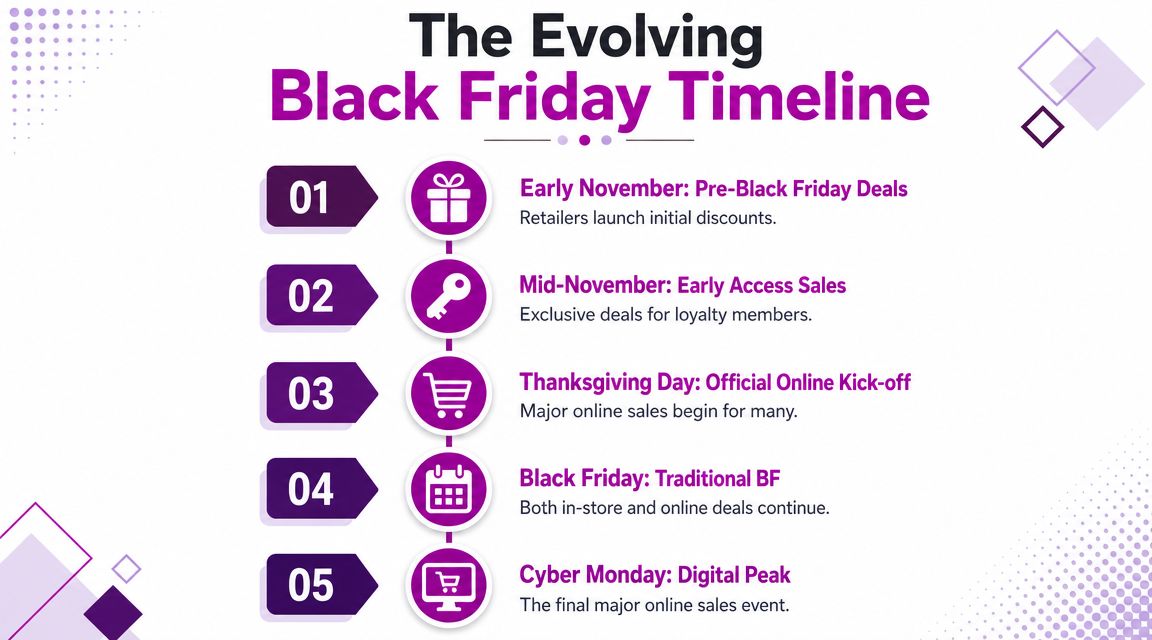
The New Black Friday Starts on Thanksgiving
The cleanest way to answer the timing question is this. Online Black Friday starts on Thanksgiving Day and runs through Cyber Week.
In 2025, U.S. consumers spent $6.4 billion online on Thanksgiving Day before Black Friday even began, then $11.8 billion online on Black Friday itself, according to Adobe-backed Black Friday sales reporting. That makes the old “Friday-only” framing obsolete.
Thanksgiving is no longer a warm-up day
A lot of merchants still treat Thanksgiving like a teaser period. That's a mistake.
Thanksgiving now functions as a live buying day. Shoppers don't wait for the ceremonial start of Black Friday because the internet doesn't impose one. If a discount is live, the sale has started. If a retailer opens early access, sends an SMS code, or flips collection pages to promotional pricing, customers act immediately.
That means your operation needs to think in terms of an event window, not a launch moment.
What this means for Shopify planning
If Thanksgiving is already active demand, then Friday is peak acceleration, not kickoff. That changes how you sequence work.
A practical way to view this:
| Phase | What customers are doing | What merchants should be doing |
|---|---|---|
| Pre-launch | Comparing, list-building, browsing deals | Publishing landing pages, testing offers, warming audiences |
| Thanksgiving | Buying early, especially from mobile and email | Turning on first-wave promos, monitoring support and site health |
| Black Friday | Converting at scale, checking competitors | Adjusting merchandising, replenishing featured SKUs, shifting budget |
| Weekend through Cyber Monday | Continuing purchase decisions | Rotating messages, extending top performers, protecting margin |
If you wait to “start Black Friday” on Friday morning, you've already given up the early-intent shopper.
The real demand window is wider than one day
The traditional name stayed the same, but the mechanics changed. The strongest operators now plan around a five-day buying surge, with earlier promotional activity feeding into it.
That's the operative frame for 2026. Not a 24-hour sprint. A staged, multi-day conversion window where Thursday matters, Friday peaks, and Cyber Monday closes the loop.
How Major Retailers Dictate the Starting Gun
Major retailers don't wait for the calendar. They decide when Black Friday starts by launching first and teaching customers to expect it.

For 2025, Amazon's Black Friday Week event was scheduled to begin online at 12:01 a.m. PST on Nov. 20, while Walmart's official Black Friday event ran Nov. 25 to Nov. 30. Black Friday itself was Nov. 28, as listed in major Black Friday sale start times. That's the market telling shoppers to start browsing and buying well before the traditional date.
Amazon and Walmart set customer expectations
When Amazon starts on Nov. 20 and Walmart opens on Nov. 25, they do more than extend a promotion. They reset the category clock.
Customers stop asking, “Is it Black Friday yet?” They start asking, “Who already has deals live?” That's a very different buying mindset. Once shoppers get trained to hunt early, every smaller merchant has to decide whether to join the market on time or show up after the initial demand wave has already moved.
For Shopify brands, that doesn't mean copying Amazon's schedule exactly. It means understanding that your audience isn't comparing you against a holiday on the calendar. They're comparing you against live alternatives already in market.
What smaller brands should actually copy
You shouldn't imitate big-box retailers blindly. Their catalog depth, logistics, and ad budgets are different.
What you can copy is the operating logic:
- Launch in phases: early access, public sale, then weekend or Cyber Monday extension.
- Merchandise around intent: giftable, discounted, low-friction products first.
- Watch prices closely: if you're in a competitive category, mastering competitor pricing data helps you decide whether to match, bundle, or hold margin.
One of the biggest mistakes I see is a merchant waiting to reveal the entire offer set in one dramatic launch. That feels tidy internally. It often underperforms in the market because customers have already made shortlist decisions before your announcement lands.
A quick look at how operators think about the shift helps:
The practical takeaway
Your customer's Black Friday clock starts when dominant retailers go live. If your store stays quiet while everyone else is running “week” events, your campaign has to work harder just to re-enter consideration.
That's why launch timing is no longer a creative choice. It's a competitive response.
The Strategy Behind Early Online Sales
Retailers don't launch early by accident. They do it because a stretched event window solves real business problems.
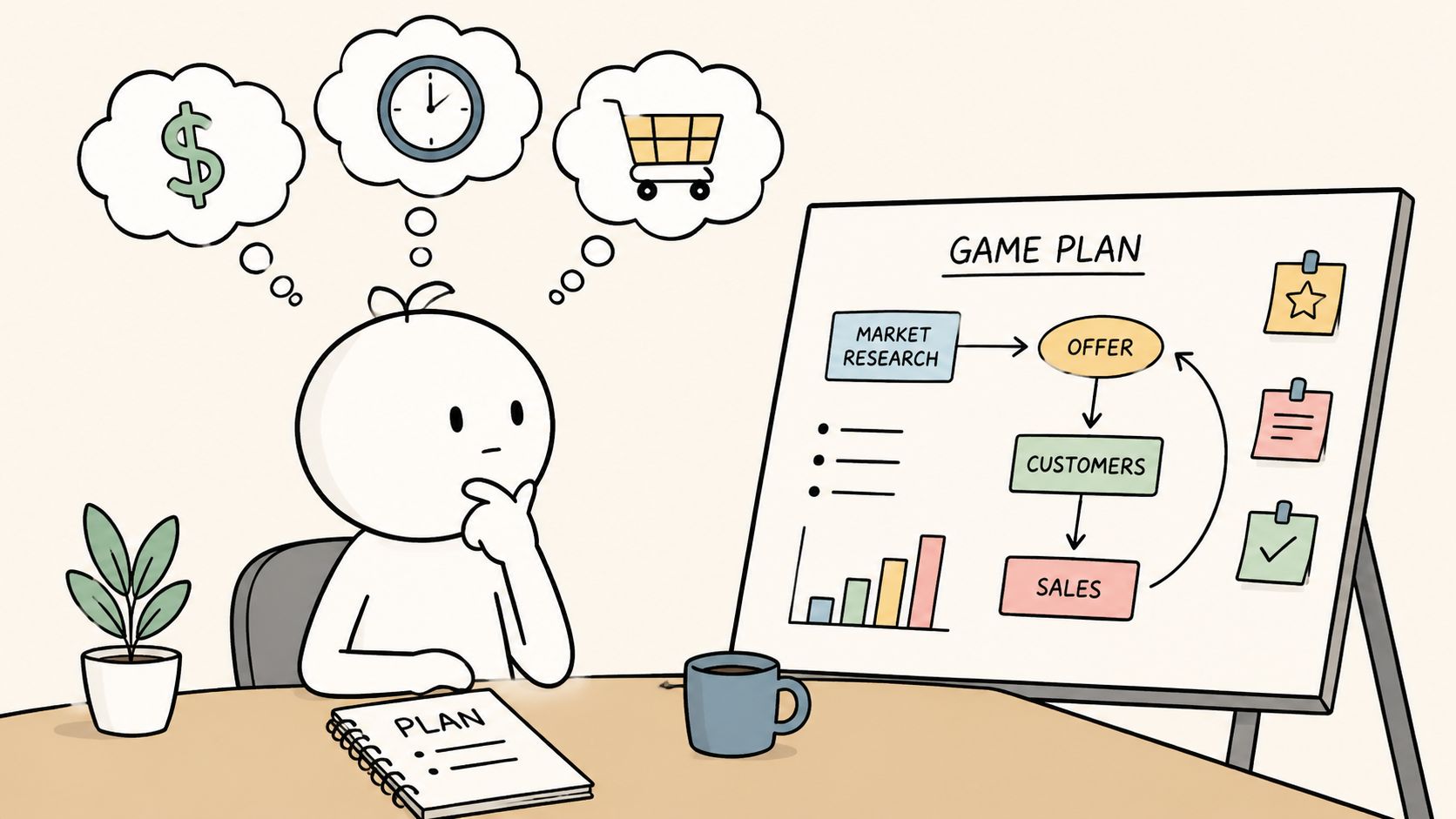
According to Printful's Black Friday glossary, retailers stagger launch timing to reduce traffic spikes and extend demand capture, and the strongest deals are increasingly spread across a long event window rather than concentrated on one day. That's the strategic reason the start date keeps moving earlier.
Why operators prefer a longer runway
A one-day surge sounds exciting. It's often messy.
If every visitor arrives at once, teams get hit with the hardest version of every problem. Product pages slow down. Customer support queues pile up. Paid performance becomes harder to interpret because everything is happening at peak pressure. Merchandising has less room to react if a featured SKU starts moving faster than expected.
A phased launch gives teams more control. They can see where demand is forming, move hero products on the homepage, pull back underperforming offers, and protect bestsellers before the biggest wave hits.
Early launch windows aren't just for revenue capture. They give operators time to correct mistakes while purchase intent is still building.
The trade-offs merchants need to manage
Starting early isn't automatically better. It comes with real decisions.
Here are the main trade-offs:
- Margin vs. momentum: launch too aggressively, and you may train customers to wait for deeper discounts.
- Simplicity vs. segmentation: one sitewide sale is easy to communicate, but staggered offers often fit demand better.
- Control vs. urgency: longer windows smooth operations, but they can dilute the “buy now” pressure if messaging gets lazy.
The brands that handle this well usually separate the audience from the offer. VIP subscribers might get early access to a bundle. The broader market gets the cleaner public sale later. Returning buyers might see different messaging than first-time traffic. The promotion is one campaign, but the activation isn't one-size-fits-all.
Why waiting can be the risky move
A lot of merchants think waiting protects exclusivity. In practice, waiting often means surrendering discovery.
By the time your Black Friday email lands, customers may have already committed budget elsewhere or bookmarked other deals. That doesn't mean every brand should discount early. It means every brand should decide early what role it wants to play: first mover, selective participant, or premium holdout with a different value story.
If you don't make that choice on purpose, the market makes it for you.
Your Shopify Black Friday Launch Timeline
For Shopify teams, the winning approach is to treat Black Friday as a multi-week funnel. Industry guidance recommends publishing landing pages early and using countdown timers because holiday-intent search traffic starts building around early October, as noted in Black Friday ecommerce preparation guidance.
That advice is useful because it ties timing to operations. You're not just choosing a sale date. You're building the store, traffic, and message sequence that lead into it.

Six weeks out
Strong teams separate planning from wishful thinking.
- Lock the offer architecture: Decide what's sitewide, what's category-specific, what's bundle-only, and what gets held for Cyber Monday.
- Audit inventory reality: Don't build your campaign around products you can't confidently support.
- Map the landing pages: Collection pages, gift pages, bundle pages, and VIP signup pages should exist before traffic ramps.
At this stage, I'd rather see a simple offer structure executed cleanly than a complicated promo tree that breaks under pressure.
Four weeks out
Now the store needs to act like the event is real.
Focus on execution:
- Build and QA discounts in Shopify. Test automatic discounts, code-based offers, free gift logic, and any app interactions that could conflict at checkout.
- Prepare merchandising rules. Choose which collections lead, which SKUs get badges, and what gets hidden if stock tightens.
- Draft retention flows. Cart recovery, browse abandonment, VIP access, and post-purchase cross-sell sequences should be staged, not improvised.
If email is a major channel for you, a tighter campaign calendar matters. This guide to Black Friday email marketing planning is a useful reference for sequencing before, during, and after the main event.
Two weeks out
This is the moment to pressure-test the mobile journey.
Remember that mobile carried the majority of Black Friday online spend in the earlier cited 2025 data. For Shopify merchants, that means checking the details many overlook:
- Mobile nav: Can a shopper reach sale collections in one or two taps?
- PDP clarity: Is the offer visible above the fold, including variant logic and shipping expectations?
- Cart confidence: Are discount messages, free shipping thresholds, and return policy links easy to see?
The homepage matters less than the path from ad click to product page to checkout.
This is also the right time to finalize paid creative and audience sequencing. If your team is running Meta aggressively, this playbook on achieving Black Friday Meta ad success can help tighten campaign structure and timing.
Launch week and launch day
In launch week, stop adding complexity. Start increasing visibility.
A no-nonsense launch checklist:
| Timing | Priority | What to do |
|---|---|---|
| Early in the week | Visibility | Publish banners, countdowns, and live collection pages |
| Day before first offer | Validation | Test checkout, discount stacking behavior, and support workflows |
| Thanksgiving or early-access day | Soft open | Turn on segmented traffic first, then expand |
| Black Friday morning | Control room | Monitor top SKUs, site behavior, and campaign pacing in real time |
| Weekend through Cyber Monday | Optimization | Rotate creative, pin winning products, and adjust urgency messaging |
What usually works:
- Clear offer hierarchy
- Fast mobile pages
- Visible delivery and return policies
- Real-time merchandising changes
What usually fails:
- Launching everything at once
- Hiding terms in fine print
- Sending the same message to every segment
- Waiting until Friday to publish sale pages
Winning the Entire Cyber Week Not Just the Start
A good Black Friday start helps. It doesn't win the period by itself.
The merchants that perform best across Cyber Week treat the whole stretch as one connected campaign. The first offer captures attention. The next wave keeps momentum. The final push closes undecided buyers. Teams that only plan for launch day often exhaust creative too early, run support too thin, or let stale merchandising sit through the weekend.
What sustained performance looks like
The objective isn't to create one dramatic spike and hope for the best. It's to manage energy across the full buying window.
That usually means:
- Refreshing messages without changing the entire offer
- Promoting different product angles across the weekend
- Updating stock visibility before customers hit dead ends
- Keeping fulfillment realities close to merchandising decisions
If your operation includes Amazon alongside Shopify, logistics discipline matters even more. This FBA on Amazon shipping guide is a useful operational reference when inventory and delivery promises need to stay aligned across channels.
The merchants who win don't go static
Cyber Week punishes teams that launch and coast. You need people checking what's moving, what's stalling, and what customers are asking.
That's why preparation and adaptation go together. A stronger pre-BFCM operating plan gives you the space to make smarter decisions during the event, and this guide on how to prepare for BFCM is a solid operational companion if you're tightening your broader holiday setup.
The start matters. The follow-through decides whether Black Friday becomes a strong weekend or a wasted opportunity.
Black Friday Timing FAQs
Should a Shopify store launch on Thanksgiving night or wait until Friday morning
If your audience is promotion-aware and you have operational coverage, launching on Thanksgiving usually makes more sense than waiting. Customers are already browsing and buying earlier in the window. If you wait until Friday morning, your offer may enter the market after shoppers have already started comparing, bookmarking, or purchasing elsewhere.
If your team is small, a softer early-access release can work better than a full public launch. That lets you test checkout flow, support volume, and merchandising before broader traffic hits.
How should global brands handle time zones
Don't force one global “midnight” if your customer base is spread across regions. Anchor launches to your primary market, then communicate clearly by timezone in email, SMS, and on-site banners.
Operationally, the bigger issue is support and fulfillment visibility. If a promotion goes live while your team is asleep and a pricing rule misfires, the problem compounds fast. Staggered regional messaging often works better than a single universal blast.
Is one big sale better than multiple staggered offers
It depends on your catalog and margin structure. One big sale is easier to explain and easier to execute. Staggered offers usually give you more control over urgency, segmentation, and inventory management.
A practical rule is simple. If your assortment is broad and shopper intent varies, staggered offers tend to fit better. If your catalog is tight and your brand wins on clarity, a cleaner sale often converts better than a maze of exceptions.
The actual mistake isn't choosing one path over the other. It's choosing a structure your team can't manage once demand goes live.
If your Shopify team needs help turning Black Friday from a rushed promotion into a controlled revenue event, ECORN can help with Shopify development, CRO, merchandising execution, and BFCM planning that holds up under traffic.


7 Ecommerce Newsletter Examples for Shopify Brands
One Product Shopify Store: Build and Scale
Mobile Pop Up Strategy for Shopify Stores That Converts
Sitemap for Shopify: How to Find, Optimize, and Submit It
7 Single Product Websites Worth Emulating
Product Variants Shopify: The Complete 2026 Guide
Ecommerce Analytics Consulting for Growth
What Is AI Integration for eCommerce
How to Choose the Right eCommerce Website Development Firm
E Business Strategy Implementation
Conversion Tracking Setup for Shopify Stores
BigCommerce vs Shopify Plus Which Enterprise Wins in 2026
Shopify Theme Kit: Setup, Commands, and Migration Guide
Shopify Extension Development: A Practical 2026 Guide
Shopify Speed Score Explained and How to Improve It
Shopify Mobile Optimization: The 2026 Playbook
How to Add Subcategory in Shopify for Better UX
How to Implement Structured Data for Ecommerce in 2026
SEO App Mobile: Shopify Store Optimization Guide
Shopify Plus Support: What It Includes and How to Choose
Google Ads for Shopify: The Complete 2026 Playbook
Shopify New York: How to Find and Hire the Right Agency
Google Search Console for Shopify: The Complete Setup
First Party Data Collection for eCommerce Growth
FAQ Online Store Guide: Build and Measure It Right
Do FB Ads Work for eCommerce in 2026?
One Page Checkout for Shopify: Design and Implementation
Shopify GraphQL vs REST: The 2026 Developer Decision
Shopify Ecommerce Consulting: Strategy, Pricing &
Are Reddit Ads Worth It for eCommerce Brands
Shopify Title and Meta Description: A Practical 2026 Guide
Product Video Best Practices for Shopify Brands
Real-Time Inventory Management: A 2026 Guide
AI Chatbot Integration for Shopify Stores
Affiliate Program Management: A Shopify Guide
10 Best Performance Monitoring Tools for Shopify in 2026
Digital Asset Management for eCommerce Brands in 2026
Every Type of Facebook Ads Explained for eCommerce Growth
Product Information Management Explained for Shopify Brands
Support Ticket System: A Guide for Shopify Stores

10 Best Customer Service Tools for Shopify in 2026

Can I Start a Business with No Money? a 2026 Blueprint
What Sells Good on Etsy: Best Niches for 2026

Shopify Add to Cart Button: A Practical 2026 Guide

Customer Feedback Automation: A Practical eCommerce Guide
Critical Rendering Path: A Guide for Shopify Stores

How to Promote on TikTok for eCommerce in 2026

B2B eCommerce Consulting That Drives Real Revenue
10 Best Practices for Site Navigation in 2026
Return vs Refund for Shopify Stores: A Practical Guide
What Is Customer Lifetime Value and Why It Matters
What Is Voice of Customer Research for eCommerce

SMS Marketing for Ecommerce That Actually Converts

Master How to Improve Email Deliverability in 2026

Top 7 eCommerce Partners NYC for Shopify Brands in 2026
Machine Learning for Ecommerce: Boost Your Shopify Store

Beauty Market Research: Your 2026 Growth Guide
Shopify International Expansion: A 2026 Roadmap
What Does CRO Stand for in Business: Understanding CRO
Shopify Visual Merchandising: A Playbook for Higher Sales

Shopify Landing Page Design: Master Conversion in 2026
10 Best AI SEO Optimization Tools for Shopify in 2026

Agentic AI for Ecommerce: Boost Your Sales in 2026
Mastering Email Marketing Data for eCommerce Growth

Conversion Rate Optimisation Australia: Boost Your Sales
Conversion Rate Optimization AI: Your Shopify Store Guide

10 Product Bundling Strategies for Shopify in 2026
How to Increase Customer Lifetime Value: A Shopify Playbook
AI Customer Service Automation: Shopify Guide 2026

Clean Website Design: A Shopify Conversion Playbook

Omnichannel Retail Strategy: A Shopify Playbook
Product Data Enrichment: A Guide for Shopify Brands
Instagram Shopping Features a Guide for Shopify Stores
What Is Revenue Optimization: A Holistic RevOps Guide
Benefits of Conversion Rate Optimization: Boost Your
WordPress to Shopify Migration: Your 2026 Seamless Switch
Boost Sales: Ecommerce Payment Processing Guide 2026
Unified Commerce Platform: Benefits, KPIs & Shopify Guide
How to Reduce Bounce Rate eCommerce: Your 2026 Guide
Shopify API Integration: A Practical End-to-End Guide
How to Implement Data Governance: A 2026 Guide
Shopify Store Development Cost: A 2026 Breakdown
What Is Server Side Tracking: The Shopify Guide 2026
Marketing Automation Workflows: A Shopify Guide for 2026
Shopify: How to Reduce Technical Debt

Shopify UX Design Change: A Playbook for Growth
User Generated Content Strategy: Shopify Playbook
Shopify Pause and Build Plan Cost: A Complete 2026 Guide
Compare at Price on Shopify: A Complete Guide for 2026
Where Can I Sell My Prints? 10 Best Platforms for 2026
Shopify Order Management System: The Ultimate Guide 2026
What Is Marketing Attribution? an eCommerce Guide for 2026
10 Best Black Friday Sales Sheets for 2026

Discover the Top Social Media Marketing Agencies For
Consumer Confidence Definition for eCommerce in 2026
What Is Social Commerce? Your 2026 Guide to Boosting Sales
A Social Ad Campaign Playbook for eCommerce Growth

7 Best FAQ Page Examples for SaaS & eCommerce

Market Research in Fashion Industry: A Guide for Shopify
Shopify Migration Services: Expert Guide for 2026


newsletter in your inbox