


If you're running a Shopify store, you've probably seen the pattern already. Product pages get published, collection pages sit a few layers deep, blog posts attract some traffic, and revenue still clusters around a small handful of URLs. The issue often isn't content volume. It's that the site doesn't direct authority, discovery, and buying intent toward the pages that matter most.
That's where strong SEO linking strategies change the economics of the store. For Shopify, linking isn't just an SEO task. It's how you move attention from informational pages to collections, from collections to products, and from externally linked assets to commercial pages that generate sales. Done well, internal and external links work as one system.
Build Your eCommerce Linking Foundation
Most Shopify stores don't have a link problem first. They have a site architecture problem.
Teams start with category menus, add products as they launch, then publish blog content whenever there's time. That creates an indexable site, but not a deliberate one. Important pages get buried. Blog traffic doesn't support collection pages. Product pages compete with each other for similar intent. Internal links become accidental.

A better approach is to build around a pillar and cluster structure adapted to commerce. Instead of treating content and category pages as separate programs, connect them around buying journeys.
Map pillars to revenue categories
On Shopify, your pillars are rarely generic blog posts. They are usually your main collections, major buying guides, or category-level landing pages tied to clear commercial demand.
A skincare brand might structure it like this:
| Site layer | Shopify example | Job in the link structure |
|---|---|---|
| Homepage | / | Routes authority to primary collections and campaigns |
| Main category | /collections/serums | Targets broad commercial intent |
| Sub-category | /collections/vitamin-c-serums | Narrows intent and product type |
| Product | /products/vitamin-c-brightening-serum | Converts demand into revenue |
| Content hub | /blogs/journal/how-to-layer-serums | Captures research intent and supports collections |
Internal linking shouldn't follow keywords alone. Guidance on internal linking emphasizes choosing links based on business value, site architecture, page strength, and content consolidation decisions, while keeping important pages within three clicks of the homepage in a practical structure for crawlability and prioritization according to Lumar's internal linking guidance.
Practical rule: If a page matters to revenue, it shouldn't depend on a sitemap or filter navigation to be found.
For Shopify stores, that usually means your top collections need direct access from the main nav, homepage modules, featured collections, and relevant blog content. Your best-selling products then need support from their parent collections, related products, and educational content.
Build clusters around product discovery
Clusters in eCommerce should answer the questions buyers ask before purchase. That's where many stores miss easy wins.
If you sell running shoes, the cluster shouldn't just be "best running shoes." It should include content and landing pages such as:
- Use-case pages like trail running, wide fit, marathon training
- Comparison content such as neutral vs stability shoes
- Problem-solving articles like how to choose the right shoe for overpronation
- Care and sizing content that naturally links to relevant products
Each cluster page should link upward to the pillar collection and sideways to closely related assets where that helps the user choose.
Clean up overlap before adding more links
Internal linking gets messy fast when multiple URLs target the same thing. Shopify stores often create separate collections for near-identical intents, then write blog posts that point to all of them. That spreads signals thin and confuses both users and search engines.
Before adding links, review:
- Collection overlap where two collections serve the same demand.
- Blog cannibalization where multiple posts answer the same query.
- Dead-end product pages with no contextual support.
- Seasonal pages that should be preserved and reused, not replaced.
A strong foundation means every major page has a defined role. Some pages attract links. Some pages rank for category intent. Some pages close the sale. The architecture has to reflect that, or your later link building won't compound.
Strategic Internal Linking for Shopify Stores
Once the structure is set, implementation becomes very practical. Shopify gives you enough flexibility to build a strong internal link graph, but only if you use the right surfaces. Most stores over-rely on navigation and underuse contextual links.
The biggest gains usually come from links placed inside content, collection copy, and product descriptions. These links carry more context than menu links and do a better job of channeling users toward the next commercial step.
Where to add links inside Shopify
Start with your blog because it's the easiest place to create intentional paths.
A post like "How to choose a duvet for hot sleepers" shouldn't end as a standalone article. Inside the body copy, link naturally to the cooling bedding collection, a comparison page for materials, and a featured product set. Then add a short "Shop the products mentioned" block near the middle or end.
Collection pages are the next priority. Most Shopify collections have thin intros or no editorial copy at all. That's a missed opportunity. Add a concise introduction that links to adjacent collections, buying guides, and standout subcategories. On a "Men's waterproof jackets" collection, that might include links to "lightweight rain jackets," "winter shells," or a care guide for waterproof fabric.
Product pages also deserve selective internal links. Not a cluttered list. A few high-intent connections work better:
- Cross-sell links to complementary products, such as a grinder from an espresso machine page
- Use-case links to collection pages, such as "shop all travel backpacks"
- Educational links to care, sizing, ingredient, or compatibility content
For a broader framework on structuring internal site connections, this guide on site link SEO is useful if you're reviewing page relationships and navigation patterns.
Anchor text that sounds normal
Internal anchor text on Shopify often swings between two bad extremes. Some stores use vague text like "click here" everywhere. Others force exact-match terms into every paragraph.
Neither works well.
Use anchor text the way a merchandiser or copywriter would speak:
- Brand-led anchors when linking to branded collections or proprietary products
- Natural descriptive phrases like "see all linen duvet covers"
- Longer anchors inside educational content where context matters
- Short exact terms only when they fit naturally on high-confidence destination pages
If you sell supplements, don't link every mention of "magnesium gummies" to the same collection in every article. Vary phrasing based on intent. One page might use "sleep support gummies," another "magnesium options for evening routines," and another the direct product category.
Internal links should feel like they belong to the sentence. If the sentence sounds engineered, the anchor probably is too.
A practical weekly workflow
The easiest way to keep internal linking alive is to turn it into a repeatable merchandising task.
Use a simple cycle:
- Publish or update one commercial page. This could be a collection, product family page, or gift guide.
- Add links from existing blog posts that match the same buying stage.
- Add supporting links from stronger collections where the relationship is obvious.
- Check for orphaned or weak pages in your crawl tool or Search Console.
- Review templates so related products, featured collections, and article modules don't create irrelevant noise.
Shopify stores often treat internal links as editorial extras. They're not. They are part of how revenue pages gain visibility and how shoppers move from research to purchase without friction.
Acquiring Backlinks That Actually Drive Revenue
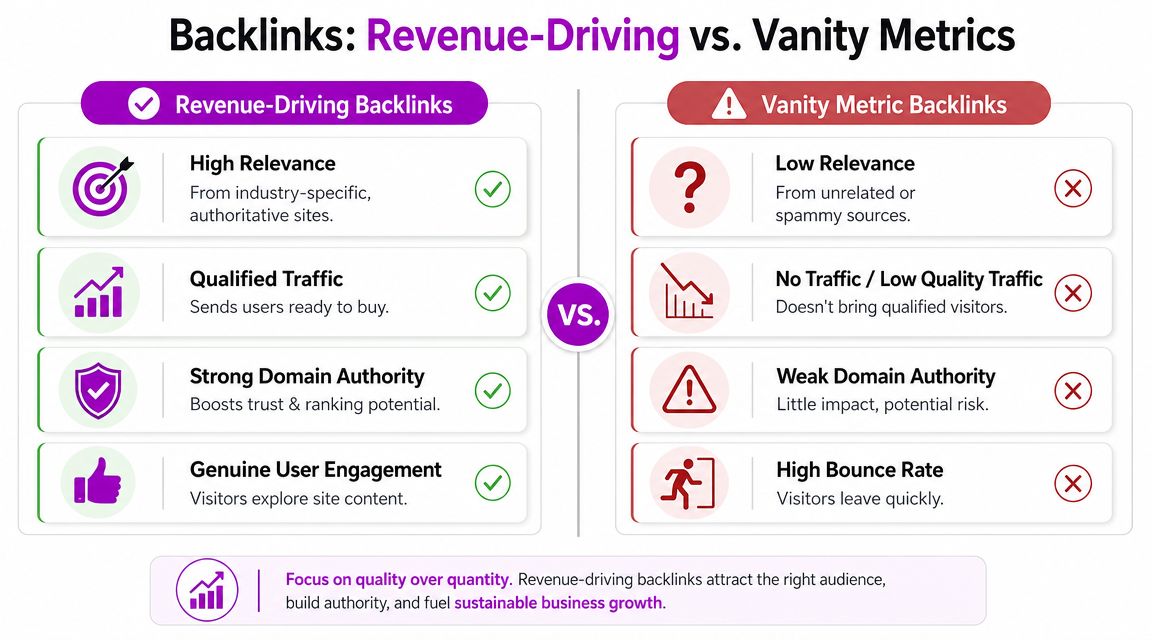
A backlink only matters if it improves one of three things. Qualified traffic, search visibility for pages that sell, or brand trust with people likely to buy. If it does none of those, it may still look good in a report, but it won't help a Shopify store in a meaningful way.
That distinction matters because earning links is still difficult. 94% of published web pages have zero backlinks, and there are 84 times more pages with zero backlinks than pages with just one backlink, which is a useful reminder that deliberate acquisition is still part of competition in search as summarized in Reboot's SEO statistics roundup.
What tends to work for Shopify brands
For eCommerce, the highest-value backlinks usually come from websites that already influence purchasing decisions.
Here are the tactics I trust more than generic outreach blasts:
| Tactic | Why it works for revenue | Typical destination page |
|---|---|---|
| Supplier and stockist links | Relevance is built in, and traffic is often product-aware | Collection or brand page |
| Product launch PR | Good for demand generation and brand discovery | Launch landing page or feature category |
| Gift guide and editorial placements | Brings shoppers close to purchase | Product or collection page |
| Unlinked brand mention reclamation | Fastest path when awareness already exists | Homepage or cited commercial page |
| Association and niche directory links | Useful when the audience is tightly aligned | Category, about, or resource page |
A furniture store, for example, will often get more commercial value from a placement in a well-read interior design roundup than from a guest post on a broad marketing blog. The first puts the product in front of buyers. The second mostly satisfies the SEO team.
What looks productive but usually isn't
Some link building tactics still absorb a lot of time without creating much business value.
Watch for these traps:
- Low-relevance guest posting on sites that don't overlap with your customer base
- Cheap placements on sites that exist mainly to sell links
- Homepage-only link campaigns when collection pages are the primary revenue-generating pages
- Volume-first outreach with no editorial angle or product story
- Anchor manipulation where every placement tries to force a commercial keyword
Many eCommerce teams confuse activity with progress. A spreadsheet full of contacts doesn't mean you've built a durable acquisition channel.
The right backlink for a Shopify store often looks more like merchandising support or brand distribution than classic "SEO outreach."
A better outreach lens
When evaluating a target site, ask four questions:
- Does this site's audience overlap with our buyers?
- Can the publisher feature a relevant page, not just the homepage?
- Is the context editorial and useful?
- Will this link stay live and make sense months later?
That lens also applies when you borrow ideas from adjacent industries. For example, this Guide to link building for software companies is worth reading because the qualification logic transfers well. The vertical is different, but the emphasis on relevance, target selection, and outreach discipline maps cleanly to eCommerce.
If you want a Shopify-specific perspective on evaluating referring domains, placement quality, and outreach opportunities, this overview of ecommerce link building is a useful companion.
Where to point the links
Not every acquired link should go to a product page. In fact, many editorial placements perform better when they point to a category, launch page, or useful resource that then routes authority and users inward.
A simple rule helps here:
- Send press and broad editorial coverage to category-level or campaign pages.
- Send product-specific mentions to the exact product page.
- Send resource-style links to a buying guide or tool with internal paths to products.
That's how backlink acquisition supports revenue rather than just domain-level vanity.
Create Linkable Assets for Your Niche
Most Shopify brands hit a ceiling with outreach because they keep pitching pages that were never built to earn links. A collection page can rank and convert, but it rarely gives publishers a reason to cite it. That's why linkable assets matter.
The strongest assets solve a narrow problem better than anything else in the market. They don't need to appeal to everyone. They need to be useful enough that niche sites, communities, associations, and editors want to reference them.
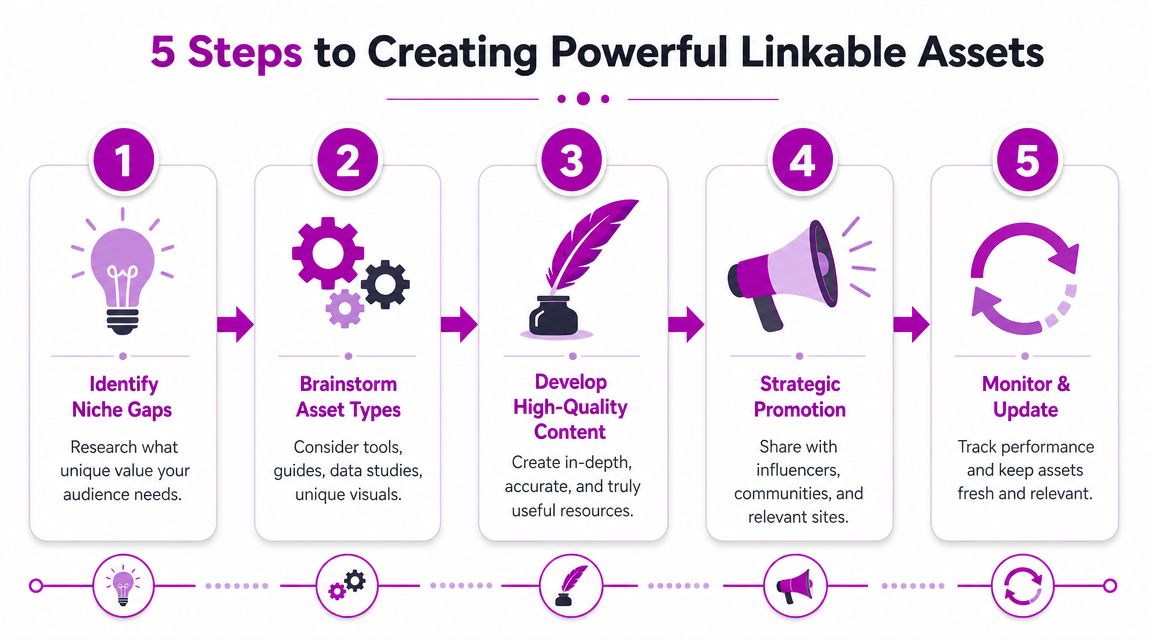
A good working principle comes from modern link-building guidance. The best opportunities often come from creating a resource for an underserved subtopic, because useful, niche-relevant assets tend to outperform crowded generic outreach approaches as discussed by Search Engine Journal.
What a linkable asset looks like in eCommerce
For Shopify, useful assets often sit one step away from the product. They support the purchase without being a sales page.
Examples that fit real stores:
- A sizing or fit calculator for apparel, footwear, helmets, or rings
- A material comparison guide for bedding, cookware, flooring, or furniture
- A compatibility finder for supplements, accessories, replacement parts, or tech products
- A care library for leather, linen, cast iron, wood, or specialty fabrics
- A niche glossary or standards guide for enthusiast categories
A coffee equipment brand might build a brew ratio calculator. A pet nutrition brand might create a feeding guide by life stage and diet preference. A home fragrance brand might publish a scent family finder tied to room type and strength preference.
These assets earn links because they answer a recurring question once, clearly, and better than scattered forum answers.
Build the asset around a gap, not a format
Teams often start with the format they want to make. "Let's build a guide" or "let's make an infographic." That's backward.
Start with the gap:
- What question keeps showing up in support tickets?
- What buying hesitation appears in product reviews?
- What search intent isn't served well by existing content?
- What resource would a trade group, blogger, or publisher reference?
Then choose the format that fits the problem.
If the asset doesn't remove friction for a real buyer, outreach becomes persuasion. If it does remove friction, outreach becomes distribution.
For stores with technical products, I often prefer tools, checklists, and visual explainers over standard blog posts. They give other sites a stronger reason to link because they offer utility, not just opinion.
A short video walkthrough can help when the asset needs demonstration:
Promotion that fits the asset
Once the asset is live, don't default to mass email outreach. Match promotion to the type of resource.
If you've built a technical guide, reach out to reviewers, niche bloggers, and resource pages. If you've created an educational asset with broad consumer value, lifestyle editors and community newsletters may be better fits. If the asset helps professionals do their jobs, associations and organizations become obvious targets.
A practical promotion list often includes:
- Existing brand relationships, including suppliers and partners
- Niche publishers that already cover the problem your asset solves
- Resource pages from communities, clubs, and associations
- Relevant journalists or editors when the angle has broad public interest
- Owned channels such as email, social, and onsite modules that help the asset attract attention
The key is to keep the asset connected to commerce. The page itself can be informational, but it should still route users through relevant collections, product families, or consultation pages where appropriate. That's how an asset becomes more than a link magnet. It becomes part of the sales path.
Measure and Refine Your Linking Performance
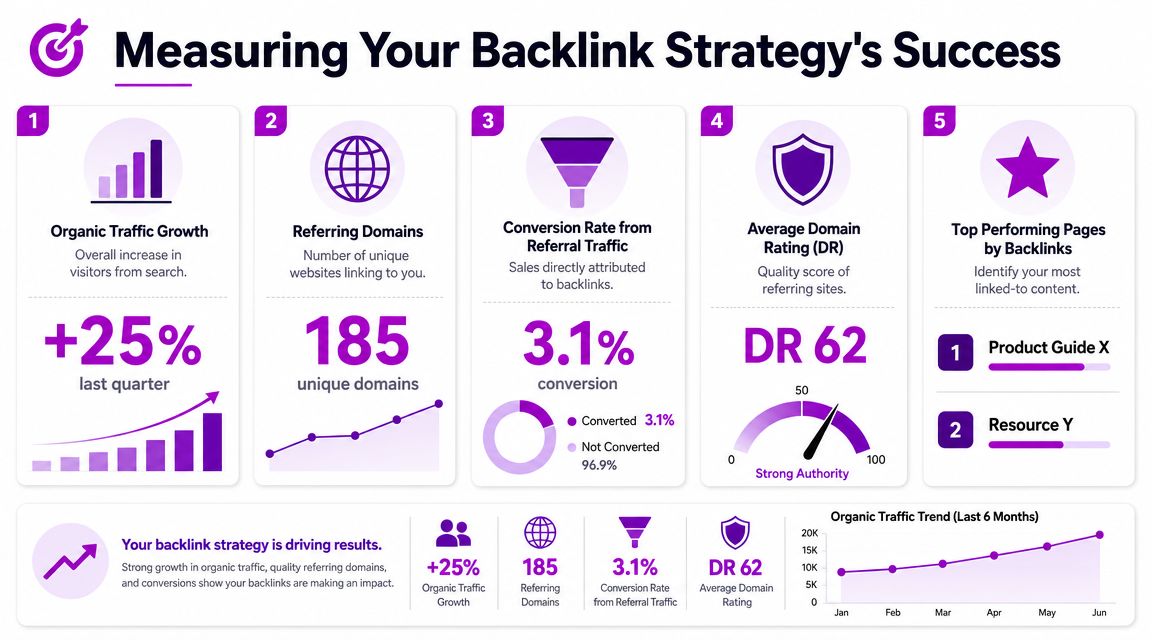
A Shopify store can gain new links, see rankings rise, and still miss revenue targets. The gap usually comes from measurement. Teams report on link counts or domain metrics, while the pages that matter most, collections and product families, barely move in search or convert poorly from referral traffic.
Track page outcomes, not just domain trends
Measure linking performance at the URL level first. A new internal link to a best-selling collection page matters more than a general rise in sitewide authority if that collection starts ranking for higher-intent terms and contributes more assisted revenue.
For each important page or cluster, monitor:
- Organic sessions to the target URL and closely related pages
- Ranking changes for the page's core commercial and informational terms
- Referral traffic from each linking site
- Assisted conversions and revenue paths in GA4
- Engagement quality, including product views, collection depth, and next-step clicks
On Shopify, that usually means using Google Search Console for query and landing page movement, GA4 for conversion paths, and an SEO tool for backlink discovery and link monitoring. Group reporting by business priority. Examples include top collections, seasonal categories, high-margin product lines, or blog posts that feed those pages.
This keeps the review tied to sales, not vanity metrics.
Audit the internal system on a schedule
Internal linking weakens over time because the store changes. Products go out of stock. Collections get renamed. blog content gets refreshed. Apps create duplicate parameter paths. Navigation updates leave old contextual links pointing through redirects.
A useful audit checks the issues below and fixes them in order of commercial impact.
| Check | Why it matters on Shopify |
|---|---|
| Broken internal links | Sends shoppers and crawlers to dead ends |
| Redirecting internal links | Wastes crawl paths and adds friction before the destination page loads |
| Orphaned pages | Leaves valuable collections or products with little internal support |
| Overlinked templates | Repeats the same links so often that contextual signals weaken |
| Shallow anchor variety | Creates forced patterns that read poorly and limit topical context |
Anchor text deserves its own review. Use descriptive phrases that match the destination and fit the sentence. Keep brand, product-type, and natural long-tail anchors in the mix. Use exact-match commercial anchors sparingly, especially when many links point to the same collection. Incremys' link-building workflow guidance aligns with that approach.
A simple test works well here. Read the sentence out loud. If the anchor feels written for a crawler instead of a shopper, rewrite it.
Scale the links that contribute to revenue
Once tracking is clean, the next decision is operational. Keep investing in the linking work that improves visibility for revenue pages, sends qualified visitors, and shows up in assisted conversion paths. Reduce the work that produces link reports with no downstream business effect.
In practice, that often means keeping resource-page links that send engaged traffic to a collection hub, while cutting outreach placements on irrelevant sites that never drive product views. It can also mean removing internal link blocks from blog templates if users skip them, then shifting that link equity into collection intros, related-category modules, or product comparison content where clicks are stronger.
For Shopify teams, this review should happen regularly, not once a quarter when reporting is already stale. Linking is part of merchandising. If a collection becomes a priority for margin, stock depth, or seasonality, internal support and external promotion should follow that change quickly.
The goal is simple. Build a linking system you can measure page by page, tie to revenue paths, and adjust before weak patterns spread across the store.


Shopify Design Agency: How to Pick the Right Partner
Mastering Multi Store Management on Shopify
Scale Shopify Store
10 Shopify App Ideas Worth Building in 2026
Conversion Rate Optimization for Landing Pages: The Playbook
Shopify Plus Automation: A Guide for 2026
10 Social Selling Platforms for Shopify Merchants

Shopify Website Design Examples: 7 Stores Worth Studying
7 Ecommerce Newsletter Examples for Shopify Brands
One Product Shopify Store: Build and Scale
Mobile Pop Up Strategy for Shopify Stores That Converts
Sitemap for Shopify: How to Find, Optimize, and Submit It
7 Single Product Websites Worth Emulating
Product Variants Shopify: The Complete 2026 Guide
Ecommerce Analytics Consulting for Growth
What Is AI Integration for eCommerce
How to Choose the Right eCommerce Website Development Firm
E Business Strategy Implementation
Conversion Tracking Setup for Shopify Stores
BigCommerce vs Shopify Plus Which Enterprise Wins in 2026
Shopify Theme Kit: Setup, Commands, and Migration Guide
Shopify Extension Development: A Practical 2026 Guide
Shopify Speed Score Explained and How to Improve It
Shopify Mobile Optimization: The 2026 Playbook
How to Add Subcategory in Shopify for Better UX
How to Implement Structured Data for Ecommerce in 2026
SEO App Mobile: Shopify Store Optimization Guide
Shopify Plus Support: What It Includes and How to Choose
Google Ads for Shopify: The Complete 2026 Playbook
Shopify New York: How to Find and Hire the Right Agency
Google Search Console for Shopify: The Complete Setup
First Party Data Collection for eCommerce Growth
FAQ Online Store Guide: Build and Measure It Right
Do FB Ads Work for eCommerce in 2026?
One Page Checkout for Shopify: Design and Implementation
Shopify GraphQL vs REST: The 2026 Developer Decision
Shopify Ecommerce Consulting: Strategy, Pricing &
Are Reddit Ads Worth It for eCommerce Brands
Shopify Title and Meta Description: A Practical 2026 Guide
Product Video Best Practices for Shopify Brands
Real-Time Inventory Management: A 2026 Guide
AI Chatbot Integration for Shopify Stores
Affiliate Program Management: A Shopify Guide
10 Best Performance Monitoring Tools for Shopify in 2026
Digital Asset Management for eCommerce Brands in 2026
Every Type of Facebook Ads Explained for eCommerce Growth
Product Information Management Explained for Shopify Brands
Support Ticket System: A Guide for Shopify Stores

10 Best Customer Service Tools for Shopify in 2026

Can I Start a Business with No Money? a 2026 Blueprint

What Sells Good on Etsy: Best Niches for 2026

Shopify Add to Cart Button: A Practical 2026 Guide

Customer Feedback Automation: A Practical eCommerce Guide
Critical Rendering Path: A Guide for Shopify Stores

How to Promote on TikTok for eCommerce in 2026

B2B eCommerce Consulting That Drives Real Revenue
10 Best Practices for Site Navigation in 2026
Return vs Refund for Shopify Stores: A Practical Guide
What Is Customer Lifetime Value and Why It Matters
What Is Voice of Customer Research for eCommerce

SMS Marketing for Ecommerce That Actually Converts

Master How to Improve Email Deliverability in 2026

Top 7 eCommerce Partners NYC for Shopify Brands in 2026
Machine Learning for Ecommerce: Boost Your Shopify Store

Beauty Market Research: Your 2026 Growth Guide

Shopify International Expansion: A 2026 Roadmap
What Does CRO Stand for in Business: Understanding CRO

Shopify Visual Merchandising: A Playbook for Higher Sales

Shopify Landing Page Design: Master Conversion in 2026
10 Best AI SEO Optimization Tools for Shopify in 2026

Agentic AI for Ecommerce: Boost Your Sales in 2026
Mastering Email Marketing Data for eCommerce Growth

Conversion Rate Optimisation Australia: Boost Your Sales
Conversion Rate Optimization AI: Your Shopify Store Guide

10 Product Bundling Strategies for Shopify in 2026
How to Increase Customer Lifetime Value: A Shopify Playbook
AI Customer Service Automation: Shopify Guide 2026
Clean Website Design: A Shopify Conversion Playbook

Omnichannel Retail Strategy: A Shopify Playbook
Product Data Enrichment: A Guide for Shopify Brands
Instagram Shopping Features a Guide for Shopify Stores
What Is Revenue Optimization: A Holistic RevOps Guide

Benefits of Conversion Rate Optimization: Boost Your
WordPress to Shopify Migration: Your 2026 Seamless Switch
Boost Sales: Ecommerce Payment Processing Guide 2026
Unified Commerce Platform: Benefits, KPIs & Shopify Guide
How to Reduce Bounce Rate eCommerce: Your 2026 Guide
Shopify API Integration: A Practical End-to-End Guide

How to Implement Data Governance: A 2026 Guide
Shopify Store Development Cost: A 2026 Breakdown
What Is Server Side Tracking: The Shopify Guide 2026
Marketing Automation Workflows: A Shopify Guide for 2026
Shopify: How to Reduce Technical Debt

Shopify UX Design Change: A Playbook for Growth
User Generated Content Strategy: Shopify Playbook
Shopify Pause and Build Plan Cost: A Complete 2026 Guide
Compare at Price on Shopify: A Complete Guide for 2026
Where Can I Sell My Prints? 10 Best Platforms for 2026
Shopify Order Management System: The Ultimate Guide 2026
What Is Marketing Attribution? an eCommerce Guide for 2026


newsletter in your inbox