

You search “CRO,” open three tabs, and get three different answers. One article talks about landing pages and checkout flows. A LinkedIn profile says someone is a CRO at a SaaS company. A consultant mentions CRO in a growth audit, and now you're not sure whether you need software, testing, or a senior executive.
That confusion is normal, especially if you run an eCommerce business and wear too many hats already.
When founders ask what does CRO stand for in business, they usually need more than a dictionary definition. They need to know which meaning applies to their situation, which one matters right now, and how using the wrong definition can send them in the wrong direction.
The Common CRO Conundrum in Business
The acronym CRO has two main business meanings, and people often mix them up. One is Conversion Rate Optimization, which is a marketing and growth practice. The other is Chief Revenue Officer, which is a senior leadership role.
That sounds simple until you see how often the two get blended together online. One industry analysis notes that 95% of search results conflate the two or fail to clarify context by industry, which creates real confusion for founders trying to make the right growth decision (GoFractional).
For an eCommerce founder, that mix-up isn't just annoying. It can lead to bad priorities. You might think you need better A/B testing when your real problem is that marketing, retention, and sales aren't aligned. Or you might assume a job post for “CRO” is about conversion testing when it's a C-suite revenue leader.
Why the confusion matters
The two meanings sit close to each other because both connect to growth and revenue. But they operate at very different levels.
- Conversion Rate Optimization improves how your website turns visitors into customers or leads.
- Chief Revenue Officer aligns the teams and decisions that drive revenue across the business.
Practical rule: If the conversation is about pages, funnels, checkout, user behavior, or testing, CRO usually means Conversion Rate Optimization. If it's about leadership, revenue ownership, pricing, go-to-market, or department alignment, it usually means Chief Revenue Officer.
This distinction matters most in eCommerce because founders often move between tactical and strategic problems in the same week. On Monday you're reviewing your product page. On Tuesday you're trying to fix a gap between paid acquisition and repeat purchase performance. Same acronym. Different issue.
The CRO You Test Conversion Rate Optimization
In eCommerce, CRO most commonly stands for Conversion Rate Optimization. It's the process of increasing the percentage of website visitors who take a desired action, such as buying a product, signing up for a list, or starting checkout. In this context, average eCommerce conversion rates often sit around 1.5% to 3%, while top-performing sites can reach 5% to 10% or higher through stronger user experience, A/B testing, and better landing pages (Kirro).
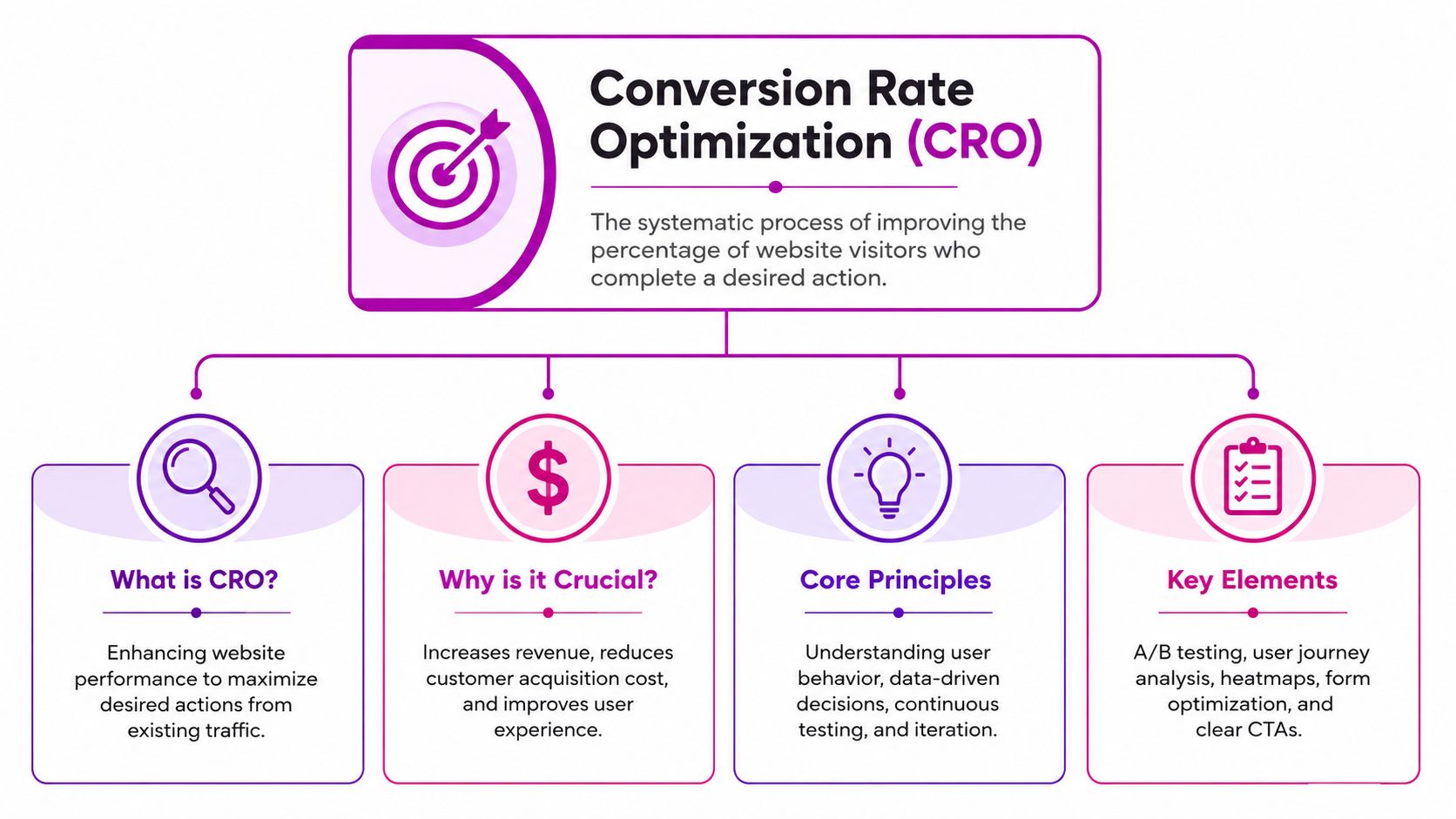
A simple way to think about it is this. CRO helps your store work smarter, not just harder. Instead of paying for more clicks right away, you improve what happens after the click.
What Conversion Rate Optimization looks like in practice
Say your store gets visitors from Meta ads, Google Shopping, email, and organic search. People land on the site, browse products, maybe add items to cart, and then many leave without buying.
Conversion Rate Optimization asks practical questions like:
- Where are people dropping off? Product page, cart, shipping step, or payment page?
- What's causing hesitation? Weak product copy, missing trust signals, confusing sizing, slow mobile layout?
- Which change should you test first? A clearer call to action, a simplified form, stronger social proof, or a better page structure?
This is why many founders eventually look deeper into how to optimize conversion rates before increasing ad spend. If the site leaks demand, buying more traffic only feeds the leak.
The core parts of a CRO process
A good CRO program usually includes a few recurring activities.
User behavior analysis
Teams review analytics, session recordings, heatmaps, and funnel drop-off points to understand what visitors do.Hypothesis building
Instead of guessing, you identify a likely issue. For example, mobile users may not see key delivery information early enough.A/B testing
You compare one version of a page or element against another to learn which performs better.Landing page and flow refinement
You keep improving important pages such as collection pages, PDPs, cart, and checkout-adjacent experiences.
The point of CRO isn't to make your site prettier. It's to make it easier for the right customer to say yes.
What founders often get wrong about CRO
A lot of people reduce Conversion Rate Optimization to tiny design tweaks. Button colors get all the attention because they're easy to discuss. But meaningful CRO usually starts with bigger questions.
For example:
- Offer clarity matters more than cosmetic polish.
- Message match matters if your ad promises one thing and the landing page says another.
- Purchase friction matters when shoppers can't quickly understand shipping, returns, fit, or payment options.
If you want a useful companion piece on the term itself, ECORN also breaks down the conversion rate optimisation definition in a way that's practical for store operators.
Why this matters to profit
Conversion Rate Optimization matters because it improves the return on the traffic you already paid for or already earned. If your product pages, cart flow, or signup experience convert more visitors, you increase revenue efficiency without needing immediate traffic growth.
That's why the term shows up so often in eCommerce conversations. For most online brands, this is the CRO they mean.
The CRO You Hire Chief Revenue Officer
Sometimes CRO doesn't mean a marketing practice at all. It means Chief Revenue Officer.
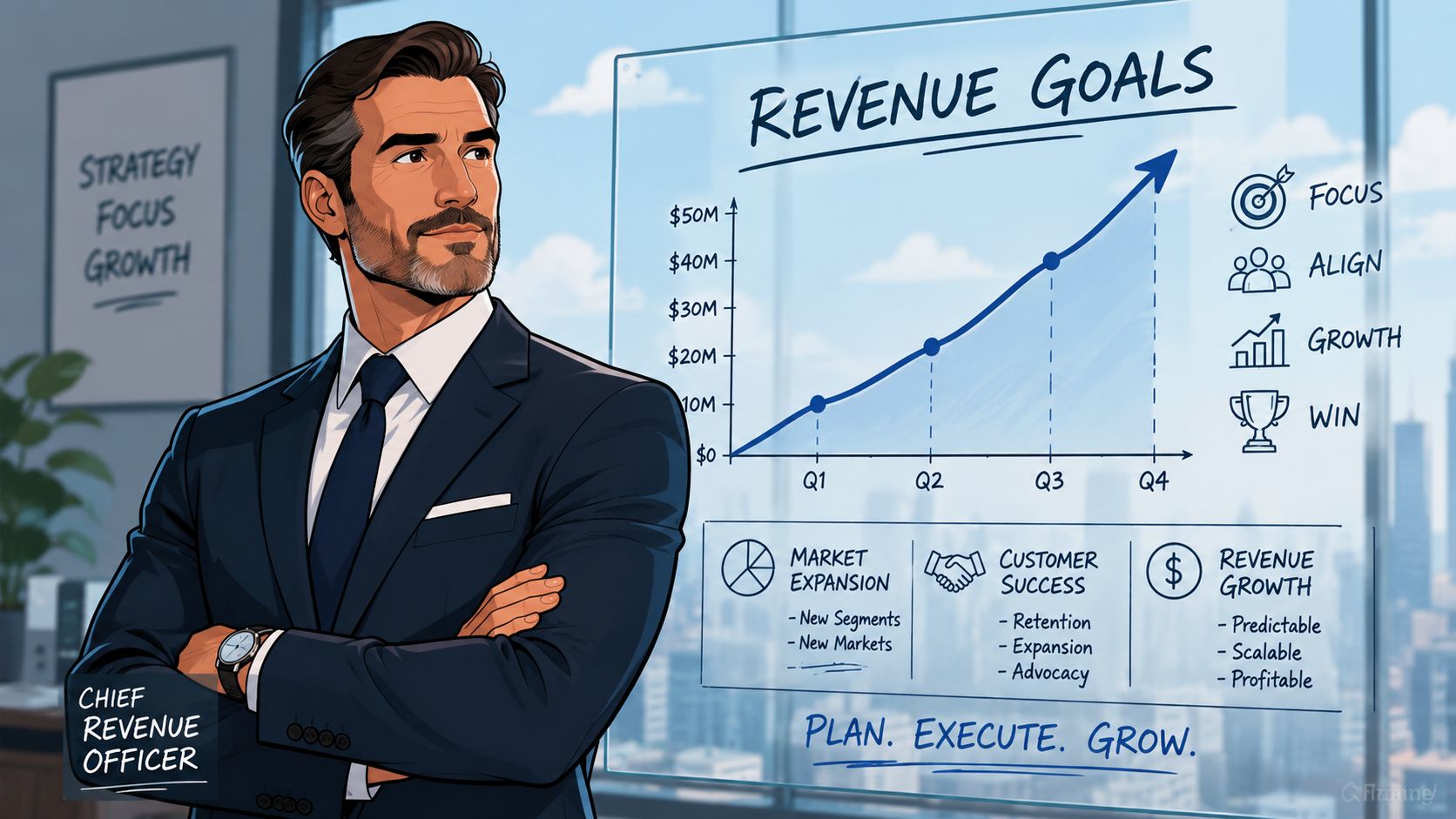
This is a senior executive role. The Chief Revenue Officer owns the broader revenue strategy across functions that influence growth, often including sales, marketing, and customer support. The role became especially prominent in technology and SaaS sectors around the mid-2010s as companies tried to unify teams that had been working in silos (Wikipedia overview of the Chief Revenue Officer role).
What a Chief Revenue Officer actually does
A Chief Revenue Officer doesn't spend the day tweaking headlines on product pages. Their job is much broader.
They look at questions like:
- How do marketing, sales, and customer teams work together?
- Is the pricing strategy helping or hurting growth?
- Are acquisition and retention goals aligned?
- Does the business have one revenue plan or several disconnected ones?
In businesses with sales teams, subscriptions, partnerships, or complex retention models, a Chief Revenue Officer helps make revenue ownership clear across the customer journey.
How this role differs from other executives
A founder can easily mistake this role for a Head of Sales, CFO, or even CEO-style growth owner. But the scope is different.
- CEO: Owns the whole company.
- CFO: Owns financial management and reporting.
- Head of Sales: Focuses on the sales organization.
- Chief Revenue Officer: Connects the full revenue engine and makes sure major commercial decisions work together.
If Conversion Rate Optimization improves one part of the buying journey, a Chief Revenue Officer improves how the business organizes revenue across the entire journey.
For most early eCommerce brands, this is not the first “CRO” they need. But once the company grows, teams multiply, and revenue channels become harder to coordinate, the role starts to make more sense.
The Two CROs Side by Side A Direct Comparison
The easiest way to remove the confusion is to compare them directly.
| Dimension | Conversion Rate Optimization (The Practice) | Chief Revenue Officer (The Role) |
|---|---|---|
| What it is | A process for improving how many visitors take a desired action | A senior executive responsible for revenue strategy |
| Main focus | Website performance, funnel efficiency, user experience, experimentation | Revenue alignment across teams, channels, pricing, and customer journey |
| Typical context | eCommerce stores, landing pages, digital marketing, Shopify optimization | Scaling companies, SaaS firms, multi-team commercial organizations |
| Day-to-day work | Analyze behavior, test variants, refine pages, reduce friction | Set strategy, align departments, guide go-to-market and revenue decisions |
| Core question | “How do we turn more visitors into buyers?” | “How do we organize the business to grow revenue efficiently?” |
| Main KPI style | Conversion-focused metrics such as purchases, signups, and revenue per visitor | Business-level revenue outcomes and commercial alignment |
| Who owns it | Growth team, marketing team, product team, agency, or founder | C-suite executive |
| Best fit for | Brands trying to get more from current traffic | Companies that need unified leadership across revenue functions |
A quick way to identify the meaning
Read the surrounding words.
If people mention checkout, product pages, heatmaps, testing platforms, or user behavior, they mean Conversion Rate Optimization.
If they mention org charts, leadership hiring, board discussions, commercial planning, or cross-functional revenue ownership, they mean Chief Revenue Officer.
Why founders mix them up
Both versions of CRO point at growth, so they sound related. They are related. But they solve different problems.
One solves conversion efficiency.
The other solves revenue coordination.
That's why the phrase “what does CRO stand for in business” can't be answered well with only one definition. The right answer depends on the business context and the stage you're in.
Which CRO Does Your eCommerce Business Need Now
Most eCommerce founders don't need to hire a Chief Revenue Officer first. They need to improve Conversion Rate Optimization first.
That's because young and growing stores usually have a simpler problem. They already have traffic from ads, email, influencer campaigns, or organic channels, but too few of those visitors become customers. In that situation, the fastest gains often come from improving the site experience, product messaging, funnel clarity, and post-click journey.
If you're early stage
Focus on the practice.
Your priorities usually look like this:
- Fix friction on key pages such as product pages, cart, and mobile navigation.
- Clarify the offer so visitors understand why they should buy now.
- Use testing and behavioral insight to improve decisions instead of relying on opinion.
At this stage, hiring a senior revenue executive is usually premature unless your business model is unusually complex.
If you're scaling fast
You still need Conversion Rate Optimization, but leadership alignment starts to matter more.
Maybe acquisition is strong, but repeat purchase is weak. Maybe marketing promises one thing while the onsite experience delivers another. Maybe different teams own different pieces of revenue, and nobody owns the full system.
That doesn't always mean “hire a Chief Revenue Officer now.” It may mean you need someone, whether a founder, operator, or revenue leader, to think like one.
Founder lens: Ask yourself whether your bottleneck is page performance or business alignment. Many brands guess the wrong one.
If you're established on Shopify Plus
At this point, both meanings can matter.
You may need a mature Conversion Rate Optimization program to improve revenue efficiency across landing pages, merchandising flows, and retention touchpoints. At the same time, you may also need executive-level coordination so pricing, lifecycle marketing, customer experience, and growth planning move in the same direction.
For most brands, the sequence is the key. First improve how the store converts. Then strengthen how the business organizes revenue across teams. If you skip the first step, you risk building strategy on top of a weak customer journey. If you skip the second later on, growth gets messy as the business expands.
Your Next Steps Building an Optimization Engine
If you're still asking what does CRO stand for in business because you're trying to decide what to do next, start with the version you can act on immediately. For most eCommerce businesses, that means building a stronger Conversion Rate Optimization system.
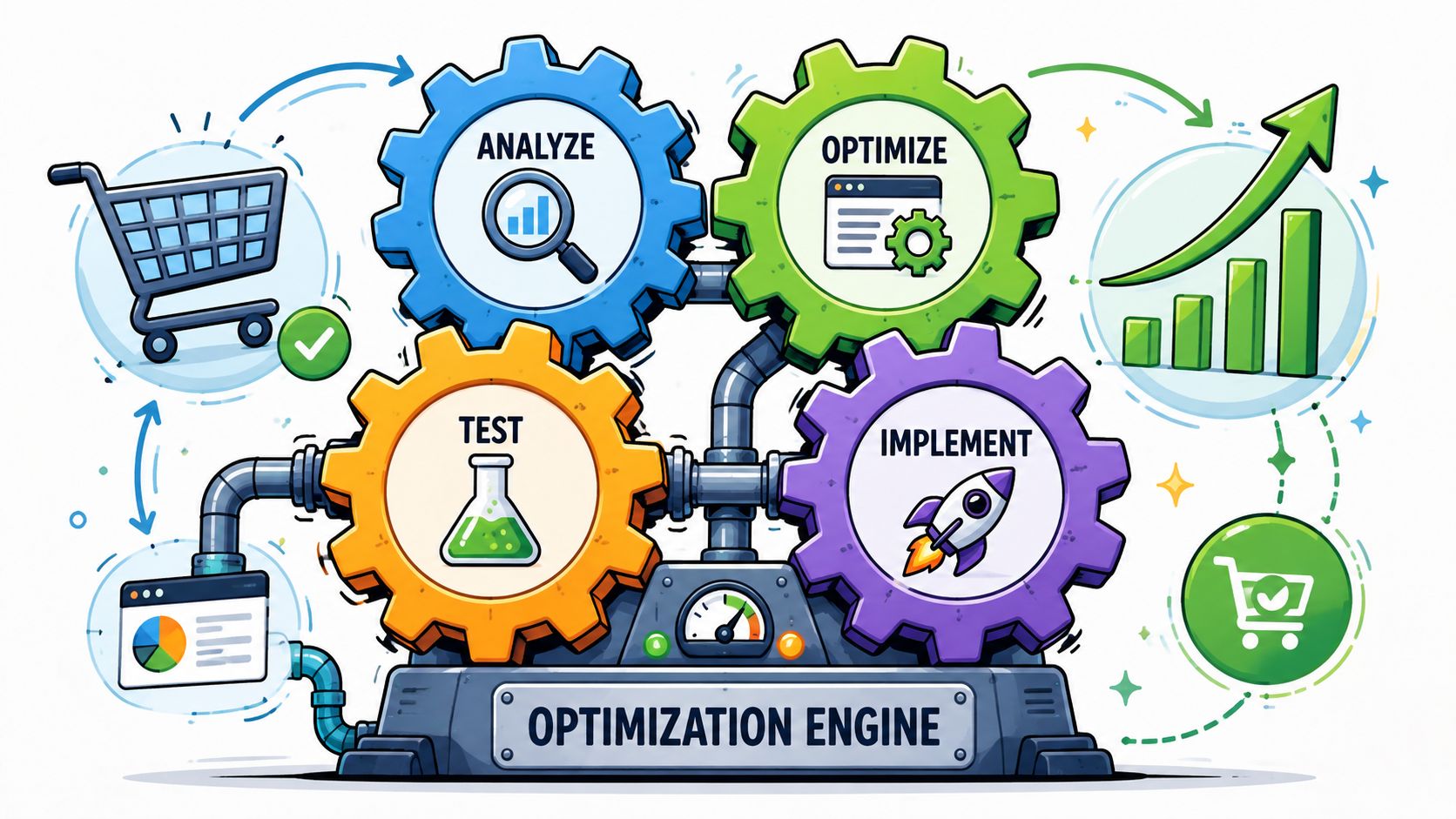
The most useful shift is to stop treating CRO as a one-off website tweak. It works better as an operating rhythm. Review behavior, prioritize friction points, test meaningful changes, learn from results, and repeat.
Start with a simple operating model
You don't need a huge team to begin. You do need consistency.
A practical approach looks like this:
- Audit the journey from landing page to checkout completion.
- Identify the biggest drop-offs using analytics and behavior tools.
- Prioritize larger opportunities first such as offer clarity, product page structure, trust signals, and mobile friction.
- Run controlled tests where you have enough traffic and confidence.
- Track business impact with metrics tied to actual revenue, not just clicks.
One useful mindset shift is to connect conversion work to broader revenue quality. That's where ideas like revenue optimization become relevant, especially once you start looking beyond isolated page tests.
Why AI is changing CRO
The next phase of Conversion Rate Optimization is less about static testing and more about adaptive systems. Recent data shows that AI-integrated CRO platforms increased revenue per visitor by 22% without additional ad spend (Twilio).
That matters because many brands have already tested the obvious changes. They've updated buttons, simplified forms, and adjusted layouts. AI-driven optimization adds another layer by helping teams respond to behavior patterns more dynamically.
Here's a practical video if you want to explore that shift further:
What to do if you don't have in-house CRO depth
Some brands handle this internally with a growth lead, designer, developer, and analyst. Others work with outside specialists who can audit Shopify experiences, run structured experimentation, and connect onsite improvements to revenue outcomes.
ECORN is one option for teams that need Shopify design, development, and CRO support in the same workflow, especially when implementation speed matters as much as strategy.
The main point is simpler than the tooling. Don't let the acronym confuse the decision. If your store has traffic but leaves revenue on the table, focus on Conversion Rate Optimization. If your business has multiple revenue-moving teams pulling in different directions, start thinking about Chief Revenue Officer responsibilities too.
If you want help turning traffic into more revenue with sharper Shopify execution, ECORN offers eCommerce support across design, development, and conversion-focused improvement work.


How to Build a Shopify Clothing Website That Converts
How to Launch a Box Subscription Business in 2026

Luxury Skincare Branding Playbook That Converters
10 Best Podcast Ecommerce Shows for Store Growth in 2026
Shopify Developer Hourly Rate: What to Pay in 2026
Critical Shopify Setup Errors That Are Secretly Sabotaging Your Store
Ecommerce Conversion Tracking: The Complete How-To Guide
Shopify Design Agency: How to Pick the Right Partner
Mastering Multi Store Management on Shopify
Scale Shopify Store
10 Shopify App Ideas Worth Building in 2026
Conversion Rate Optimization for Landing Pages: The Playbook
Shopify Plus Automation: A Guide for 2026
10 Social Selling Platforms for Shopify Merchants

Shopify Website Design Examples: 7 Stores Worth Studying
7 Ecommerce Newsletter Examples for Shopify Brands
One Product Shopify Store: Build and Scale

Mobile Pop Up Strategy for Shopify Stores That Converts
Sitemap for Shopify: How to Find, Optimize, and Submit It
7 Single Product Websites Worth Emulating
Product Variants Shopify: The Complete 2026 Guide
Ecommerce Analytics Consulting for Growth
What Is AI Integration for eCommerce
How to Choose the Right eCommerce Website Development Firm
E Business Strategy Implementation
Conversion Tracking Setup for Shopify Stores
BigCommerce vs Shopify Plus Which Enterprise Wins in 2026
Shopify Theme Kit: Setup, Commands, and Migration Guide

Shopify Extension Development: A Practical 2026 Guide
Shopify Speed Score Explained and How to Improve It
Shopify Mobile Optimization: The 2026 Playbook
How to Add Subcategory in Shopify for Better UX
How to Implement Structured Data for Ecommerce in 2026
SEO App Mobile: Shopify Store Optimization Guide
Shopify Plus Support: What It Includes and How to Choose
Google Ads for Shopify: The Complete 2026 Playbook
Shopify New York: How to Find and Hire the Right Agency
Google Search Console for Shopify: The Complete Setup
First Party Data Collection for eCommerce Growth
FAQ Online Store Guide: Build and Measure It Right
Do FB Ads Work for eCommerce in 2026?
One Page Checkout for Shopify: Design and Implementation
Shopify GraphQL vs REST: The 2026 Developer Decision
Shopify Ecommerce Consulting: Strategy, Pricing &
Are Reddit Ads Worth It for eCommerce Brands

Shopify Title and Meta Description: A Practical 2026 Guide

Product Video Best Practices for Shopify Brands
Real-Time Inventory Management: A 2026 Guide
AI Chatbot Integration for Shopify Stores
Affiliate Program Management: A Shopify Guide
10 Best Performance Monitoring Tools for Shopify in 2026
Digital Asset Management for eCommerce Brands in 2026
Every Type of Facebook Ads Explained for eCommerce Growth
Product Information Management Explained for Shopify Brands
Support Ticket System: A Guide for Shopify Stores

10 Best Customer Service Tools for Shopify in 2026

Can I Start a Business with No Money? a 2026 Blueprint

What Sells Good on Etsy: Best Niches for 2026

Shopify Add to Cart Button: A Practical 2026 Guide

Customer Feedback Automation: A Practical eCommerce Guide
Critical Rendering Path: A Guide for Shopify Stores

How to Promote on TikTok for eCommerce in 2026

B2B eCommerce Consulting That Drives Real Revenue
10 Best Practices for Site Navigation in 2026
Return vs Refund for Shopify Stores: A Practical Guide
What Is Customer Lifetime Value and Why It Matters
What Is Voice of Customer Research for eCommerce

SMS Marketing for Ecommerce That Actually Converts

Master How to Improve Email Deliverability in 2026

Top 8 eCommerce Partners NYC for Shopify Brands in 2026
Machine Learning for Ecommerce: Boost Your Shopify Store

Beauty Market Research: Your 2026 Growth Guide

Shopify International Expansion: A 2026 Roadmap

Shopify Visual Merchandising: A Playbook for Higher Sales

Shopify Landing Page Design: Master Conversion in 2026
10 Best AI SEO Optimization Tools for Shopify in 2026

Agentic AI for Ecommerce: Boost Your Sales in 2026
Mastering Email Marketing Data for eCommerce Growth
Conversion Rate Optimisation Australia: Boost Your Sales
Conversion Rate Optimization AI: Your Shopify Store Guide

10 Product Bundling Strategies for Shopify in 2026
How to Increase Customer Lifetime Value: A Shopify Playbook
AI Customer Service Automation: Shopify Guide 2026

Clean Website Design: A Shopify Conversion Playbook

Omnichannel Retail Strategy: A Shopify Playbook
Product Data Enrichment: A Guide for Shopify Brands

Instagram Shopping Features a Guide for Shopify Stores
What Is Revenue Optimization: A Holistic RevOps Guide
Benefits of Conversion Rate Optimization: Boost Your
WordPress to Shopify Migration: Your 2026 Seamless Switch
Boost Sales: Ecommerce Payment Processing Guide 2026
Unified Commerce Platform: Benefits, KPIs & Shopify Guide
How to Reduce Bounce Rate eCommerce: Your 2026 Guide
Shopify API Integration: A Practical End-to-End Guide

How to Implement Data Governance: A 2026 Guide
Shopify Store Development Cost: A 2026 Breakdown
What Is Server Side Tracking: The Shopify Guide 2026
Marketing Automation Workflows: A Shopify Guide for 2026
Shopify: How to Reduce Technical Debt

Shopify UX Design Change: A Playbook for Growth


newsletter in your inbox