


Your Shopify support queue probably looks familiar, a flood of “Where is my order?” messages, returns questions, pre-purchase objections, and the odd urgent escalation that should've been routed somewhere else ten minutes ago. As order volume grows, email threads and scattered social DMs stop being manageable, and the cost isn't just slower replies, it's lost repeat purchases, higher agent fatigue, and a support stack that can't keep up with your store. The right customer service tools turn support into a retention channel, especially for Shopify brands that need clean order context, fast handoffs, and automation that reduces work instead of adding another dashboard. If you're trying to cut costs with automated support while keeping response quality high, the difference between a generic helpdesk and a Shopify-aware platform matters fast. For a deeper Shopify-specific angle on chat and support workflows, see ECORN's guide on transforming customer support into a sales machine.
1. Gorgias
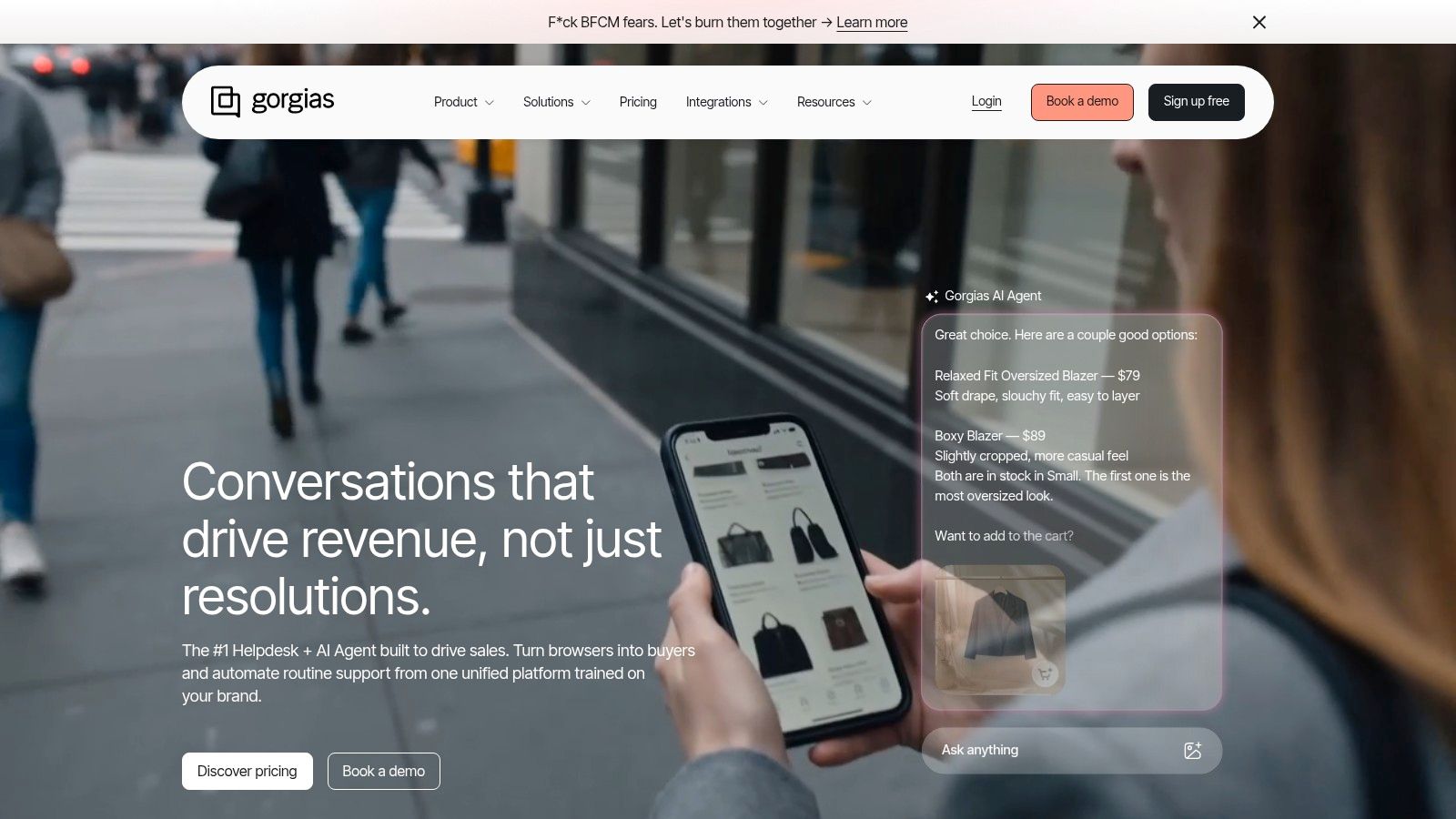
Gorgias is usually the first platform Shopify operators evaluate because it's built around ecommerce operations, not a generic service desk. The appeal is simple, agents can see and act on Shopify order data inside the workspace, which makes refunds, cancellations, and order edits feel like support tasks instead of system hops.
Why Shopify teams like it
The value shows up when support volume is repetitive. Gorgias's macros, rules, and AI features help teams reduce handling time on the same ticket types that eat margin, and its omnichannel inbox covers email, chat, social, SMS, with voice as an add-on. For brands running multiple storefronts or a messy mix of channels, that single workspace is often what keeps operations sane.
Practical rule: if most of your tickets are order-status, returns, or cancellation requests, choose the tool that makes those actions fastest inside the agent console.
Trade-offs that matter
Gorgias is not cheap in high-volume months if you don't tune the workflow carefully, because ticket-based pricing can rise when support spikes. Voice and SMS are also paid add-ons, so the true cost of ownership can drift beyond the base subscription if your team leans on those channels heavily.
For Shopify merchants, that's still often a good trade if your current setup wastes agent minutes on every ticket. The platform's Shopify-first design, quick install path, and automation depth make it one of the strongest choices for SMB and mid-market brands that are outgrowing shared inboxes. If you want a practical AI lens on support workflows, ECORN's guide to AI customer service automation is a useful companion read.
2. Zendesk Suite
Zendesk Suite is the safest enterprise-grade answer when your support team needs process control more than ecommerce-specific polish. It handles multi-brand operations, security reviews, and complex routing well, and it's a better fit when support is tied into broader customer experience governance instead of just Shopify ticket handling.
Where it fits best
Zendesk's omnichannel workspace gives you routing, automations, knowledge base tooling, and add-ons for workforce management and advanced AI. For larger teams, that maturity matters because it supports QA, forecasting, reporting, and layered permissions without forcing you into a lightweight model that breaks as soon as the org grows.
The Shopify integration is useful, but it's not the reason to buy Zendesk. Brands pick it when they already know they need a platform that can absorb complexity across regions, teams, and channels. If you're managing support for multiple brands or operating under stricter compliance expectations, that's a reasonable trade.
What to watch
The downside is cost creep. Per-seat pricing plus AI, telephony, and outbound add-ons can make the total bill much higher than the starting price suggests, and the implementation effort is heavier than ecommerce-native tools. Smaller Shopify teams often discover they're paying for depth they won't use for a long time.
For Plus-level operators, though, that depth can be exactly why Zendesk works. It's the platform you choose when support has to align with enterprise workflows, not when you're trying to get order lookup working by Friday.
3. Intercom
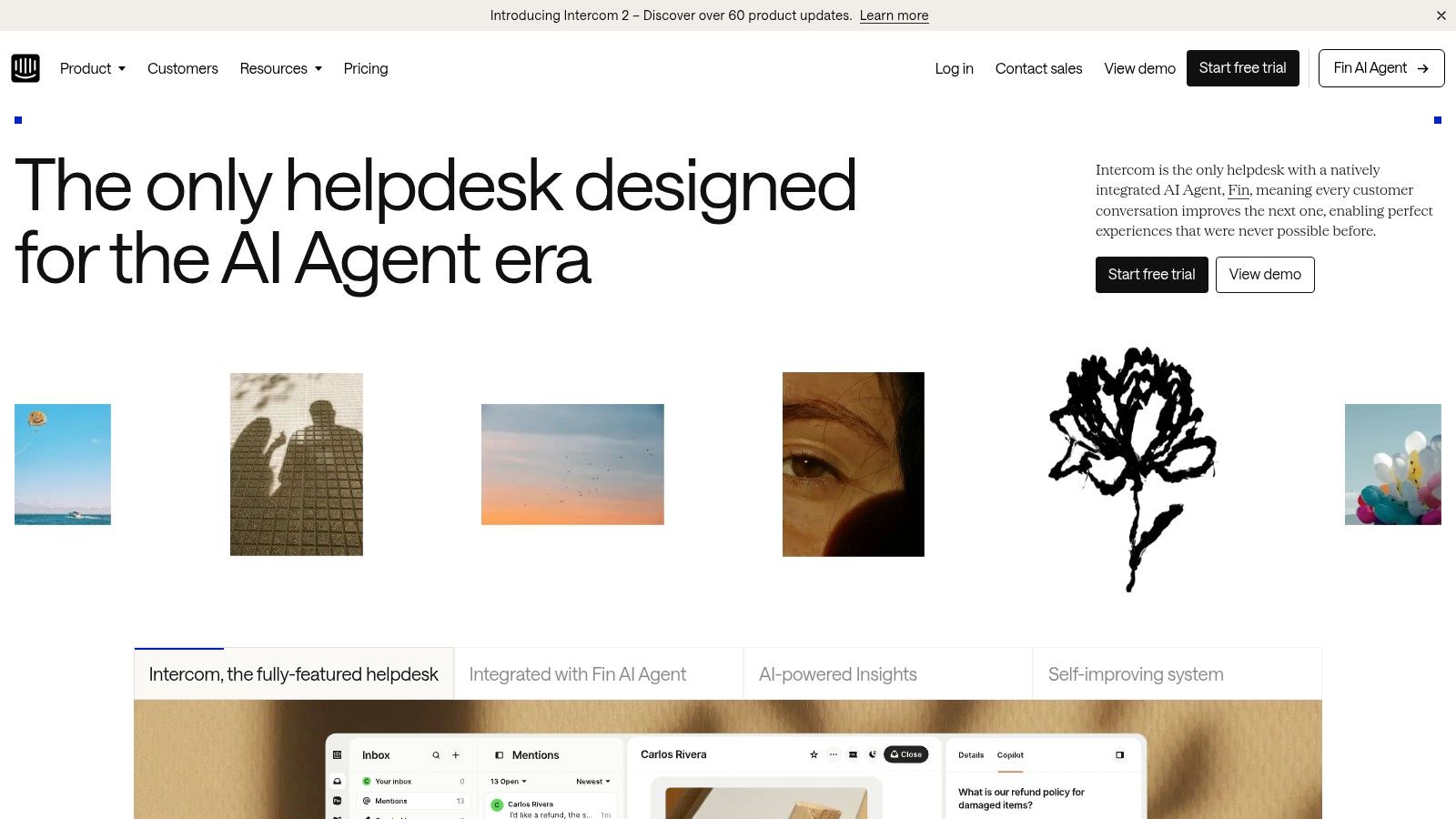
A Shopify brand usually reaches for Intercom when support and product experience are intertwined. A customer asks a question in-app, gets a guided reply, and the same tool can carry that conversation into proactive messaging or support follow-up. That makes it feel closer to a customer engagement layer than a traditional helpdesk, while still covering service workflows well.
The Shopify angle
The Shopify integration works, but it is not as commerce-native as Gorgias or Re:amaze. For brands that rely on proactive messages, guided onboarding, product education, or a steady flow of web-based customer touchpoints, that trade-off can still make sense.
Intercom's AI layer, Fin, is the main reason automation-heavy teams look at it. The pricing model takes more effort to model because it combines seats, AI outcomes, and add-ons, so the total cost of ownership can move well beyond the starting price. For teams that want a predictable support bill, that deserves a close look before procurement signs off. For a practical AI lens on support workflows, ECORN's guide to AI customer service automation is a useful companion read.
Best use case
Intercom fits brands that treat customer service as part of a broader digital experience. If your customers spend time in a web app, repeat buyers need proactive nudges, or you want to shape conversations before they become tickets, this platform can justify itself.
It handles conversation start and routing very well. It is less specialized for Shopify back-office actions, so brands that need deep order management inside support often pair it with another tool or choose a more ecommerce-native option. For SMBs, that can mean paying for capabilities they will not fully use. For Mid-Market and Plus brands, the value comes when support, onboarding, and retention live in the same workflow.
4. Help Scout
Help Scout is the cleanest option for teams that want an email-first support experience without a lot of administrative overhead. It looks and feels familiar, which is a real advantage when you're trying to get a lean team working inside a new workflow quickly.
Why it stays popular
The shared inbox is straightforward, the Docs knowledge base is easy to maintain, and the chat layer works well for teams that want just enough live support without turning service into a complicated operations project. That simplicity is the point. For smaller Shopify stores, the value is often in how little time it takes to adopt.
A simple service stack is only simple if it stays connected to your actual customer data. Otherwise, the inbox gets cleaner while the handoffs get worse.
Limits for ecommerce brands
Help Scout isn't as Shopify-native as Gorgias or Re:amaze, so you won't get the same depth of order actions inside the agent workflow. That matters when your team needs to refund, edit, or cancel orders fast while keeping the customer conversation in context.
Its pricing mechanics are relatively transparent, including add-ons for in-app Messages based on monthly unique viewers, which is useful if you care about budgeting with less surprise. I'd still position Help Scout as best for lean teams that value human tone and quick rollout over automation depth.
5. Kustomer
Kustomer takes a CRM-style approach to support, which makes it strong for brands that want every customer interaction in one timeline. That model is useful when your agents need history, context, and actionability instead of ticket-by-ticket fragmentation.
Where it stands out
Kustomer's Shopify integration lets agents work with order data directly from the customer timeline, including draft order actions and edits. That gives service teams a more complete operational picture, which is especially valuable if customers come back often and expect continuity across channels.
It's also a strong fit for automation-heavy workflows. If your brand has structured support motions, repeatable processes, and a lot of customer identity data to unify, Kustomer can reduce friction in a way a simpler inbox can't.
What makes it heavier
The platform is usually sold through quotes, and implementation is generally heavier than a lighter helpdesk. That's not a flaw, it's the cost of a more unified customer record.
For Shopify brands, the question is whether your support team needs a CRM-first architecture or just faster ticket resolution. If your operating model already includes layered service workflows, Kustomer can be a serious upgrade. If you mainly need order lookup and fast macros, it may be more platform than you need.
6. Gladly
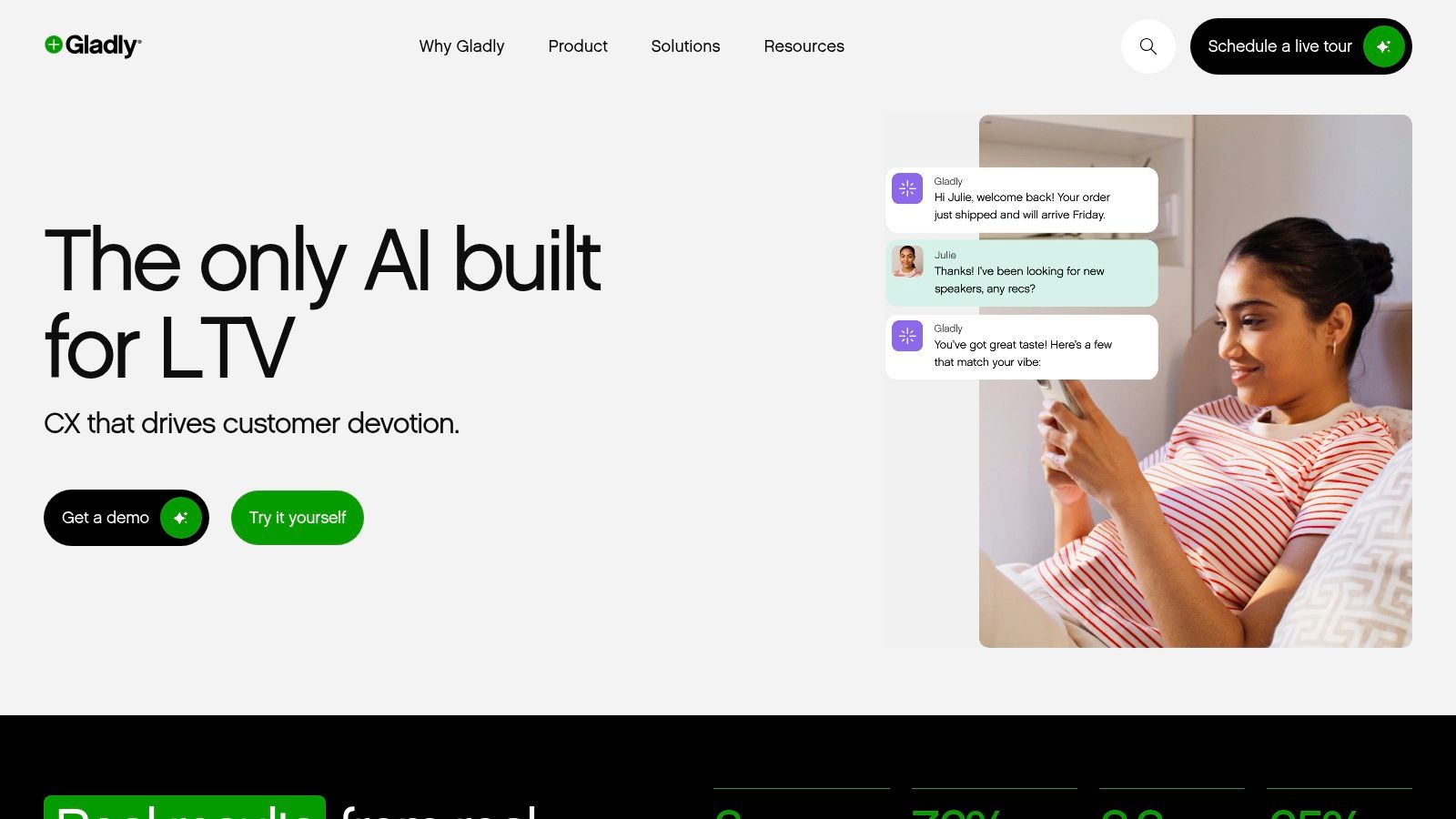
Gladly is for brands that think in ongoing conversations rather than isolated tickets. That difference sounds subtle until your team starts handling repeat customers across voice, chat, email, SMS, and social, then the single-thread model becomes a real operational advantage.
Why it works for repeat buyers
Gladly's strength is continuity. Agents don't have to reconstruct the customer story every time someone comes back through a different channel, which is especially helpful for brands with loyalty programs, high repeat purchase rates, or heavy voice volume.
Its native Shopify integration and voice support make it attractive for service teams that still rely on phone interactions while trying to modernize the rest of the stack. The conversation-centric design also makes training easier for teams that dislike ticket queues and want a more natural interaction model.
Where cost and fit get tricky
Gladly is typically sales-quoted, and telephony plus voice AI usage can add cost on top of the base arrangement. That means you should think in terms of total service economics, not just seat counts.
It's a strong fit for established DTC brands with mature support operations. It's less compelling if your team mainly needs an affordable way to clean up inbox chaos and automate repetitive ecommerce questions. In that case, a more Shopify-specific helpdesk is usually the better investment.
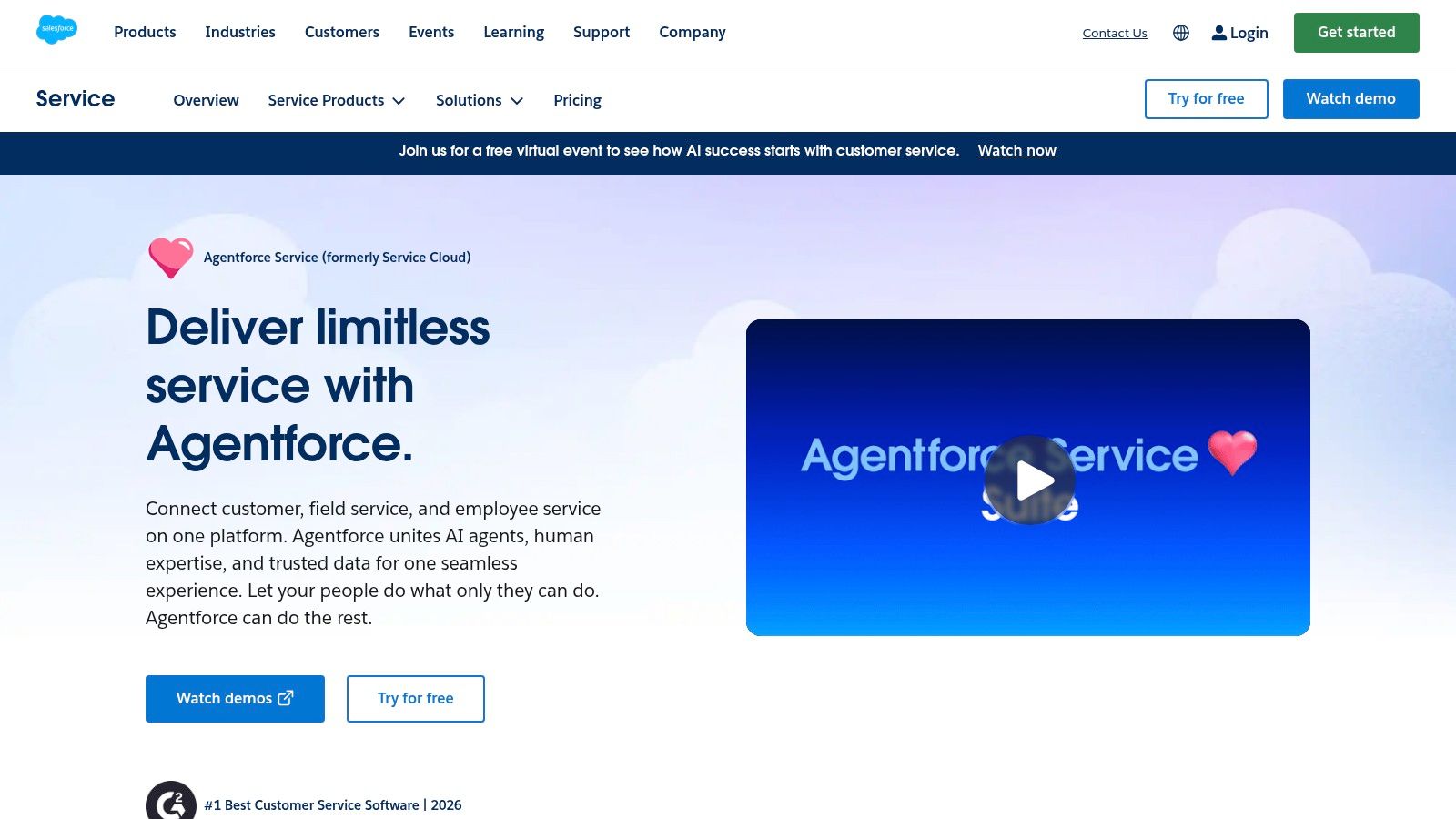
7. Salesforce Service Cloud
Salesforce Service Cloud makes sense when support has to live inside a wider Salesforce stack. It is highly configurable, extensible, and aimed at organizations that already use Salesforce as a core system for customer data, routing, and reporting.
The practical upside
Salesforce reports that 30% of service cases were resolved by AI in 2025, with that share expected to reach 50% in 2027 in its service stats overview (Salesforce service statistics). For enterprise teams, that points to where the platform is headed, more automated case handling, more AI-assisted workflows, and less manual triage in the support queue.
For Shopify operators, the value is not the statistic itself. It is the way Salesforce can connect support with CRM, workflows, approvals, knowledge, and telephony in one system architecture. If your company already runs Salesforce across sales and service, the integration path is often cleaner than stitching together a stack of point tools. For brands managing service data in B2B RevOps, this martechdo resource provides useful context on enterprise service architecture: service data in B2B RevOps.
That matters most for larger teams that need shared data across departments. A service agent can see account history, order context, and workflow status without jumping between disconnected systems, which can reduce handoff friction and improve reporting quality.
The downside
Salesforce is rarely the fastest or lowest-friction choice for a Shopify support team that just needs to resolve order issues quickly. Implementation usually takes more planning, more governance, and more internal ownership than ecommerce-native tools. Add-ons, licensing choices, and commercial negotiation can also make total cost harder to predict than teams expect at the buying stage.
It fits best when support is part of a broader enterprise service operation and the company is already committed to the Salesforce ecosystem. For smaller Shopify merchants, or teams that mainly need to clear repetitive tickets faster, it is often too much platform for the problem at hand.
8. HubSpot Service Hub
HubSpot Service Hub works best for Shopify brands that already run their customer data through HubSpot CRM. The practical benefit is shared context. Service, marketing, and sales teams can work from the same customer record instead of reconciling separate systems.

Where it makes sense
The help desk, omnichannel inbox, knowledge base, surveys, and automation tools all stand on their own. Value becomes evident once those features sit on HubSpot CRM, because service history, lifecycle data, and reporting are easier to manage in one place.
For Shopify brands already using HubSpot for acquisition and lifecycle marketing, Service Hub can reduce tool sprawl and limit the need to maintain another disconnected support stack. The published product catalog and no seat minimums for new customers since 2024 also make adoption easier for teams that want a lower-commitment entry point.
Where it falls short
HubSpot is less ecommerce-native than Shopify-specialized tools, especially for direct order actions. That matters for teams that need agents to spend less time switching tabs and more time closing service issues inside the support workflow.
Costs can climb once you add more advanced contact center features and AI capabilities. That makes HubSpot a clean fit for unified CRM teams, but not always the leanest choice for brands whose service volume is tightly tied to orders and post-purchase resolution.
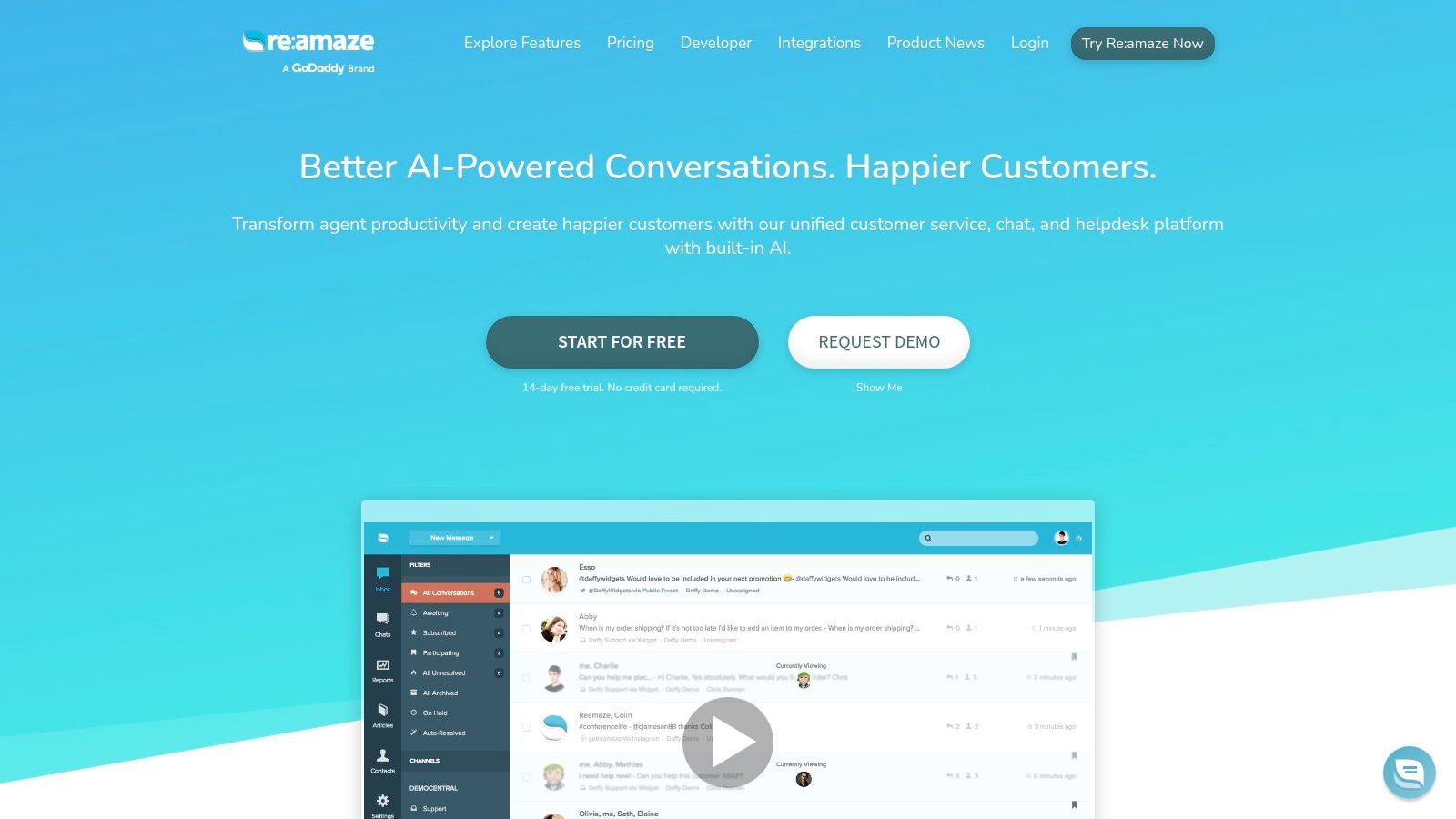
9. Re:amaze
Re:amaze is one of the strongest Shopify-oriented helpdesks for SMB and mid-market ecommerce teams. It combines a friendly interface with the practical workflows brands need, like order data in tickets, multi-store support, and proactive campaigns.
Why ecommerce teams like it
Re:amaze is built for omnichannel service without feeling enterprise-heavy. Its bots, Cues, live view, and proactive messaging are useful for teams that want to answer faster and intercept issues before they become tickets.
The Shopify integration is a real operational advantage, because agents can work with order context, refunds, cancellations, and multi-store setups inside one workflow. That makes it especially attractive for stores that have moved beyond startup chaos but aren't ready for a giant enterprise stack.
Best-fit signal: if your team wants more ecommerce specificity than Help Scout but less complexity than Zendesk, Re:amaze sits in a very practical middle ground.
What to keep in mind
Re:amaze doesn't have the same governance depth as Zendesk or Salesforce. Reporting is also lighter than the enterprise platforms, so analytics-heavy teams may feel constrained as they scale.
Even so, the value proposition is strong. For Shopify operators who care about a quick install, strong channel coverage, and a support workflow that respects commerce context, Re:amaze is one of the most sensible options on the list.
10. Richpanel
Richpanel is built around self-service and AI agents, which makes it a strong option for brands trying to reduce repetitive tickets at the source. Instead of treating the helpdesk as the center of gravity, it leans into end-to-end customer flows tied to store data.

Why it stands out
Richpanel's AI agents can resolve common ecommerce flows like returns and order status, which is exactly where many Shopify support teams lose time. It also supports hybrid setups, including interoperability with Zendesk, so it can sit standalone or beside an existing helpdesk.
That flexibility is useful if you're not ready to rip out your current stack. You can use Richpanel to replace selected widgets or workflows while preserving the rest of your service operation.
What to verify before buying
Its pricing is quote-based, so you'll need a sales-assisted conversation to understand the actual cost. The ecosystem is smaller than major platforms, which means integration checks matter more than usual.
For DTC brands focused on deflection and self-service, Richpanel can be a valuable layer. For teams that want a broad, proven marketplace and a large partner ecosystem, a more established helpdesk may be easier to operate long term.
Top 10 Customer Service Tools Comparison
| Solution | Core features ✨ | UX / Quality ★ | Value / Price 💰 | Target audience 👥 | USP / Strengths 🏆 |
|---|---|---|---|---|---|
| Gorgias | Native Shopify actions, omnichannel inbox, automations ✨ | ★★★★ | 💰 Ticket-volume pricing; unlimited agents on higher tiers | 👥 Shopify & Shopify Plus merchants scaling omnichannel support | 🏆 Deep Shopify integration + strong automation |
| Zendesk Suite | Omnichannel workspace, WFM, analytics, marketplace ✨ | ★★★★★ | 💰 Per-seat + add-ons (telephony/AI) → higher TCO | 👥 Large/multi-brand enterprises needing compliance | 🏆 Scalable enterprise ecosystem & reports |
| Intercom | In-app/web messenger, AI (Fin), proactive campaigns ✨ | ★★★★ | 💰 Seats + AI outcomes + add-ons; pricing complex | 👥 Product-led teams & apps focused on in‑app CX | 🏆 Best-in-class messenger experience & AI outcomes |
| Help Scout | Shared inbox, Docs KB, web chat, simple admin ✨ | ★★★★ | 💰 Predictable, transparent pricing; low admin overhead | 👥 Lean, email-first teams & nonprofits | 🏆 Fast rollout and human-centric email experience |
| Kustomer (Meta) | Unified timeline, robust automation, voice support ✨ | ★★★★ | 💰 Quote-based sales model; possible seat mins | 👥 B2C brands needing CRM-style workflows & automation | 🏆 Deep customer timeline with actionable order edits |
| Gladly | Continuous conversation model, native voice, AI routing ✨ | ★★★★ | 💰 Sales-quoted; voice/AI usage fees & seat mins | 👥 Brands with high voice volume & repeat customers | 🏆 Conversation-first lifetime customer view |
| Salesforce Service Cloud | Case mgmt, Service Cloud Voice, platform extensibility ✨ | ★★★★★ | 💰 High; negotiated pricing + heavy implementation | 👥 Complex enterprises, Salesforce-centric orgs | 🏆 Extremely configurable with vast ecosystem |
| HubSpot Service Hub | Help desk, omnichannel inbox, KB, CRM-tied automation ✨ | ★★★★ | 💰 Predictable seat-based pricing; add-ons raise cost | 👥 Teams already on HubSpot wanting unified CRM | 🏆 Frictionless CRM integration & unified reporting |
| Re:amaze | Deep Shopify integration, bots, proactive Cues, AI agents ✨ | ★★★★ | 💰 Good SMB/mid-market value; AI monthly resolutions included | 👥 DTC SMB to mid-market ecommerce teams | 🏆 Ecommerce-centric workflows + proactive campaigns |
| Richpanel | AI agents, self-service flows, Shopify + hybrid setups ✨ | ★★★★ | 💰 Quote-based, sales-assisted pricing | 👥 DTC brands prioritizing self-service & automation | 🏆 End-to-end AI self-service that reduces ticket volume |
From Tool Selection to a World-Class CX Strategy
Choosing the right customer service tools is only the first decision. The bigger win comes from how you implement them, because a good platform still underperforms if your data is messy, your workflows are unclear, or your team isn't trained on what changed. That's the part many Shopify brands underestimate.
A strong rollout starts with clean migration. Customer histories, tags, routing logic, knowledge articles, and saved automations need to move in a way that preserves context, not just records. If the new platform doesn't see the same order and customer data your agents used before, the support experience can get worse before it gets better.
Training matters just as much. Agents need to know when to let automation handle a ticket, when to escalate, and how to use the workflow in a way that keeps response quality high. The market data makes this shift hard to ignore, since 88% of contact centers use some form of AI, but only 25% have fully integrated automation into daily operations, which means many teams are still bolting AI onto old processes instead of redesigning the work itself (industry summary).
For Shopify brands, the best ROI usually comes from tools that match your actual stage. SMBs need fast deployment and order-aware support. Mid-market teams need stronger routing, reporting, and self-service. Shopify Plus brands need governance, security, and orchestration across channels and brands.
That's also where integration maturity becomes the key buying criterion. If your support stack can't pull accurate Shopify context, CRM history, and policy knowledge into one agent view, you'll keep paying for manual lookup time. And if your workflows aren't designed around escalation logic and approved knowledge, AI can create more handoff errors than it removes.
ECORN works with Shopify brands that need more than a software license, they need a support system that fits the store, the team, and the growth plan. If you're comparing platforms or planning a migration, the Shopify specialists at ECORN can help you map the right stack, implement it cleanly, and build a customer service operation that supports retention, not just ticket closure.
If you're choosing a Shopify support stack right now, start with the tool that fits your order volume, channel mix, and team structure, not the one with the longest feature list. ECORN helps Shopify brands evaluate customer service tooling, connect it properly to the store, and roll out workflows that reduce support friction. Reach out if you want a practical migration plan or a Shopify-first review of your current setup.


Shopify Extension Development: A Practical 2026 Guide

Shopify Speed Score Explained and How to Improve It
Shopify Mobile Optimization: The 2026 Playbook

How to Add Subcategory in Shopify for Better UX
How to Implement Structured Data for Ecommerce in 2026
SEO App Mobile: Shopify Store Optimization Guide

Shopify Plus Support: What It Includes and How to Choose

Google Ads for Shopify: The Complete 2026 Playbook

Shopify New York: How to Find and Hire the Right Agency

Google Search Console for Shopify: The Complete Setup
First Party Data Collection for eCommerce Growth

FAQ Online Store Guide: Build and Measure It Right
Do FB Ads Work for eCommerce in 2026?

One Page Checkout for Shopify: Design and Implementation
Shopify GraphQL vs REST: The 2026 Developer Decision
Shopify Ecommerce Consulting: Strategy, Pricing &

Are Reddit Ads Worth It for eCommerce Brands
Shopify Title and Meta Description: A Practical 2026 Guide

Product Video Best Practices for Shopify Brands
Real-Time Inventory Management: A 2026 Guide
AI Chatbot Integration for Shopify Stores
Affiliate Program Management: A Shopify Guide
10 Best Performance Monitoring Tools for Shopify in 2026

Digital Asset Management for eCommerce Brands in 2026
Every Type of Facebook Ads Explained for eCommerce Growth
Product Information Management Explained for Shopify Brands
Support Ticket System: A Guide for Shopify Stores

Can I Start a Business with No Money? a 2026 Blueprint

What Sells Good on Etsy: Best Niches for 2026

Shopify Add to Cart Button: A Practical 2026 Guide

Customer Feedback Automation: A Practical eCommerce Guide

Critical Rendering Path: A Guide for Shopify Stores

How to Promote on TikTok for eCommerce in 2026

B2B eCommerce Consulting That Drives Real Revenue
10 Best Practices for Site Navigation in 2026
Return vs Refund for Shopify Stores: A Practical Guide

What Is Customer Lifetime Value and Why It Matters
What Is Voice of Customer Research for eCommerce

SMS Marketing for Ecommerce That Actually Converts

Master How to Improve Email Deliverability in 2026

Top 7 eCommerce Partners NYC for Shopify Brands in 2026

Machine Learning for Ecommerce: Boost Your Shopify Store

Beauty Market Research: Your 2026 Growth Guide

Shopify International Expansion: A 2026 Roadmap

What Does CRO Stand for in Business: Understanding CRO

Shopify Visual Merchandising: A Playbook for Higher Sales

Shopify Landing Page Design: Master Conversion in 2026
10 Best AI SEO Optimization Tools for Shopify in 2026

Agentic AI for Ecommerce: Boost Your Sales in 2026
Mastering Email Marketing Data for eCommerce Growth

Conversion Rate Optimisation Australia: Boost Your Sales
Conversion Rate Optimization AI: Your Shopify Store Guide

10 Product Bundling Strategies for Shopify in 2026

How to Increase Customer Lifetime Value: A Shopify Playbook
AI Customer Service Automation: Shopify Guide 2026

Clean Website Design: A Shopify Conversion Playbook

Omnichannel Retail Strategy: A Shopify Playbook

Product Data Enrichment: A Guide for Shopify Brands

Instagram Shopping Features a Guide for Shopify Stores
What Is Revenue Optimization: A Holistic RevOps Guide

Benefits of Conversion Rate Optimization: Boost Your
WordPress to Shopify Migration: Your 2026 Seamless Switch
Boost Sales: Ecommerce Payment Processing Guide 2026
Unified Commerce Platform: Benefits, KPIs & Shopify Guide

How to Reduce Bounce Rate eCommerce: Your 2026 Guide
Shopify API Integration: A Practical End-to-End Guide

How to Implement Data Governance: A 2026 Guide

Shopify Store Development Cost: A 2026 Breakdown
What Is Server Side Tracking: The Shopify Guide 2026
Marketing Automation Workflows: A Shopify Guide for 2026

Shopify: How to Reduce Technical Debt

Shopify UX Design Change: A Playbook for Growth
User Generated Content Strategy: Shopify Playbook

Shopify Pause and Build Plan Cost: A Complete 2026 Guide

Compare at Price on Shopify: A Complete Guide for 2026

Where Can I Sell My Prints? 10 Best Platforms for 2026
Shopify Order Management System: The Ultimate Guide 2026
What Is Marketing Attribution? an eCommerce Guide for 2026

10 Best Black Friday Sales Sheets for 2026

Discover the Top Social Media Marketing Agencies For
Consumer Confidence Definition for eCommerce in 2026

What Is Social Commerce? Your 2026 Guide to Boosting Sales

A Social Ad Campaign Playbook for eCommerce Growth

7 Best FAQ Page Examples for SaaS & eCommerce

Market Research in Fashion Industry: A Guide for Shopify
Shopify Migration Services: Expert Guide for 2026

Mastering FB Retargeting Ads for Shopify in 2026
What Is Omnichannel Ecommerce

Master Your Shopify Plus Migration: The 2026 Guide
Shopify Integration Services: A Merchant's 2026 Guide
Shopify Collection Description: A Guide to SEO & Sales

Shopify Plus Contact: Reach Sales & Support Effectively

Top Luxury Shopify Stores: Design & UX Strategies
How to Improve Customer Experience: A Shopify Roadmap

Creative Facebook Ads: 10 Examples for Shopify Brands

Remarketing with Facebook Ads: A Shopify Guide for 2026

SEO Linking Strategies for Shopify Stores

Top 7 Statistics YouTube Channels for eCommerce in 2026

Hiring Shopify Plus Designers: A Founder's Guide

Shopify Product Variation: Master Your Variants for 2026


newsletter in your inbox