

A polished landing page isn't automatically the best single-product website. The right build depends on the buying job you need it to perform: supporting a scalable storefront, embedding a trusted checkout into an existing site, testing conversion ideas quickly, creating bespoke product storytelling, launching with minimal setup, or handling digital-product tax obligations. Those priorities lead to very different platform choices.
The seven approaches below separate storefront control, checkout strength, experimentation, design freedom, setup speed, and digital-product compliance. Each one is evaluated through product narrative, purchase friction, iteration speed, extensibility, performance trade-offs, and future growth. That matters because a single-product site concentrates messaging, proof, traffic, and checkout around one offer. The conversion optimization statistics for 2026 put typical ecommerce conversion rates in the 2% to 4% range, while a page converting at 5% is already strong relative to many web benchmarks. ECORN can help Shopify brands turn the strategy into execution through design, development, CRO, and scalable ecommerce implementation.
1. Shopify
Shopify fits a single-product business that may become a larger commerce operation. You can launch with one offer while keeping a storefront, inventory, payments, checkout, marketing channels, and product expansion in the same system. That avoids rebuilding the business when additional products, variants, or markets become viable.
Its strongest conversion advantage is a dependable transaction layer. Shopify includes PCI-compliant checkout and native payment options, while the official Theme Store provides a controlled design starting point. Online Store 2.0 sections support long-form product pages with demonstrations, specifications, reviews, FAQs, shipping details, and repeated purchase prompts, without requiring a fully custom build.

Where Shopify earns its place
Choose Shopify when physical fulfillment, repeat purchases, multiple variants, or catalog growth are part of the plan. Connections to Shop, social channels, marketplaces, and POS let one product record support several selling channels.
- Scalable foundation: Start with one product and retain an upgrade path to advanced Shopify plans and Shopify Plus.
- Centralized operations: Manage inventory, tax configuration, orders, and payment processing within one commerce system.
- Extensible stack: Add subscriptions, reviews, bundles, personalization, customer accounts, and analytics through apps.
- Channel flexibility: Sell through the storefront, social commerce, marketplaces, and physical locations.
The trade-off is ongoing cost and technical discipline. You pay a monthly platform fee and payment processing costs, while third-party gateways may add transaction fees. Apps and heavily customized themes can add scripts, styles, and tracking requests that slow the page. A single-product store should not install an app for every minor enhancement.
Practical rule: Build the first page with native theme sections. Add an app only when it addresses a measurable customer or operational requirement.
Shopify also suits brands that need professional implementation rather than a one-off launch. ECORN provides Shopify design, development, CRO, and Shopify Plus implementation, allowing an internal team to keep the platform aligned with a broader growth plan.
2. Shopify Buy Button
Shopify Buy Button fits a specific conversion problem: the content site already attracts attention, but the business needs Shopify Checkout for one product. Embed a product card or purchase component into an existing editorial site, portfolio, community, or campaign page instead of rebuilding that experience as a Shopify storefront.
The external site handles the explanation and persuasion. Shopify handles the transaction. A creator can place the offer beneath a long product guide, a media brand can connect a campaign page to commerce, and a company testing demand can link a preorder flow to Shopify's inventory and order management.
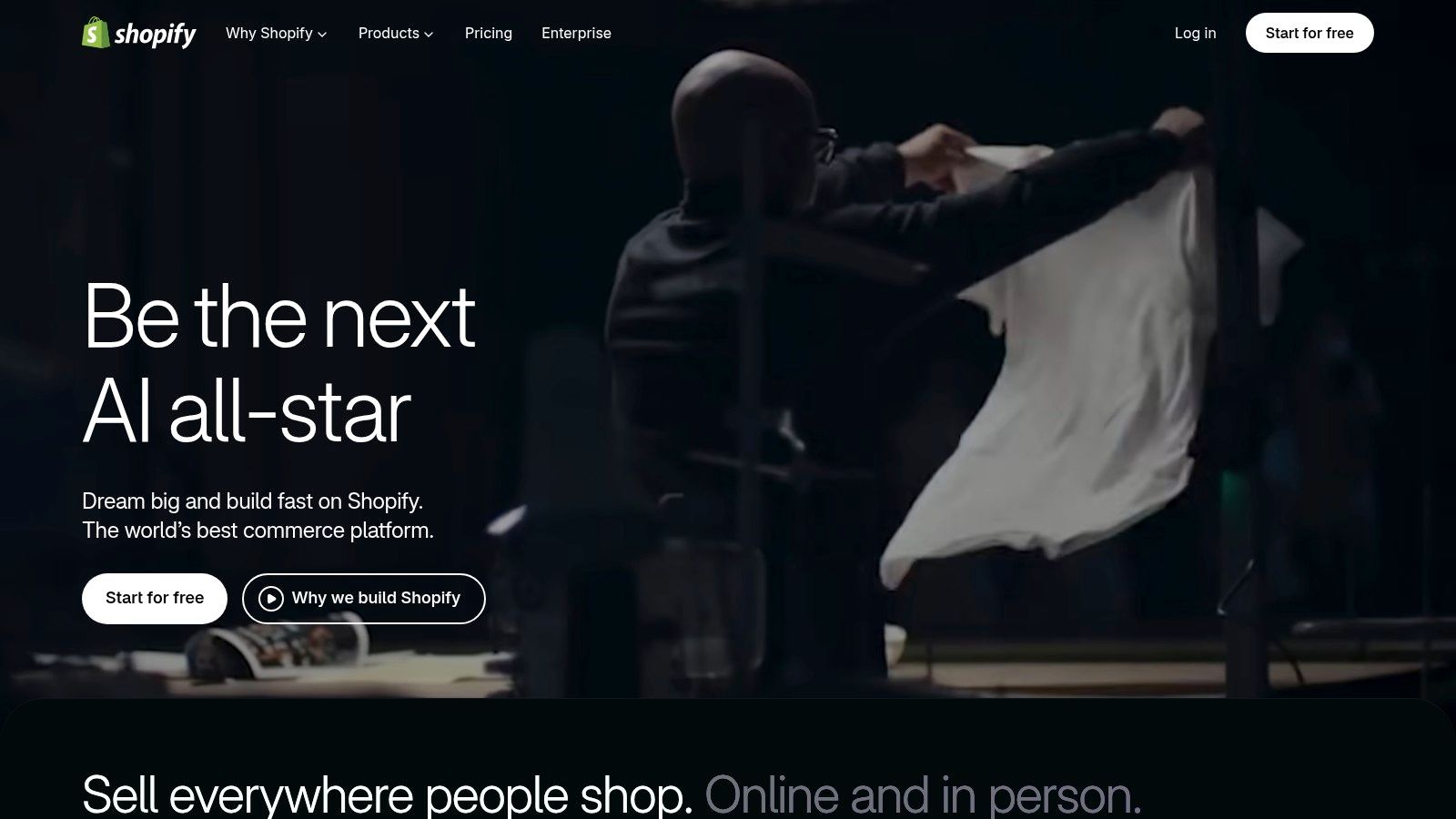
Strong checkout, limited storefront control
The button uses Shopify product data, keeping inventory, taxes, and orders connected to the Shopify account. That makes it a quick way to sell one SKU without creating collection pages, navigation, customer accounts, or broader merchandising logic.
Choose this setup when:
- The content layer already performs: Keep an established CMS, blog, portfolio, or campaign site.
- Checkout carries the conversion burden: Send buyers into Shopify Checkout without building a full storefront.
- Setup speed matters: Add a purchase action to an existing page instead of commissioning a complete ecommerce build.
- The product may expand later: Move content and merchandising into a full Shopify store if demand justifies the change.
The trade-off is split ownership. Product information and commerce controls sit in different systems, so design updates may require work in both places. The embedded flow also offers less storefront control, which can weaken navigation, merchandising, search visibility, and account continuity after purchase.
For an MVP, preorder, or content-led funnel, that limitation may be acceptable. Products requiring comparison content, bundles, subscriptions, extensive merchandising, or multiple markets usually need a full Shopify storefront.
Practical rule: Use a Buy Button as a deliberate checkout layer when the existing site does the selling. Choose a full storefront when merchandising and customer account experiences are part of the conversion path.
3. Shogun Page Builder for Shopify
Shogun solves a specific Shopify problem: fast, structured experimentation on high-value pages. Its visual editor lets marketers build long-form product pages, reusable sections, templates, and campaign variants while Shopify continues to manage products and checkout.
That separation makes Shogun useful for a single-product brand testing its conversion path. A team can revise the hero promise, move proof closer to a claim, add a comparison section, restructure FAQs, or create a campaign page without routing every change through development. The operational advantage is faster learning, provided each change has a clear purpose.
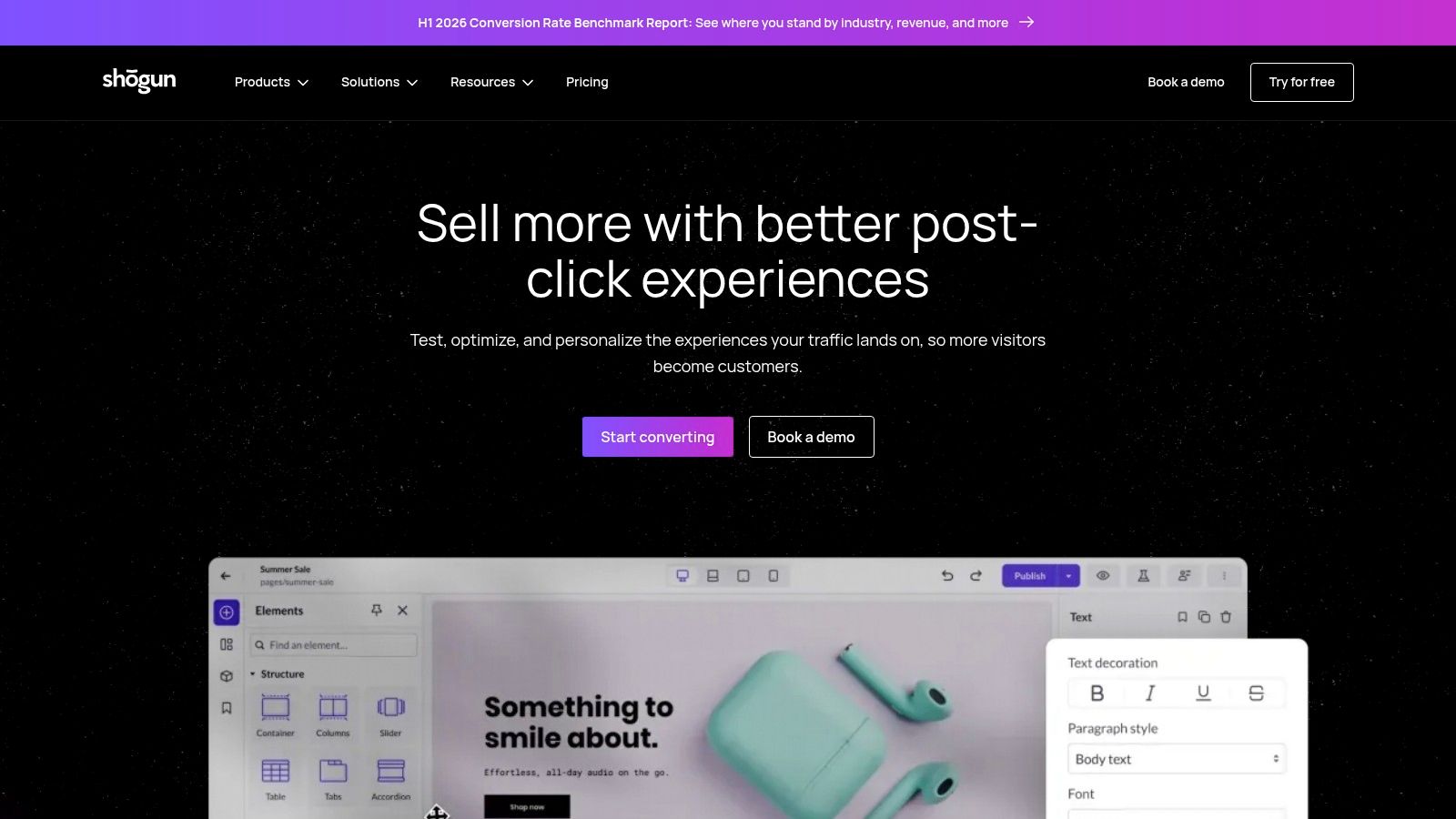
Use the page as a testing system
Shogun combines drag-and-drop editing, templates, reusable components, A/B testing, personalization, and Shopify integration. Those features give marketing teams more control over the storefront without replacing Shopify's checkout strength. With one product, the testing surface stays focused on messaging, offer presentation, objections, trust, and purchase friction.
Run experiments with a defined sequence:
- State the hypothesis: Tie the change to one objection or weakness.
- Change one meaningful element: Revise the hero promise or move shipping information nearer to the CTA.
- Keep commerce stable: Leave product data and checkout unchanged while testing the page experience.
- Review results and feedback: Treat a winning variant as evidence for further testing, not a universal rule.
The trade-off is another paid app and another layer between the theme and the storefront. Excessive animation, duplicated sections, large media files, and unnecessary scripts can slow the page. Maintenance also becomes harder if reusable components are not governed carefully.
ECORN's guide to Shopify page builders offers a useful reference when assessing whether marketer autonomy justifies that added layer. Shogun fits teams that need repeated iteration. A standard Shopify page remains simpler for a single launch with no testing plan.
4. GemPages
GemPages suits operators who need a conversion-focused Shopify page without starting a large development project. Its templates, prebuilt sections, drag-and-drop editor, and AI-assisted block generation support long-form product pages, bundles, upsells, and campaign-specific funnels.
Its practical advantage is faster iteration than custom development. The builder lets a team shape the story around one offer, connect features to outcomes, place proof beside relevant claims, and keep Shopify product data and checkout in place. Compatibility with Shopify apps also supports reviews, subscriptions, and post-purchase offers.
Build around the buying decision
For a $79 posture corrector, place the 30-day return guarantee beside the size-fit claim, not in a distant FAQ. Then test moving the CTA above the proof block. That experiment addresses two specific sources of hesitation, fit risk and delayed purchase action, while leaving the underlying Shopify checkout unchanged.
Give each section one job:
- Problem section: Show the situation the product addresses.
- Product explanation: Link features to practical outcomes.
- Objection handling: Answer questions about fit, materials, delivery, returns, compatibility, or use.
- Proof section: Put reviews, demonstrations, creator content, or guarantees beside the claims they support.
- Purchase reinforcement: Keep the CTA and key buying information available as visitors move through the page.
GemPages works well for emerging brands and lean marketing teams that need more control than a standard theme offers. It also fits paid or social campaigns where the landing-page message must match the ad closely. The trade-off is another layer to maintain between Shopify's theme and storefront.
Every extra block, animation, app integration, or upsell script can increase loading work and maintenance. AI generation speeds production, but it does not decide whether a section earns its place. Review generated copy for accuracy and brand fit, then check accessibility, mobile layouts, and performance before publishing.
ECORN's guide to Shopify page builders provides a useful reference for weighing marketer control against added complexity. Start with the customer's objections, build the shortest sequence that answers them, and test one meaningful change at a time.
5. Webflow Ecommerce
Webflow Ecommerce addresses a specific conversion problem: products that need more explanation than a standard store template can provide. It gives teams control over layout, typography, responsive behavior, custom sections, animation, and the wider brand experience. That makes it suitable for products whose value depends on visual identity, interaction, demonstrations, or a distinctive story.
A Webflow page can sequence a product's origin, materials, mechanism, use cases, or cultural context as an editorial experience. Native ecommerce features support products, carts, checkout, Stripe, and PayPal, while plan differences affect published item limits and transaction fees. The result is strong storefront control, with more responsibility for the team building and maintaining it.
Use design freedom to clarify the purchase
A premium visual treatment does not automatically make buying easier. Keep the product, price, availability, delivery information, returns, and CTA visible as visitors move through the page. Test animations and scroll effects on mobile, remove interactions that delay product understanding, and check that accessibility and performance remain acceptable.
Webflow fits when:
- The product needs explanation: Use demonstrations and visual sequencing to show how the offer works.
- Brand distinction affects demand: Build a visual system that standard commerce themes cannot express cleanly.
- The team can maintain the site: Assign ownership for responsive QA, content changes, ecommerce settings, and performance.
- Storefront control matters more than setup speed: Accept a more involved build when the page itself does conversion work.
Review the commercial model before committing. The standard plan has a 2% transaction fee, in addition to processor fees, so margin-sensitive businesses should compare the total cost with commerce-first options.
ECORN's guide to choosing an ecommerce platform provides a framework for weighing design control against checkout, operations, extensibility, and long-term ownership. Webflow suits a story-led product when the team can protect a clear purchase path. It fits less well when the business needs extensive commerce automation without technical support.
6. Squarespace Commerce
A polished storefront can be the conversion solution when the product needs clarity more than technical range. Squarespace Commerce combines presentation, product management, checkout, POS, marketing tools, and analytics in one system. That reduces the setup work for a founder-led brand, a campaign-based product, or a small physical catalog.
The conversion trade-off is straightforward. Squarespace gives you strong control over the storefront's visual consistency, while Shopify generally offers more commerce integrations and operational flexibility. Choose Squarespace when a focused buying journey matters more than specialized workflows.
Use the platform's limits as a filter
Start by mapping the path from product explanation to payment. A Squarespace page can keep photography, value proposition, specifications, FAQs, reassurance, and purchase controls within one visual system. That helps non-technical teams publish and maintain a credible product experience without assembling a large application stack.
Its strongest fit is a simple operating model:
- Fast setup: Templates and integrated tools reduce decisions before launch.
- Design consistency: Product pages, editorial content, and brand pages can share the same presentation.
- Routine control: Teams can update products and content without depending on developers for everyday changes.
- Built-in coverage: Marketing and analytics handle common requirements without a large app stack.
Test the boundary before committing. Specialized subscriptions, advanced merchandising, multi-system inventory, and enterprise workflows may require workarounds or another platform. Review the selected plan's transaction-fee policy and payment-processing costs against expected margin.
Squarespace also suits teams that want to experiment through content rather than a dedicated testing system. You can refine page structure, copy, imagery, FAQs, and calls to action within the site editor, but advanced experimentation and complex integrations may require external tools or custom work.
Choose it because the catalog, checkout path, fulfillment process, and growth plan can stay within those limits. That keeps the launch manageable while preserving enough storefront control to explain and sell one product clearly.
7. Lemon Squeezy
Lemon Squeezy addresses the operational side of selling one digital product. It fits software, plugins, templates, course assets, and subscriptions where tax handling, licensing, and delivery can demand more work than the product page.
As a Merchant of Record, Lemon Squeezy collects and files sales tax and VAT through its platform model. It also offers hosted product pages and checkout, subscriptions, license-key management, email tools, and upsells. These features shorten the path from a finished product to a working digital checkout.

Compliance and delivery outweigh storefront depth
For software makers and independent digital-product creators, the main conversion advantage is removing operational friction after the sale. You can host the sales experience on Lemon Squeezy or link to it from a custom marketing site, accept subscription payments, issue licenses, and deliver files without building those systems separately.
That specialization changes the storefront trade-off. Lemon Squeezy gives you a faster checkout and stronger digital-product compliance, while a custom site can carry the brand, education, and demand-generation work. Advanced merchandising, broad catalog management, and storefront experimentation remain more limited than they are in Shopify.
The pricing model also affects the decision. Lemon Squeezy uses transaction-based pricing rather than a monthly ecommerce fee, which can keep fixed platform commitments low when demand is uncertain. Transaction fees still apply, including the standard percentage-plus-per-transaction structure described in the product notes, so compare the total cost with expected margin.
Physical goods are a poor fit. Inventory, shipping rules, warehouse operations, and complex product merchandising require workflows designed for physical commerce.
Choose Lemon Squeezy when tax, licensing, and digital delivery create the largest conversion risk. Choose another platform when storefront control, physical fulfillment, or broad merchandising matters more.
Single-Product Website Platforms, 7-Tool Comparison
| Platform | Implementation complexity 🔄 | Resource requirements ⚡ | Expected outcomes 📊 | Ideal use cases 💡 | Key advantages ⭐ |
|---|---|---|---|---|---|
| Shopify | Medium, platform setup, theme choice, minor custom code possible | Moderate, monthly fees, apps, possible developer for performance tuning | ⭐⭐⭐⭐, reliable checkout, scalable storefront and multi‑channel growth | Single to multi‑SKU stores that plan to scale or add channels | Enterprise‑grade checkout, large app ecosystem, clear upgrade path |
| Shopify Buy Button | Low, embed code, no storefront build | Low, included in Shopify plan; minimal dev work | ⭐⭐⭐, fast path to sell with Shopify checkout (limited storefront features) | MVPs, preorders, content funnels wanting best‑in‑class checkout quickly | Quick launch, uses Shopify inventory/order system without full store |
| Shogun Page Builder for Shopify | Low, visual drag‑and‑drop for marketers | Moderate, paid app + content/design time | ⭐⭐⭐⭐, improves conversion via tests and personalization | CRO‑focused single‑SKU brands needing rapid page iteration | Built‑in A/B testing, personalization, native Shopify integration |
| GemPages (Shopify) | Low, visual builder with templates | Low‑Moderate, lower entry price, app cost | ⭐⭐⭐, fast to produce long‑form pages and funnels | Teams needing quick, low‑cost landing pages and upsells | AI blocks, conversion‑focused templates, affordable entry |
| Webflow Ecommerce | High, pixel‑level design control and custom checkout tweaks | High, design/dev expertise, ecommerce plan fees | ⭐⭐⭐⭐, highly branded, bespoke product narratives | Brands that require custom animation/design and full site control | Pixel‑perfect design, native ecommerce features, flexible checkout |
| Squarespace Commerce | Low, template‑driven setup, intuitive editor | Low, built‑in tools, commerce plan costs | ⭐⭐⭐, polished, fast publishing with built‑in analytics | Small catalogs or single‑product sites needing speed and polish | Fast setup, strong templates, easy marketing/analytics |
| Lemon Squeezy | Low, hosted product pages/checkout | Low, pay‑per‑transaction; minimal infra overhead | ⭐⭐⭐⭐, rapid digital‑product sales with global tax handling | Digital goods, SaaS/plugins, subscriptions requiring M.o.R. | Merchant‑of‑Record, tax/VAT handling, subscriptions/licenses built‑in |
Turn the Pattern Into Your Next Product Page
The best single-product website isn't defined by how few links it contains or how polished the hero image looks. It succeeds when the platform matches the buying job. A product page for a physical good with future catalog ambitions needs different infrastructure from a digital product sold globally, and a campaign landing page has different requirements from a durable storefront.
Use this selection logic:
- Choose Shopify for a scalable physical-product storefront with reliable checkout, inventory, channels, and room to add products or markets.
- Choose Shopify Buy Button when an existing content site should remain in place and Shopify should provide the purchase layer.
- Choose Shogun when structured CRO iteration, personalization, and marketer-led page changes are central to the workflow.
- Choose GemPages when you need to ship long-form product pages, funnels, bundles, or upsells quickly within Shopify.
- Choose Webflow when bespoke design and product storytelling justify a steeper learning curve and closer performance ownership.
- Choose Squarespace Commerce when a polished, simple build matters more than advanced commerce extensibility.
- Choose Lemon Squeezy for a single digital product where hosted checkout, licensing, subscriptions, and Merchant of Record tax handling remove operational friction.
Before building, define the one primary conversion goal. A page can support an email capture, product purchase, preorder, demo request, or subscription, but competing primary actions weaken the buying path. Map each objection into a page section, then keep the purchase option visible as visitors learn more.
Treat the page as an operating system rather than a poster. Test one meaningful change at a time, whether that's the headline, proof placement, product demonstration, shipping explanation, or CTA language. Audit third-party scripts and app output regularly, because a builder's flexibility can become a performance liability. For email capture and deliverability workflows, an email tester can help verify whether your supporting lifecycle messages are reaching inboxes.
The right platform should support the next stage, not only the first launch. If you need Shopify design, development, CRO, strategic ecommerce consulting, or Shopify Plus support, ECORN offers project and subscription-based services for brands at different growth stages.
ECORN provides Shopify design, development, CRO, and scalable ecommerce implementation for brands building or improving single-product websites. Visit ECORN to discuss your product-page strategy, technical setup, or next conversion-focused build.


Product Variants Shopify: The Complete 2026 Guide
Ecommerce Analytics Consulting for Growth
What Is AI Integration for eCommerce
How to Choose the Right eCommerce Website Development Firm
E Business Strategy Implementation
Conversion Tracking Setup for Shopify Stores
BigCommerce vs Shopify Plus Which Enterprise Wins in 2026
Shopify Theme Kit: Setup, Commands, and Migration Guide
Shopify Extension Development: A Practical 2026 Guide
Shopify Speed Score Explained and How to Improve It
Shopify Mobile Optimization: The 2026 Playbook
How to Add Subcategory in Shopify for Better UX
How to Implement Structured Data for Ecommerce in 2026
SEO App Mobile: Shopify Store Optimization Guide
Shopify Plus Support: What It Includes and How to Choose
Google Ads for Shopify: The Complete 2026 Playbook

Shopify New York: How to Find and Hire the Right Agency
Google Search Console for Shopify: The Complete Setup
First Party Data Collection for eCommerce Growth
FAQ Online Store Guide: Build and Measure It Right
Do FB Ads Work for eCommerce in 2026?
One Page Checkout for Shopify: Design and Implementation
Shopify GraphQL vs REST: The 2026 Developer Decision
Shopify Ecommerce Consulting: Strategy, Pricing &

Are Reddit Ads Worth It for eCommerce Brands
Shopify Title and Meta Description: A Practical 2026 Guide

Product Video Best Practices for Shopify Brands
Real-Time Inventory Management: A 2026 Guide
AI Chatbot Integration for Shopify Stores
Affiliate Program Management: A Shopify Guide
10 Best Performance Monitoring Tools for Shopify in 2026
Digital Asset Management for eCommerce Brands in 2026
Every Type of Facebook Ads Explained for eCommerce Growth
Product Information Management Explained for Shopify Brands
Support Ticket System: A Guide for Shopify Stores

10 Best Customer Service Tools for Shopify in 2026

Can I Start a Business with No Money? a 2026 Blueprint

What Sells Good on Etsy: Best Niches for 2026

Shopify Add to Cart Button: A Practical 2026 Guide

Customer Feedback Automation: A Practical eCommerce Guide
Critical Rendering Path: A Guide for Shopify Stores

How to Promote on TikTok for eCommerce in 2026

B2B eCommerce Consulting That Drives Real Revenue

10 Best Practices for Site Navigation in 2026
Return vs Refund for Shopify Stores: A Practical Guide

What Is Customer Lifetime Value and Why It Matters
What Is Voice of Customer Research for eCommerce

SMS Marketing for Ecommerce That Actually Converts

Master How to Improve Email Deliverability in 2026

Top 7 eCommerce Partners NYC for Shopify Brands in 2026
Machine Learning for Ecommerce: Boost Your Shopify Store

Beauty Market Research: Your 2026 Growth Guide

Shopify International Expansion: A 2026 Roadmap
What Does CRO Stand for in Business: Understanding CRO

Shopify Visual Merchandising: A Playbook for Higher Sales

Shopify Landing Page Design: Master Conversion in 2026
10 Best AI SEO Optimization Tools for Shopify in 2026

Agentic AI for Ecommerce: Boost Your Sales in 2026
Mastering Email Marketing Data for eCommerce Growth
Conversion Rate Optimisation Australia: Boost Your Sales
Conversion Rate Optimization AI: Your Shopify Store Guide

10 Product Bundling Strategies for Shopify in 2026
How to Increase Customer Lifetime Value: A Shopify Playbook
AI Customer Service Automation: Shopify Guide 2026
Clean Website Design: A Shopify Conversion Playbook

Omnichannel Retail Strategy: A Shopify Playbook
Product Data Enrichment: A Guide for Shopify Brands
Instagram Shopping Features a Guide for Shopify Stores
What Is Revenue Optimization: A Holistic RevOps Guide

Benefits of Conversion Rate Optimization: Boost Your
WordPress to Shopify Migration: Your 2026 Seamless Switch
Boost Sales: Ecommerce Payment Processing Guide 2026
Unified Commerce Platform: Benefits, KPIs & Shopify Guide
How to Reduce Bounce Rate eCommerce: Your 2026 Guide
Shopify API Integration: A Practical End-to-End Guide

How to Implement Data Governance: A 2026 Guide
Shopify Store Development Cost: A 2026 Breakdown
What Is Server Side Tracking: The Shopify Guide 2026
Marketing Automation Workflows: A Shopify Guide for 2026
Shopify: How to Reduce Technical Debt

Shopify UX Design Change: A Playbook for Growth
User Generated Content Strategy: Shopify Playbook
Shopify Pause and Build Plan Cost: A Complete 2026 Guide
Compare at Price on Shopify: A Complete Guide for 2026

Where Can I Sell My Prints? 10 Best Platforms for 2026
Shopify Order Management System: The Ultimate Guide 2026
What Is Marketing Attribution? an eCommerce Guide for 2026

10 Best Black Friday Sales Sheets for 2026

Discover the Top Social Media Marketing Agencies For
Consumer Confidence Definition for eCommerce in 2026
What Is Social Commerce? Your 2026 Guide to Boosting Sales
A Social Ad Campaign Playbook for eCommerce Growth

7 Best FAQ Page Examples for SaaS & eCommerce

Market Research in Fashion Industry: A Guide for Shopify
Shopify Migration Services: Expert Guide for 2026

Mastering FB Retargeting Ads for Shopify in 2026
What Is Omnichannel Ecommerce

Master Your Shopify Plus Migration: The 2026 Guide
Shopify Integration Services: A Merchant's 2026 Guide
Shopify Collection Description: A Guide to SEO & Sales


newsletter in your inbox