

If you've got one commute and too many decisions, the best podcast ecommerce shows are the ones that answer a real question fast, like how to protect margin, lift conversion, improve paid media, or fix the store ops mess that's slowing you down. That's the filter here. Some shows are built for Shopify-native tactics, others for strategy, retention, or media efficiency, and each pick below says who it fits, what stage it serves, and who should skip it.
Podcasting has also earned the attention of ecommerce teams for a reason. U.S. podcast advertising reached about $1.8 billion in 2022, grew 26% year over year, and then rose again to about $1.9 billion in 2023 even as the broader ad market weakened, according to the IAB podcast advertising revenue study. The audience side matters too. Edison Research found that 46% of weekly U.S. podcast listeners had bought a product or service after hearing an ad on a podcast, which is why these shows are worth your time if you're trying to make better ecommerce decisions, not just stay entertained.
1. Shopify Masters
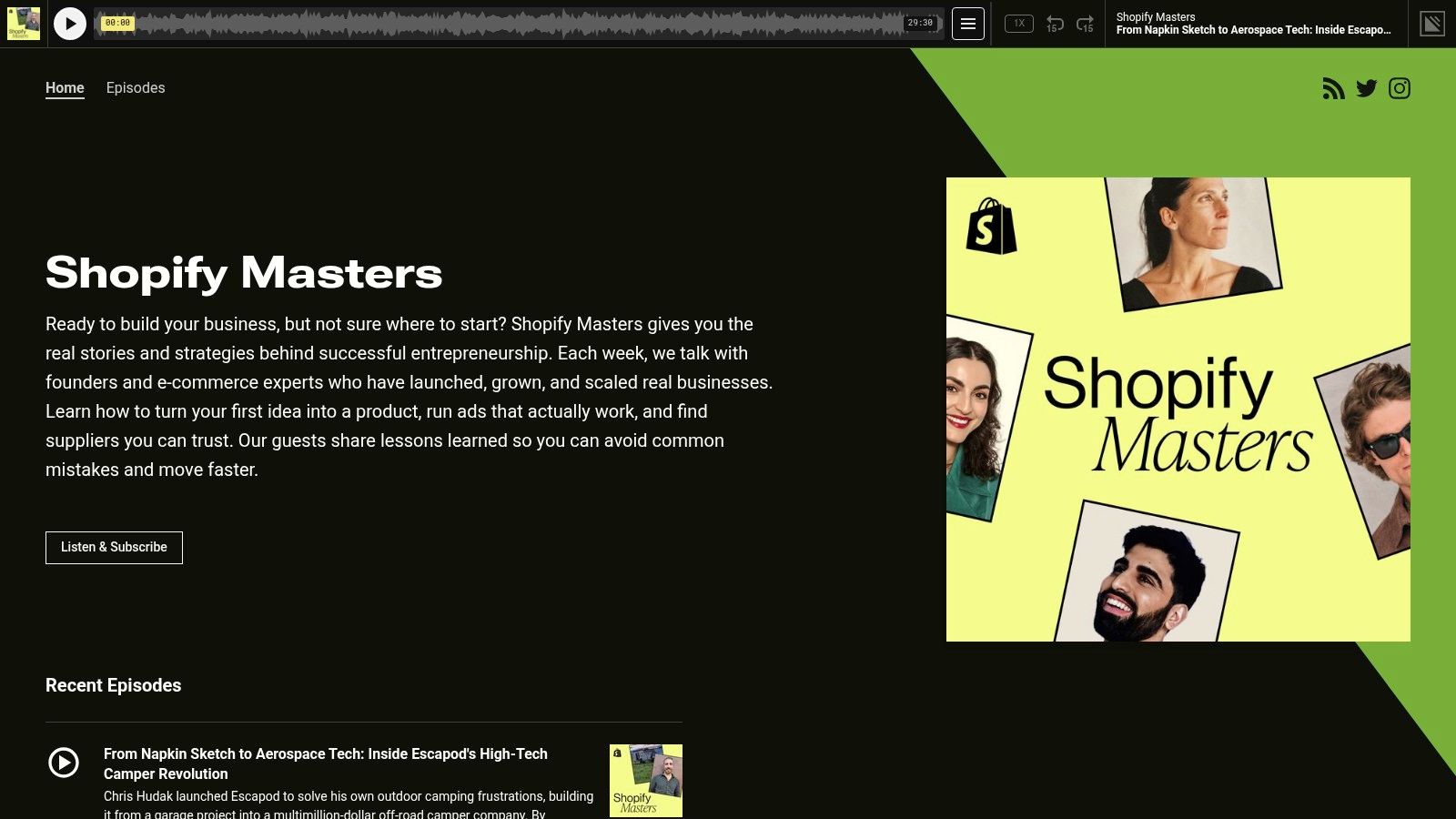
If you run on Shopify and want examples you can borrow, Shopify Masters earns its place quickly. The show's operator-first interviews are strongest when you need a clean look at how merchants think about merchandising, growth, and practical platform decisions inside the Shopify ecosystem. Start here if you're a founder or operator in the early-to-middle stage and want proof that your problems are normal before you change anything.
The limitation is simple, and it matters. The show is centered on Shopify, so it's less useful if your stack is platform-agnostic or if you want broader commentary on DTC media, retention, or marketplace strategy. Guest quality also shifts from episode to episode, which means the back catalog rewards selective listening rather than autoplay.
Practical rule: use this show when you need one strong idea for a Shopify-native test, not when you need a broad ecommerce strategy reset.
For busy teams, the browsing experience helps. The back catalog is easy to scan on Shopify Masters, which makes it easier to jump straight to a guest or topic instead of burning time on a full backlog.
2. The Unofficial Shopify Podcast
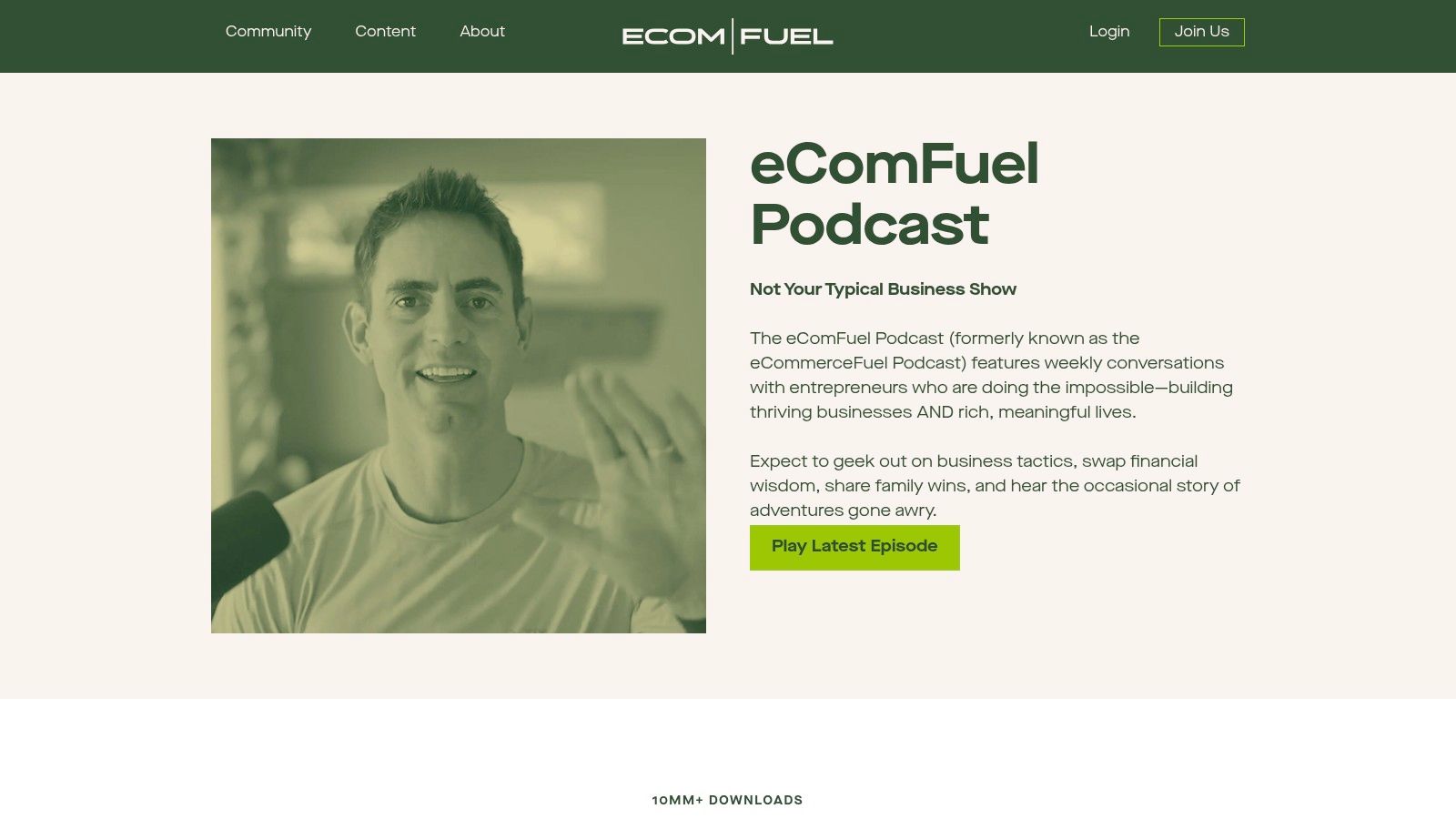
The Unofficial Shopify Podcast is the one I'd hand to a Shopify merchant who needs direct, near-term fixes. Kurt Elster leans into conversion rate optimization, merchandising, app selection, and teardown-style thinking, so the episodes tend to land with store owners who need to move faster than a quarterly strategy cycle. It's especially useful for teams that already know their store has friction but haven't isolated where.
The trade-off is that the show can feel very Shopify-app adjacent, and that's not always a bad thing. It's just a reminder that if you're looking for broader platform-neutral lessons, some episodes will feel narrower than you want. Sponsor reads can also be frequent, so it pays to keep your own judgment on while you listen.
For a store owner choosing between tools, flows, or page changes, that directness is the appeal. If you're also comparing ecosystem partners, compare Shopify SEO agencies before you treat any one recommendation as gospel. The show's site, The Unofficial Shopify Podcast, makes it easy to find the episodes most likely to save you a week of trial and error.
3. Honest Ecommerce
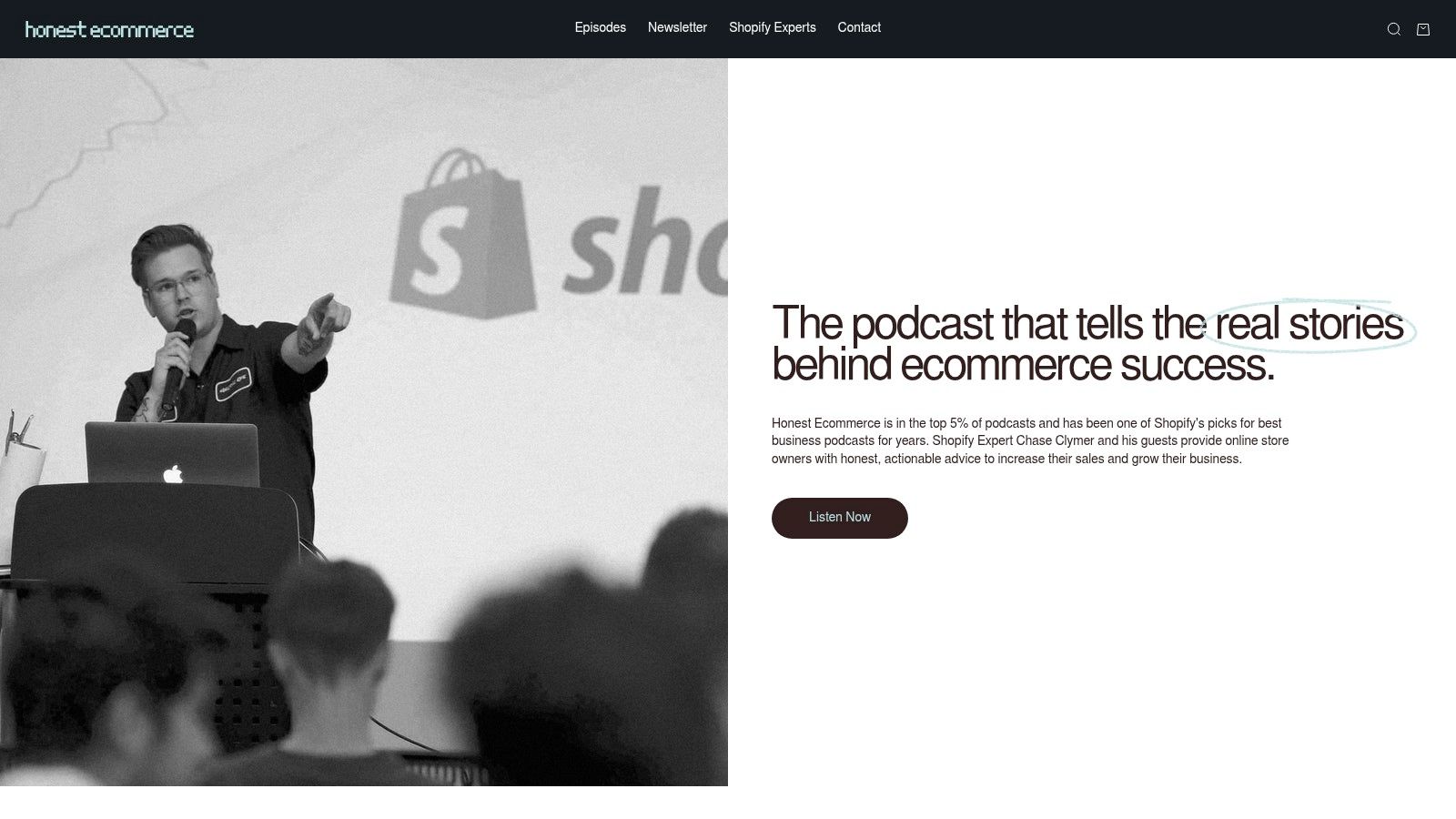
Honest Ecommerce works best for operators who want practical, topic-based episodes without a lot of fluff. The mix of CRO, SEO, omnichannel, and AI-related ecommerce topics gives it a useful range, and the episode titles are easy to skim when you only have a few minutes to decide what to listen to. That makes it a good fit for marketers and founders in the growth stage who need one tactical takeaway per commute.
The show's strength is also its limitation. Because it brings in different guests and perspectives, the depth varies, and you'll occasionally hear an episode that's more useful as a directional note than a playbook. Some discussions also assume you're already comfortable with Shopify apps and common ecommerce tooling.
Still, that broad utility is useful in real store work. If you're trying to connect acquisition, retention, and site experience without constantly switching shows, Honest Ecommerce is one of the cleaner weekly options. It's the sort of podcast that helps you keep a running list of store fixes instead of a folder full of half-remembered ideas.
4. eComFuel Podcast
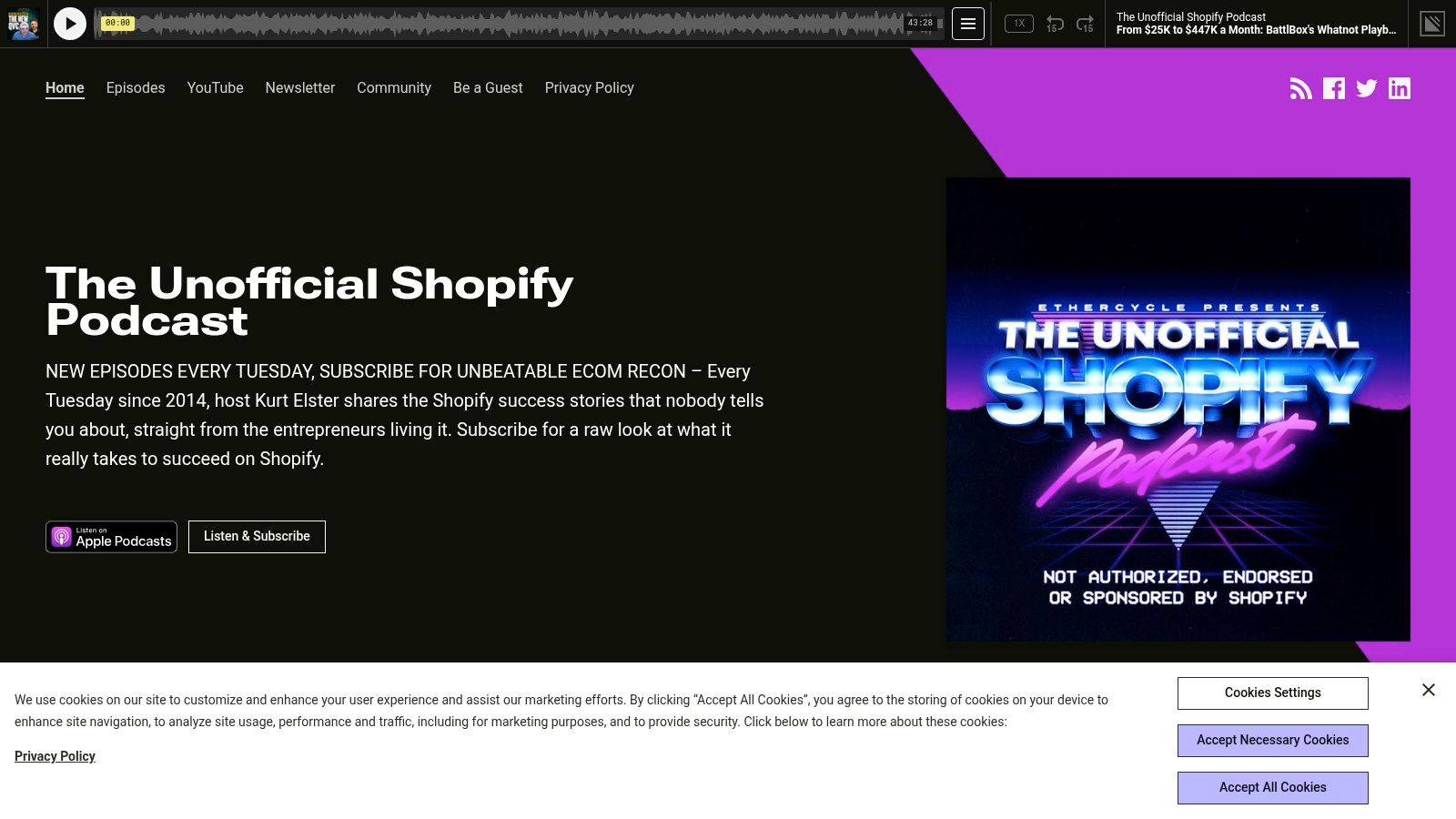
When the business is already real and the questions get harder, eComFuel Podcast becomes much more valuable. The show is aimed at mature operators, so the conversations about profit, cash flow, team design, AI workflows, and channel strategy feel less like inspiration and more like peer-level thinking. If you're running a seven-figure brand or managing a Shopify Plus operation, that's the zone where the show tends to pay off.
The best episodes don't just share what happened, they show how owners reasoned through the decision. That's what makes the catalog useful for founders and operators who are past early product validation and now care more about durable growth. The downside is that the pace can be more strategic than tactical, so if you need immediate site copy fixes or a landing page teardown, this won't be your main show.
The associated community is invite-only, but the podcast itself is free on eComFuel's podcast archive. That makes it a smart listen for operators who want candid conversations without the noise of content built for mass reach.
5. The Ecommerce Playbook
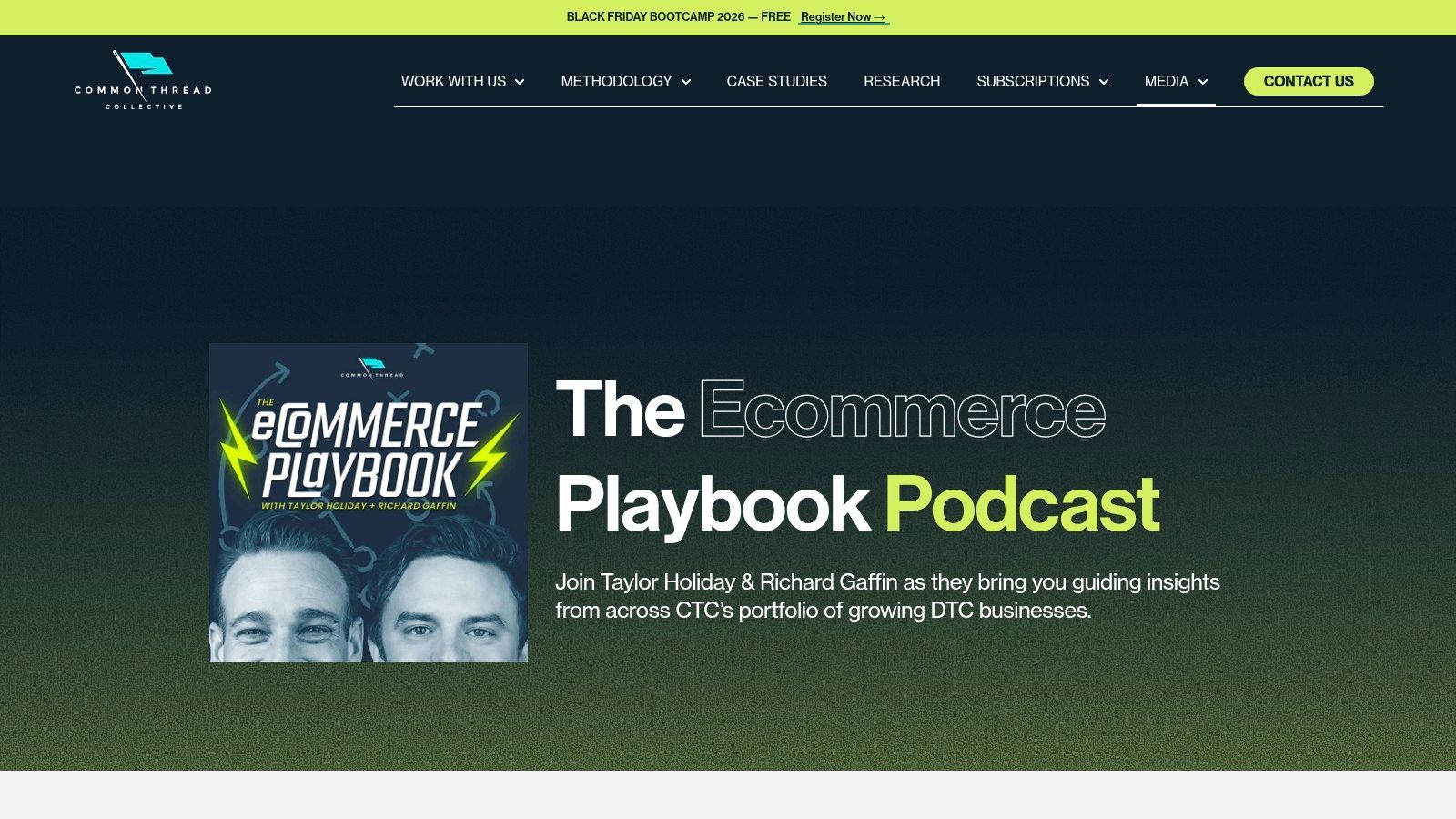
The Ecommerce Playbook is built for marketers and growth leads who want a strong point of view on paid media, creative, and media efficiency. The Common Thread Collective angle matters because the discussions feel rooted in active operator experience, not abstract commentary. If your week revolves around offers, platform shifts, and making paid acquisition profitable, this show belongs near the top of your queue.
It's also the right fit for seasonal planning, especially when Q4 pressure starts to rise. The show tends to frame problems in a way that makes testing easier, which is helpful when you need to decide whether an idea belongs in your next sprint or on the cutting room floor. The limitation is that the focus tilts toward acquisition and content operations, so wholesale and marketplace leaders may not get as much out of it.
For brands trying to understand who's worth following beyond the podcast itself, the internal guide on DTC people to follow on Twitter is a useful companion. The main feed at The Ecommerce Playbook is best when you want current, testable thinking rather than broad industry nostalgia.
6. DTC POD
DTC POD suits founders and marketing leads at early-stage brands who need working context across several growth channels. Episodes cover paid acquisition, organic search, creators, analytics, and international expansion, so the show helps when one person still owns decisions that larger teams split between specialists. Use it before a weekly channel review to challenge assumptions and spot options outside your usual playbook.
Its breadth is both the advantage and the constraint. A founder focused on retention may find an episode about international growth irrelevant, while a marketer seeking one channel-specific framework may find the discussion too wide. Episodes also move quickly, so active listening works better than leaving the show on while handling other tasks.
The best result is one usable question or test to carry into the meeting, rather than a complete implementation plan.
What works here: a quick hit of tactical context before a planning meeting or channel review.
What doesn't: passive listening while multitasking, because useful details can pass quickly.
The format also works for teams that switch between audio and video. DTC POD gives listeners a practical way to choose the format that fits their routine, while DTC POD: How The Best Brands Are Built provides another entry point for evaluating the show.
7. Limited Supply
Limited Supply is for operators who want blunt opinions and can handle them. Nik Sharma's style is direct, and the show's best moments are the ones that break down landing pages, offers, retention, creative, and Q4 planning in a way that feels immediately usable. It's a strong listen for CRO-minded teams and founders who want to pressure-test their own assumptions.
The limitation is built into the appeal. Strong opinions are useful until they collide with your category, price point, or margin structure, so this is not the kind of show you should copy from blindly. Some episodes also pull in sponsor tie-ins to analytics or AI tools, which means you still need to separate insight from promotion.
The community layer is part of the draw for people who want to stay close to the discussion. The main show lives at Limited Supply, and it's best when you want dense thinking instead of polished branding. If you're the kind of operator who rewrites landing pages after one good framework, this one deserves time.
8. LEADING BRANDS, Wavebreak Podcast
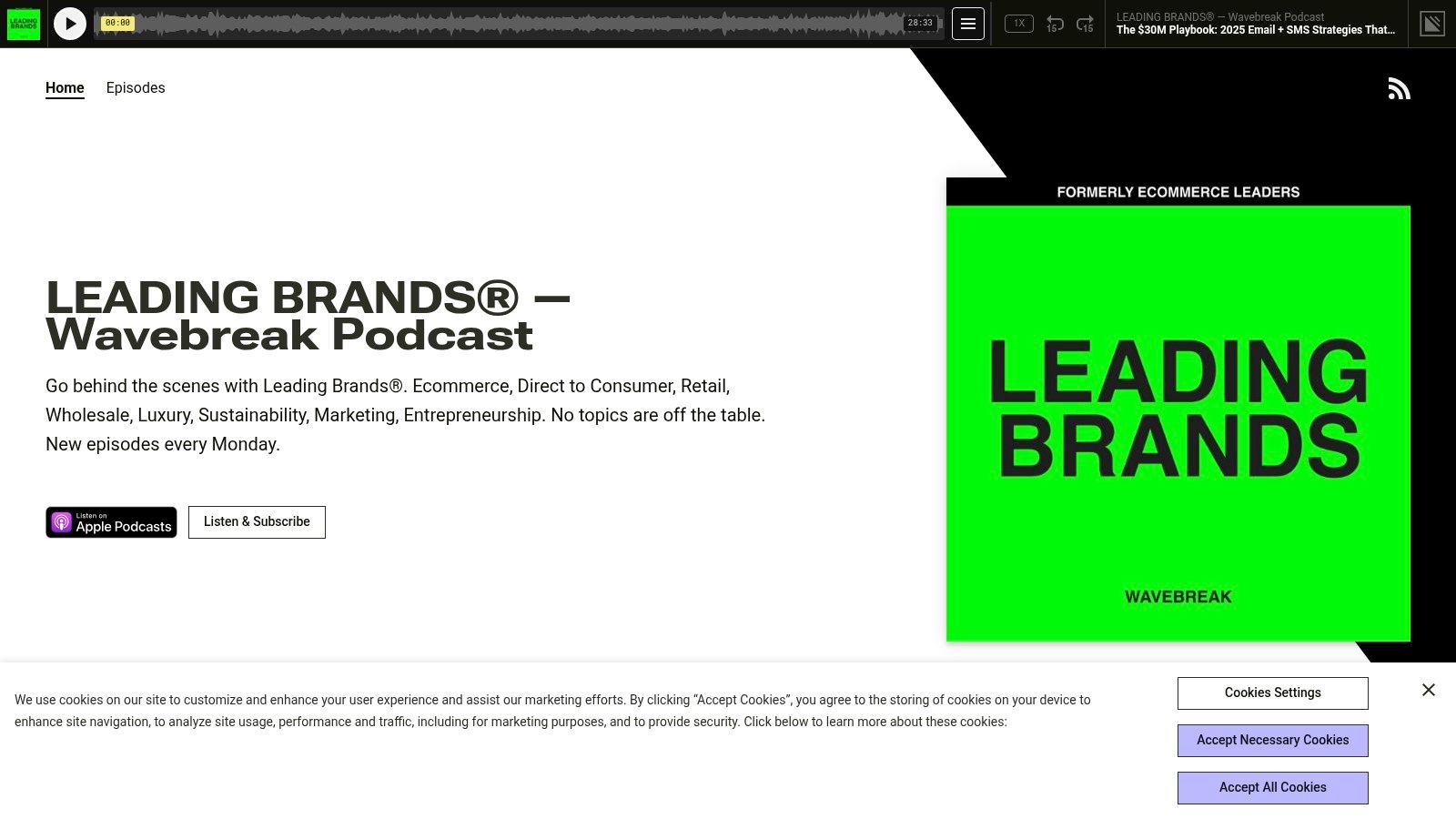
For lifecycle teams, LEADING BRANDS, Wavebreak Podcast is one of the cleaner retention-focused listens. The interviews with scaled DTC and omnichannel brands lean into email, SMS, CRM, creative testing, and post-purchase growth, which makes the show especially useful once acquisition is no longer your only problem. If you manage retention or own CRM economics, the guest mix is usually closer to your day job than most ecommerce podcasts.
The show is less helpful if you need acquisition-heavy content. That's the main limitation, and it's worth taking seriously because teams sometimes over-listen to retention content and underinvest in traffic quality or offer structure. Some episodes also assume you already have the CRM basics in place, so brand-new teams may need to catch up before the advice fully lands.
The Wavebreak Podcast fits teams that are trying to squeeze more value out of existing customers without sounding generic. It's the kind of show that can improve the way you talk about post-purchase journeys, loyalty, and repeat buying, which is often where the profit shows up after the acquisition spend has already happened.
9. EcomCrew Podcast
A growing store rarely breaks in one place. Inventory arrives late, a hire misses expectations, and a promising channel produces thinner margins than planned. EcomCrew Podcast is a strong fit for founders and operators working through that stage, especially those managing both Amazon and Shopify. Mike Jackness and Dave Bryant feature candid accounts from people who have built, scaled, and sometimes exited ecommerce brands.
Use it during weekly operations reviews. Episodes can prompt better questions about supply chain, hiring, channel mix, and the trade-offs behind growth. The show's value comes from hearing what went wrong, not just copying a polished success story.
Its Amazon and Shopify coverage is also the main limitation. A single-platform business may find parts of the feed less relevant, and some conversations feel more like personal diaries than structured playbooks. Expect to extract the useful decision rather than receive a tidy checklist.
For a broader operator network beyond podcasts, see the ECORN guide to ecommerce communities. The show itself is available through EcomCrew Podcast.
10. You're Not Your ROAS
If your team lives and dies by media efficiency, You're Not Your ROAS is the most measurement-forward choice on this list. The Triple Whale angle keeps the discussion centered on attribution, creative, benchmarking, and KPI hygiene, which is exactly what paid media teams need when privacy changes muddy the numbers and everyone argues over which metric is “real.” It's a strong fit for brands that already have analytics discipline and want sharper decision-making.
The limitation is that it stays close to measurement and creative. That makes it less useful for broader operations, supply chain, or organizational questions, and there's also an obvious vendor bias to keep in mind. Still, if you're trying to tighten reporting and make smarter calls on ad spend, that bias is easier to manage than vague theory.
The show at You're Not Your ROAS works best when your team is ready to connect podcast insights to dashboards, experiments, and media reviews. It's not the right starting point for a new store owner, but for a paid team that wants cleaner benchmarking and more grounded analysis, it's a sensible weekly listen.
Top 10 Ecommerce Podcasts Comparison
| Podcast | Focus & Format ✨ | Target Audience 👥 | Practicality / Quality ★🏆 | Value / Price 💰 | Standout USP ✨ |
|---|---|---|---|---|---|
| Shopify Masters | Operator-first interviews, Shopify-native case studies ✨ | 👥 Shopify merchants & agency teams | ★★★★☆ 🏆, practical playbooks | 💰 Free, deep Shopify best practices | Official Shopify perspective; broad brand coverage |
| The Unofficial Shopify Podcast | CRO teardowns, app/tech stack deep dives ✨ | 👥 Merchants seeking quick CRO wins | ★★★★☆, highly actionable | 💰 Free (sponsor reads) | Tactical, teardown-style playbooks for near-term wins |
| Honest Ecommerce | CRO, SEO, omnichannel & AI trends; topic-indexed ✨ | 👥 Merchants & marketers improving CVR | ★★★★, hands-on tactics | 💰 Free, pragmatic CRO tips | Skimmable episode titles; balanced brand/tool views |
| eComFuel Podcast | Strategic growth for 7–8 figure operators; long-form ✨ | 👥 Mature operators & Shopify Plus brands | ★★★★★ 🏆, numbers-aware, candid | 💰 Free (private community paid/invite-only) | Deep finance/ops conversations; founder-level insights |
| The Ecommerce Playbook | Paid media, creative, MER & seasonal playbooks ✨ | 👥 DTC marketing & media teams | ★★★★☆ 🏆, testable media frameworks | 💰 Free, media-focused ROI tactics | Clear, testable frameworks for paid & seasonal peaks |
| DTC POD: How The Best Brands Are Built | Brand building, creators, international expansion ✨ | 👥 Founders & marketing leaders | ★★★★, dense, tactical episodes | 💰 Free, multi-platform presence | Play-by-play checklists across paid & creator strategies |
| Limited Supply | Nik Sharma's tactical growth frameworks; Q4/landing pages ✨ | 👥 CRO/creative-focused teams & founders | ★★★★☆ 🏆, dense, no-fluff tactics | 💰 Free + community add-ons | Highly tactical frameworks with community engagement |
| LEADING BRANDS, Wavebreak Podcast | Retention, CRM economics & lifecycle tactics ✨ | 👥 Lifecycle/CRM teams | ★★★★, focused retention playbooks | 💰 Free, retention-centric value | Consistent cadence; deep CRM & post-purchase focus |
| EcomCrew Podcast | Operator stories, Amazon+Shopify, supply chain ops ✨ | 👥 Entrepreneurs expanding channels | ★★★★, candid postmortems | 💰 Free, practical ops lessons | Transparent wins/failures; hybrid channel perspective |
| You're Not Your ROAS | Measurement, attribution & creative-testing focus ✨ | 👥 Paid-media & analytics teams | ★★★★☆ 🏆, analytics-forward, timely | 💰 Free (vendor-lean episodes) | Strong on attribution, benchmarking & KPI hygiene |
| Honest Ecommerce | (duplicate entry avoided) | , | , | , | , |
Turn Episodes Into a Listening Routine That Changes Decisions
The biggest mistake with ecommerce podcasts is treating them like background noise. Pick one show that matches your current bottleneck, log two or three ideas from each episode, and test one change in your store before you add another podcast to the queue. That keeps the listening tied to actual decisions, which is the only reason these shows are worth squeezing into a packed week.
If you're a founder, choose the show that matches your stage, not the one with the loudest reputation. Early teams usually get more out of Shopify-native tactics and conversion thinking, while mature brands need better retention, measurement, and margin conversations. The wrong podcast can still be interesting, but it won't move your store if it doesn't map to the problem in front of you.
That's also why the best ecommerce listening habits are specific. A retention lead should watch for CRM ideas, a paid media manager should look for testing frameworks, and an operator should listen for process fixes that can be implemented without a full replatform. The goal isn't to collect opinions, it's to make one better decision this week.
The podcast market itself keeps expanding, and that makes taste more important, not less. Edison's 2024 consumer data showed 67% of Americans aged 12 and older had ever listened to a podcast, 47% were monthly listeners, and 34% were weekly listeners, so the format is mainstream enough that good shows can shape how operators think about the business. The trick is separating useful operator advice from entertaining noise.
If you want outside help turning what you hear into a real Shopify change, a CRO sprint, or a monthly optimization plan, ECORN can help. Their subscription packages and single-project tests are built for brands that want practical implementation, not more theory, so if your listening has already surfaced a few store problems, visit ECORN and turn those ideas into work that ships.
ECORN helps Shopify brands turn podcast-level ideas into live improvements on the store, from CRO and design to development and strategic optimization. If you're using these shows to spot the next test or fix a conversion problem, visit ECORN and get support that's built for implementation, not just advice.


Shopify Developer Hourly Rate: What to Pay in 2026
Ecommerce Conversion Tracking: The Complete How-To Guide
Shopify Design Agency: How to Pick the Right Partner
Mastering Multi Store Management on Shopify
Scale Shopify Store
10 Shopify App Ideas Worth Building in 2026
Conversion Rate Optimization for Landing Pages: The Playbook
Shopify Plus Automation: A Guide for 2026
10 Social Selling Platforms for Shopify Merchants

Shopify Website Design Examples: 7 Stores Worth Studying
7 Ecommerce Newsletter Examples for Shopify Brands
One Product Shopify Store: Build and Scale
Mobile Pop Up Strategy for Shopify Stores That Converts
Sitemap for Shopify: How to Find, Optimize, and Submit It
7 Single Product Websites Worth Emulating
Product Variants Shopify: The Complete 2026 Guide
Ecommerce Analytics Consulting for Growth
What Is AI Integration for eCommerce
How to Choose the Right eCommerce Website Development Firm
E Business Strategy Implementation
Conversion Tracking Setup for Shopify Stores
BigCommerce vs Shopify Plus Which Enterprise Wins in 2026
Shopify Theme Kit: Setup, Commands, and Migration Guide
Shopify Extension Development: A Practical 2026 Guide
Shopify Speed Score Explained and How to Improve It
Shopify Mobile Optimization: The 2026 Playbook
How to Add Subcategory in Shopify for Better UX
How to Implement Structured Data for Ecommerce in 2026
SEO App Mobile: Shopify Store Optimization Guide
Shopify Plus Support: What It Includes and How to Choose
Google Ads for Shopify: The Complete 2026 Playbook
Shopify New York: How to Find and Hire the Right Agency
Google Search Console for Shopify: The Complete Setup
First Party Data Collection for eCommerce Growth
FAQ Online Store Guide: Build and Measure It Right
Do FB Ads Work for eCommerce in 2026?
One Page Checkout for Shopify: Design and Implementation
Shopify GraphQL vs REST: The 2026 Developer Decision
Shopify Ecommerce Consulting: Strategy, Pricing &
Are Reddit Ads Worth It for eCommerce Brands
Shopify Title and Meta Description: A Practical 2026 Guide
Product Video Best Practices for Shopify Brands
Real-Time Inventory Management: A 2026 Guide
AI Chatbot Integration for Shopify Stores
Affiliate Program Management: A Shopify Guide
10 Best Performance Monitoring Tools for Shopify in 2026
Digital Asset Management for eCommerce Brands in 2026
Every Type of Facebook Ads Explained for eCommerce Growth
Product Information Management Explained for Shopify Brands
Support Ticket System: A Guide for Shopify Stores

10 Best Customer Service Tools for Shopify in 2026

Can I Start a Business with No Money? a 2026 Blueprint
What Sells Good on Etsy: Best Niches for 2026

Shopify Add to Cart Button: A Practical 2026 Guide

Customer Feedback Automation: A Practical eCommerce Guide
Critical Rendering Path: A Guide for Shopify Stores

How to Promote on TikTok for eCommerce in 2026

B2B eCommerce Consulting That Drives Real Revenue
10 Best Practices for Site Navigation in 2026
Return vs Refund for Shopify Stores: A Practical Guide
What Is Customer Lifetime Value and Why It Matters
What Is Voice of Customer Research for eCommerce

SMS Marketing for Ecommerce That Actually Converts

Master How to Improve Email Deliverability in 2026

Top 8 eCommerce Partners NYC for Shopify Brands in 2026
Machine Learning for Ecommerce: Boost Your Shopify Store

Beauty Market Research: Your 2026 Growth Guide
Shopify International Expansion: A 2026 Roadmap
What Does CRO Stand for in Business: Understanding CRO

Shopify Visual Merchandising: A Playbook for Higher Sales
Shopify Landing Page Design: Master Conversion in 2026
10 Best AI SEO Optimization Tools for Shopify in 2026

Agentic AI for Ecommerce: Boost Your Sales in 2026
Mastering Email Marketing Data for eCommerce Growth

Conversion Rate Optimisation Australia: Boost Your Sales
Conversion Rate Optimization AI: Your Shopify Store Guide

10 Product Bundling Strategies for Shopify in 2026
How to Increase Customer Lifetime Value: A Shopify Playbook
AI Customer Service Automation: Shopify Guide 2026
Clean Website Design: A Shopify Conversion Playbook

Omnichannel Retail Strategy: A Shopify Playbook
Product Data Enrichment: A Guide for Shopify Brands
Instagram Shopping Features a Guide for Shopify Stores
What Is Revenue Optimization: A Holistic RevOps Guide

Benefits of Conversion Rate Optimization: Boost Your
WordPress to Shopify Migration: Your 2026 Seamless Switch
Boost Sales: Ecommerce Payment Processing Guide 2026
Unified Commerce Platform: Benefits, KPIs & Shopify Guide

How to Reduce Bounce Rate eCommerce: Your 2026 Guide
Shopify API Integration: A Practical End-to-End Guide
How to Implement Data Governance: A 2026 Guide
Shopify Store Development Cost: A 2026 Breakdown
What Is Server Side Tracking: The Shopify Guide 2026
Marketing Automation Workflows: A Shopify Guide for 2026
Shopify: How to Reduce Technical Debt

Shopify UX Design Change: A Playbook for Growth
User Generated Content Strategy: Shopify Playbook
Shopify Pause and Build Plan Cost: A Complete 2026 Guide
Compare at Price on Shopify: A Complete Guide for 2026

Where Can I Sell My Prints? 10 Best Platforms for 2026


newsletter in your inbox