

You're a Shopify merchant with several ways to sell through social media, but the platforms in front of you aren't interchangeable. A native storefront is built for product discovery and fast checkout. A live-commerce tool is built around hosting, presenting, and converting an audience in real time. A creator-commerce network depends on partnerships and commission tracking, while a link-in-bio tool gives you a lightweight owned destination from almost any social profile.
That distinction matters more than another generic feature list. The right choice depends on where buyers discover products, who owns the checkout, how much operational work your team can sustain, and whether Shopify remains the system of record. Social commerce has become a direct transaction channel, with global revenue estimated at about $699 billion by the end of 2024 and projected to exceed $1 trillion by 2028, according to social commerce market coverage.
This comparison focuses on Shopify integration, use cases, limitations, pricing approach, and practical implementation workflows. It also covers the wider range of social ecommerce platforms, rather than treating social selling as a LinkedIn-only activity. Eligibility, regional availability, platform fees, fulfillment rules, and checkout policies change, so verify the current requirements before launch.
1. Facebook & Instagram Shops
Meta's native storefronts are a strong starting point for Shopify merchants that already create content for Facebook and Instagram. The Shopify sales channel connects your product catalog to Facebook Shop and Instagram Shopping, allowing teams to tag products in posts, Reels, and live content while keeping catalog and order workflows centralized in Shopify.
Product tagging is the practical advantage. A product demonstration can move directly from discovery to a product detail page, without forcing customers to search through a separate storefront. Merchants in eligible regions and accounts may also be able to use native Instagram checkout, although the available checkout path depends on current Meta requirements.
Where Meta fits best
Meta works well for visual discovery, product tagging, retargeting, and recurring content distribution. Instagram Reels, Explore, Shops, and live content give brands multiple surfaces for reaching shoppers. A merchant selling fashion, beauty, home goods, or other visually demonstrable products can connect editorial content to specific products without building a separate commerce experience.
The Shopify connection also reduces catalog duplication. Product titles, images, variants, and availability should be managed from the primary Shopify catalog, then checked inside Meta Commerce Manager before campaigns go live. Merchants can find additional implementation guidance in this practical overview of Instagram Shopping features.
Practical rule: Treat Meta as a discovery and merchandising layer, but keep Shopify as the operational source of truth wherever the selected checkout and order flow allow it.
Trade-offs and workflow
The main risk is not installation. It's eligibility, policy compliance, attribution, and regional variation. A store can have a technically correct catalog and still encounter restrictions around products, account status, checkout, or commerce features. Reporting can also differ between Meta and Shopify, particularly when customers move across social content, paid media, and the on-site checkout.
A sensible workflow is to sync a focused product set, verify product approvals, tag a small group of high-intent posts, and compare Shopify sessions, add-to-carts, orders, and assisted conversions with Meta reporting. Before setup, review this guide on how to connect Shopify to Instagram.
2. TikTok Shop
TikTok Shop combines an in-app storefront with product tagging across short-form videos, LIVE streams, and the Shop tab. For Shopify merchants, the TikTok app for Shopify can connect catalogs, synchronize orders, and support advertising workflows, while TikTok Seller Center manages the broader seller operation.
The platform's commercial strength comes from the connection between entertainment, creators, and immediate product discovery. A product doesn't need to be found through a traditional store search. It can appear inside a demonstration, review, tutorial, trend, or live selling session, then become purchasable from the same environment.
A strong fit for content-led products
TikTok Shop suits merchants that can produce a steady flow of demonstrations, comparisons, tutorials, unboxings, and creator-led recommendations. The platform's affiliate ecosystem can also help brands recruit creators who promote products in exchange for tracked commissions. That model shifts some acquisition work from paid media toward partner content, but it requires clear product seeding, commission rules, approval processes, and content guidance.
Shopify onboarding is relatively direct, but the commerce operation is more demanding than merely adding a social link. Merchants need to configure products, monitor order synchronization, and make sure their chosen logistics model matches their inventory and fulfillment capabilities.
Fulfillment is part of the channel strategy
TikTok Shop can support Seller Shipping, TikTok Shipping, and Fulfilled by TikTok options, with service-level obligations that merchants must review before committing to a product range. Shipping speed, stock accuracy, returns, and customer support affect the viability of the channel. These requirements can change, so confirm current rules and fees in TikTok Seller Center.
For a Shopify team, the implementation sequence should be deliberate:
- Start with proven products: Use items with reliable stock, simple variants, and predictable fulfillment.
- Connect the catalog carefully: Check titles, images, pricing, inventory, and product policy eligibility after synchronization.
- Pilot creator activity: Give partners clear claims, usage guidance, links, and commission terms.
- Reconcile orders daily: Compare TikTok Shop orders with Shopify inventory and fulfillment records.
Merchants that treat TikTok Shop as only a content channel often underestimate the operational work. It's a commerce channel with marketplace-style obligations.
3. YouTube Shopping
YouTube Shopping gives Shopify merchants a way to attach products to long-form videos, Shorts, and live streams. Through the Google & YouTube channel for Shopify, merchants can connect product information and manage the resulting commerce workflow while using product shelves and pins inside video content.
YouTube's distinguishing advantage is content longevity. A product tutorial or buying guide can continue attracting discovery after its initial publication, unlike a social post that may depend heavily on short-term feed distribution. That makes the platform particularly useful for products that need explanation, comparison, or demonstration before purchase.
Use video to answer buying objections
YouTube Shopping works best when product placement supports the viewer's intent. A product shelf under a detailed review, a product pin during a tutorial, or a live-stream product demonstration can make the buying path more relevant than a generic promotion.
The channel also supports creator and affiliate programs, which lets brands extend product reach through publishers and creators whose audiences already trust their format. The merchant still needs to provide accurate feeds, clear product information, and a landing experience that matches the promise made in the video.
The cost is content consistency
YouTube isn't a low-effort storefront. The channel demands a content system, including topics, scripts, demonstrations, thumbnails, product tagging, and ongoing optimization. Merchants should map products to specific viewer questions rather than adding a product shelf to every upload.
A practical Shopify workflow is to select a small set of high-margin or high-consideration products, build videos around their use cases, and review product clicks alongside on-site conversion data. Eligibility and feature access can vary, so check the current requirements through YouTube and the connected Google & YouTube sales channel before investing in production.
4. Pinterest for Shopify
Pinterest for Shopify connects a product catalog to shoppable Pins, product tagging, and Shopping Ads. The integration can also support the Pinterest Tag, giving merchants visibility into events such as product views, add-to-cart actions, and conversions.
Pinterest is particularly useful for categories where shoppers plan visually. Home furnishings, fashion, beauty, weddings, travel accessories, seasonal products, and gifts can benefit from content that appears during research rather than only at the moment of immediate purchase.
Discovery with stronger planning intent
Pinterest users often save, compare, and revisit ideas. That behavior gives merchants more room to build product collections around themes, occasions, rooms, routines, or style choices. A merchant can create a product-led content system instead of relying only on direct promotional posts.
The Shopify connection makes catalog distribution easier, but the creative work still matters. Product images need to communicate the use case quickly, and collections should reflect how customers browse. A feed full of disconnected product shots is less useful than a coordinated set of Pins that answer a recognizable shopping need.

Checkout and measurement considerations
Pinterest may send shoppers to the Shopify store rather than completing the transaction natively. That preserves more control over checkout, merchandising, customer data, and post-purchase communication, but it also introduces another click and makes landing-page quality important.
Native checkout features and availability can vary. Merchants should connect the catalog, validate tracking events, and compare Pinterest-attributed conversions with Shopify analytics before scaling ads. Use Pinterest Business to confirm current product, advertising, and regional requirements.
The best workflow is usually evergreen. Build Pins around product use cases, seasonal planning, and search-friendly descriptions, then direct each Pin to the most relevant Shopify collection or product page. Avoid sending every shopper to the homepage.
5. CommentSold
CommentSold is designed for merchants that sell through live video, social comments, and fast-moving product presentations. It supports live shows across Facebook, Instagram, and TikTok, along with comment-to-cart workflows where viewers claim products by commenting during a broadcast.
That model is especially relevant to boutiques and DTC brands whose customers enjoy product drops, styling sessions, auctions, or host-led shopping. Instead of asking viewers to leave a live stream, search for a product, and complete a conventional purchase path, CommentSold turns comments into cart or invoicing actions.
Live commerce needs a show format
The tool is more than a streaming add-on. Merchants need hosts, product sequencing, inventory controls, moderation, customer service, and a repeatable broadcast schedule. Social clips and mobile app storefronts can extend the life of a live session, but they also create more content and merchandising tasks.
Multicasting can increase distribution efficiency because a team can present one show across multiple social environments. The trade-off is that each channel has different audience behavior, comments, product rules, and technical expectations. Someone still needs to monitor the experience while the show runs.
Live selling works when the team treats the broadcast as a retail event, not as a casual product video.
Costs and Shopify fit
CommentSold can streamline cart creation, invoicing, and comment-based buying alongside Shopify workflows. It also adds another system to operate, so merchants should define which platform owns product data, customer records, orders, refunds, and fulfillment exceptions.
Percentage-of-sales pricing can become material as volume grows. The plan notes reference tiers with examples such as an additional 6%, but current pricing must be confirmed directly because packages and commercial terms can change. Review the current offering at CommentSold, then model software fees, payment costs, creator or host costs, and fulfillment labor against average order value before committing to a recurring live schedule.
6. Bambuser Video Commerce
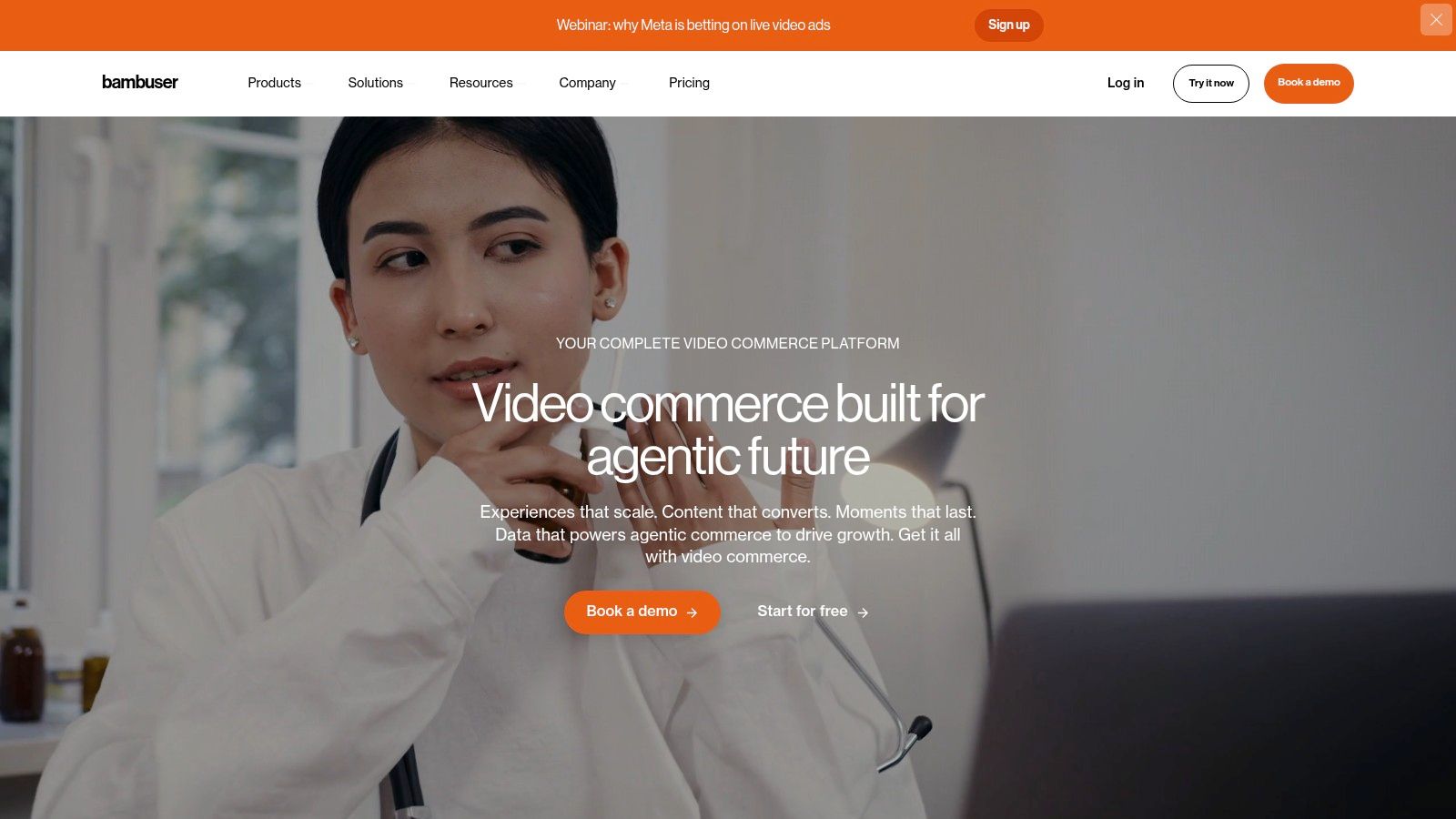
Bambuser is an enterprise-oriented video commerce platform for brands that want shoppable live and on-demand video embedded into their own sites and apps. Its Shopify integration can support real-time cart and product information, while its white-label player helps brands keep the experience within their own digital storefront.
This is a different proposition from a social-native shop. Bambuser is designed for merchants that want to use video to improve the owned-channel experience, then distribute or simulcast content to social platforms where useful. The brand can control the page environment, merchandising context, and relationship with the customer more directly.
Owned-channel control
Bambuser makes sense when the merchant already has the production capability and traffic to justify a deeper video commerce layer. A brand can place shoppable video on a campaign landing page, product detail page, editorial hub, or app experience, then connect featured products to Shopify cart actions.
That structure supports first-party data capture and a brand-safe presentation. It can also work across larger catalogs and multiple storefronts, where consistent governance matters more than just publishing a tagged social post.
The operational threshold is higher
Enterprise pricing, production resources, technical implementation, and cross-team coordination make Bambuser a poor fit for a merchant that only wants to test live commerce casually. The team may need developers, content producers, merchandising owners, analytics support, and a defined release process.
The right workflow starts with one owned-channel use case, such as a shoppable product launch or guided buying experience. Define the checkout destination, catalog synchronization, event tracking, player placement, and fallback experience before production begins. Visit Bambuser to assess the current integration and commercial model.
7. TalkShopLive
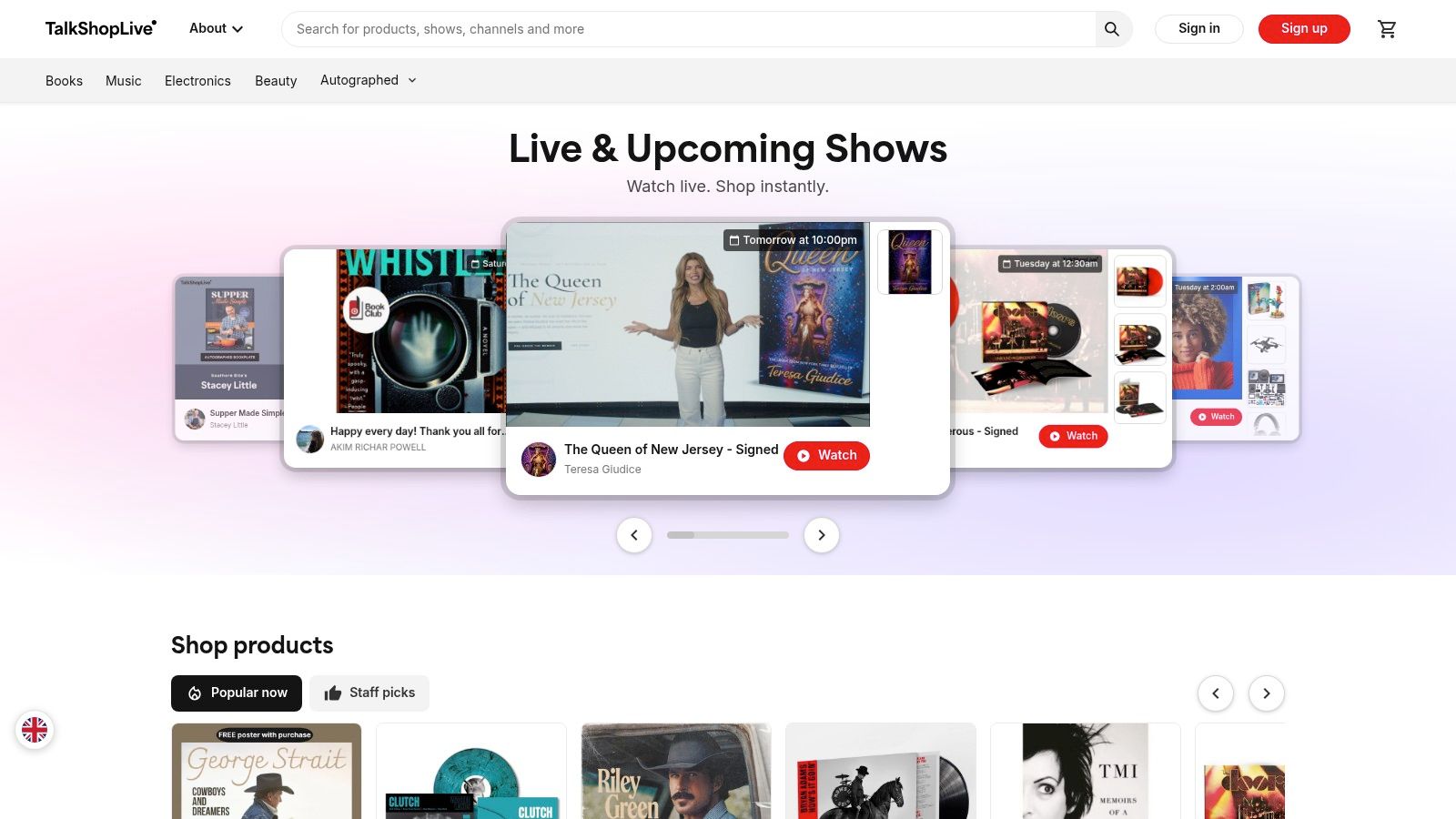
TalkShopLive combines a live shopping marketplace with an embeddable player for brands, publishers, and creators. Shows can include built-in cart and checkout, then appear on brand sites or through partner distribution and marketplace syndication.
For a Shopify merchant, the appeal is speed to market. The brand can pilot live commerce without building a complete video commerce infrastructure or creating every element of the audience and distribution layer from scratch. A pay-as-you-sell approach can also make experimentation easier to budget than a large fixed implementation.
A useful pilot environment
TalkShopLive is well suited to a brand that wants to test whether live demonstrations, interviews, launches, or creator-led shows fit its category. The merchant can produce a focused show, use the embeddable player on a campaign page, and evaluate product engagement, audience quality, and operational requirements.
The marketplace and publisher relationships can expand reach, but the brand needs to understand how the experience is presented outside its own site. Marketplace branding, customer journeys, and data access may not match an owned-channel solution.
Weigh reach against ownership
TalkShopLive can reduce development work, but that convenience may come with less control over customer data, branding, and post-purchase engagement than a Shopify-first experience. Merchants should ask where the checkout occurs, what customer information flows back to Shopify, how refunds are handled, and which reporting is available at product and show level.
Use it when the priority is testing live commerce and accessing distribution. Choose an owned-channel platform when the priority is long-term control of the video experience and first-party customer relationship. Review the current capabilities at TalkShopLive before planning a pilot.
8. LTK
LTK is a creator-commerce platform and consumer shopping app where creators publish shoppable posts and video. Brands can recruit creators, brief campaigns, track social sales, and use creator matching and in-app shopping features such as LTK Cart and Buy Now with LTK experiences.
The platform fits merchants that want an ongoing creator program rather than a single influencer campaign. LTK can provide a structured environment for product discovery, creator publishing, tracked links, and brand collaboration. That makes it different from a native social storefront, where the merchant usually owns the catalog but must source and manage creator relationships separately.
Build a repeatable creator workflow
Brands can use LTK Connect for self-serve creator sourcing and collaboration management, while larger programs may use broader creator matching and enterprise services. A Shopify connection can support product and sales tracking, but the commercial arrangement still needs careful planning.
A useful operating model includes:
- Creator selection: Match creators to product category, audience, visual style, and buying context.
- Brief development: Define approved claims, content formats, product availability, landing pages, and disclosure requirements.
- Commission control: Set terms that protect margin and distinguish gifting, affiliate sales, and paid content.
- Performance review: Compare tracked sales with Shopify orders and account for assisted discovery.
Creator fees and enterprise packages can be significant, and creator experiences with commissions or algorithms may vary. Monitor contribution margin rather than judging the program on clicks alone. Explore the current brand offering at LTK.
9. ShopMy
ShopMy gives creators storefront tools and gives brands a workspace for creator collaborations, gifting, product links, codes, and payouts. Shopify integrations and APIs can support product and commission tracking, while a brand and creator chat center helps manage ongoing relationships.
The platform is practical for merchants that want always-on seeding rather than isolated campaign bursts. A brand can offer products to selected creators, manage communication, track links, and maintain a repeatable process for new collaborations. Creators can build shops around products they recommend, which keeps the buying path connected to their own content and audience.
Better for relationship operations
ShopMy's value sits in workflow management. The brand team can coordinate gifting, provide product information, set codes, review commissions, and keep collaboration activity in one place. That reduces the need to manage every creator relationship through disconnected spreadsheets and direct messages.
The Shopify connection should be checked at the product, inventory, link, order, and commission levels. A creator link that points to an unavailable variant or outdated product page creates friction that no amount of outreach can fix.
Vet reliability and total cost
Platform reliability concerns have been reported by users, so merchants should ask about support response, reporting accuracy, payout handling, and service commitments before expanding the program. Pricing and total cost depend on commissions, creator incentives, product seeding, and program scope, and the full commercial model isn't always publicly visible.
Start with a small creator cohort and a defined product group. Track net revenue after discounts, commissions, gifting, returns, and fulfillment. Review the current tools and partnership model at ShopMy.
10. Linktree
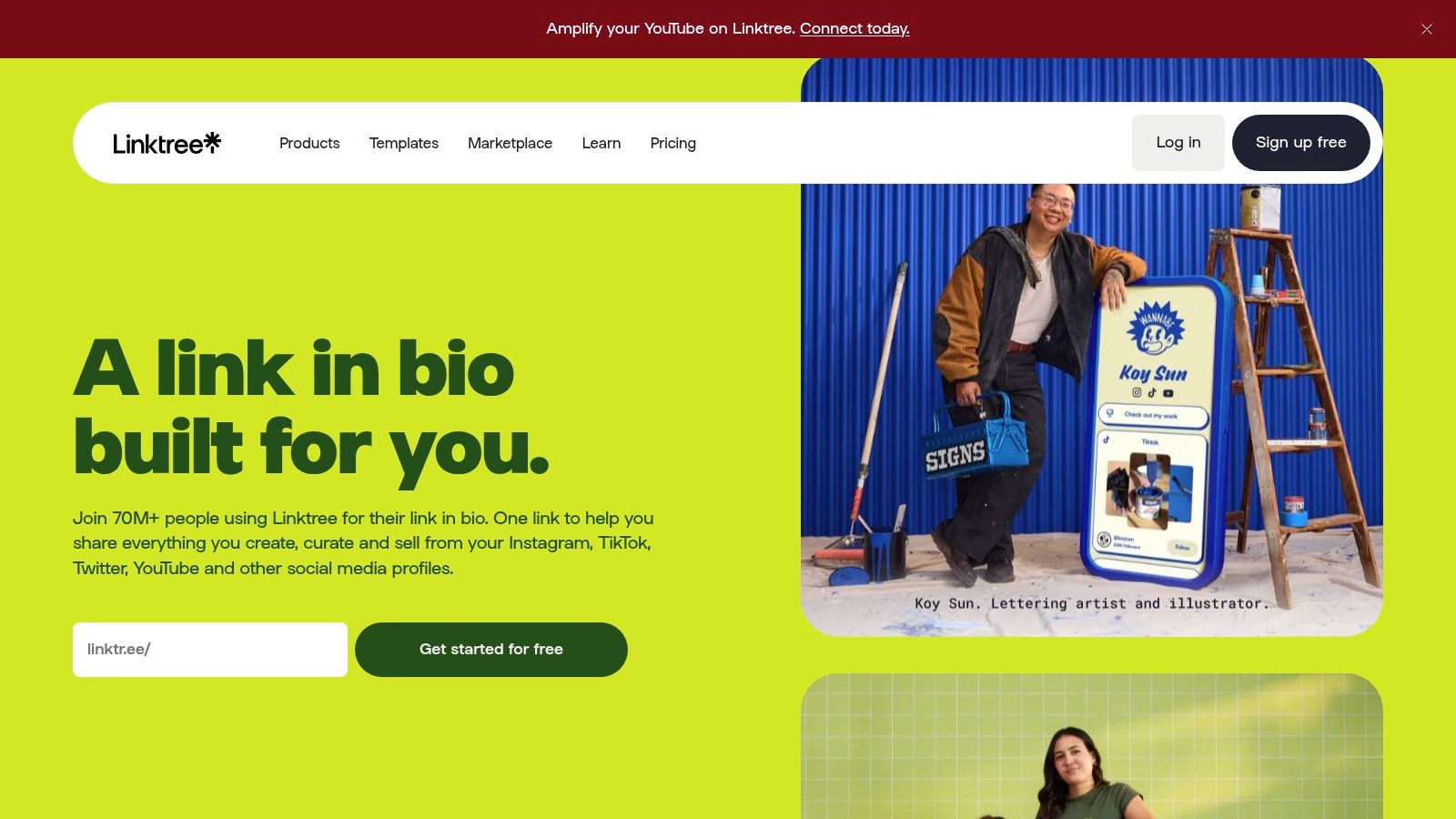
Linktree is a link-in-bio tool that can display Shopify products and collections inside a social profile landing page. It gives merchants a fast way to centralize product drops, promotions, user-generated content, campaign links, and other destinations without asking a development team to create a new storefront.
That makes Linktree the lowest-lift option in this comparison. It doesn't replace Shopify, a native social storefront, or a full creator platform. Instead, it acts as a navigation and merchandising layer between a social profile and the merchant's owned store.
A practical owned-channel bridge
A merchant can create different Linktree pages or modules for a launch, seasonal collection, best sellers, creator content, and customer support. Shopify remains the system of record, while the bio page gives shoppers a clearer route than a long list of unrelated links.
Linktree also supports other monetization tools and integrations, including tips and digital products. Those features may be useful for creators or hybrid brands, but Shopify merchants should keep the page focused on the primary buying journey.
The extra click still matters
Linktree is an interstitial page. Some visitors will choose a product and continue to Shopify, while others may click between options without purchasing. The page needs a clear hierarchy, strong product imagery, concise labels, and frequent testing.
Use campaign-specific links where possible, apply consistent tracking parameters, and review which modules receive attention. A useful workflow is to place the primary offer first, follow it with the current collection or product drop, then include supporting links such as customer service and shipping information. Set up the integration through Linktree, then validate the complete path from social profile to Shopify checkout on mobile.
Top 10 Social Selling Platforms, Feature Comparison
| Platform | Key features | UX & Quality (★) | Value / Pricing (💰) | Target audience (👥) | Unique selling point (✨/🏆) |
|---|---|---|---|---|---|
| Facebook & Instagram Shops (Meta) | Sync Shopify catalog, product tagging (posts/Reels/live), optional native IG checkout | ★★★★ (mass reach; eligibility varies) | 💰 Low, free channel; ad spend optional | 👥 DTC brands seeking broad social discovery | ✨ Tight Shopify tagging across FB/IG, 🏆 massive audience reach |
| TikTok Shop | Native product tags in videos & LIVE, Shop tab, Shopify sync, ads, logistics options | ★★★★ (high short‑form conversion) | 💰💰 Moderate, onboarding fast; logistics/fees vary | 👥 Brands focused on creators & short‑form video | ✨ Strong creator ecosystem driving fast conversions |
| YouTube Shopping (Google & YouTube) | Product shelves/pins, Shorts/live tagging, Shopify integration, creator programs | ★★★ (evergreen discovery; SEO upside) | 💰💰 Moderate, content investment required | 👥 Brands with video strategy & long‑term content | ✨ Long‑tail discovery + strong SEO potential |
| Pinterest for Shopify | Sync catalog, shoppable Pins, Pinterest Tag for tracking | ★★★★ (visual discovery; high intent) | 💰💰 Moderate, best with targeted ad spend | 👥 Lifestyle, home, fashion, beauty brands | ✨ Visual search & seasonal intent, strong inspiration-to-buy |
| CommentSold | Multicast live shows, comment‑to‑cart, auctions, mobile app storefronts | ★★★ (live commerce specialist) | 💰💰💰 Platform fees (% of sales) | 👥 Boutiques & DTC sellers using live formats | ✨ Automated comment‑to‑cart flows, 🏆 proven live uplift |
| Bambuser Video Commerce | Shoppable live & on‑demand video embeds, white‑label player, Shopify sync | ★★★★★ (enterprise, brand‑safe) | 💰💰💰💰 Enterprise pricing; production required | 👥 Enterprise brands & multi‑storefront merchants | 🏆 Owned‑channel video commerce + first‑party data capture |
| TalkShopLive | Live shows with built‑in cart, embeddable player, marketplace syndication | ★★★ (marketplace + embed) | 💰💰 Low‑to‑moderate, pay‑as‑you‑sell fees | 👥 Brands piloting live commerce & publishers | ✨ Low‑lift pilot option + marketplace demand |
| LTK (LIKEtoKNOW.it), LTK Connect | Creator matching, in‑app LTK Cart & checkout, Shopify paths | ★★★★ (creator network scale) | 💰💰💰 Creator fees & enterprise packages | 👥 Brands running scaled influencer programs | 🏆 Large creator network & in‑app shopping experience |
| ShopMy | Creator storefronts, APIs for product/commission tracking, gifting workflows | ★★★ (creator ops tooling) | 💰💰 Variable, commissions & program scope | 👥 Brands managing long‑term creator partnerships | ✨ Practical creator workflows & tracking APIs |
| Linktree | Link‑in‑bio storefront modules, Shopify integration, multi‑tool monetization | ★★★ (fast, familiar UX) | 💰 Low, free/basic tiers; premium features paid | 👥 Small brands, creators, social teams | ✨ Extremely fast deployment to centralize promos and drops |
Match the Platform to the Workflow You Can Sustain
The best social selling platform is the one your team can operate consistently without losing control of catalog quality, fulfillment, measurement, or customer experience. Start with the channel where your audience already discovers products, then choose the commerce model that matches that behavior. A shopper who finds products through Reels may respond to Meta product tags. A shopper who wants demonstrations may be better served by YouTube Shopping or TikTok Shop. A creator-led audience may need LTK or ShopMy, while a brand that owns strong social profiles may only need Linktree as a reliable path into Shopify.
The buyer journey is broader than one default network. In 2025, buyers used Facebook, Instagram, LinkedIn, X, and TikTok to research businesses and people, with Facebook at 59.3%, Instagram at 49%, LinkedIn at 32%, X at 20.6%, and TikTok at 19.1%, according to buyer research on social selling channels. Those figures reinforce a practical point. Platform selection should follow audience intent and product category, not merely the channel your competitors mention most often.
Before launch, verify the core Shopify workflow:
- Catalog synchronization: Confirm that titles, images, variants, prices, availability, and product policies transfer correctly.
- Checkout destination: Establish whether customers complete purchases on the social platform, inside a third-party live-commerce experience, or in Shopify.
- Order ownership: Identify where cancellations, refunds, returns, customer records, and fulfillment exceptions are managed.
- Fulfillment obligations: Review shipping methods, service levels, delivery promises, inventory buffers, and regional restrictions.
- Measurement: Define the source of truth for product views, add-to-carts, orders, revenue, commissions, and assisted conversions.
- Commercial model: Calculate subscriptions, transaction fees, percentage-of-sales charges, creator commissions, advertising costs, production, and support labor.
Response speed belongs in the operating plan too. Social commerce increasingly depends on customer service, not only content reach. Research cited by social selling statistics and customer response coverage reports that 73% of consumers expect a brand reply on social within 24 hours. Assign ownership for comments, direct messages, order questions, product availability, and post-purchase issues before the first campaign goes live.
Don't expand across four channels because each integration is available. Test one focused workflow first. That might be tagged short-form content on Meta or TikTok, a live-selling pilot with CommentSold or TalkShopLive, a creator-link program through LTK or ShopMy, a video commerce experience on an owned Shopify page, or a Linktree storefront for a product launch.
Give the pilot a clear product set, audience, content format, checkout path, fulfillment process, and measurement plan. Review contribution margin rather than surface engagement. A channel can generate attention while adding too much production, commission, support, or fulfillment work to remain profitable.
Finally, confirm current eligibility, pricing, regional availability, platform policies, and Shopify integration behavior before signing a contract or publishing a storefront. ECORN can help when the work extends beyond installing an app, including Shopify design, development, CRO, integration planning, and strategic eCommerce consulting. For brands that need a more capable storefront, multi-storefront coordination, or Shopify Plus development, deeper implementation support can turn a promising social channel into a maintainable commerce workflow.
ECORN helps Shopify merchants connect social selling initiatives with stronger storefront design, development, CRO, integrations, and eCommerce consulting. If you're planning a native social shop, creator program, live-commerce pilot, or Shopify Plus workflow, visit ECORN to discuss a practical implementation path.



Shopify Website Design Examples: 7 Stores Worth Studying
7 Ecommerce Newsletter Examples for Shopify Brands
One Product Shopify Store: Build and Scale
Mobile Pop Up Strategy for Shopify Stores That Converts
Sitemap for Shopify: How to Find, Optimize, and Submit It
7 Single Product Websites Worth Emulating
Product Variants Shopify: The Complete 2026 Guide
Ecommerce Analytics Consulting for Growth
What Is AI Integration for eCommerce
How to Choose the Right eCommerce Website Development Firm
E Business Strategy Implementation
Conversion Tracking Setup for Shopify Stores
BigCommerce vs Shopify Plus Which Enterprise Wins in 2026
Shopify Theme Kit: Setup, Commands, and Migration Guide
Shopify Extension Development: A Practical 2026 Guide
Shopify Speed Score Explained and How to Improve It
Shopify Mobile Optimization: The 2026 Playbook
How to Add Subcategory in Shopify for Better UX
How to Implement Structured Data for Ecommerce in 2026
SEO App Mobile: Shopify Store Optimization Guide
Shopify Plus Support: What It Includes and How to Choose
Google Ads for Shopify: The Complete 2026 Playbook

Shopify New York: How to Find and Hire the Right Agency
Google Search Console for Shopify: The Complete Setup
First Party Data Collection for eCommerce Growth
FAQ Online Store Guide: Build and Measure It Right
Do FB Ads Work for eCommerce in 2026?
One Page Checkout for Shopify: Design and Implementation
Shopify GraphQL vs REST: The 2026 Developer Decision
Shopify Ecommerce Consulting: Strategy, Pricing &

Are Reddit Ads Worth It for eCommerce Brands
Shopify Title and Meta Description: A Practical 2026 Guide

Product Video Best Practices for Shopify Brands
Real-Time Inventory Management: A 2026 Guide
AI Chatbot Integration for Shopify Stores
Affiliate Program Management: A Shopify Guide
10 Best Performance Monitoring Tools for Shopify in 2026
Digital Asset Management for eCommerce Brands in 2026
Every Type of Facebook Ads Explained for eCommerce Growth
Product Information Management Explained for Shopify Brands
Support Ticket System: A Guide for Shopify Stores

10 Best Customer Service Tools for Shopify in 2026

Can I Start a Business with No Money? a 2026 Blueprint

What Sells Good on Etsy: Best Niches for 2026

Shopify Add to Cart Button: A Practical 2026 Guide

Customer Feedback Automation: A Practical eCommerce Guide
Critical Rendering Path: A Guide for Shopify Stores

How to Promote on TikTok for eCommerce in 2026

B2B eCommerce Consulting That Drives Real Revenue
10 Best Practices for Site Navigation in 2026
Return vs Refund for Shopify Stores: A Practical Guide
What Is Customer Lifetime Value and Why It Matters
What Is Voice of Customer Research for eCommerce

SMS Marketing for Ecommerce That Actually Converts

Master How to Improve Email Deliverability in 2026

Top 7 eCommerce Partners NYC for Shopify Brands in 2026
Machine Learning for Ecommerce: Boost Your Shopify Store

Beauty Market Research: Your 2026 Growth Guide

Shopify International Expansion: A 2026 Roadmap

What Does CRO Stand for in Business: Understanding CRO

Shopify Visual Merchandising: A Playbook for Higher Sales

Shopify Landing Page Design: Master Conversion in 2026
10 Best AI SEO Optimization Tools for Shopify in 2026

Agentic AI for Ecommerce: Boost Your Sales in 2026
Mastering Email Marketing Data for eCommerce Growth

Conversion Rate Optimisation Australia: Boost Your Sales
Conversion Rate Optimization AI: Your Shopify Store Guide

10 Product Bundling Strategies for Shopify in 2026
How to Increase Customer Lifetime Value: A Shopify Playbook
AI Customer Service Automation: Shopify Guide 2026
Clean Website Design: A Shopify Conversion Playbook

Omnichannel Retail Strategy: A Shopify Playbook
Product Data Enrichment: A Guide for Shopify Brands
Instagram Shopping Features a Guide for Shopify Stores
What Is Revenue Optimization: A Holistic RevOps Guide

Benefits of Conversion Rate Optimization: Boost Your
WordPress to Shopify Migration: Your 2026 Seamless Switch
Boost Sales: Ecommerce Payment Processing Guide 2026
Unified Commerce Platform: Benefits, KPIs & Shopify Guide

How to Reduce Bounce Rate eCommerce: Your 2026 Guide
Shopify API Integration: A Practical End-to-End Guide

How to Implement Data Governance: A 2026 Guide
Shopify Store Development Cost: A 2026 Breakdown
What Is Server Side Tracking: The Shopify Guide 2026
Marketing Automation Workflows: A Shopify Guide for 2026

Shopify: How to Reduce Technical Debt

Shopify UX Design Change: A Playbook for Growth
User Generated Content Strategy: Shopify Playbook
Shopify Pause and Build Plan Cost: A Complete 2026 Guide
Compare at Price on Shopify: A Complete Guide for 2026

Where Can I Sell My Prints? 10 Best Platforms for 2026
Shopify Order Management System: The Ultimate Guide 2026
What Is Marketing Attribution? an eCommerce Guide for 2026
10 Best Black Friday Sales Sheets for 2026

Discover the Top Social Media Marketing Agencies For
Consumer Confidence Definition for eCommerce in 2026
What Is Social Commerce? Your 2026 Guide to Boosting Sales

A Social Ad Campaign Playbook for eCommerce Growth

7 Best FAQ Page Examples for SaaS & eCommerce

Market Research in Fashion Industry: A Guide for Shopify


newsletter in your inbox