

AI-powered lead generation is transforming how e-commerce businesses reach B2B buyers and wholesale partners by connecting targeted outreach with digital sales funnels. As traditional traffic sources plateau, intelligent automation and personalized engagement on platforms like LinkedIn open opportunities for scalable acquisition. This article explores how aligning AI, LinkedIn outreach tools, and e-commerce workflows can deliver high-quality leads and support sustainable sales growth.
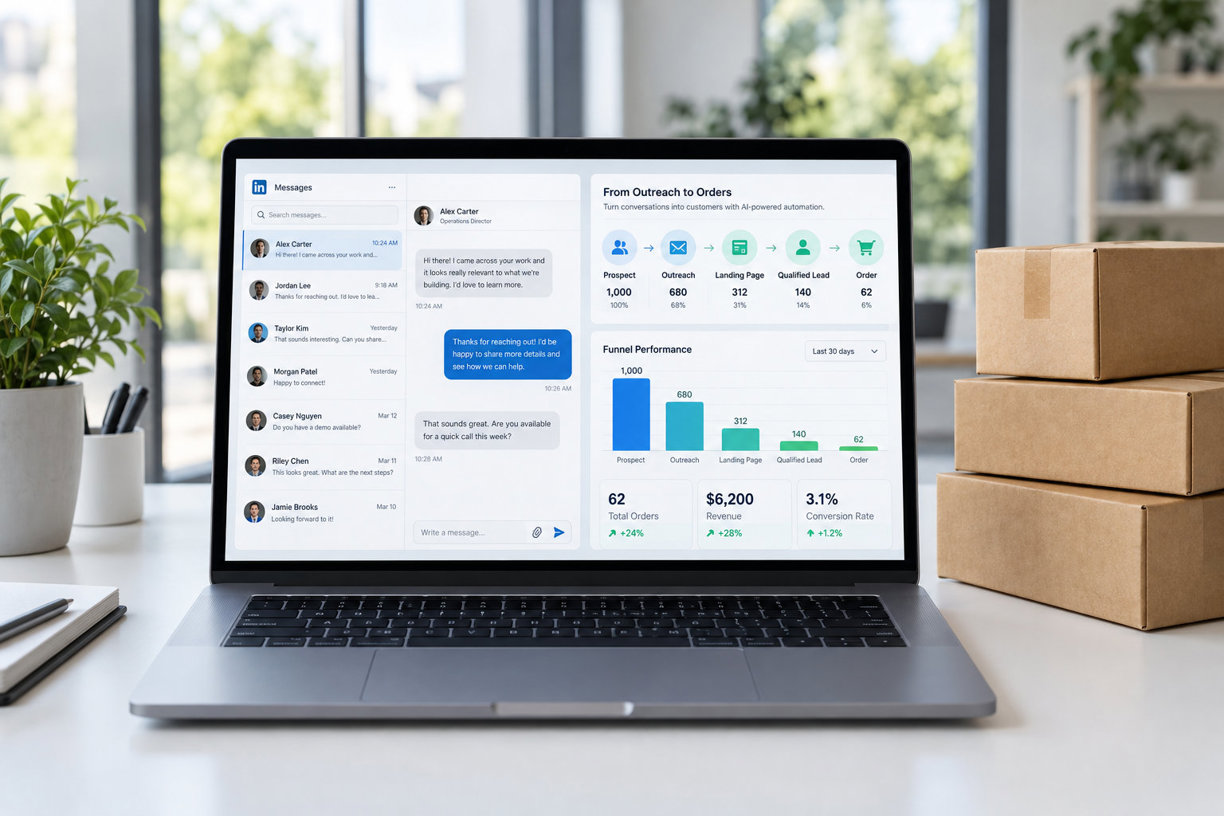
Many e-commerce companies find that relying solely on on-site traffic limits access to decision-makers at larger accounts, distributors, or corporate partners. While digital storefronts remain essential for direct retail sales, platforms like LinkedIn introduce a new pathway for building B2B relationships. According to Salesforce's 2026 State of Sales report, 87% of sales organizations use AI for tasks such as prospecting, forecasting, lead scoring, or drafting emails. Automated solutions such as Expandi enable businesses to efficiently engage prospective buyers, but integrating these tools with your e-commerce funnel requires strategic planning and a focus on genuine connection, not just volume.
Building an AI-driven LinkedIn outreach strategy for e-commerce
Modern LinkedIn outreach automation leverages AI to help e-commerce businesses identify, engage, and nurture high-value B2B leads. Rather than mass messaging, success depends on thoughtful engagement that reflects the unique needs of different buyer profiles. Automation platforms help define target audiences using firmographic data and role-based filters, while AI can further refine segmentation and personalize messaging based on prospect behavior and industry signals.
For each outreach campaign, it’s important to align your approach with the stages of your B2B funnel—from identifying promising companies, to qualifying prospects through tailored conversations, and eventually moving them towards wholesale proposals or account setup in your store. As outreach scales, intelligent queueing and follow-up workflows help manage responses, sustain engagement, and avoid overwhelming prospects with generic communications.
Personalizing message sequences and funnel touchpoints
A key advantage of integrating AI with LinkedIn automation is the ability to craft personalized message sequences that adapt to each prospect’s profile. Effective campaigns reference recipient roles, recent company initiatives, or specific challenges, establishing relevance and trust from the outset. Building in natural pauses between messages, and using intent signals to adjust cadence, can separate quality outreach from spammy tactics.
Some advanced outreach tools incorporate AI for message optimization, automatically adjusting subject lines and follow-up timing based on prior interactions. Transitioning conversations from LinkedIn to other channels like email, while ensuring compliance with privacy norms, consent, and CAN-SPAM requirements, can help advance prospects through the sales funnel in a way that feels seamless and professional.
Integrating CRM systems and qualifying B2B leads
Connecting LinkedIn outreach automation with a customer relationship management (CRM) system helps e-commerce businesses maintain a consistent record of prospect interactions. Information such as company size, purchasing interests, previous conversations, and engagement history can be organized into individual lead profiles. AI-assisted scoring can then help sales teams prioritize prospects according to their likelihood of becoming wholesale customers, making it easier to distinguish active buying interest from general engagement.
A well-structured CRM workflow also supports smoother collaboration between marketing and sales teams. When a prospect requests product information, discusses bulk pricing, or shows interest in opening a trade account, these interactions can trigger appropriate follow-up tasks. Keeping contact records and communication histories up to date reduces duplicated outreach and helps sales representatives approach conversations with relevant context. For e-commerce businesses managing multiple distributors or wholesale accounts, this coordination can make lead management more consistent as acquisition activity grows.
Maintaining data quality and responsible prospecting
The effectiveness of AI-powered lead generation depends heavily on the quality of the information used to identify and approach potential buyers. Outdated job titles, incorrect company details, duplicate contacts, and incomplete purchasing profiles can undermine targeting accuracy and waste sales resources. Regularly reviewing prospect databases helps e-commerce businesses maintain reliable records and improve the relevance of automated campaigns. It is also important to distinguish between publicly available professional information and data that businesses have a lawful basis to collect and use.
A structured approach to data management can make outreach more consistent while reducing unnecessary contact and compliance risks. The following practices provide a useful starting point for businesses integrating LinkedIn automation with their e-commerce operations.
These practices are particularly relevant to businesses operating across international markets, where privacy requirements and electronic marketing rules can differ. Establishing clear data-handling procedures helps maintain prospect confidence while giving sales teams a more dependable foundation for AI-assisted targeting.
Aligning outreach with e-commerce landing experiences
After a successful LinkedIn introduction, the handoff between outreach and on-site conversion is critical. Sending potential partners or wholesale buyers to dedicated landing pages, such as tailored product assortments or information on bulk ordering, removes friction and clarifies next steps. Clearly displaying key details like order minimums, shipping policies, or sample availability supports decision-making for varied B2B roles.
AI-enabled personalization continues on the site by adapting product recommendations or signup flows based on user segment data. Adjusting these experiences based on engagement cues from LinkedIn ensures that prospects receive relevant offers and information as they move through the digital funnel, a practical part of conversion rate optimization that can increase conversion rates and reduce abandonment.
Measuring attribution and maximizing AI lead generation impact
Tracking the effectiveness of LinkedIn outreach within your e-commerce strategy relies on clear measurement and disciplined marketing attribution. Success metrics should focus on qualified conversations, proposals, and revenue influenced, rather than superficial indicators like connection counts. Utilize CRM integrations, UTM-tagged URLs, and structured pipeline stages to follow leads from engagement through to completed orders.
Leveraging reporting, cohort analysis, and dedicated tools for AI lead generation helps quantify how automation contributes to sales funnel performance. Tracking metrics such as lead-to-customer conversion rates, cost per qualified lead, and average deal value can reveal which automated outreach activities generate the strongest commercial returns. This holistic view supports more informed budget allocation and allows for ongoing optimisation as AI and outreach platforms evolve, keeping your e-commerce operation competitive and efficient.
Turning LinkedIn Conversations Into Store Revenue
Outreach only pays off when the store is ready to receive the traffic it creates. Before scaling any LinkedIn campaign, check that your wholesale landing pages load fast, show order minimums and shipping terms clearly, and guide buyers to a simple account setup. Small fixes here often lift results more than sending more messages. If your B2B pages need a closer look, our guide to landing page optimization is a good place to start, and a Shopify development agency can help build wholesale flows that match your outreach.


Shopify Theme Minimal: How to Design and Build One
Consistent Website Design: A Practical Guide for Stores
Shopify Development Company in USA Hiring Guide
Shopify Inventory Tracking App: How to Set It Up Right
Shopify Volume Pricing: How to Set Up Tiered Discounts
How Does Shopify Work for Sellers? a Practical Guide
Shopify Theme ZIP: How to Upload and Install It
Shopify Plus Organization Admin: Roles and Access Guide
How to Build a Drop Down Menu in Shopify: Steps and Fixes
Shopify Plus Integration Services Guide
Shopify Customer Experience: A 2026 Guide
Shopify Plus Expansion Stores: Limits and Setup
Shopify Theme Update: Safe Steps, Backups and Rollback
Shopify Website Design Packages: What You Actually Get

How to Choose a Shopify Plus Web Design Agency in 2026
Shopify Plus Ecommerce Agency: How to Pick the Right One
Shopify Themes Retina: How to Serve 2x Images

How to Cross Sell on Shopify Without Friction
Best Shopify Theme for Custom Products Compared
Multi Store Inventory Management: A Practical Guide

SEO Consulting for Ecommerce: A Practical Guide
Shopify Theme Updater App: A Safe Update Playbook
Shopify Git Integration: A Developer's Guide to 2026
Headless Ecommerce Development Services Explained

How to Build a Shopify Clothing Website That Converts
How to Launch a Box Subscription Business in 2026

Luxury Skincare Branding Playbook That Converters
11 Best Podcast Ecommerce Shows for Store Growth in 2026
Shopify Developer Hourly Rate: What to Pay in 2026
Critical Shopify Setup Errors That Are Secretly Sabotaging Your Store
Ecommerce Conversion Tracking: The Complete How-To Guide
Shopify Design Agency: How to Pick the Right Partner
Mastering Multi Store Management on Shopify
Scale Shopify Store
10 Shopify App Ideas Worth Building in 2026
Conversion Rate Optimization for Landing Pages: The Playbook
Shopify Plus Automation: A Guide for 2026
10 Social Selling Platforms for Shopify Merchants

Shopify Website Design Examples: 7 Stores Worth Studying
7 Ecommerce Newsletter Examples for Shopify Brands
One Product Shopify Store: Build and Scale
Mobile Pop Up Strategy for Shopify Stores That Converts
Sitemap for Shopify: How to Find, Optimize, and Submit It
7 Single Product Websites Worth Emulating
Product Variants Shopify: The Complete 2026 Guide
Ecommerce Analytics Consulting for Growth
What Is AI Integration for eCommerce
How to Choose the Right eCommerce Website Development Firm
E Business Strategy Implementation
Conversion Tracking Setup for Shopify Stores
BigCommerce vs Shopify Plus Which Enterprise Wins in 2026
Shopify Theme Kit: Setup, Commands, and Migration Guide
Shopify Extension Development: A Practical 2026 Guide
Shopify Speed Score Explained and How to Improve It
Shopify Mobile Optimization: The 2026 Playbook
How to Add Subcategory in Shopify for Better UX
How to Implement Structured Data for Ecommerce in 2026
SEO App Mobile: Shopify Store Optimization Guide
Shopify Plus Support: What It Includes and How to Choose
Google Ads for Shopify: The Complete 2026 Playbook
Shopify New York: How to Find and Hire the Right Agency
Google Search Console for Shopify: The Complete Setup
First Party Data Collection for eCommerce Growth
FAQ Online Store Guide: Build and Measure It Right
Do FB Ads Work for eCommerce in 2026?
One Page Checkout for Shopify: Design and Implementation
Shopify GraphQL vs REST: The 2026 Developer Decision
Shopify Ecommerce Consulting: Strategy, Pricing &
Are Reddit Ads Worth It for eCommerce Brands
Shopify Title and Meta Description: A Practical 2026 Guide
Product Video Best Practices for Shopify Brands
Real-Time Inventory Management: A 2026 Guide
AI Chatbot Integration for Shopify Stores
Affiliate Program Management: A Shopify Guide
10 Best Performance Monitoring Tools for Shopify in 2026
Digital Asset Management for eCommerce Brands in 2026
Every Type of Facebook Ads Explained for eCommerce Growth
Product Information Management Explained for Shopify Brands
Support Ticket System: A Guide for Shopify Stores

10 Best Customer Service Tools for Shopify in 2026

Can I Start a Business with No Money? a 2026 Blueprint
What Sells Good on Etsy: Best Niches for 2026

Shopify Add to Cart Button: A Practical 2026 Guide

Customer Feedback Automation: A Practical eCommerce Guide
Critical Rendering Path: A Guide for Shopify Stores

How to Promote on TikTok for eCommerce in 2026

B2B eCommerce Consulting That Drives Real Revenue
10 Best Practices for Site Navigation in 2026
Return vs Refund for Shopify Stores: A Practical Guide
What Is Customer Lifetime Value and Why It Matters
What Is Voice of Customer Research for eCommerce

SMS Marketing for Ecommerce That Actually Converts

Master How to Improve Email Deliverability in 2026
Top 8 eCommerce Partners NYC for Shopify Brands in 2026
Machine Learning for Ecommerce: Boost Your Shopify Store
Beauty Market Research: Your 2026 Growth Guide
Shopify International Expansion: A 2026 Roadmap
What Does CRO Stand for in Business: Understanding CRO
Shopify Visual Merchandising: A Playbook for Higher Sales
Shopify Landing Page Design: Master Conversion in 2026


newsletter in your inbox