

Both spellings are correct, and search engines read "ecommerce" and "e-commerce" as the same word. What matters is which single form your brand owns in URLs, navigation and metadata, with the other form kept for editorial or legal copy that answers to an outside style guide.
The argument usually happens in the wrong room. Teams debate grammar while the cost lands elsewhere: two URL patterns for the same category, product feeds that spell an attribute two ways, title tags written by three people to three standards, and a support inbox where nobody is sure whether a customer is asking about one thing or two.
The scale makes that sloppiness expensive. U.S. retail e-commerce sales reached $1.2337 trillion in 2025, up 5.4% from 2024, and online sales accounted for 16.6% of total U.S. retail sales in the fourth quarter, according to the U.S. Census Bureau. At that volume the word sits in product titles, feed attributes, ad copy, schema markup, help articles and app marketplace listings, and no single writer controls all of them.
Pick one primary form. Document the exceptions. Stop reopening the decision every quarter.
Which Spelling Is Correct and Where Each Form Appears
Both forms are accepted. Dictionaries record "ecommerce" and "e-commerce" as the same noun, so neither is a spelling error, and no reader will think less of a page for choosing one. The question worth answering is narrower: where does each form belong on your site?
Treat the ecommerce ou e-commerce decision as a naming decision, not a grammar decision. For most brands the primary form should be ecommerce, used for URLs, navigation labels, page titles, meta descriptions and product data. Allow the hyphenated e-commerce only where an external style guide or a legal document requires it. That default matches how most digital brands already write, and it keeps templates, feeds and ad platforms aligned as you add pages.
| Form | Where it dominates | Where to use it |
|---|---|---|
| ecommerce | SaaS, Shopify ecosystem content, product marketing, most digital brands | URLs, navigation, titles, metadata, product data |
| e-commerce | AP style, newspapers, formal publishers | Editorial and press content that follows that guide |
| Match the document | Contracts, legal notices, partner agreements | Legal text and quoted material, unchanged |
The third row matters more than it looks. If your terms of service spell the word with a hyphen, don't correct it when you quote or link to those terms, and don't let a writer "fix" a partner's press release. Match the source document and move on.
What creates a mess is mixing all three on one page. A collection page titled with the hyphenated form, a navigation label without it, and a product feed attribute spelled a third way tells a reader, and a crawler, that nobody owns the standard.
Do this today: open your style guide, or the nearest document that plays the role, and check whether it names a form. If it doesn't, you have a gap to fill, not a debate to win.
Then search your own site for both spellings and note every place they appear side by side. That list is the scope of the work, and it's usually shorter than people fear.
How Style Guides and Digital Brands Differ
Two camps write this word, and each has a defensible reason. Formal publishers and news organisations hyphenate compound terms as a matter of house style, which is why "e-commerce" dominates print journalism and press releases. Digital-commerce businesses, software companies and marketers drop the hyphen to match how the term appears in product names, platform categories and search-driven copy.
Neither camp is being careless. They're optimising for different readers.
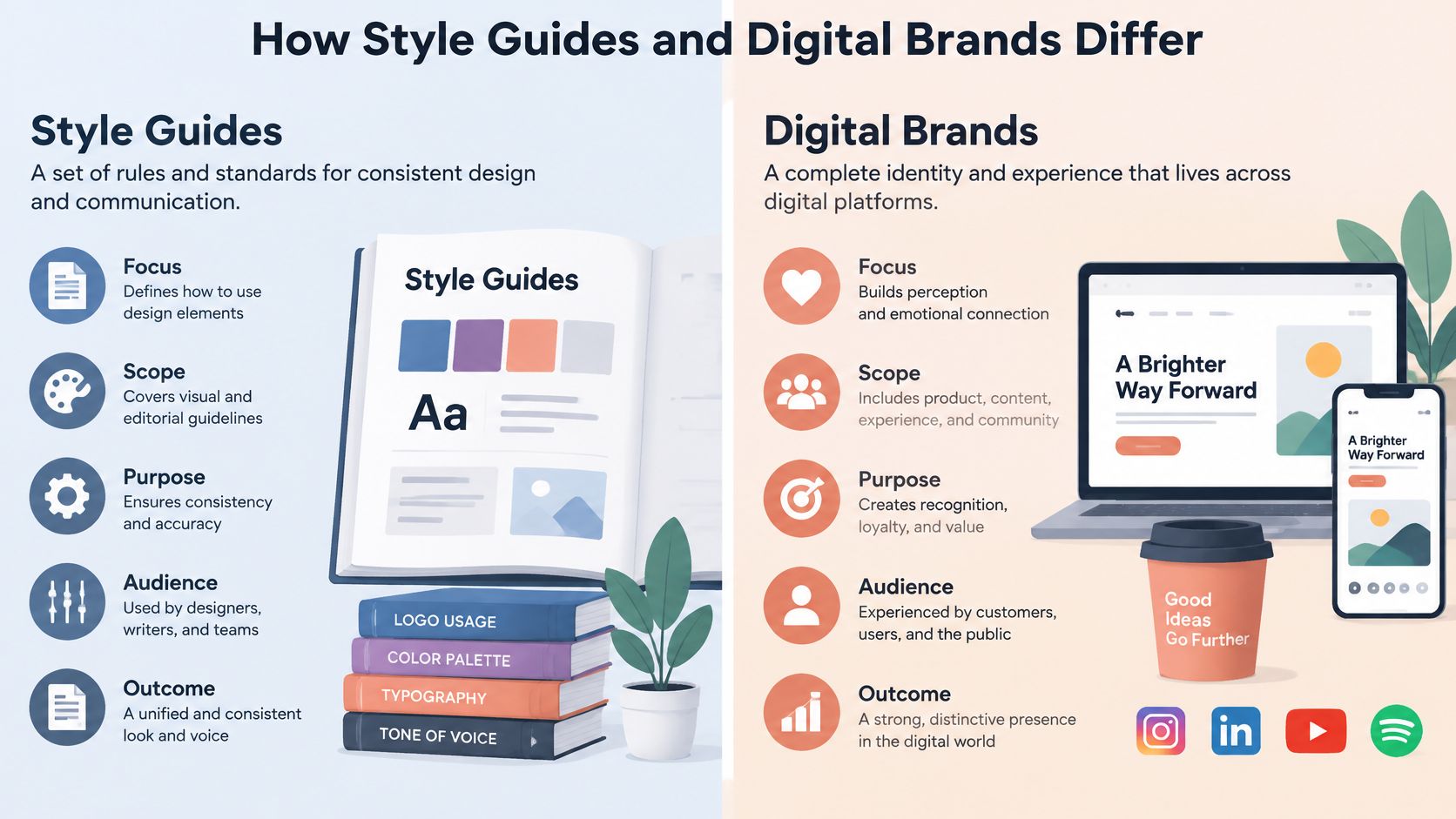
A press release and a product page read differently
Picture a funding announcement drafted to a news style guide. Every reference is hyphenated, consistently, because the editor receiving it will apply that same convention. Now picture an app landing page in a commerce platform's ecosystem: the headline, the feature blocks and the pricing table all use the closed-up form, because that's how the surrounding category writes and how buyers search.
Both documents are correct. The trouble starts when the same company publishes both without telling anyone which rule applies where. A writer who mixes the two forms inside one article looks inconsistent. A writer who follows a documented standard looks deliberate, even when the reader would have accepted either.
Regional English adds a second variable. UK and US publishers don't always apply the same conventions to compound nouns, so confirm which market the content targets before you choose a house default. Exporting a US convention into UK copy is how brands end up sounding foreign to their own customers.
Which audience reads this content most, and which style guide do they expect? If the honest answer is "our buyers, not editors," the closed-up form is the safer default.
The decision isn't permanent, but it needs a home. Put it in writing once and the argument disappears.
What the Spelling Means for Search Visibility
Lock one spelling into URLs and metadata, and let the other form stay in ordinary sentences. Search visibility follows that split more than it follows grammar.
A page that says "ecommerce" can still rank for a query typed as "e-commerce," and the reverse holds. Advice that treats the hyphen as a ranking trick answers a question your traffic does not depend on. The form you put in identifier fields does change which query the page matches most closely, so keyword research should cover both spellings.
Measure before you change anything. Open Google Search Console, go to Performance, and filter queries containing "ecommerce" against queries containing "e-commerce." Compare impressions and clicks over the last 28 days. If one form carries most of the demand in your market, lead titles and headings with that form.
Treat the hyphen as an information-architecture rule. URL slugs get one form, chosen once and applied to every new collection and landing page. Title tags and meta descriptions use that same primary form, matched to the query that brings impressions. Internal links point at the primary path, not a variant of it. Any legacy URL already published under the other form gets a 301 redirect to the primary path.
Body copy, FAQs and section headings can use the alternative where it reads naturally. Readers get both signals in context, and the page stops sounding like three people edited it. Note the primary spelling beside your Shopify SEO checklist so titles and metadata stay on one form.
Run the 28-day comparison before you touch redirects. Changing URLs on a hunch has cost more traffic than a hyphen ever will.
Set One Spelling Across Your Site and Team
Consistency is a process problem, and process problems need an owner and a document. Here's the framework to put in front of any brand running more than one storefront or more than one content writer.
- Name the primary form. Write it into the style note: ecommerce for navigation, URLs, metadata, product feeds and internal documentation. One line, no debate, no exceptions buried in a comment thread.
- Allow the alternative in human-read copy. FAQs, blog body text and multilingual keyword research can use whichever form the reader is most likely to type or recognise. Purity isn't the goal; being understood is.
- Document the exceptions. Legal, editorial and partner-facing materials may need a different standard. Say so explicitly, so a writer doesn't have to guess which rule wins.
- Audit for mixed usage. Crawl titles, H1s, navigation labels, category names and product feeds, then flag every page where both forms appear without a stated reason.
- Validate with first-party data. Check Search Console queries, site search logs, support tickets and reviews to see which form customers use, before you enforce a rule on them.
The framing that helps many teams is this: the hyphen question is an information-architecture and governance problem, not a spelling one. Pyra Trends makes the same case, noting that AP style favors "e-commerce" while major digital-commerce businesses commonly use "ecommerce", and that consistency and user language matter more than forcing one universal form.
That last point scales with your footprint. Businesses across 46 developed and developing economies recorded nearly $28 trillion in e-commerce sales in 2024, according to UNCTAD. A brand selling into several English markets should be checking local search behaviour rather than exporting one convention to all of them.
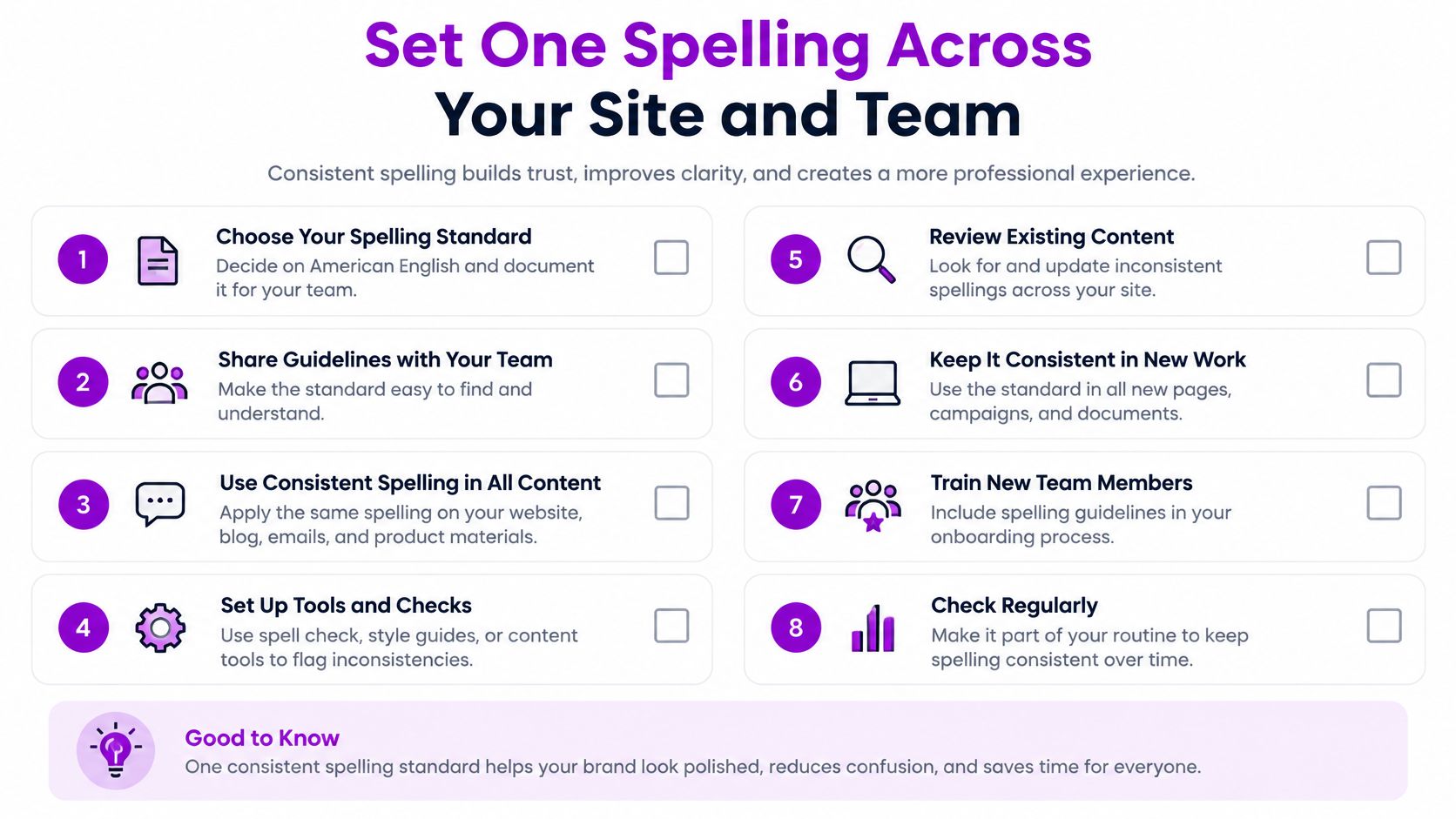
Here's the decision rule worth writing on the wall: one primary form for anything a machine reads, the alternative permitted for anything a person reads, and a written exception list for anything a lawyer reads. Configure on-site search synonyms so a query for either form returns the same products and articles, and check that filters and category labels don't split results between the two. A shopper who types "e-commerce" should never see half your catalogue. When you formalise the rule, publish it beside your other standards; our guide to creating brand guidelines shows where terminology sits alongside voice and visual rules.
Choosing the Right Spelling for Each Situation
You don't need a philosophy, you need a lookup. Use this one until your own data says otherwise.
| Situation | Recommended spelling | Reason |
|---|---|---|
| Domain, URLs and main navigation | ecommerce (primary form) | One form avoids duplicate and inconsistent paths |
| Page titles and meta descriptions | ecommerce (primary form) | Keeps snippets consistent and matches your target queries |
| Product schema and feed fields | ecommerce (primary form) | Keeps data consistent across platforms and feeds |
| AP-style editorial articles | e-commerce | Follows the publication standard readers and editors expect |
| Quoted press or partner copy | Original spelling | Editing quotes or partner text is not appropriate |
| Translated pages | Local term for each language | Matches how customers in that market search and read |
Two situations catch people out.
Brands that publish editorial and marketing content
A company running a newsroom alongside a product site effectively has two standards, and that's fine as long as both are written down by content type. What fails is the informal version, where whoever wrote last sets the rule. Put both standards in the same document, name the content types, and let a writer pick without asking anyone.
Multilingual sites
An English primary spelling should never override the term customers use in their own language. In some markets the English word isn't what buyers type at all, and forcing it into a translated category page makes the page read like a machine output. Keep the English form as the reference for English pages, then commission local keyword research for every other language.
Before you publish the guide, add the situations this table misses. Yours will include app store listings, marketplace product titles, email templates and affiliate feeds, and each one needs a stated answer rather than a judgement call at deadline.
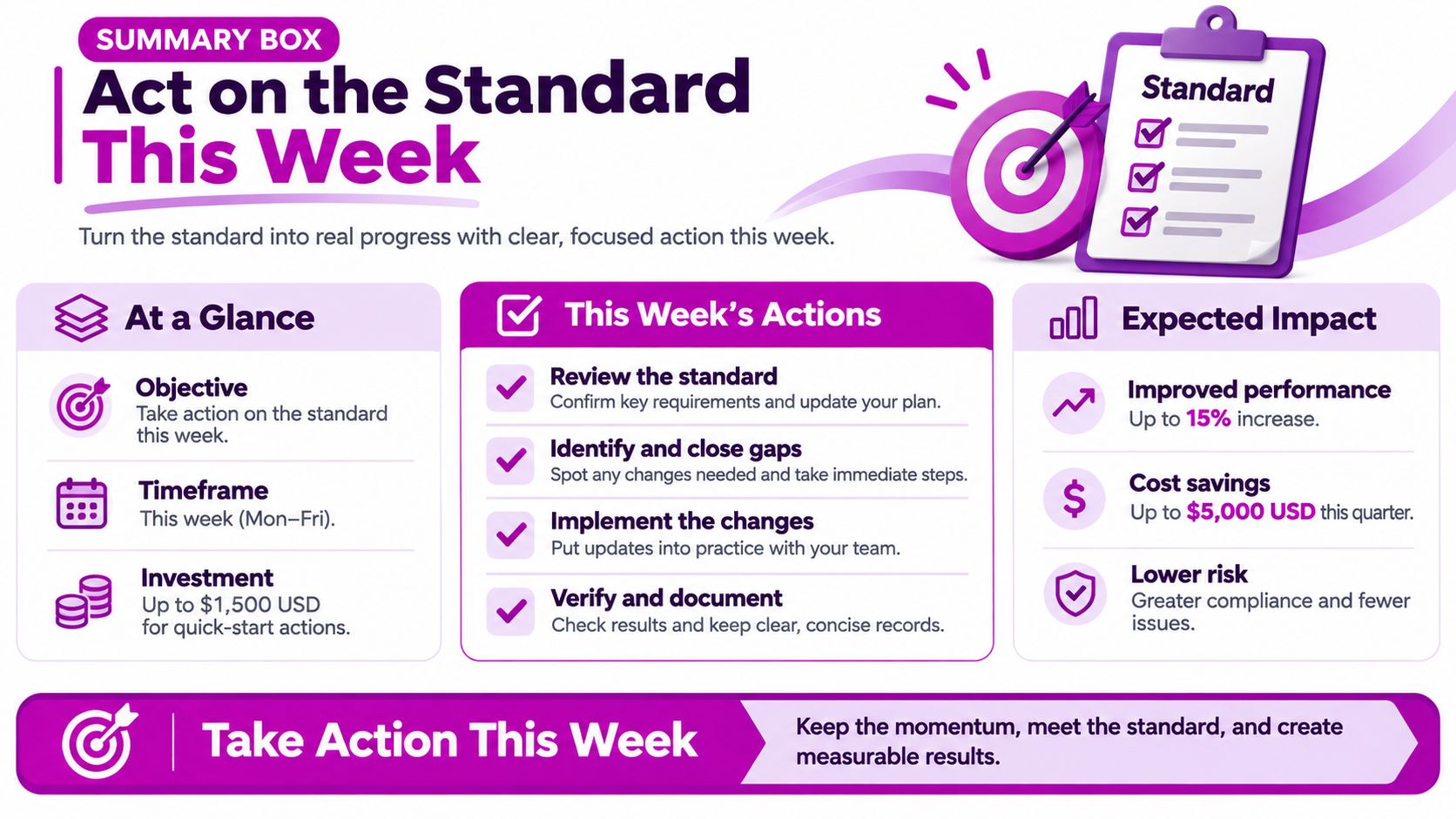
Act on the Standard This Week
Five actions, one week, and the decision stops being a recurring meeting.
- Write a one-page style note. Name ecommerce as the primary spelling for URLs, navigation, titles, metadata and product data, then list the exceptions for editorial, legal and partner materials. Writers and developers should be able to open it before drafting a single new page.
- Audit the live site for mixed usage. Crawl titles, H1 tags, navigation labels, category names and product feeds, and flag every page where both forms appear side by side without a documented reason. Fix the high-traffic templates first, because that's where the inconsistency shows up.
- Build a Search Console comparison. Export query data for the last 28 days, filter for queries containing each spelling, and compare impressions and clicks. This confirms which variant your audience types, rather than which one your team prefers.
- Redirect legacy variants. Once the audit is done, apply 301s from any URL built on the secondary form to the primary path, and update internal links so they point only at the primary version.
- Review after one quarter. If search data or customer reviews point to a different dominant term, update the style note and the affected templates together. Page-by-page edits are how the old inconsistency creeps back.
The work compounds beyond the spelling itself. Once terminology lives in a document, metadata standards, product naming and translation briefs all get the same treatment, and the next hire inherits a rule instead of a rumour. We create and support Shopify online stores with conversion rate optimization, so template-level fixes are part of the job rather than an afterthought, and the terminology audit slots neatly into that same pass over titles, feeds and navigation.
If your store carries years of mixed terminology across templates, feeds and category pages, ECORN's ecommerce development team can rebuild those assets to a single documented standard while keeping your redirects and search visibility intact. We work across Shopify development, design and CRO in one team, so the style decision and the technical implementation land together. Tell us which spelling you've chosen and visit ECORN to start the audit.



Shopify ERP Integration: A Step-by-Step Guide for 2026
Shopify Cart Page Optimization: 7 Ways That Work
Shopify Post Purchase Upsell: Setup, Timing and Results
Ab Test Sample Size
Shopify Social Proof: 7 Apps That Build Buyer Trust
10 Best Shopify Design App Tools for 2026: Pros and Cons
Shopify Local Development: Setup, Workflow and Fixes

Shopify Theme Minimal: How to Design and Build One
Consistent Website Design: A Practical Guide for Stores
Shopify Development Company in USA Hiring Guide

Shopify Inventory Tracking App: How to Set It Up Right
Shopify Volume Pricing: How to Set Up Tiered Discounts
How Does Shopify Work for Sellers? a Practical Guide
Shopify Theme ZIP: How to Upload and Install It
Shopify Plus Organization Admin: Roles and Access Guide
How to Build a Drop Down Menu in Shopify: Steps and Fixes
Shopify Plus Integration Services Guide
Shopify Customer Experience: A 2026 Guide
AI Lead Generation for E-commerce Growth
Shopify Plus Expansion Stores: Limits and Setup
Shopify Theme Update: Safe Steps, Backups and Rollback
Shopify Website Design Packages: What You Actually Get

How to Choose a Shopify Plus Web Design Agency in 2026
Shopify Plus Ecommerce Agency: How to Pick the Right One
Shopify Themes Retina: How to Serve 2x Images

How to Cross Sell on Shopify Without Friction
Best Shopify Theme for Custom Products Compared
Multi Store Inventory Management: A Practical Guide

SEO Consulting for Ecommerce: A Practical Guide
Shopify Theme Updater App: A Safe Update Playbook

Shopify Git Integration: A Developer's Guide to 2026
Headless Ecommerce Development Services Explained

How to Build a Shopify Clothing Website That Converts
How to Launch a Box Subscription Business in 2026

Luxury Skincare Branding Playbook That Converters
11 Best Podcast Ecommerce Shows for Store Growth in 2026

Shopify Developer Hourly Rate: What to Pay in 2026
Critical Shopify Setup Errors That Are Secretly Sabotaging Your Store
Ecommerce Conversion Tracking: The Complete How-To Guide
Shopify Design Agency: How to Pick the Right Partner
Mastering Multi Store Management on Shopify
Scale Shopify Store

10 Shopify App Ideas Worth Building in 2026
Conversion Rate Optimization for Landing Pages: The Playbook
Shopify Plus Automation: A Guide for 2026
10 Social Selling Platforms for Shopify Merchants

Shopify Website Design Examples: 7 Stores Worth Studying
7 Ecommerce Newsletter Examples for Shopify Brands
One Product Shopify Store: Build and Scale

Mobile Pop Up Strategy for Shopify Stores That Converts
Sitemap for Shopify: How to Find, Optimize, and Submit It
7 Single Product Websites Worth Emulating
Product Variants Shopify: The Complete 2026 Guide
Ecommerce Analytics Consulting for Growth
What Is AI Integration for eCommerce
How to Choose the Right eCommerce Website Development Firm
E Business Strategy Implementation
Conversion Tracking Setup for Shopify Stores
BigCommerce vs Shopify Plus Which Enterprise Wins in 2026
Shopify Theme Kit: Setup, Commands, and Migration Guide
Shopify Extension Development: A Practical 2026 Guide
Shopify Speed Score Explained and How to Improve It

Shopify Mobile Optimization: The 2026 Playbook
How to Add Subcategory in Shopify for Better UX
How to Implement Structured Data for Ecommerce in 2026
SEO App Mobile: Shopify Store Optimization Guide
Shopify Plus Support: What It Includes and How to Choose
Google Ads for Shopify: The Complete 2026 Playbook
Shopify New York: How to Find and Hire the Right Agency
Google Search Console for Shopify: The Complete Setup
First Party Data Collection for eCommerce Growth
FAQ Online Store Guide: Build and Measure It Right
Do FB Ads Work for eCommerce in 2026?
One Page Checkout for Shopify: Design and Implementation

Shopify GraphQL vs REST: The 2026 Developer Decision
Shopify Ecommerce Consulting: Strategy, Pricing &
Are Reddit Ads Worth It for eCommerce Brands
Shopify Title and Meta Description: A Practical 2026 Guide

Product Video Best Practices for Shopify Brands

Real-Time Inventory Management: A 2026 Guide

AI Chatbot Integration for Shopify Stores
Affiliate Program Management: A Shopify Guide
10 Best Performance Monitoring Tools for Shopify in 2026

Digital Asset Management for eCommerce Brands in 2026
Every Type of Facebook Ads Explained for eCommerce Growth
Product Information Management Explained for Shopify Brands
Support Ticket System: A Guide for Shopify Stores

10 Best Customer Service Tools for Shopify in 2026

Can I Start a Business with No Money? a 2026 Blueprint
What Sells Good on Etsy: Best Niches for 2026

Shopify Add to Cart Button: A Practical 2026 Guide

Customer Feedback Automation: A Practical eCommerce Guide
Critical Rendering Path: A Guide for Shopify Stores

How to Promote on TikTok for eCommerce in 2026

B2B eCommerce Consulting That Drives Real Revenue
10 Best Practices for Site Navigation in 2026
Return vs Refund for Shopify Stores: A Practical Guide
What Is Customer Lifetime Value and Why It Matters
What Is Voice of Customer Research for eCommerce

SMS Marketing for Ecommerce That Actually Converts


newsletter in your inbox